Why the Supervising Adult Needs Riding Experience
A child may be eager to ride, but choosing an adult to supervise is more than arranging for someone to stand nearby. Iowa sets a standard for riders under 12: the supervising adult must be licensed and experienced in operating off-road vehicles. Here’s what that means, why experience matters, and how to prepare for a safer ride.
What Iowa Requires of the Supervising Adult
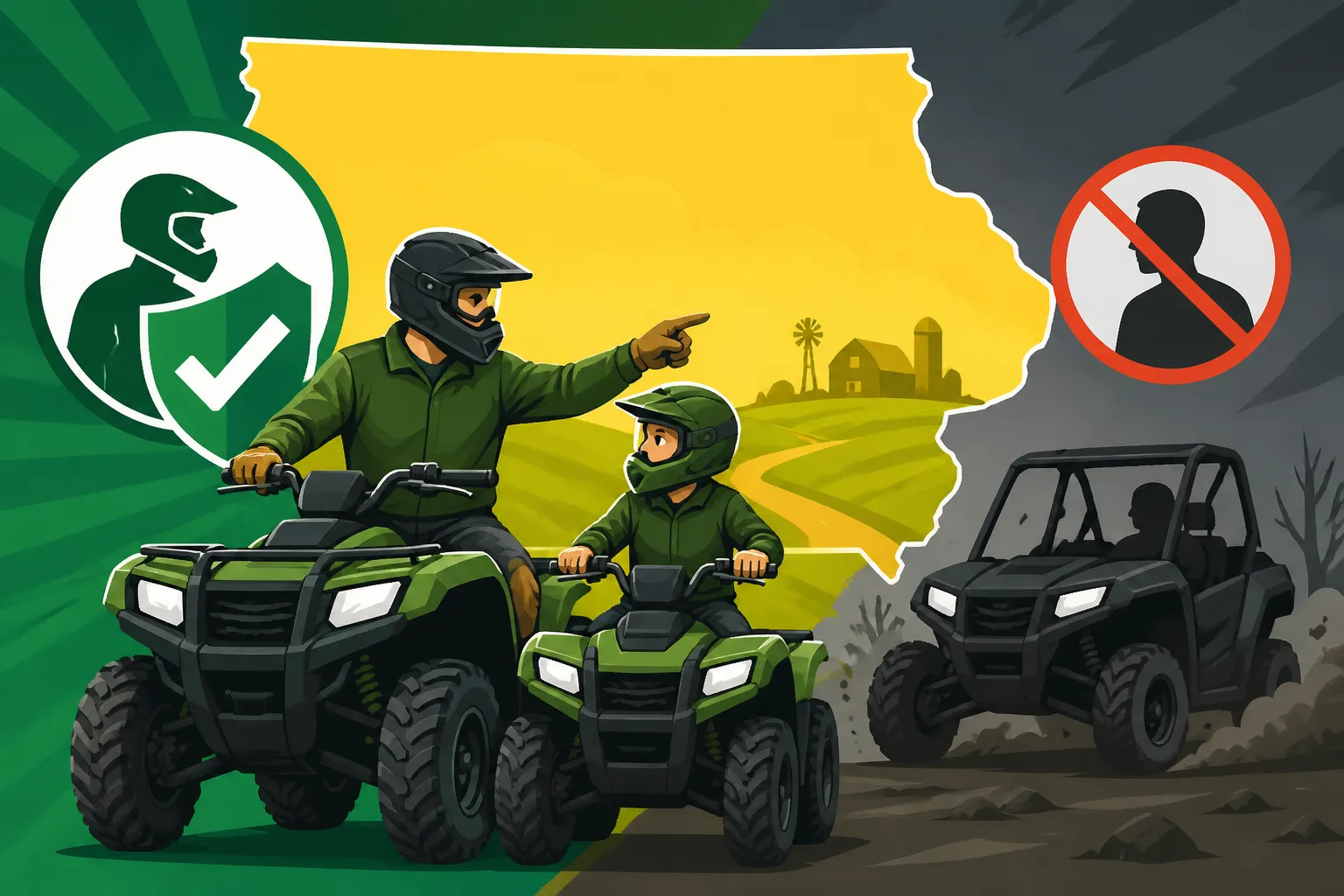
In Iowa, a rider under 12 must ride under the supervision of an adult who is at least 18, holds a valid driver’s license, and has experience operating off-road vehicles. Those requirements are distinct: being an adult is not enough, and having a driver’s license does not by itself show riding experience.
The experience requirement is there for a practical reason. A supervisor may need to recognize when a young rider is losing control, respond to changing terrain, or intervene before a mistake becomes a crash. Someone who has never operated an ATV or similar machine may not know how quickly it can accelerate, how it behaves on a slope, or how much space it needs to stop.
The rule concerns the adult’s ability to supervise off-road vehicle operation. It does not mean that the adult has to be riding the same machine, but supervision should be meaningful: the adult needs to be able to watch the child and respond if something goes wrong. If you are unsure whether a planned setup meets the current requirement, check the applicable Iowa rules before riding.
For a fuller look at how the age requirement works, see Iowa Supervision Rules for Riders Under 12 and Iowa Rules for Riders Under 12. The key point is that supervision is not simply having an adult somewhere at the park or property. The designated adult needs to meet the qualifications and be able to provide real oversight.
A license and experience are separate qualifications
The license requirement establishes that the adult is a licensed driver. It should not be treated as proof that the adult understands ATV or UTV handling. A person may have years of road-driving experience and still be unfamiliar with off-road machines, trail conditions, and the specific risks of riding with a child.
Likewise, someone who has considerable experience operating an ATV but does not hold the required driver’s license may not meet the adult-supervisor standard. If a possible supervisor’s eligibility is uncertain, do not assume that one qualification can substitute for the other.
This is different from a rule requiring the child to hold a driver’s license to operate an ATV. The adult’s license is part of the adult-supervision requirement; it does not grant a child permission to ride on a public road or change other age-based restrictions. Road use has its own requirements, so check Iowa Minimum Age to Ride a Road if the route involves public roads.
What “experienced” means in practice
A requirement for riding experience should be taken seriously, but it need not be turned into a guessing game about a number of rides or hours. The practical question is whether the adult knows how an off-road vehicle operates well enough to supervise a young rider responsibly.
Useful experience includes understanding how throttle, brakes, steering, and shifting work on the machine; recognizing how speed and momentum affect control; and knowing that conditions such as loose gravel, mud, ruts, and slopes can change how a vehicle responds. The supervisor should also be comfortable judging whether a child’s machine fits the rider and whether the rider is tired, frightened, or having trouble.
Experience with one type of vehicle does not automatically mean familiarity with every type. An adult who has only ridden a small ATV may need to learn the controls and handling of a side-by-side before supervising a child around one. Before the ride, make sure the adult understands the machine the child will operate, not merely off-road riding in general.
Why Experience Matters When a Child Is Riding
Young riders are still developing judgment, coordination, and the ability to respond calmly under pressure. A child may understand a rule in a quiet setting but have difficulty applying it when a machine starts moving faster than expected or the ground changes beneath the tires. An experienced adult is better placed to spot those problems early and choose a safer response.
That does not mean experience makes a ride risk-free. Children can still lose control, misjudge an obstacle, or become distracted. The adult’s role is to reduce the chances and consequences of those mistakes through preparation, suitable riding conditions, and close attention.
A supervisor needs to recognize trouble early
A child who is struggling may not be able to explain what is wrong while riding. The adult needs to notice clues such as repeated stalling, abrupt turns, difficulty stopping, excessive speed, or a posture that suggests the rider is tense and no longer in control.
An experienced supervisor can respond by stopping the ride, moving to easier terrain, reviewing a control, or ending the session. A less experienced adult may not recognize that a small problem is becoming a dangerous one. The goal is not to wait for a near miss before stepping in.
The machine and terrain affect supervision
The right level of supervision depends partly on the machine and where it is being ridden. A child on a small, appropriately sized ATV in a clear, familiar area presents different challenges from a child on a larger machine in mud, steep terrain, or a busy riding area. The adult should understand the vehicle’s controls and likely handling before the child starts.
An ATV and a UTV also differ in how they are operated and how riders are positioned. Do not assume that experience on one type automatically covers the other. Review the rules that apply to the rider and vehicle, including Iowa ATV Safety Certificate Requirements and Does an Iowa UTV Operator Need a Certificate?. Certificate rules and supervision requirements are related safety issues, but they are not interchangeable.
A designated riding area may have additional rules about access, equipment, or conduct. Check Iowa Rules for Riding a Designated Riding Area and any posted requirements before unloading. The supervising adult should be familiar with the site as well as the machine.
Experience supports better decisions, not just better riding
A capable adult does more than operate a vehicle confidently. The adult must decide whether a child is ready for a particular ride, whether conditions are suitable, and when to stop. Those judgments matter because a child may focus on keeping up with others or reaching a destination instead of noticing fatigue or a changing trail.
It can help to agree on simple signals and rules before the ride: where the child may go, how far ahead the child may travel, when to stop, and what to do if separated. The supervisor should also set a pace the child can manage rather than encouraging the child to follow faster riders.
| Situation | What an experienced supervisor can assess |
|---|---|
| Before starting | Whether the child understands the controls and whether the machine is suitable |
| On unfamiliar ground | Whether the surface, obstacles, and route are appropriate for the child |
| When control looks shaky | Whether to pause, give a clear instruction, or end the ride |
| As conditions change | Whether mud, traffic, fatigue, or weather makes continuing unsafe |
| When another rider is nearby | Whether the child can maintain a safe distance and follow the route |
The table is a practical safety aid, not a substitute for Iowa’s legal requirements or a riding area’s rules.
Choosing and Preparing a Qualified Supervisor
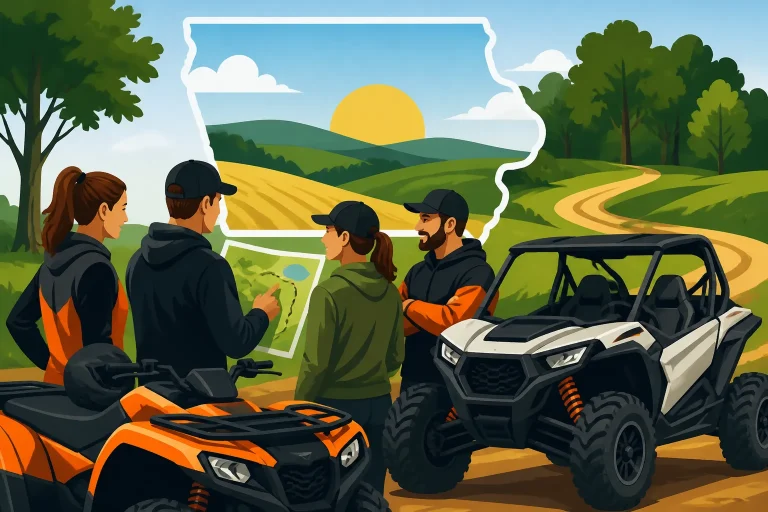
Start by identifying the adult who will actually supervise the child. Do not rely on a general plan that “an adult will be around.” Confirm that the chosen person is at least 18, has a valid driver’s license, and has real experience operating off-road vehicles. Then make sure that person is available and attentive for the full ride.
If the adult has ridden before but is unfamiliar with the child’s machine, take time to review the controls and handling before the child operates it. If the adult’s experience is limited or uncertain, choose someone better qualified rather than stretching the meaning of “experienced.” A safety course can help riders build knowledge, but taking a course should not be treated as automatic proof that every other legal qualification has been met.
Agree on the adult’s role before riding
The supervisor should know where the child will ride and be able to keep the child under observation. The adult should not be so occupied with another task, a separate group, or operating a machine in a different area that the child cannot get timely help.
Before setting out, agree on basic boundaries:
- Keep the child within a range where the adult can observe and respond.
- Choose terrain and speed that match the child’s ability.
- Stop if the child appears tired, overwhelmed, or unable to control the machine.
- Explain what the child should do if the adult signals a stop or if the riders become separated.
- Follow the riding area’s posted rules and any additional requirements.
The phrase “under supervision” should not be interpreted as permission for a child to ride beyond the adult’s practical ability to monitor them. A qualified adult who cannot see or reach the child when needed may not be providing effective supervision.
Check age and certificate rules separately
A child’s age may affect more than who must supervise. Iowa has separate safety-certificate requirements for some riders, and those requirements differ by age and machine type. The adult-supervision rule does not erase a certificate requirement, and having a certificate does not necessarily remove the need for supervision.
Review Iowa Safety Certificate Age Range and [Iowa Rules for a Rider Aged 12] if the child is near an age threshold or will be riding with older children. For riders who are no longer in the under-12 group, the applicable requirements can change. Do not assume the rules for one age group apply to another; Why the Iowa Certificate Stops at Eighteen explains a separate age-related part of the certificate rules.
Also distinguish off-road riding from road use. A child who is allowed to ride under supervision in an appropriate off-road setting is not thereby allowed to operate on a public road. Road rules, local permissions, and equipment requirements are separate. When planning a route, verify each part rather than relying on the supervision rule alone.
Use a short pre-ride check
A simple check makes it less likely that a misunderstanding will surface after the child is already moving.
- Confirm the supervisor is at least 18, has a valid driver’s license, and has off-road riding experience.
- Confirm the child’s age, machine type, and any applicable safety-certificate requirement.
- Review the machine’s controls and make sure the adult understands how it behaves.
- Choose an appropriate area and review posted rules or current closures.
- Set boundaries, signals, and a plan for stopping or getting separated.
- Reassess conditions during the ride and stop if the child or supervisor is no longer comfortable.
This list is a planning aid, not a replacement for checking current Iowa requirements. For related details about carrying a required card, see Can the Safety Certificate Ride in Your Pocket?.
Common Misunderstandings to Avoid
The most common mistake is treating “adult present” as the entire rule. Iowa’s standard includes age, a driver’s license, and off-road riding experience. A parent, relative, or property owner should not assume that their relationship to the child or presence at the site automatically makes them a qualified supervisor.
Another mistake is treating a driver’s license as a proxy for riding experience. Road experience may help with general judgment, but off-road machines have different controls and respond differently to terrain. The adult should have genuine familiarity with operating the relevant type of vehicle.
It is also risky to assume that an adult’s experience on a powerful machine means a child is ready for a similar machine. The supervisor’s qualifications and the child’s suitability are separate questions. A qualified adult still needs to choose a machine and setting appropriate for the child’s size, ability, and comfort.
Finally, do not rely on an old understanding of the rules when a child’s age, vehicle, or riding location has changed. Check the current Iowa requirements and the rules of the place where you plan to ride. If there is doubt about whether a particular person or setup qualifies, resolve it before the child starts the machine.
Disclaimer
This article is for general informational purposes only and does not constitute professional advice. Laws, prices and regulations vary by location and change over time. Consult a qualified professional for guidance on your specific situation.