Renting to a Fifteen-Year-Old in Iowa
A 15-year-old may be able to ride a rented ATV or UTV in Iowa, but the answer depends on the machine and where it will be used. Iowa’s safety-certificate rules differ by vehicle type, and rental companies can set stricter age limits than state law. Check the certificate, adult-consent, machine-decal, and riding-area requirements before reserving.
Start by identifying the machine and the riding location
“ATV” and “UTV” are often used loosely in rental listings, but Iowa’s requirements can differ according to the kind of machine. Ask the rental company what vehicle it is providing and whether it is classified as an ATV, a side-by-side, or another type of off-highway vehicle. Do not rely only on the listing’s casual description.
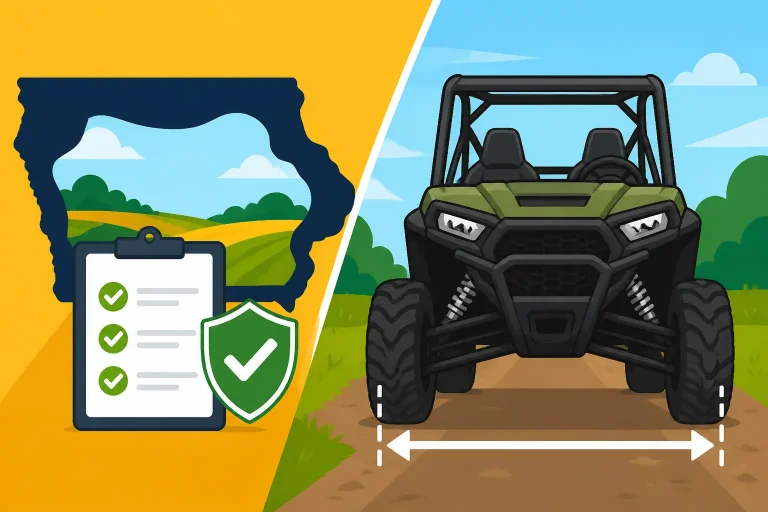
For Iowa’s safety-certificate rule, an ATV operator aged 12 through 17 generally needs an approved ATV safety certificate when riding in places covered by the state requirement. A 15-year-old riding an ATV should therefore be ready to show the certificate before heading out. The rule is tied to the rider’s age and the type of machine, not simply to whether the ATV is rented or privately owned. See Iowa’s Safety Certificate for Ages 12 to 17 for more on who needs the certificate and where it applies.
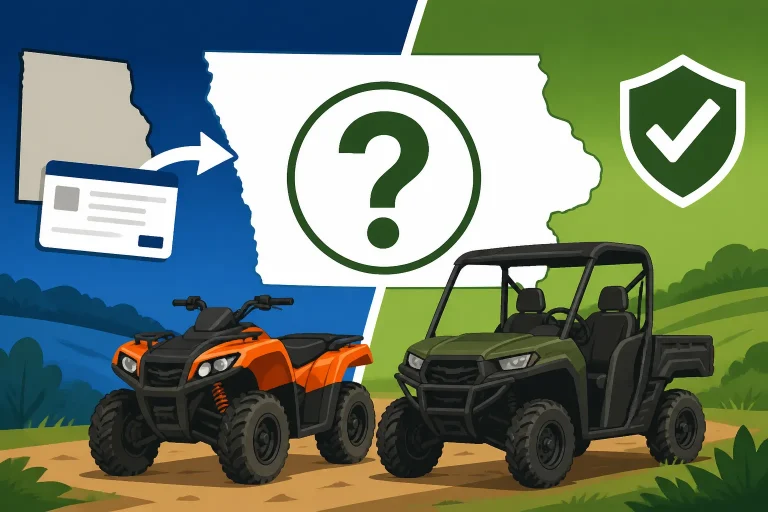
A UTV or side-by-side is treated differently for this certificate requirement: Iowa exempts side-by-side operators from the ATV safety-certificate rule. That does not automatically make every 15-year-old eligible to drive a rented UTV. The rental company can impose its own minimum age, require an adult driver, or limit a teen to riding as a passenger. Vehicle size, seat belts, manufacturer guidance, insurance conditions, and the company’s risk policies may all affect its decision. The distinction between the state certificate rule and a rental company’s separate rules is important; Why Iowa Exempts Side-by-Side Operators explains the vehicle-type difference.
Where the machine will be ridden matters just as much. Iowa’s safety and use requirements depend on the riding setting, such as a designated riding area, private property, or public land. A company may offer access to a particular trail or park, but that does not mean every route is open to every machine or rider. Check the rules for the actual destination, not just the rules at the rental counter. Useful starting points include Iowa Rules for Riding a Designated Riding Area and Iowa Rules for Riding Private Property.
| Rental situation | What to check for a 15-year-old |
|---|---|
| ATV on a designated area or other covered public riding ground | Whether an Iowa safety certificate is required, and whether the renter must see it before departure |
| UTV or side-by-side | Whether the company allows a 15-year-old to drive, even though the ATV certificate rule does not apply to side-by-side operators |
| Private property | The landowner’s permission, the rental agreement’s limits, and any applicable safety or supervision conditions |
| Public road | Do not plan on a 15-year-old driving there; Iowa’s public-road rules impose separate age and equipment requirements |
| Rental with a guided tour | Who is allowed to operate, what the guide’s rules require, and whether the teen will be a driver or passenger |
A public road is not a shortcut between the rental site and a trail. Iowa’s road-use rules have their own requirements, including an age threshold that a 15-year-old does not meet. A rental company may also prohibit road use altogether. Keep the planned ride within the authorized off-road route, and review Iowa Minimum Age to Ride a Road if a road crossing or connection is part of the plan.
Confirm the rental company’s rules before you pay
State law sets requirements, but a business can choose not to rent to a minor or can set a higher minimum age for drivers. It may also distinguish between renting an ATV and renting a UTV, or between driving and riding as a passenger. A 15-year-old should not assume that having a safety certificate guarantees the right to operate a rental machine.
Before making a reservation, ask the company direct questions and get clear answers. In particular, confirm:
- Whether a 15-year-old may operate the specific machine being rented.
- Whether the teen may drive an ATV, a UTV, or neither.
- Whether the company requires a safety certificate, and what proof it accepts.
- Whether a parent or guardian must be present at pickup and during the ride.
- Whether the teen may ride only with an adult operator or may operate independently.
- Whether the rental includes a machine with the registration decal or permit needed for the planned riding area.
- What equipment, route, passenger, and supervision restrictions apply.
- What happens if the teen does not meet a requirement on the day of the rental.
These questions can prevent a frustrating situation in which the adult has paid for a booking but the teen is not allowed to operate. If the business has a minimum age, ask whether a 15-year-old can ride as a passenger instead. Do not count on that option without checking: some machines have passenger seats and restraints, while others are intended for one operator only.
A rental business will commonly require an adult to sign documents for a minor, but its paperwork and policy can vary. Ask whether the parent or guardian needs to sign a rental agreement, release, safety acknowledgment, or other form. Find out whether the adult must be physically present and whether the adult must also be the person who booked the machine. The relevant details are company-specific; Which Adult Signs an Iowa Waiver covers the questions to clarify before arrival.
Read the contract before signing, especially sections on who may drive, where the machine may be taken, and who is responsible for damage. A waiver does not grant permission to ride where riding is prohibited, remove the need to follow Iowa rules, or override the rental company’s age restrictions. If the agreement says only an approved adult may operate, a parent cannot simply hand the controls to a teen because the adult is riding nearby.
Also ask what training the rental company gives. A short control demonstration is helpful, but it is not necessarily the same thing as an approved safety course or certificate. If a 15-year-old needs an ATV safety certificate for the planned ride, confirm that the certificate is in hand before the trip rather than expecting the company to provide it at the counter. The state course and certificate process is discussed in Where to Take an Iowa ATV Safety Course.
Check the decal, permit, and riding-area access
A rental machine’s registration or decal is not the same as the rider’s safety certificate. The certificate concerns the operator; a decal or permit relates to the machine and its eligibility for a particular kind of riding. A teen can meet the certificate requirement and still be unable to ride if the machine lacks the required authorization for the destination.
Ask the rental company whether the particular machine is properly registered and whether its decal is current for the intended riding area. Do not assume the answer based on the company’s location or because the machine is available for rent. Confirm that any decal is attached to the machine being rented and that the rental agreement authorizes taking it to the planned park or trail. For more detail on rentals and machine authorization, see Iowa Rules for a Rented Machine.
If the ride is at an Iowa OHV park, verify the park’s entry rules as well. Iowa’s registration decal is used for access at designated riding areas, so a renter should confirm whether the machine comes with the required decal and whether it is valid for that use. A company’s statement that a machine is “trail ready” is less useful than a direct answer about the specific park and machine. Your Registration Decal Is the Park Admission explains why checking the machine’s decal matters.
Visitors renting in Iowa should not confuse a nonresident user permit with a safety certificate. The permit question generally concerns a nonresident’s machine and whether it is authorized for use in Iowa; the safety certificate question concerns an operator’s age and vehicle type. With a rental, ask the company whether its machine already has the required Iowa authorization for the intended ride. If the renter is bringing a personal machine instead, check the separate rules for Iowa’s Nonresident User Permit and Does Iowa Honor Out-of-State Registration?.
The riding location also determines what kind of permission is needed. A designated public riding area has its own posted rules and route boundaries. Private land requires the landowner’s permission, and permission to ride one property does not necessarily include adjoining fields, trails, or public ground. A rental agreement may be narrower still, allowing use only at an approved destination or prohibiting certain surfaces and routes.
Before leaving the rental site, make sure the teen and accompanying adult understand the boundaries. Ask whether the rental company allows riding on club trails, public land, or only at a specific park. Confirm whether there are restrictions on passengers, speed, night use, towing, or carrying equipment. The company may have rules that are stricter than the rules at the riding area, and both sets must be followed.
Make a practical plan for a safe, legal rental
A good plan begins with the machine, the teen’s role, and the destination. If the 15-year-old intends to operate an ATV, arrange the required safety certificate in advance and bring acceptable proof. If the rental is a UTV, ask the company whether the teen may drive; the certificate exemption does not compel a business to rent to a teen driver. If the company will not approve teen operation, ask about a passenger option only if the machine is designed and equipped for one.
Have the parent or guardian speak with the rental business before booking. Confirm who must sign, what identification is needed, whether the adult must stay for the entire ride, and whether any supervision rules apply at the chosen site. A minor should not be left to resolve these questions at pickup, when the adult who must authorize the rental may not be present.
At pickup, inspect the machine with the rental staff. Make sure the teen knows the controls and understands the company’s instructions. Check the seat, restraints on a UTV, brakes, throttle, tires, lights, and any protective equipment included with the rental. If the machine appears damaged or does not match the reservation, bring it to the staff’s attention before riding. Do not attempt a route or maneuver beyond the teen’s ability simply because the rental period is limited.
Wear appropriate protective gear and follow the site’s rules. An ATV safety certificate is not a substitute for a helmet, protective clothing, or responsible riding. For a UTV, use the restraints and other safety equipment provided. Keep the teen within the approved route and under the level of supervision required by the site and the rental company. If the group is uncertain whether a trail is open to the rented machine, stop and ask rather than guessing.
A simple pre-ride checklist helps keep the important details together:
- Confirm whether the machine is an ATV or UTV and who is approved to operate it.
- Bring the teen’s ATV safety certificate if the planned ATV ride requires one.
- Have the required parent or guardian attend and sign the company’s forms.
- Verify that the rental machine has the authorization needed for the planned riding area.
- Confirm the route, passenger rules, supervision expectations, and return time.
- Keep the rental agreement and emergency contact details accessible during the trip.
If any answer is unclear, pause the rental rather than treating uncertainty as permission. Ask the rental company, the riding-area operator, or the relevant Iowa agency to clarify the point before the machine is used. Requirements can differ across machines and locations, and a rental company’s approval does not replace the need to follow the rules of the place where the ride occurs.
Disclaimer
This article is for general informational purposes only and does not constitute professional advice. Laws, prices and regulations vary by location and change over time. Consult a qualified professional for guidance on your specific situation.