Iowa Supervision Rules for Riders Under 12
A child under 12 may be able to ride an ATV in Iowa, but the rules depend on where the machine is used and who is supervising. The important details are easy to mix up: age, safety certificates, public riding areas, private land, and UTVs can each bring different requirements. Here’s how to sort them out before a child rides.
The supervision rule for riders under 12
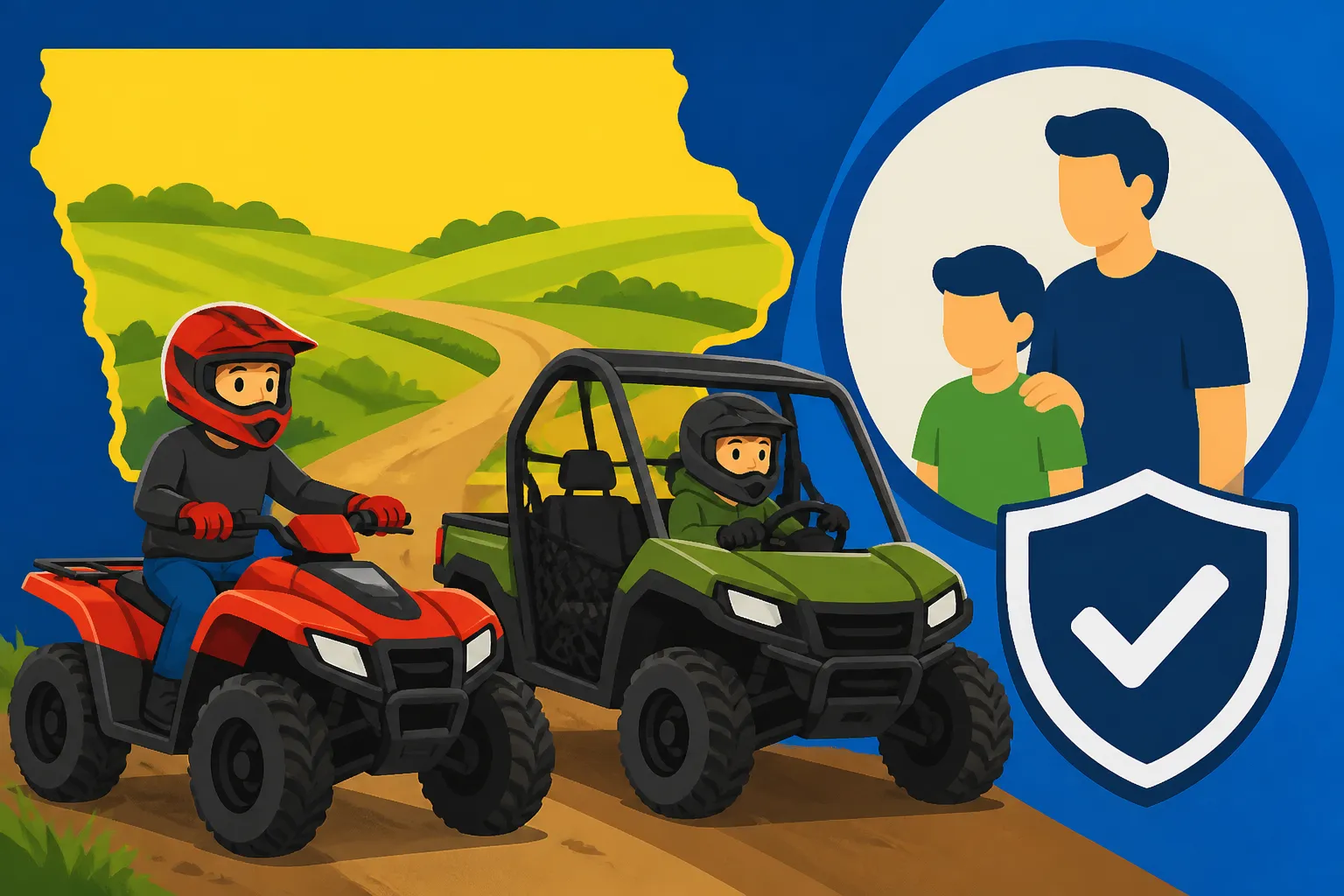
For an ATV ride on Iowa public land, a rider under 12 must be under the direct supervision of a parent, guardian, or an adult authorized by the parent or guardian. The supervising adult must be at least 18, hold a valid driver’s license, and have at least two years of experience operating an ATV.
Those qualifications matter. A capable adult who is not authorized by the child’s parent or guardian may not meet the rule. Neither does an authorized adult who is too young, lacks a valid driver’s license, or lacks the required ATV experience. Check the details in A Licensed, Experienced Adult in Iowa before choosing who will supervise.
“Direct supervision” should mean more than being at the same park or knowing where the child is riding. The adult should be close enough to keep the child in view, respond promptly, and intervene if the child approaches a hazard or leaves an approved area. Treat that as the practical standard for safe riding, even if a situation seems technically manageable from farther away.
Choose a supervisor who can actually supervise
Before setting out, confirm that the proposed adult meets the stated qualifications and is prepared to focus on the child. A group ride can make that harder: adults may be spread across different trail loops, stopping to help other riders, or traveling at a pace that leaves a child behind.
The rule is about supervision, not simply having an adult somewhere nearby. If the child and supervisor are separated, the arrangement may no longer provide meaningful oversight. Plan a route and pace that allow them to stay together, and agree on what to do if the group stops or becomes separated.
A single adult may not be able to keep effective watch over several young riders in different places. For a group, decide in advance which adult is responsible for which children and whether the riders can remain together. For more on that planning question, see How Many Young Riders One Adult Can Watch.
Check the riding location and machine type
The under-12 supervision rule is not a blanket permission to ride anywhere. Public land, private property, roads, and organized riding areas can be subject to different requirements. Check the rules for the specific place and machine before assuming that a child can ride there.
Public land and designated riding areas
On public land, do not treat adult supervision as a substitute for permission to ride. The location must allow the type of machine and activity, and the rider must follow its posted rules. Designated riding areas can have their own operating restrictions, trail boundaries, and conditions. Review Iowa Rules for Riding a Designated Riding Area and check the park or land manager’s current instructions before loading the machine.
A child should remain on permitted routes and inside the area open to riding. An adult’s presence does not make a closed trail, restricted area, or unauthorized route acceptable. If a sign or staff instruction is unclear, stop and ask rather than letting the child continue while the group guesses.
Rules for a club trail may also depend on how the trail is managed and who has access. Confirm the trail’s requirements with the responsible organization; [Iowa Rules for Riding a Club Trail] is a useful starting point.
Private property and roads are different situations
Private property is not automatically open to riding. Get permission from the landowner and confirm where the child may operate. The owner may set limits on routes, hours, machine types, or riders. Read Iowa Landowner Permission Rules before treating a field or trail as available.
Do not confuse private-land permission with permission to ride on a public road. A road has separate operating rules, and supervision does not make a child eligible to ride it. For the distinction, see Why No Iowa Minor May Ride a Road.
A practical rule for families is to identify the exact riding area before the engine starts: public trail, private property, or road. If a route crosses between them, check the requirements for each part. A trail ride that begins on private land may still reach a place where different rules apply.
Do not assume every UTV follows the ATV rule
ATVs and UTVs are not interchangeable categories in every Iowa requirement. In particular, a safety-certificate exemption for a side-by-side operator does not, by itself, establish that a child under 12 may operate that machine or remove any supervision, age, or location restrictions. Check the rules for the particular machine and where it will be used. See Does an Iowa UTV Operator Need a Certificate? for the certificate distinction.
If you are unsure how a machine is classified, check its documentation and ask the park or relevant authority before the trip. A machine’s size, seating arrangement, or marketing name is not a reliable substitute for determining which rules apply.
Understand the safety certificate requirement
Iowa’s safety-certificate requirement is commonly discussed in connection with riders ages 12 through 17. A child under 12 should not be assumed to need that certificate under the age-based requirement, but the lack of a certificate does not cancel the supervision rule or other location-specific requirements.
The age boundary is important: turning 12 can change what paperwork or training is required. It does not mean that a newly 12-year-old is automatically ready to ride without close adult oversight. Review Iowa Safety Certificate Age Range and Iowa’s Certificate Requirement at Twelve when a child is approaching that age.
A safety certificate also is not a permit to ride anywhere. It does not grant access to private property, authorize riding on a closed trail, or replace a park’s rules. The certificate and supervision requirements address different questions:
| Question | What to check |
|---|---|
| Is the rider under 12? | Confirm the required adult supervision for the location and machine. |
| Is the ride on public land? | Check access rules, trail restrictions, and the applicable supervision requirement. |
| Is the rider 12 through 17? | Check whether the safety-certificate requirement applies. |
| Is the machine a UTV? | Confirm the rules for that machine type; do not rely on an ATV assumption. |
| Is the route on private land or a road? | Check landowner permission or road rules separately. |
For a visiting family, an out-of-state credential should not be treated as an automatic exemption from Iowa’s operating rules. Check the requirements that apply to the Iowa riding location and the rider’s machine. Iowa ATV Safety Certificate Requirements explains the broader certificate question.
Make a simple plan before the child rides
A few checks before departure can prevent the most common misunderstandings. Keep the plan specific to the rider, machine, and location rather than relying on what was allowed on a previous trip.
- Confirm the rider’s age and machine. Identify whether the child will use an ATV or UTV, and check the rule that applies to that machine.
- Name the supervising adult. For a public-land ATV ride, verify the adult’s age, driver’s license, ATV experience, and authorization from the parent or guardian.
- Confirm the place is open to riding. Check current access information and follow signs, boundaries, and instructions from the land manager.
- Get permission for private land. Ask the landowner where riding is allowed and whether any limits apply.
- Keep the adult and child together. Set a pace the child can maintain, choose a route appropriate to the child’s ability, and agree on a stop-and-wait plan.
- Recheck requirements when the child turns 12. The certificate rules may change with age; supervision and access rules still need to be checked separately.
Good supervision also includes setting limits that match the child’s skills. A young rider may need a simple route, frequent stops, and an adult close enough to help with basic decisions. Conditions can change quickly: mud, loose ground, hills, blind corners, and traffic at trail intersections all call for extra caution. If the adult cannot keep the child in sight or the route becomes too difficult, stop and reassess rather than pressing on.
The central point is straightforward: for an under-12 child riding an ATV on Iowa public land, the adult must meet the stated qualifications and provide direct supervision. Then verify the rules for the location and machine, because supervision alone does not make every ride lawful or appropriate.
Disclaimer
This article is for general informational purposes only and does not constitute professional advice. Laws, prices and regulations vary by location and change over time. Consult a qualified professional for guidance on your specific situation.