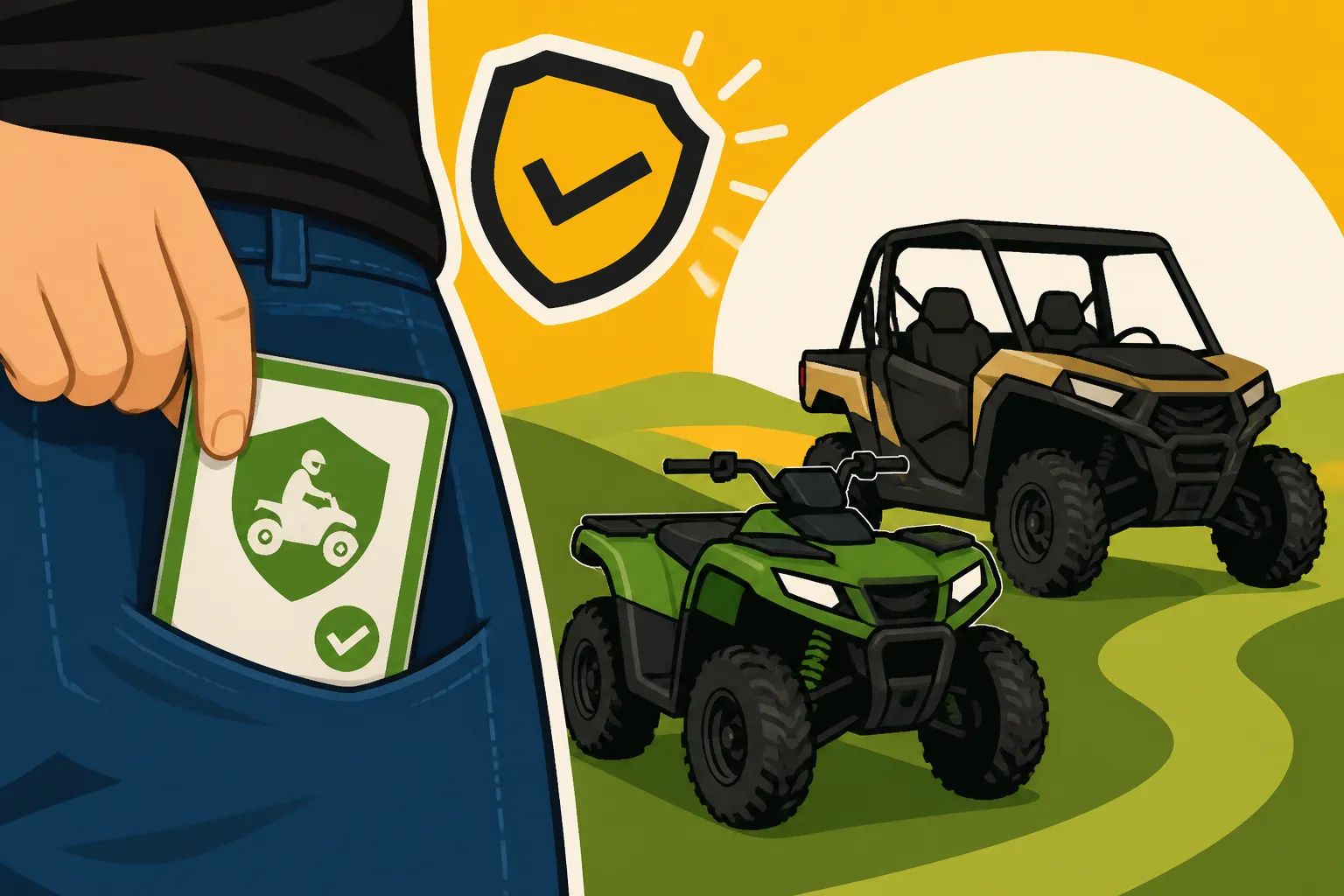
Can the Safety Certificate Ride in Your Pocket?
There's a common question that pops up among ATV and UTV riders, especially those new to the trails or just getting their machines ready for an Iowa adventure: do you actually need to carry all your paperwork with you, or can some of it, like that safety certificate, just stay safely tucked away at home? It's a valid concern, as nobody wants to be caught off guard by a DNR officer or county deputy while out enjoying the beautiful Iowa landscape. This guide will dive deep into Iowa's specific requirements for carrying your ATV or UTV safety certificate, helping you understand not just what to do, but why it matters, and where to keep it so you’re always prepared.
Understanding Iowa's ATV Safety Certificate Requirement
Before we even talk about where to keep your certificate, let's get clear on who needs one and what it actually is. The Iowa DNR takes rider safety seriously, especially when it comes to younger operators. The ATV safety certificate is essentially proof that you've completed an approved safety course, demonstrating that you understand the basic rules of the trail, safe operating procedures, and general ATV etiquette. It’s not just a piece of paper; it represents a commitment to responsible riding.
Iowa has very specific guidelines about who needs this certificate. Generally, if you're between the ages of 12 and 17, you are required to hold and carry an ATV safety certificate when operating an off-highway vehicle (OHV) on public land or designated OHV trails in Iowa. This applies to a wide range of machines, from quads to dirt bikes. The thinking here is pretty straightforward: these are critical years for learning good habits, and proper training can prevent accidents. It’s a bit like getting your driver's permit before your full license, ensuring you've got the foundational knowledge before you hit the road – or in this case, the trail. You can find more detail on this specific age range by looking into [Iowa Safety Certificate Age Range].
However, not everyone needs one. If you're 18 years old or older, Iowa law currently exempts you from the safety certificate requirement. This isn't because adults don't need to know how to ride safely, but rather a reflection of the legal age of adulthood and the assumption that adults can seek out safety training voluntarily. Similarly, operators of side-by-sides (UTVs) are also exempt from needing a safety certificate, regardless of age. This particular exemption for UTVs sometimes surprises people, but it’s a distinct part of Iowa's OHV regulations. For more information on this, check out [Does an Iowa UTV Operator Need a Certificate?]. Likewise, those on off-road motorcycles also fall under an exemption from the certificate. So, if you're an adult riding a quad, or anyone operating a UTV or dirt bike, while a safety course is always a good idea, the certificate itself isn't a legal requirement for you.
Where to Keep Your Safety Certificate While Riding
Now to the core question: "Can the safety certificate ride in your pocket?" The short answer is yes, absolutely! In fact, keeping it on your person or securely on your machine is exactly what Iowa law expects for those who are required to have it. The goal is to have it readily available if a law enforcement officer asks to see it. Imagine you’re enjoying a fantastic day at Gypsum City OHV Park, navigating some challenging trails, and you encounter a DNR conservation officer who's doing a routine check. If you’re a 16-year-old rider, they'll want to see proof you’ve completed your safety course. Fumbling around, or worse, having to explain it’s at home in a filing cabinet, just won’t cut it.
Many riders opt to keep their safety certificate, along with their machine's registration certificate, in a waterproof document holder. This could be a small, zippered pouch that fits neatly into a jacket pocket, a fanny pack, or even secured within a storage compartment on the ATV itself. The key is "accessible and protected." Pockets are great, but make sure it’s a secure pocket that won't lose your vital documents on a bumpy ride. Losing it out on the trail is just as bad as leaving it at home, as you won’t have it when needed. A Ziploc bag inside a pocket works wonders for water protection in a pinch!
Consider the practicalities. You're riding in potentially dusty, muddy, or wet conditions. A paper certificate can quickly become unreadable. Laminating your certificate can be a smart move, or at least storing it in a robust, waterproof sleeve. Some riders keep all their essential documents, like their driver's license (if applicable), their ATV registration certificate – which also needs to be carried – and their safety certificate, together in one convenient packet. This way, if you’re ever stopped, everything is in one place, easy to present. Think of it as your machine's "glove box" for documents, even if it's just a small bag attached to your handlebars or inside a small saddlebag. You can learn more about this by checking out [Carrying the Certificate on an Iowa Ride].
| Document Type | Who Needs It (Generally) | Where to Keep It (Recommendation) | Important Notes |
|---|---|---|---|
| ATV Safety Certificate | Ages 12-17 (ATV/Dirt Bike operators) | On person (pocket, fanny pack) or machine | Must be readily accessible; waterproof strongly recommended |
| ATV Registration | All registered OHVs | On person or machine | Proof of registration is critical; often checked with decal |
| Driver's License | Anyone operating on public roads | On person | Required for public road use, even if exempt from certificate |
| Proof of Insurance | Required for public road use in Iowa | On person or machine | Crucial for any road riding, even short distances |
This table highlights the documents Iowa riders should consider carrying. While LawDepot offers templates for various legal documents, like a bill of sale for an ATV, their focus isn't on the specific government-issued safety certificates. However, having a comprehensive understanding of all documentation related to your machine is always a good idea, whether it's for legal transactions or simply for daily riding.
Obtaining and Replacing Your Iowa ATV Safety Certificate
So, you're in that 12-17 age bracket, or you know someone who is, and you need to get this certificate. The process is designed to be accessible. Most riders complete an approved online safety course. These courses cover everything from basic machine operation and maintenance to environmental awareness and trail etiquette. They're typically interactive, self-paced, and culminate in a final exam. You usually need to score 80% or higher to pass. You can dive deeper into the specifics of this process by exploring [Iowa ATV Safety Certificate Requirements] and [Where to Take an Iowa ATV Safety Course].
The online course often has a fee associated with it, which covers the cost of the course material and administrative processing. After successfully completing the course and passing the exam, you'll typically pay a separate, smaller fee directly to the Iowa DNR for the actual certificate itself. For instance, you might encounter a fee of [The $34.95 Iowa Online Safety Course] for the course itself, and then [The $5 Iowa Certificate Fee] for the physical card. Once everything is processed, your official safety certificate will be mailed to you. This usually takes a couple of weeks, so don't wait until the last minute if you're planning a ride!
Now, what happens if that precious certificate goes missing? Maybe it fell out of your pocket on a particularly gnarly section of trail, or perhaps it got damaged by water or mud beyond recognition. It happens! The good news is that replacing a lost or damaged certificate isn't an insurmountable task. You'll typically contact the Iowa DNR or the entity that issued your original certificate to request a duplicate. There might be a small processing fee for a replacement, similar to the initial certificate fee. It’s always a good idea to keep a digital copy or a clear photograph of your certificate on your phone as a backup, just in case you need to verify your completion while waiting for a physical replacement. Losing your certificate can be a hassle, so it’s worth familiarizing yourself with [Replacing a Lost Iowa Safety Certificate] to know the exact steps. Remember, having a valid certificate in hand is what counts when you're out on the trails.
Consequences of Not Carrying Your Safety Certificate
This is where the "why" truly comes into play. You might think, "What's the big deal if it's just at home?" The big deal is that Iowa law requires it for certain riders, and failure to comply can lead to fines and other unpleasant experiences. If you're required to have a safety certificate (meaning you're between 12 and 17 years old and operating an ATV on public lands) and you're stopped by an officer without it, you could face a citation. These aren't just minor inconveniences; they can result in monetary penalties and potentially put a damper on your riding day.
Imagine you and your friends are enjoying a weekend at Bluff Creek OHV Park, and a DNR officer pulls you over for a routine check. You're 15, and the officer asks for your registration and safety certificate. If you can only produce the registration, you're in a tricky spot. The officer isn't likely to just take your word for it that you completed the course. They need to see the physical proof. Not having it means you’re in violation of the law. You can read up on these potential issues by checking out [Iowa Penalties for Riding Without a Safety Certificate].
The enforcement of these rules isn't arbitrary. Conservation officers and county deputies are trained to ensure that riders are operating safely and legally, which includes checking for proper documentation. Their goal isn't to ruin your day, but to promote safety and responsible use of Iowa's public riding areas. They're looking out for everyone's well-being. A citation can mean a fine, and if you're a minor, it also means an uncomfortable conversation with your parents. It's far better to simply have that certificate securely stashed away than to deal with the fallout of not having it.
Furthermore, these checks aren't limited to just dedicated OHV parks. If you're riding on public gravel roads where ATVs are permitted, or crossing state land, you could still be subject to checks. Always assume that if you're on public property, you should have all your required documentation with you. Don't risk a fine or having your ride cut short for something as easily preventable as forgetting your safety certificate. While LawDepot might offer documents like permission slips for riding on private land, these don't replace the state-mandated safety certificate for public land use. The state certificate is about demonstrating competence for public safety, a different category of legal documentation.
In summary, for those Iowa riders aged 12-17 operating an ATV, carrying your safety certificate isn't just a suggestion; it's a legal requirement. Make it a habit to check for it, along with your registration and any other necessary documents, every single time you head out for a ride. A little preparation goes a long way in ensuring a fun, safe, and legal day on the trails.
Disclaimer
This article is for general informational purposes only and does not constitute professional advice. Laws, prices and regulations vary by location and change over time. Consult a qualified professional for guidance on your specific situation.