How Many Young Riders One Adult Can Watch
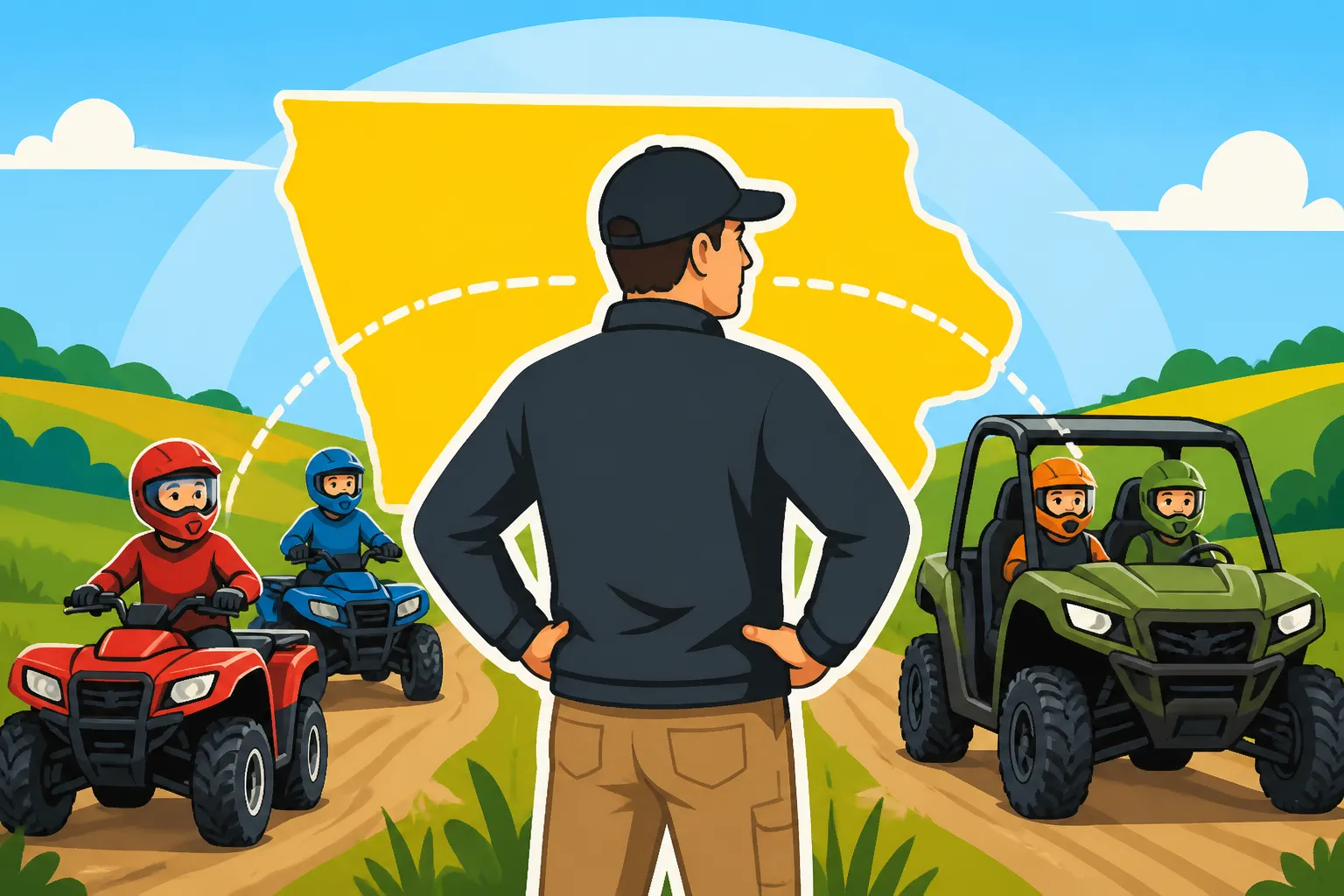
If you’re taking several children riding in Iowa, the key question is not just whether an adult is present. The adult must be able to supervise each child closely enough to respond when something goes wrong. Iowa’s rules set qualifications for supervising younger riders, but they do not provide a simple statewide child-to-adult ratio. Here’s how to interpret that and choose a sensible group size.
Iowa does not set a simple statewide supervision ratio
Iowa’s rules focus on who may supervise a young rider and whether that supervision is effective. They do not give families a universal number such as one adult for every two, three, or five children. That means you should not treat the absence of a stated ratio as permission to supervise as many children as you can bring.
For riders under 12, Iowa’s supervision requirement calls for an adult who meets the applicable qualifications. The adult’s role is active: being at the same riding area or standing at a trailhead is not necessarily enough if the children ride out of sight or the adult cannot reach them promptly. For a closer look at the age-specific rule, see Iowa Supervision for Riders Under Twelve and A Licensed, Experienced Adult in Iowa.
The practical answer to “How many can one adult watch?” depends on conditions. One adult may be able to keep close control of a small group riding slowly in a contained practice area. That same adult may not be able to supervise even two children safely on separate trails, in heavy traffic, or across a large park.
Think of the number as a supervision decision, not a fixed legal allowance. Before the ride, consider:
- How many children are operating machines at the same time?
- Can the adult see each rider and get to them quickly?
- Are the children experienced enough to follow instructions and stop when asked?
- Is the riding area open, enclosed, unfamiliar, or crowded?
- Are the machines and riding speeds appropriate for the children?
- Can another responsible adult help if a rider needs attention?
If one child needs help, the supervising adult may have to focus on that child. A group that is manageable while everyone is riding calmly can become difficult the moment a machine stalls, a child falls, or the group separates. Plan for that possibility rather than assuming every rider will remain together.
Also check the rules for the specific place you plan to ride. A park, club, event organizer, or landowner may set conditions beyond the general state requirement. The state rule is a starting point, not a guarantee that every venue accepts the same arrangement.
The rider’s age and machine type matter
Do not apply the under-12 supervision rule to every young rider in the same way. Iowa’s safety-certificate requirements have their own age range, and the applicable rule can depend on the machine and where it is being operated. The age thresholds are important: Iowa Safety Certificate Age Range explains the certificate requirement, while Iowa Rules for Riders Under 12 and [Iowa Rules for a Rider Aged 12] address different stages.
A certificate does not mean a young rider no longer needs sensible oversight. It shows that the rider has completed the required safety education where that rule applies; it does not prove that the rider can handle every trail, machine, or group situation without help. Likewise, a supervising adult’s presence does not replace a certificate when one is required.
Age alone is not a reliable measure of readiness. Two riders of the same age can have very different experience, judgment, confidence, and ability to follow directions. A child who has recently completed a course may still need close support when learning a new machine or riding on unfamiliar terrain.
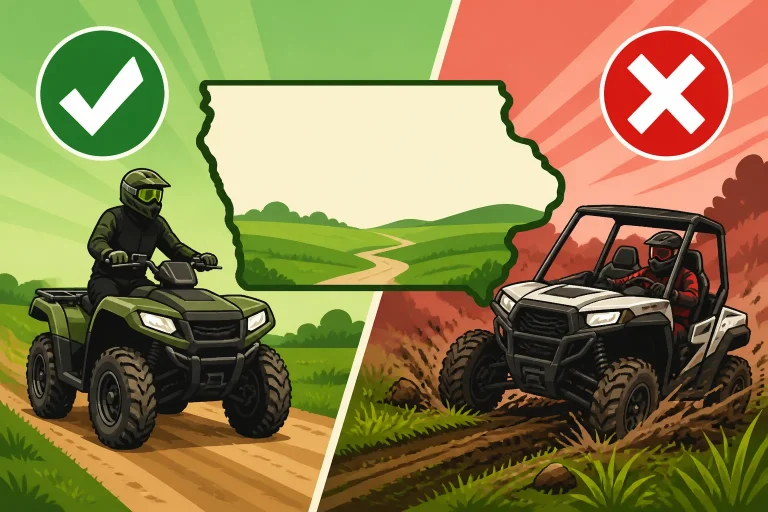
Machine type also matters. Iowa’s rules do not treat every off-highway vehicle identically, and some requirements differ for side-by-sides and off-road motorcycles. Do not assume that a rule written for an ATV automatically applies to every UTV or dirt bike. If the group includes different machine types, confirm which rules apply to each operator and machine before riding.
A practical pre-ride check should cover four things:
- Confirm the rider’s age and machine category. Identify whether the child is operating an ATV, a side-by-side, or another type of machine.
- Check the applicable certificate and supervision rules. Do not rely on a friend’s recollection or assume that one child’s requirements apply to the whole group.
- Confirm the riding location’s rules. Rules for a designated riding area, private property, a club trail, and other locations may differ. See [Iowa Rules on Designated Riding Areas] and Iowa Rules for Riding a Club Trail.
- Match the plan to the least-ready rider. Choose a route and pace that the youngest or least experienced operator can manage.
If you are riding with a child near an age threshold, verify the requirement before the trip rather than deciding at the gate. The certificate rule does not make the under-12 supervision question irrelevant, and turning 12 does not automatically make every riding situation suitable for a young operator. The transition to adult certificate rules is a separate issue; see Why the Iowa Certificate Stops at Eighteen for that distinction.
Choose the number of children by visibility, terrain, and experience
Because there is no single statewide ratio to rely on, set a group size that lets the supervising adult remain attentive and reachable. A conservative plan is especially important when children are new to riding or are using different machines.
| Riding situation | What makes supervision harder | Sensible approach |
|---|---|---|
| Flat, open practice area | Children may spread out or focus on different activities | Keep the group small, establish boundaries, and maintain clear sightlines |
| Narrow or winding trail | Trees, bends, and elevation changes hide riders | Use a lead-and-follow arrangement only if the adult can still monitor everyone |
| Busy or unfamiliar park | Other riders, trail intersections, and changing conditions add distractions | Reduce the number of children and review stop points and route rules |
| Mixed experience levels | Faster riders may leave beginners behind | Set the pace for the least experienced rider and keep the group together |
| Multiple machine types | Different sizes, speeds, and handling can split the group | Choose a route all machines can manage and make sure the adult can reach each rider |
| One adult supervising a child who needs extra help | A single incident can occupy the adult’s attention | Add another qualified adult or ride with fewer children |
These are planning guidelines, not Iowa’s legal ratios. A ride can be unsafe even if no specific number is prohibited. The adult should be able to notice a problem, communicate with the riders, and respond without leaving the rest of the group effectively unsupervised.
Keep the group within the adult’s control
Before engines start, agree on simple signals and rules. Children should know where to stop, how to respond if they lose sight of the group, and that they must not continue onto a different trail without permission. Set a speed and distance that suit the youngest rider, not the most confident one.
For a trail ride, put a capable adult in a position where the children can be monitored, and avoid sending a child ahead beyond the adult’s view or communication range. A second adult can help, but only if responsibilities are clear. Two adults who each assume the other is watching a rider can leave that child without effective supervision.
A ride leader should also know where the group is going and how to regroup. If the trail system is unfamiliar, study the map and current conditions before departure. Iowa Trail Conditions Before You Ride can help with the conditions side of planning; for the riding-location rules, review the relevant state and venue requirements.
Add help when a child needs individual attention
Some children need more support than others, regardless of age. A rider who is anxious, easily distracted, unfamiliar with the machine, or still learning to brake and turn may need an adult nearby rather than being one member of a larger group.
If the adult must coach one child continuously, the remaining children may not receive adequate supervision. Reduce the group, add another responsible adult, or practice with the child separately. That is often more useful than trying to make a larger group work by asking children to ride independently before they are ready.
The same judgment applies when one rider is much faster or more experienced than the others. Separate groups only if each group has an appropriate adult supervisor and a clear plan. Splitting the children while leaving one group without a qualified adult does not solve the problem.
Plan the ride so supervision can work
Good supervision starts before the machines leave the trailer. Check that each rider has the required paperwork or certificate for the machine and location, and make sure the group understands that registration and riding permission are separate matters. Iowa’s registration decal is used for access to designated riding opportunities, but it does not replace safety requirements. Your Registration Decal Is the Park Admission explains the decal’s role.
Choose a route that matches the group, not the route that looks most exciting on a map. A short, familiar loop can be a better first ride than a long trail with blind corners and multiple intersections. Check for closures and changing ground conditions, particularly after rain, when trail surfaces may become difficult or a park may restrict access. If riders cannot stay together safely on the available route, change the plan.
Before riding, make sure every child knows:
- Which adult is supervising and how to contact that adult.
- Where the group will stop and regroup.
- What to do if a machine stalls or a rider falls.
- That no one leaves the agreed route or rides ahead without permission.
- Which adult to follow if the group needs to turn around.
- That a child should stop in a safe place if separated, rather than trying to find the group by taking an unfamiliar trail.
The supervising adult should also be able to focus on the group. Avoid assigning that person a task that competes with watching riders, such as managing a complicated route, taking frequent photos, or operating a machine at a pace that puts the children out of reach. If another adult is available, divide responsibilities before the ride begins.
A useful decision is not “What is the maximum number of children one adult can bring?” but “Can this adult maintain meaningful supervision of every child in these conditions?” If the answer is uncertain, add another qualified adult, reduce the group, or choose a simpler riding area.
The clearest takeaway is that Iowa does not provide a single statewide child-to-adult number to use for every ride. Follow the age- and machine-specific rules, confirm any venue requirements, and keep the group small enough for the supervising adult to see, communicate with, and reach each young rider.
Disclaimer
This article is for general informational purposes only and does not constitute professional advice. Laws, prices and regulations vary by location and change over time. Consult a qualified professional for guidance on your specific situation.