Iowa Supervision for Riders Under Twelve
A child under twelve may be eager to ride, but Iowa’s supervision rule raises practical questions: which adult qualifies, what “supervision” means, and whether the same rules apply on private land or in a UTV. The key is to check the machine and riding location first, then plan for active adult oversight rather than treating an adult’s presence nearby as enough.
What Iowa’s Under-Twelve Rule Means
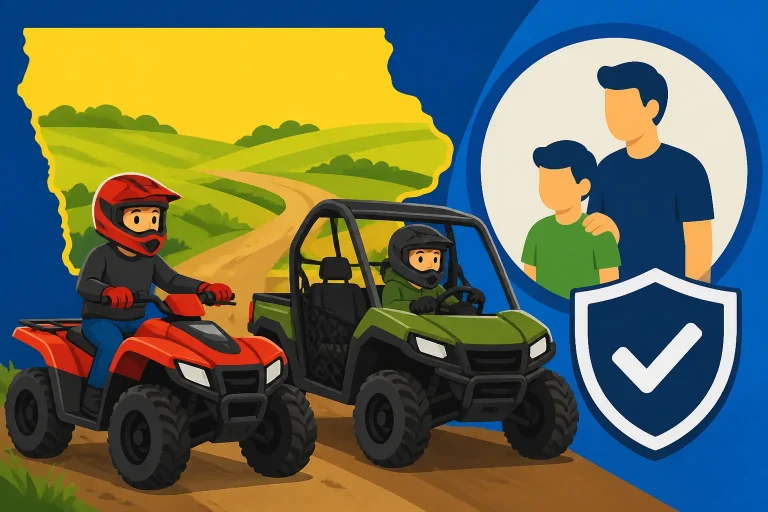
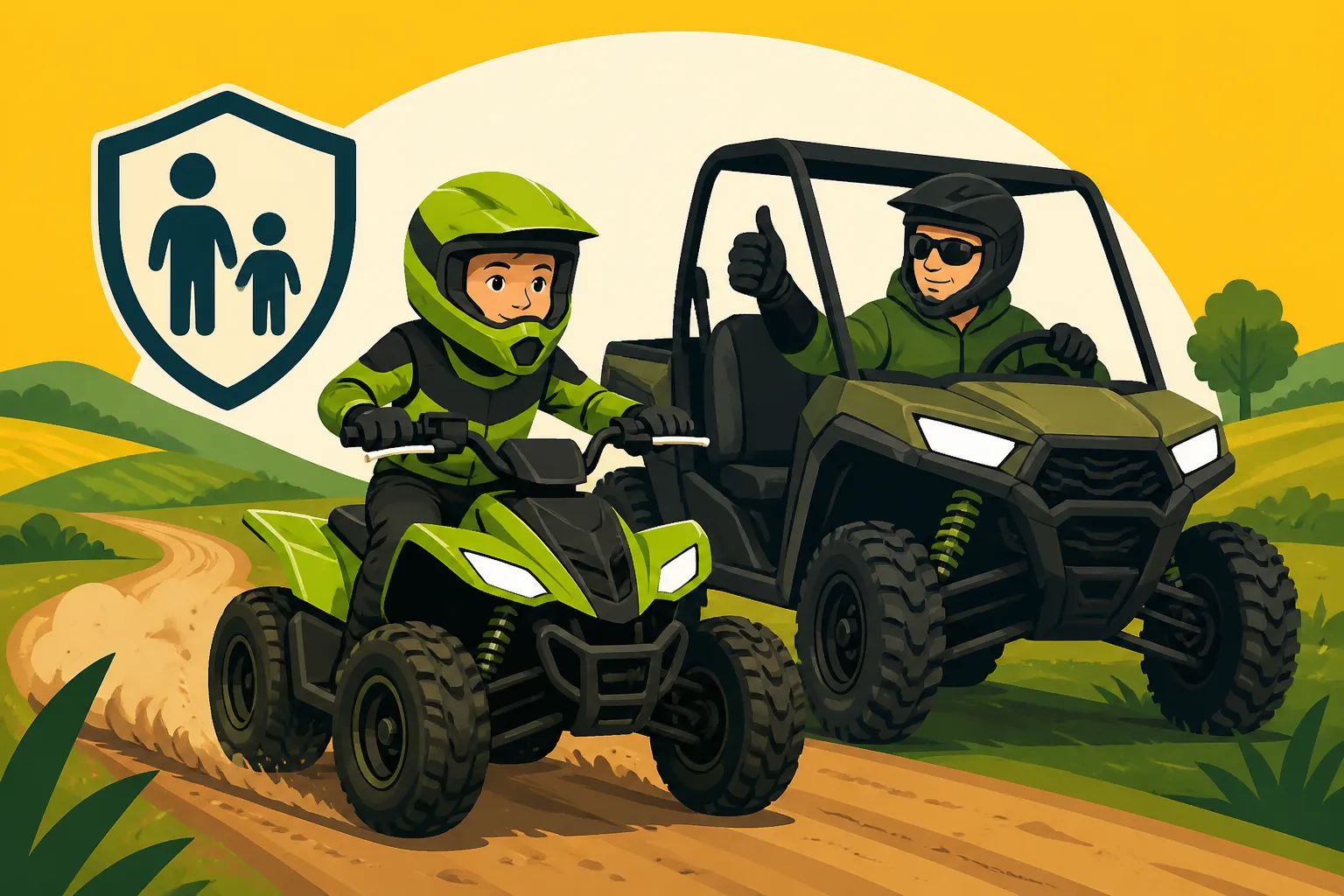
For an ATV ride covered by Iowa’s youth operating rules, a child under twelve must be directly supervised by a qualifying adult. That adult must be at least eighteen, hold a valid driver’s license, and have at least one year of experience operating an ATV. A parent is not automatically the only person who can supervise; another adult may qualify if they meet the requirements and are authorized to oversee the child.
The rule is about who is operating the machine and how the ride is supervised. It does not mean that a child may use any ATV, ride anywhere, or operate without regard to age-appropriate training and equipment. Nor does it make the adult responsible for controlling the machine from a distance. Supervision should let the adult monitor the child and respond promptly if something goes wrong.
The details matter because rules can depend on the type of machine and where it is being ridden. Iowa’s safety-certificate requirement is generally discussed separately from the under-twelve supervision requirement: children in the relevant older age group may need a certificate, while the younger rider’s rule focuses on adult supervision. For the broader age distinctions, see Iowa Rules for Riders Under 12 and Iowa ATV Safety Certificate Requirements.
| Question | Practical answer |
|---|---|
| Who must supervise an ATV rider under twelve? | A qualifying adult at least eighteen years old, with a valid driver’s license and at least one year of ATV operating experience. |
| Is having an adult somewhere at the riding area enough? | Do not assume so. Plan for direct, attentive supervision that allows the adult to monitor the rider and intervene. |
| Does supervision mean the child can ride any machine? | No. Machine size, the child’s ability, terrain, protective gear, and location still matter. |
| Does the rule automatically apply to every UTV? | Do not assume that an ATV rule covers a UTV. Confirm the requirements for the specific machine and setting. |
| Does an adult’s presence replace permission to ride? | No. Landowner permission, site rules, registration or permit requirements, and other applicable rules still matter. |
In everyday terms, “direct supervision” means active oversight, not simply being at the same property or reachable by phone. An adult who is riding nearby may be able to supervise, provided they can keep the child in view or otherwise monitor the ride closely and respond quickly. An adult who leaves the child to ride alone while staying at a distant campsite should not treat that as adequate supervision.
The precise arrangement should match the child and the riding conditions. A young rider on a small, familiar, low-speed practice area may need a different level of proximity than a child on a shared trail with hills, blind corners, other vehicles, or changing surfaces. If the adult cannot keep track of the child, the group is moving too quickly for the adult to intervene, or the child is beyond the adult’s line of sight, stop and adjust the plan.
The supervision rule is a minimum legal safeguard, not a guarantee that a ride is safe. A child can meet the rule and still be on an oversized machine, lack protective equipment, or be riding terrain beyond their ability. Treat legal eligibility and good judgment as separate checks.
Who Can Supervise and What the Adult Must Do
A suitable supervisor needs more than an adult’s age. The Iowa rule described for under-twelve ATV operation includes age, a valid driver’s license, and operating experience. Check that each condition is met before the ride, especially when a family member or friend is helping. A person who is old enough but lacks the required license or experience should not be assumed to qualify.
The adult’s practical job is to organize and monitor the ride. That includes selecting a manageable route, making sure the child knows basic controls and signals, setting clear boundaries, watching for fatigue or fear, and stopping when conditions change. It also means keeping other riders from separating the child from the supervising adult.
Use this pre-ride check:
- Confirm the machine type. Make sure the vehicle is actually an ATV for purposes of the rule. A UTV or other off-road vehicle may be governed differently.
- Confirm the adult qualifies. Check the adult’s age, driver’s license, and ATV operating experience rather than relying on a casual assumption.
- Choose a controlled riding area. Start with open, familiar ground and avoid routes that place the child in traffic or among faster, less predictable riders.
- Fit the machine to the child. The child should be able to reach and use the controls, steer, and stop without being stretched or overwhelmed.
- Review simple rules. Explain where the child may ride, how to stop, what to do if they lose sight of the adult, and why they must not follow another rider out of the agreed area.
- Set a check-in routine. Agree on when the group will pause and what signal the child should use if they are uncomfortable or need help.
- Reassess during the ride. Stop if the child becomes tired, distracted, upset, or unable to keep up with the adult.
The adult must be able to devote attention to the child. A supervisor who is also managing several unrelated tasks, riding at a pace that makes monitoring difficult, or trying to watch multiple children spread across a large area may not be providing effective oversight. The practical question is whether the adult can recognize a problem and respond in time.
Group rides deserve particular care. Before starting, decide which adult is responsible for the child, who rides immediately with them, and what happens if the group divides. Do not assume that every adult in the group is supervising every young rider. A clear assignment avoids the familiar problem of each adult thinking someone else is keeping watch.
The adult should also be ready to end the ride. If weather, trail conditions, crowding, or the child’s confidence changes, the original plan may no longer be appropriate. Continuing because the group has already traveled partway through a route is not a good reason to press on.
For more detail on the qualifications involved, see A Licensed, Experienced Adult in Iowa. When several young riders are present, How Many Young Riders One Adult Can Watch can help frame the supervision question, but the adult still needs to make a real-time judgment about visibility, terrain, and the children’s needs. A legal maximum, if applicable in a particular setting, would not prove that one adult can safely monitor every child in every situation.
Where the Rule Fits With Land and Permit Rules
Supervision is only one part of deciding whether a child can ride. The location may bring its own restrictions, and a child’s age does not create permission to use land that is closed, private, or otherwise off limits.
Public land and designated riding areas
Rules for public land and designated riding areas can be different from the rules that apply on a private property. Before traveling, check the site’s current operating rules, any posted restrictions, and applicable Iowa requirements. Confirm that the location is open and that the machine and rider are allowed there. Iowa Rules for Riding a Designated Riding Area and Iowa Rules for Riding Public Land cover those location questions.
A designated area can be a better setting for a young rider than an unapproved route because it may offer clearer boundaries and defined riding space. That does not mean every trail is suitable for every child. A route with steep slopes, blind turns, deep mud, rough obstacles, or fast traffic may be a poor choice for a novice even when riding there is allowed.
Do not rely on an old post, a previous visit, or another rider’s memory for current site access. Closures and operating conditions can change. Check the responsible site or agency before loading the machine, and follow signs and instructions once you arrive.
Private property
Private land is not a blanket exemption from safe operation or from all legal requirements. Get permission from the landowner before riding, and ask which areas are open, what hazards are present, and whether there are specific limits on speed, routes, or hours. A child should not be sent out to explore unfamiliar ground simply because it belongs to a relative or neighbor.
The property owner’s permission and the adult supervision question are separate. Permission answers whether the rider may use the land. It does not establish that a particular child is being supervised appropriately or that the machine is suitable. See [Iowa Rules for Riding Private Property] and Iowa Landowner Permission Requirements for the access side of the decision.
Farm property needs the same clear planning. Work lanes, livestock areas, equipment yards, ponds, ditches, and active fields can present hazards that are not obvious to a child. Agree on a specific route and keep the child away from operating equipment and other restricted areas.
UTVs and other off-road machines
Do not assume that an ATV provision applies unchanged to a UTV, dirt bike, or youth machine. Vehicle classification can affect which operating and safety rules apply. Iowa materials distinguish some machine types, including UTV operators and ATV safety-certificate requirements. For the certificate distinction, see [Does an Iowa UTV Operator Need a Certificate?] and Iowa Safety Certificate Age Range.
A UTV’s seats, controls, restraint systems, and size create different risks from an ATV. A child who is a passenger in a UTV is not in the same situation as a child operating an ATV. Likewise, a child operating a youth machine may need close attention even if the vehicle is smaller. Confirm the rules for the exact machine, the child’s role, and the place of use rather than applying one general answer to every off-highway vehicle.
When the vehicle’s classification is unclear, check the registration or manufacturer information and ask the responsible Iowa agency or riding site what rules apply. Do not rely solely on a seller’s description or a label such as “youth model.” The name of a product does not settle its legal classification.
Plan the Ride Around the Child, Not the Group
A child under twelve may be legally supervised and still not be ready for a particular ride. Readiness depends on judgment, coordination, confidence, physical fit, and the ability to follow directions. Some children may be comfortable on a simple practice loop but overwhelmed by a long group ride. Others may be able to operate a machine but not yet understand when to slow down or stop.
Match the machine and route
The child should be able to operate the controls without awkward reaching and should understand how to stop before the ride begins. A machine that feels manageable while stationary may become difficult on an incline, loose gravel, mud, or uneven ground. Start on predictable terrain, and increase difficulty only when the child shows control and sound judgment.
Choose a route with places to stop and regroup. Avoid starting with a route where the adult has to ride ahead to scout, where the child can disappear around a blind corner, or where faster vehicles may approach from behind. Keep the group’s speed and spacing appropriate for the youngest rider.
If the child is on a machine that is too powerful, heavy, or physically large, adult supervision cannot fix the mismatch. A supervisor may be experienced and attentive but still cannot compensate for a child who cannot comfortably control the machine. When in doubt, choose a smaller, more manageable option or postpone the ride.
Make protective equipment non-negotiable
Use a properly fitted helmet and protective clothing suitable for the conditions. Check the equipment before each ride; a helmet that moves excessively, has damaged parts, or does not fit the child is not a good fit just because it is available. Gloves, eye protection, sturdy footwear, and clothing that covers exposed skin can help reduce common riding injuries.
If shopping online, including on Amazon, treat the product description as a starting point rather than proof of fit or suitability. Check the helmet’s applicable safety information, sizing guidance, return policy, and condition on arrival. Fit the gear to the child before the riding day, not while the group is waiting to leave.
Protective equipment is not permission to take greater risks. It cannot prevent every injury, and it does not make an unsuitable machine or trail appropriate. Make the gear check part of the ride routine, then continue to manage speed, distance, and terrain.
Set child-friendly limits
Before the child starts, make the riding boundaries concrete. “Stay close” can mean different things to a child. Identify visible landmarks, explain where the child may turn around, and tell them what to do if they cannot see the adult. A simple instruction such as stopping in a safe place and waiting is easier to remember than a long list of exceptions.
Keep the first ride short enough that the child can finish while still attentive. Fatigue can make steering, judgment, and listening worse. Take breaks and ask how the child is feeling, rather than waiting until they are visibly upset or struggling.
Avoid pressure to keep up. Children may speed up or attempt terrain beyond their skill when older riders are waiting. The adult should set the pace and be willing to separate the young rider from the faster group or call off the ride. A successful first outing is one the child can complete calmly and safely, not one that covers the most ground.
Have a plan for separation or a breakdown
A child should know how to stop, where to wait, and how to attract attention if the adult is no longer visible. The adult should carry a communication method appropriate to the location, but a phone is not a substitute for staying close enough to supervise. In areas with weak or no signal, agree on an even simpler plan before starting.
If the child’s machine stops, do not send them alone to find help. The adult should stop the group, account for the child, and decide how to assist without leaving other young riders unmonitored. A small group with one clearly responsible adult is easier to manage than a dispersed group with uncertain roles.
Also consider what happens if the adult becomes unable to ride. Identify another qualified adult before the outing if a backup supervisor may be needed. A different adult should not take over automatically unless they meet the requirements and understand the child and the route.
Common Mistakes to Avoid
A few assumptions cause problems for families planning a young rider’s first outing.
- Assuming any adult qualifies. Check the age, license, and experience requirements. An adult’s relationship to the child does not replace those conditions.
- Treating “nearby” as “directly supervising.” Being in the same park or property is not a useful supervision plan if the adult cannot monitor the rider and respond.
- Confusing an ATV with a UTV. Different machines can fall under different rules. Confirm the vehicle type and the child’s role.
- Assuming private land removes every restriction. Permission from the landowner is essential, but it does not resolve all operating and safety questions.
- Relying on the certificate rule alone. A certificate requirement and the under-twelve supervision rule are separate issues. Meeting one does not automatically satisfy the other.
- Letting the group decide the child’s pace. The supervising adult should set a pace the child can safely maintain, even if that means taking a separate route.
- Starting with difficult terrain. A child’s familiarity with a machine does not prove readiness for mud, steep ground, deep ruts, or crowded trails.
- Using equipment that only almost fits. Gear and controls need to fit the child now, not after they grow into them.
- Failing to check local conditions. Site rules, closures, and hazards can change. Verify access and conditions before setting out.
If there is uncertainty about a specific machine, property, or riding area, pause and confirm the applicable requirements before the child rides. A short check with the responsible agency or site is preferable to relying on a general rule that may not fit the situation.
Frequently Asked Questions
Can a parent supervise a child under twelve?
A parent can supervise if they meet the applicable adult qualifications and provide direct supervision. Being the child’s parent alone does not replace the age, license, and experience conditions.
Can another adult supervise instead of a parent?
Another adult may supervise if they meet the requirements and are authorized to take responsibility for the child. Agree on the plan beforehand so the child and the rest of the group know who is responsible.
Does the child need an ATV safety certificate before turning twelve?
The certificate rules and the under-twelve supervision rule are distinct. Check the current requirements for the child’s age, machine, and riding location before the ride; do not assume that one rule answers every question.
Does the same supervision rule apply to a UTV?
Do not assume that an ATV rule applies automatically to a UTV. Confirm the specific requirements for the machine and whether the child is operating it or riding as a passenger.
Disclaimer
This article is for general informational purposes only and does not constitute professional advice. Laws, prices and regulations vary by location and change over time. Consult a qualified professional for guidance on your specific situation.