Why Four-Lane Roads Stay Closed in Iowa
It can be incredibly frustrating for ATV and UTV enthusiasts in Iowa when you just want to get from Point A to Point B on your machine, only to find that so many of the major roads are completely off-limits. This guide will dive deep into Iowa's nuanced regulations surrounding off-highway vehicle (OHV) road use, specifically addressing why four-lane roads remain closed to ATVs and UTVs, exploring the safety reasons, legal distinctions, and what options riders do have for road travel.
Understanding Iowa's General Approach to ATV and UTV Road Use
Iowa has a rather specific, and sometimes confusing, set of rules about where you can and cannot ride your ATV or UTV on public roads. It's not a blanket "yes" or "no" across the board, which often leads to local deputies having to explain the nuances roadside. The state generally aims to strike a balance between allowing enthusiasts access to trails and ensuring the safety of all road users.
The Basic Premise: Off-Road Vehicles on Public Roads
The fundamental design of an ATV or UTV is for off-road environments – think mud, dirt, rocks, and uneven terrain. They are not built to the same standards as on-road vehicles like cars, trucks, or motorcycles, which are specifically engineered for high speeds, predictable handling on pavement, and occupant protection in a collision with another vehicle. Because of these inherent differences, Iowa's default stance is that these machines belong off public roads, with specific exceptions carved out to allow for necessary access or recreational use on certain types of roadways. This is why you'll often hear about limitations on speed, age, and required equipment when any road use is permitted. It's all about mitigating the risks associated with mixing these different types of vehicles.
Key State-Level Requirements for Road Operation
When an ATV or UTV is allowed on an Iowa public road, there are several statewide requirements that every rider must meet. These aren't suggestions; they're legal mandates designed to ensure a basic level of safety and accountability. First, the operator must be at least 18 years old and possess a valid driver's license. No minor may operate an ATV or UTV on a public road in Iowa, regardless of their safety certificate status. Second, the machine itself needs to be properly registered with the county recorder and display a current decal. This ensures the machine is officially recognized and contributes to the funds used for trail maintenance.
Beyond that, specific equipment is mandatory for road use. You'll need working headlights and taillights, even during daylight hours, for maximum visibility. A mirror, typically on the left side, is required to see traffic behind you. A horn is also a must-have for signaling. Perhaps most critically, Iowa mandates liability insurance with minimum coverage amounts of twenty thousand for one injury, forty thousand for two, and fifteen thousand for property damage. If you're pulled over and cannot provide proof of insurance, you could face significant fines. Many riders look to companies like SuperATV for sturdy, road-legal mirrors, turn signal kits, and horn setups that can withstand the rigors of off-road use but still meet state requirements for when they hit a permissible gravel stretch. These strict requirements underscore the state's cautious approach to integrating OHVs into the existing road network.
Differentiating Road Types: Where You Can and Cannot Ride in Iowa
Iowa's regulations don't paint all roads with the same brush. The type of road, its paving, and even its jurisdiction (county vs. city vs. state) all play a critical role in whether or not your ATV or UTV is allowed to traverse it. Understanding these distinctions is crucial for staying legal and safe.
Navigating Iowa's Unpaved Secondary Roads
For many Iowa riders, the unpaved secondary roads, often referred to as gravel roads, are the most accessible and frequently used public thoroughfares. These roads are typically managed by the county and are generally open to ATVs and UTVs. The thinking here is that their lower traffic volumes and slower typical speeds make them a less hazardous environment for OHVs compared to higher-speed paved roads. When riding on these gravel roads, remember that you're still sharing the space with cars, trucks, and farm equipment, so vigilance is key. Always keep your speed under the [Iowa ATV Speed Limit on Roads] of 35 mph, obey all traffic laws, and be particularly careful of dust clouds that can obscure vision for both you and oncoming vehicles. Many riders appreciate having a good set of [Iowa Lighting Requirements for ATVs] from a reputable brand like SuperATV, including bright LED headlights and taillights, to ensure they are seen clearly on dusty roads or during dawn and dusk rides.
Rules for Paved Secondary Roads and City Streets
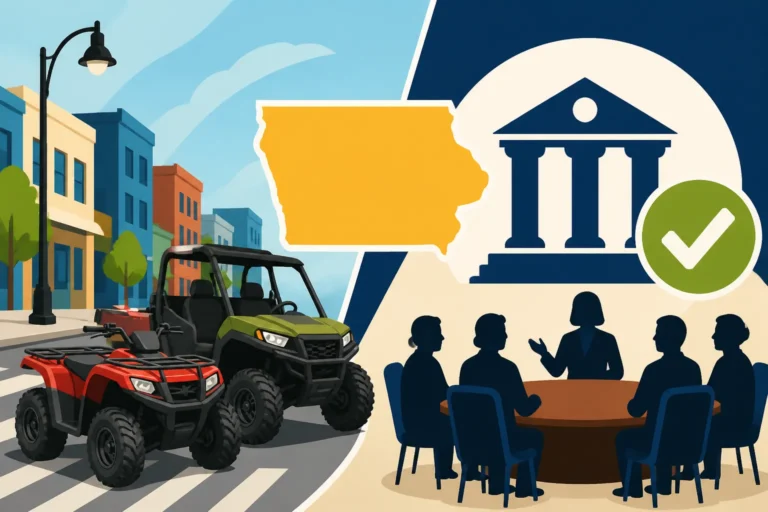
Things get a bit more complicated when you move from gravel to pavement. Paved secondary roads, also county-managed, are not automatically open to ATVs and UTVs. For an ATV or UTV to be ridden on a paved secondary road, the county board of supervisors must specifically authorize it. This often happens through a county ordinance that lists which specific paved roads, or all of them within the county, are open. The idea is to give local control over specific traffic patterns and safety concerns on these more heavily trafficked routes. Similarly, for city streets, the city council must pass an ordinance to allow ATVs and UTVs within city limits. This is why you might find that Waukon has opened its streets to ATVs and UTVs, while a neighboring town like Decorah has not. Before riding on any paved road or city street, it is absolutely essential to check with the specific county or city's ordinances. Ignoring this step could lead to a citation for illegal road use. This patchwork of local rules can be confusing, but it's a direct result of Iowa giving localities the power to assess their own unique road conditions and traffic flows. You can't just assume if one town allows it, the next one will.
The Absolute No-Go Zones: Interstates and Primary Highways
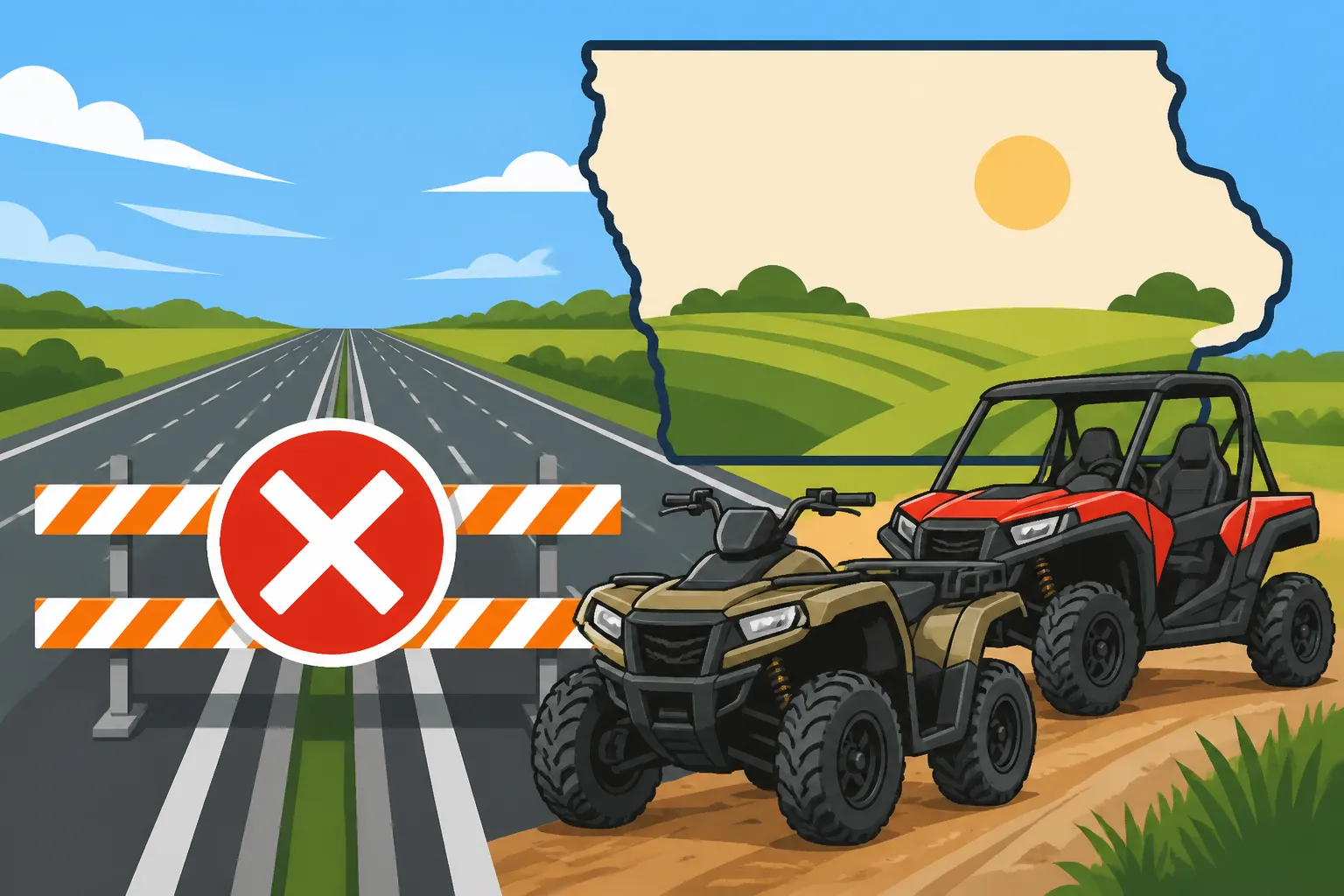
Now we get to the core of the matter: interstates and primary highways. These state-maintained roads, including all four-lane routes, are definitively closed to ATVs and UTVs in Iowa. There are no county or city ordinances that can override this state-level prohibition. This means you cannot ride your machine on roads like I-35, US-30, or even many of the multi-lane state highways that crisscross Iowa. This rule is firm, and for very good reason. These roads are designed for high-speed travel, typically with speed limits of 55 mph or higher, and often feature complex interchanges. An ATV or UTV, with its lower top speed, different handling characteristics, and less robust occupant protection, simply isn't built for that environment. Attempting to ride on these roads poses an extreme risk not just to the OHV operator, but to every other motorist on the road. The safety disparity is simply too great to permit such use.
The Specifics of Four-Lane Roads: Why They're Closed
The decision to keep four-lane roads closed to ATVs and UTVs isn't arbitrary; it's rooted in significant safety concerns and the fundamental design principles of these major arteries. These aren't your typical quiet country roads, and the risks associated with mixing OHVs with high-speed traffic are simply too high.
Traffic Volume and Speed Differential Concerns
One of the primary reasons four-lane roads remain closed to ATVs and UTVs is the sheer volume of traffic they carry, coupled with the dramatic speed differential between OHVs and conventional vehicles. Picture a UTV, even one equipped with all the [Iowa Horn Requirement for Road Use] and [Iowa Mirror Requirement for Road Use] gear, trying to merge onto a four-lane highway where cars are cruising at 65 or 70 mph. The UTV, by law, is limited to 35 mph on any permissible road, and many ATVs struggle to maintain even that speed comfortably for extended periods, especially with added weight or specific gearing.
This significant speed difference creates a hazardous situation. Faster vehicles would need to react quickly, brake hard, or swerve unexpectedly to avoid a slower-moving OHV. This increases the risk of rear-end collisions, multi-vehicle pile-ups, and sudden lane changes that can lead to loss of control, especially for large trucks or cars towing trailers. The more lanes there are, the more complex the traffic flow, and the more opportunities for these dangerous interactions. The state's goal is to ensure predictable traffic patterns and minimize scenarios that demand rapid, evasive maneuvers from drivers who aren't expecting a slow-moving off-highway vehicle.
Design and Engineering for Higher-Speed Travel
Four-lane roads, particularly primary highways and interstates, are specifically engineered for high-speed, controlled-access travel. They feature long merge lanes, dedicated turn lanes, and often lack the wide shoulders or easy pull-off points found on smaller rural roads. The design prioritizes continuous flow and minimizing interruptions. ATVs and UTVs, on the other hand, have a higher center of gravity, narrower track width (especially ATVs), and suspension systems tuned for absorbing impacts from rough terrain, not for stable, high-speed cornering or emergency braking on asphalt.
These machines can feel squirrelly at higher speeds on pavement, and a sudden need to brake or swerve could easily lead to loss of control or a rollover. Furthermore, the limited protection offered by an ATV or UTV in a collision with a passenger car or truck at highway speeds is stark. The vehicle's structure offers little to no crumple zone, and the rider is highly exposed. This fundamental mismatch between the engineering of the roads and the design of the machines makes them incompatible for shared use.
Limited Options for Safe Entry and Exit
Another critical aspect is the lack of safe entry and exit points for ATVs and UTVs on four-lane roads. These highways are designed with on-ramps and off-ramps built for acceleration and deceleration of standard vehicles. An ATV or UTV simply cannot achieve the necessary acceleration to safely merge into fast-moving traffic from a standstill on an on-ramp, nor can it safely decelerate and exit without impeding traffic flow. [Crossing a Multi-Lane Highway at an Intersection] might be allowed in very specific, limited circumstances if authorized locally, but riding along a multi-lane highway is entirely different.
Even if an OHV could somehow reach the speed limit, the act of merging or exiting creates severe bottlenecking and danger. There are no designated "ATV/UTV lanes" or slow vehicle pull-offs that could accommodate them safely. This structural incompatibility, combined with the speed and volume issues, solidifies the state's position that four-lane roads are simply not viable or safe routes for ATVs and UTVs. The risk of creating severe traffic hazards and contributing to serious accidents far outweighs any perceived convenience for riders.
Safety Implications and the Legislative Rationale
Every law and regulation regarding ATV and UTV use on Iowa roads, especially those prohibiting use on certain types of roads, stems from a fundamental concern for safety. It's not about making things difficult for riders; it's about protecting lives, both of those on the off-highway vehicles and those in conventional cars and trucks.
Protecting Riders and Other Motorists
The primary safety implication of allowing ATVs and UTVs on high-speed, four-lane roads would be a drastic increase in severe accidents. Imagine a typical Iowa family heading down a four-lane highway at 65 mph, perhaps with their kids in the back, and suddenly encountering a UTV puttering along at 35 mph. The reaction time for the car driver would be minimal, and the potential for a catastrophic rear-end collision would be incredibly high. ATVs and UTVs simply lack the robust safety features of cars, such as airbags, seatbelts (beyond lap belts in some UTVs), crumple zones, and enclosed cabins that offer protection in a crash. Even something as seemingly minor as a stone kicked up by a tractor-trailer could cause significant injury to an exposed ATV rider.
Furthermore, the handling characteristics of OHVs are not suited for the sustained speeds and dynamics of highway driving. Emergency maneuvers, like swerving to avoid an obstacle or braking hard, could easily lead to instability and rollovers, especially for ATVs. Legislators and safety experts understand these inherent vulnerabilities. Their decisions to restrict OHV access on major highways are not arbitrary but are based on accident statistics, vehicle design limitations, and the fundamental physics of high-speed collisions. The goal is to prevent tragic outcomes by keeping these vehicles out of environments where the risk of severe injury or fatality is profoundly elevated for everyone involved.
The Role of Local Control in Road Access Decisions
While the state maintains a firm stance on interstates and primary highways, it deliberately grants a significant degree of local control to counties and cities regarding their secondary roads and local streets. This approach acknowledges the vast differences in traffic patterns, road conditions, and community needs across Iowa. What works for a bustling suburban area might not make sense for a sparsely populated rural county.
For instance, a rural county board might decide to open all paved secondary roads to ATVs and UTVs because their paved roads see very little traffic and serve as essential connectors for farmers and recreational riders to access agricultural land or trailheads. Conversely, a city council in a more densely populated area might be hesitant to open their streets due to concerns about noise, congestion, or the safety of pedestrians and children. This local decision-making process allows communities to weigh the benefits of increased OHV access against potential drawbacks like increased traffic hazards, noise complaints, and wear and tear on local infrastructure. This legislative framework, which centralizes control for major state-run highways but decentralizes for local roads, is a pragmatic way to manage the diverse needs and challenges of ATV and UTV integration into Iowa's road network.
What Riders Can Do: Alternative Road Access and Transportation
While the limitations on four-lane roads might feel restrictive, Iowa riders still have plenty of options for enjoying their ATVs and UTVs, including legal road access on approved routes and effective ways to transport their machines to desired riding areas.
Utilizing Permitted Roadways for Direct Routes
Even with four-lane highways off-limits, Iowa's network of gravel and authorized paved secondary roads provides substantial opportunities for connecting trails, accessing private land, or simply enjoying a scenic ride. Many riders strategically plan their routes using these permissible roads to get to [The Most Direct Route to an Iowa OHV Park] or a friend's timber. These routes allow riders to experience the countryside, visit small towns, or reach trail systems like those at Bluff Creek or Gypsum City.
When using these roads, it's crucial to always carry your [Carrying the Certificate on an Iowa Ride] (registration certificate) and proof of insurance. Equip your machine with proper [Iowa ATV Lighting Requirements for ATVs], including headlights, taillights, and turn signals, and consider adding aftermarket accessories from SuperATV like a full rearview mirror system for enhanced visibility, especially on roads with unexpected curves or rises. Remember, the 35 mph speed limit is strictly enforced, and you must adhere to all rules of the road, just like any other vehicle. These roads, when used responsibly, are a fantastic resource for expanding your riding horizons beyond just the off-road parks.
Safe Trailering and Transporting Your Machine
For destinations beyond the reach of permissible roads, or for accessing the dedicated OHV parks, safe trailering is your best friend. Many Iowa riders opt to transport their ATVs or UTVs on trailers towed by a truck or SUV. This method completely bypasses the road legality issues, allowing you to take your machine directly to a staging area or trailhead without having to worry about what roads are open or closed. It’s also often the safest option for traveling long distances, as it reduces wear and tear on your OHV and protects you from the elements and road hazards.
When trailering, always ensure your machine is securely tied down with appropriate straps. Check your trailer lights and tires, and be mindful of the added length and weight when driving. For those hauling larger UTVs or multiple ATVs, a robust trailer can make all the difference, making the journey to places like Gypsum City OHV Park a breeze. Investing in good tie-downs and regularly inspecting your trailer ensures a safe and uneventful trip, allowing you to focus on the fun once you reach your riding destination.
Equipping Your ATV/UTV for Legal Road Use (where allowed)
If you plan to use your ATV or UTV on any of Iowa's permissible roads, it's not enough to just hope you have the right gear. You need to proactively equip your machine to meet all state requirements. As mentioned, this includes having proper [Iowa ATV Insurance Requirement], a valid driver's license, and registration. Beyond that, your machine needs to be visible and controllable for road conditions.
This means ensuring your headlights and taillights are fully functional and visible from appropriate distances. A horn that can be heard clearly by other motorists is essential. You'll also need a mirror, typically mounted to provide a view of the rear from the operator's position. For many riders, upgrading these components from stock to more robust and reliable aftermarket options is a wise choice. Brands like SuperATV offer a wide array of street-legal accessories, including mirrors, horn kits, and turn signal systems that are designed to integrate seamlessly with various ATV and UTV models, ensuring you meet the letter of the law and enhance your safety when venturing onto Iowa's legal roadways. Some riders even add a [Slow-Moving Vehicle Triangle] to the rear of their machine for extra visibility, although this might not be strictly mandated in all road-use scenarios, it's a good safety practice.
| Road Type | ATV/UTV Use Allowed? | Key Conditions/Requirements |
|---|---|---|
| Interstate Highways | No | State-level prohibition, designed for high-speed traffic |
| Primary Highways | No | State-level prohibition, includes all four-lane state roads |
| Unpaved Secondary Roads | Yes | Default is usually open; county discretion may apply for specific ones |
| Paved Secondary Roads | Yes, if county authorizes | County Board of Supervisors must pass an ordinance for specific roads |
| City Streets | Yes, if city authorizes | City Council must pass an ordinance for specific streets/areas |
| Private Land | Yes, with landowner permission | No state registration/permit needed on private land only |
Disclaimer
This article is for general informational purposes only and does not constitute professional advice. Laws, prices and regulations vary by location and change over time. Consult a qualified professional for guidance on your specific situation.