Iowa Rules for Riding a Paved Secondary Road
It’s a common dream for many Iowa ATV and UTV owners: being able to easily hop on their machine and traverse paved secondary roads to get to a local trail system, a friend’s house, or even just cruise through the countryside. However, the reality of navigating Iowa’s road laws for off-highway vehicles (OHVs) can feel like trying to untangle a ball of barbed wire, especially when it comes to paved surfaces. This guide will walk you through the very specific and often restrictive rules governing ATV and UTV use on Iowa’s paved secondary roads, helping you understand where you can and cannot ride, and what your machine needs to have if you ever get the green light.
The Core Rule: Paved Secondary Roads Are Generally Closed Unless Authorized
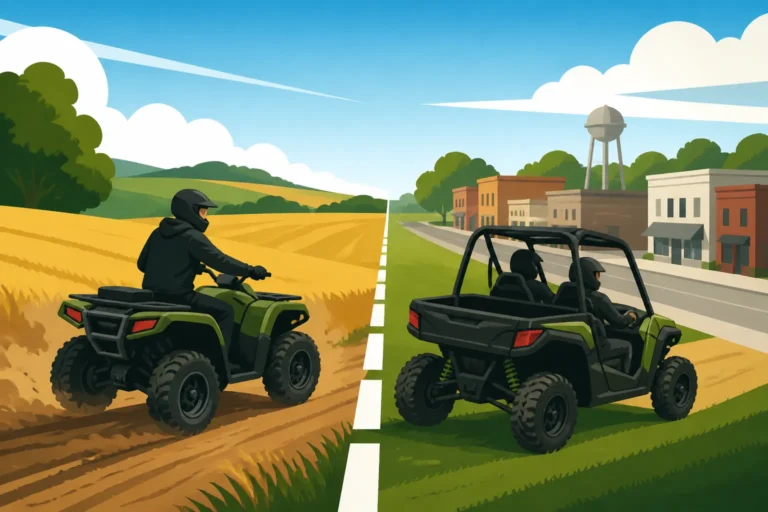
Let's get right to the heart of the matter: unlike many unpaved roads, paved secondary roads in Iowa are generally not open to ATV and UTV traffic by default. This often comes as a surprise, or even a deep frustration, to riders who see plenty of gravel roads they can use. You might think, "If I can ride gravel, why not pavement?" But Iowa law makes a very clear distinction, placing the burden of authorization squarely on local county governments. This means that if you're planning to ride your ATV or UTV on any paved secondary road, you absolutely must verify that the specific county you're in has passed an ordinance to allow it. Otherwise, you’re looking at a potential citation.
Why the Distinction Between Paved and Unpaved Matters
This distinction between gravel and paved roads is one of the most common points of confusion for riders, and it's easy to see why. From a rider's perspective, both are public roads, and both are part of the county's infrastructure. However, the legal framework differentiates them significantly. [Unpaved County Secondary Roads in Iowa] are generally open to ATVs and UTVs with certain conditions, while their paved counterparts are treated differently due to concerns often cited around traffic safety, vehicle speeds, and the wear and tear on paved surfaces. Paved roads are typically designed for higher-speed motor vehicle traffic, and the presence of slower-moving, sometimes less visible OHVs can be perceived as increasing accident risks. This legislative approach tries to balance recreational opportunities with public safety, even if it feels restrictive to the riding community.
The Local Authority Hurdle: Who Actually Gets to Open Paved Roads?
So, who holds the keys to opening paved secondary roads for OHV use? It’s not the state, but rather the individual county boards of supervisors. Each of Iowa's 99 counties has the autonomy to decide whether to permit ATVs and UTVs on their paved secondary roads, or even specific segments of them. This means that rules can vary dramatically from one county line to the next. What's legal in Allamakee County might be strictly forbidden in Mahaska County. This hyper-local control often leaves riders feeling adrift, as there’s no single statewide map or proclamation you can check. It requires proactive research into the specific ordinances of every county you plan to ride in, adding a layer of complexity to planning a simple outing. The process for [How a County Board Votes to Open Pavement] can be lengthy, involve public hearings, and often faces opposition, making these authorizations less common than riders might hope.
What It Takes for a County to Open Paved Secondary Roads
For a county to open any of its paved secondary roads to ATV and UTV traffic, it's not a casual decision; it requires a formal resolution or ordinance passed by the county board of supervisors. This isn't just a nod and a wink; it's a legislative act at the local level. This often involves public input, discussions about safety, infrastructure impact, and the general sentiment of the community. Many counties opt not to open their paved roads due to various concerns, meaning that even if you live in an OHV-friendly county for gravel, the paved sections might remain off-limits.
The Resolution Process: Local Governance in Action
When a county board considers opening paved secondary roads, they often go through a structured process. This typically involves:
- Public Hearings: Citizens, riding clubs, and law enforcement agencies are usually invited to provide input. Riders might advocate for access, while others might express concerns about noise, safety, or property values.
- Safety Studies: The county might review accident data or conduct traffic studies to assess the potential impact of OHVs on paved roads. This often includes looking at sightlines, traffic volumes, and speed differentials.
- Jurisdictional Coordination: The county may coordinate with any cities or towns within its borders, as well as the Iowa Department of Transportation (DOT) if state highways are involved (though OHVs are generally prohibited on state primary highways).
- Drafting and Voting: If the board decides to proceed, they will draft a resolution or ordinance specifying which roads, if any, will be opened, under what conditions (e.g., specific hours, routes), and with what equipment requirements. This resolution then goes to a vote.
This multi-step process means that such authorizations are not quickly granted. Many county boards are hesitant to open paved roads, often preferring to maintain the status quo to avoid perceived risks or administrative burdens.
The Impact on Riders: Navigating Authorized Paved Routes
If, by some stroke of luck, your county does authorize the use of ATVs and UTVs on certain paved secondary roads, it's crucial to understand the limitations that almost always come with such an authorization. These are rarely blanket permissions. You might find that:
- Specific Roads Only: Only certain designated paved roads are open, often connecting gravel sections or providing access to trailheads. You can’t just assume all paved secondary roads are fair game.
- Time Restrictions: Riding might only be permitted during daylight hours or specific seasons.
- Equipment Requirements: Even more stringent equipment rules might apply than for gravel roads, emphasizing visibility and safety features.
- "Most Direct Route" Rules: You might only be allowed on paved roads as the most direct route to get from one legal riding area to another, or to a gas station or repair shop, rather than for leisurely cruising. [The Most Direct Route to an Iowa OHV Park] is a common stipulation.
Understanding these nuances is vital. A general authorization doesn't mean you can throw caution to the wind. Riders must still adhere to all traffic laws, respect private property, and be acutely aware of their surroundings, particularly on paved surfaces where traffic speeds are higher.
Specific Requirements for Paved Road Riding (When Permitted)
Let’s be absolutely clear: even if a county does open its paved secondary roads, simply having an ATV or UTV and a registration decal isn't enough. There are very specific requirements your machine and you, as the operator, must meet. These aren’t suggestions; they are legal mandates designed to ensure safety and integrate OHVs into the flow of road traffic. Missing even one of these can lead to a hefty fine, so it’s critical to prepare your machine properly.
Driver Requirements and Machine Setup
First and foremost, the driver needs to be properly qualified. [Iowa Minimum Age to Ride a Road] states you must be at least 18 years old to operate an ATV or UTV on any public road in Iowa, including paved secondary roads. Furthermore, you must possess a valid driver's license. Your machine, whether it’s a quad, a side-by-side, or a dirt bike (if legally considered an OHV in this context), needs to be equipped as if it were a low-speed vehicle, or at least meets comparable safety standards.
Here's a breakdown of the essential equipment:
- Headlights and Taillights: Your machine needs at least one headlight and one taillight, which must be illuminated at all times when operating on a public road, even in broad daylight. This drastically improves your visibility to other motorists.
- Brakes: A functional braking system, capable of stopping the vehicle safely, is non-negotiable.
- Mirrors: At least one rearview mirror is required. Many riders opt for two for better situational awareness, especially with companies like SuperATV offering robust and easy-to-install mirrors that can withstand off-road vibrations but are designed for road visibility.
- Horn: A working horn or warning device is necessary for signaling other vehicles or pedestrians.
- Slow-Moving Vehicle Sign: This distinctive reflective orange triangle must be displayed on the rear of your machine. It’s a crucial visual cue for drivers approaching from behind, indicating your vehicle will be traveling at a lower speed.
- Muffler and Spark Arrester: All machines must have a working muffler and a U.S. Forest Service-approved spark arrester to control noise and prevent wildfires.
It's vital that all these components are in good working order. A roadside check by a deputy or a DNR officer will quickly uncover any deficiencies, potentially leading to a citation. For additional visibility, especially with smaller ATVs, many riders add extra lighting or reflective tape, even if not strictly mandated. [Iowa Lighting Requirements for ATVs] and [Iowa Slow-Moving Vehicle Sign Rules] are key resources here.
Speed Limits and Insurance: Non-Negotiables for Road Use
Beyond the equipment, two other aspects are absolutely non-negotiable: your speed and your insurance coverage.
- The 35 mph Cap: Iowa law imposes a strict speed limit of 35 mph for ATVs and UTVs on public roads, including any paved secondary roads that are open. This isn't a suggestion; it's a hard limit. Exceeding it can lead to a citation for speeding, just as in a regular car. This lower speed limit is another reason why OHVs are often viewed as incompatible with higher-speed paved roads.
- Mandatory Insurance: Just like with cars, operating an ATV or UTV on any public road in Iowa requires valid liability insurance. The minimum coverage amounts are specific: $20,000 for bodily injury or death of one person, $40,000 for bodily injury or death of two or more people, and $15,000 for property damage. Not having proof of insurance can result in a significant fine. Make sure to carry your insurance card with you whenever you ride on public roads. [Iowa ATV Insurance Requirement] details these critical mandates.
Other Restrictions and Best Practices
Even when legally permitted on paved secondary roads, there are other rules and best practices to keep in mind:
- Most Direct Route: Often, if paved roads are opened, it's under the condition that you use them for the "most direct route" to connect to another legal riding area (like an OHV park or a stretch of gravel road), or to access services like fuel or repairs. This isn't an invitation for joyriding on pavement.
- Ditch Riding: While ditch riding can be permissible on certain [Iowa Rules for Riding a Gravel Road] segments or county-level B roads, it is generally not allowed on paved secondary roads. The ditches alongside paved roads are often more hazardous, with deeper culverts, hidden obstacles, and closer proximity to higher-speed traffic.
- Crossing Highways: If you need to cross a paved state primary highway (which OHVs cannot legally ride on), you must do so at a 90-degree angle, only after stopping and yielding to all traffic. This is a quick and direct crossing, not a ride on the highway.
- Visibility: Always assume other drivers don't see you. Wear bright colors, use your lights, and consider adding reflective elements to your gear or machine. Products from SuperATV, for instance, include brighter LED light bars and whip lights that can enhance your visibility.
Riding responsibly and safely is key to maintaining any existing road access and preventing further restrictions.
| Requirement Category | Specific Mandate | Why It Matters |
|---|---|---|
| Operator | 18+ Years Old | Legal adult responsibility, increased experience assumed. |
| Valid Driver's License | Demonstrates basic understanding of traffic laws. | |
| Machine | Headlight (at least one, always on) | Crucial for visibility to oncoming traffic. |
| Taillight (at least one, always on) | Alerts drivers approaching from behind. | |
| At least one rearview mirror | Essential for operator to monitor traffic behind them. | |
| Functioning horn/warning device | Allows operator to signal intentions or alert others. | |
| Slow-Moving Vehicle (SMV) sign on rear | Clearly identifies vehicle as traveling under normal road speeds. | |
| Functional brakes | Basic safety equipment for all road vehicles. | |
| Muffler and Spark Arrester | Noise control and fire prevention. | |
| Operational | 35 mph Speed Limit | Reduces speed differential with other traffic, minimizes risk. |
| Liability Insurance (20/40/15 minimums) | Financial protection in case of an accident. | |
| Adherence to "Most Direct Route" (if applicable) | Limits recreational riding on higher-risk paved surfaces. |
Finding Out if Your County Has Authorized Paved Road Use
Given the hyper-local nature of these rules, one of the biggest challenges for riders is actually figuring out what’s allowed in a particular county. There isn't a central state database or an easy-to-read map that shows which paved secondary roads are open to ATVs and UTVs across Iowa. This can be incredibly frustrating when you just want to plan a safe and legal ride. The burden falls squarely on you, the rider, to do your homework before you ever put a tire on pavement.
How to Check Your Local Ordinances
The most reliable way to find out if a county has opened its paved secondary roads is to contact the county directly. Here’s how you can approach it:
- County Recorder's Office: Often, the county recorder's office maintains records of all county ordinances. You can call or visit their office and specifically ask about resolutions or ordinances pertaining to ATV and UTV use on paved secondary roads. They should be able to direct you to the relevant sections of county code or provide copies of any applicable resolutions.
- County Board of Supervisors: The board of supervisors is the governing body that would pass such an ordinance. Their office or clerk might have the information readily available, or they can guide you to where it's published.
- County Sheriff's Office: While not their primary role to provide legal advice, a quick, polite call to the non-emergency line of the county sheriff's office can sometimes provide a quick answer or at least point you in the right direction. They are, after all, the ones who enforce these laws.
When you call, be specific. Ask, "Has [County Name] County passed any resolutions or ordinances allowing ATVs or UTVs on paved secondary roads?" Emphasize "paved" to avoid confusion with the more common allowance on gravel roads. Remember, what applies to [Unpaved County Secondary Roads in Iowa] often does not apply to paved ones.
The Risk of Assuming: Consequences of Riding Illegally on Paved Roads
Assuming that a paved secondary road is open to OHVs simply because a gravel road nearby is, or because you saw someone else riding there, is a very risky gamble. Ignorance of the law is not a valid defense, and the consequences of riding illegally can be quite severe.
- Fines and Penalties: Iowa law enforcement, including county sheriffs and DNR conservation officers, can issue citations for operating an ATV or UTV illegally on paved roads. These [Iowa Fines for Illegal ATV Road Use] can add up quickly, especially if combined with other violations like not having proper equipment or insurance.
- Impoundment: In some cases, your machine could be impounded, adding towing and storage fees on top of the fines.
- Increased Insurance Premiums: A citation for illegal road use could negatively impact your insurance record and lead to higher premiums.
- Safety Risks: Beyond the legal ramifications, the safety risk of riding an OHV on a paved road not designed or authorized for such use is significant. Other drivers may not expect to see an ATV or UTV, leading to accidents.
It's a stark reminder that while the freedom of the ride is appealing, operating an OHV on Iowa's paved secondary roads requires diligence, preparation, and adherence to very specific, local rules. If in doubt, stick to designated OHV parks or clearly authorized [Iowa Rules for Riding a Gravel Road].
Disclaimer
This article is for general informational purposes only and does not constitute professional advice. Laws, prices and regulations vary by location and change over time. Consult a qualified professional for guidance on your specific situation.