Iowa Rules for Night Riding at a Park
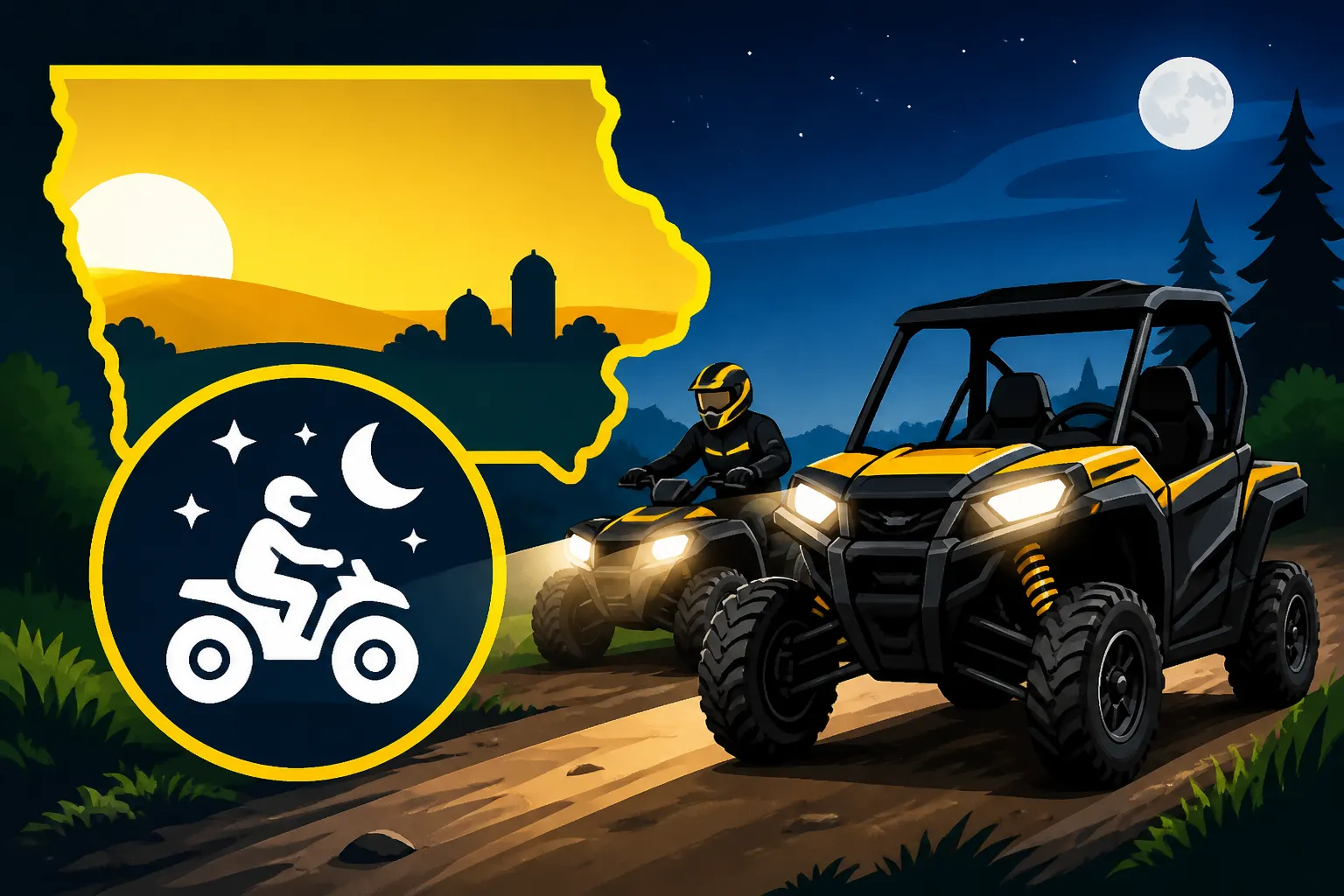
Riding after dark at an Iowa OHV park depends on more than whether your machine has headlights. Park hours, posted rules, trail closures and equipment requirements can all affect whether a night ride is allowed. Check those details before loading up, then plan for reduced visibility, changing trail conditions and a safe way back to the staging area.
Confirm the park allows riding after dark
There is no safe assumption that an OHV park stays open for riding just because its gate or campground is accessible after sunset. Riding hours can differ from camping hours, and rules may vary by facility. A park may close its trails at a set time, restrict riding to daylight, or announce temporary changes because of weather, maintenance or an event.
Before you leave, check the park’s current operating information and any notices posted by the managing club, county or agency. If the written information is unclear, contact the park or managing organization and ask specifically whether trail riding is permitted after sunset. Ask whether the answer applies to the trails you plan to use, not just the campground or parking area.
The distinction matters: permission to enter a park or stay overnight does not necessarily mean permission to ride its trails at night. Likewise, having a current Iowa registration decal or visitor permit does not grant access outside the park’s operating hours. The decal or permit addresses machine requirements; it does not override local operating rules. For background on the access pass, see Your Registration Decal Is the Park Admission and Iowa’s Nonresident User Permit.
| What to check | Why it matters |
|---|---|
| Riding hours | The trails may close before the campground or parking area does. |
| Night-riding restrictions | A park may prohibit riding after dark even if the trails remain physically accessible. |
| Trail status | A specific route may be closed because of weather, damage, maintenance or an event. |
| Lighting and equipment rules | Park requirements and applicable state rules may specify what your machine needs at night. |
| Visitor requirements | A nonresident permit or home-state registration does not replace park rules. |
| Return and gate arrangements | You need to know how to leave safely and whether access changes at closing time. |
Check again on the day of your ride. A page you reviewed earlier may not reflect a same-day closure or a changed schedule. Iowa Trail Closures to Check First and Iowa OHV Park Hours can help you build that check into your trip planning.
If a rule is not clear, do not rely on another rider’s recollection or assume that a park allows night riding because it has lights or a campground. Get a direct answer from the park contact or follow the more restrictive posted direction. When a park does not publish clear night-riding permission, planning a daylight ride is the prudent choice.
Separate trail riding from road riding
Road rules and OHV-park rules are not interchangeable. A machine’s equipment for operating on a road may be governed by different requirements from its equipment for riding a designated trail. Conversely, a machine that is acceptable for a daytime trail ride may not meet the requirements that apply after dark.
Do not use a road-use checklist as your only guide to park riding. Confirm the park’s own equipment rules and check the current rules that apply to your machine and location. If your route leaves the park and uses a public road, that is a separate question: road access can have its own lighting, registration, insurance and operator requirements.
Prepare the machine for darkness
If night riding is allowed, start with the machine. Test the headlights before you arrive, not after sunset at the trailhead. Confirm that the lights stay on when the engine is running, point where you need them, and do not flicker when the machine hits bumps. Check the taillight too if your machine has one or the applicable rules require it. A weak battery, damaged wiring or a loose connector can turn a planned ride into a walk back.
Use lighting that helps you see the trail without making it harder for other riders to see. A forward light should illuminate the route ahead rather than aim directly into another rider’s eyes. Keep lenses clean, secure any added lights firmly, and route wiring away from hot or moving parts. If you add equipment, make sure the setup is compatible with the machine and allowed by the park.
A bright beam does not make a trail safe at speed. At night, a rider may see a turn, rut, branch or approaching machine later than in daylight. Reduce speed enough to stop within the distance you can see clearly. Give yourself more room than usual, especially on narrow trails, near intersections and on uneven ground.
Before heading out, check:
- Headlights and any required rear lighting.
- Tires, brakes, steering and controls.
- Fuel or battery charge for the planned ride, with a reserve for delays.
- The machine’s registration or permit documents, where required.
- A charged phone or other communication device, while recognizing that service may be limited.
- A first-aid kit, basic tools and a way to contact help.
A spare flashlight is useful if a machine light fails, but it is not a substitute for required vehicle lighting or park permission. If you shop for replacement or auxiliary lights through Amazon, check the fit, wiring requirements, durability and the park’s rules before buying or installing them. Product descriptions alone do not establish that a light is suitable for your machine or allowed at a particular park.
Wear a helmet and protective gear suitable for the ride. Darkness makes it harder for riders to judge distance and spot one another, so visible clothing and reflective details can help others notice you. They do not replace lights, safe spacing or a controlled speed. Review Iowa Helmet Rules at an OHV Park and the park’s own protective-equipment requirements before you go.
Ride conservatively and stay on open trails
Night changes how quickly you can read the trail. A familiar route may look different when shadows hide dips, loose material and changes in slope. Do not assume that knowing a trail in daylight means you can ride it at the same pace after dark. Start with a short, familiar loop if the park allows it, and turn back if visibility, weather or fatigue makes the route difficult to manage.
Keep the group together without crowding. Agree on a lead rider, a sweep rider and a simple plan for what to do if someone stops or falls behind. Leave enough space for each person to see the route without staring into the vehicle ahead. At junctions, wait until the group is accounted for before continuing. Avoid splitting up to search for a rider unless the group has a safe, agreed plan.
Stay on marked, open trails. Do not use a closed trail as a shortcut because it looks passable, and do not ride off the marked route to get around a muddy patch or obstacle. Closures can protect riders from hazards as well as prevent trail damage. Darkness makes it especially easy to miss a marker or misjudge the edge of a trail. Review Iowa Rules for Riding a Designated Riding Area and Iowa Rules for Riding a Closed Trail before your trip.
Give other trail users room. Slow down early when approaching another machine, a pedestrian or a blind bend. Avoid sudden high beams or added lights aimed toward oncoming riders. If dust, rain, fog or vegetation glare reduces your view, stop somewhere safe and reassess rather than pressing on.
Trail conditions also matter. Wet ground can hide ruts, reduce traction and make a familiar section harder to ride. A trail may be closed after rain even if the weather has cleared by the time you arrive. Check Iowa Trail Conditions Before You Ride, and follow any posted closure rather than trying to judge from the parking lot.
If the trail is darker, rougher or more confusing than expected, turn around while you still have a clear route back. Continuing simply because the group planned a longer ride can increase the chance of getting separated, damaging the machine or needing assistance after the park has closed.
Plan the ride, group and return
A useful night-riding plan begins before sunset. Choose a route that fits your group’s ability, estimate how long it will take at a cautious pace, and leave enough time to return before the park’s riding cutoff. Avoid starting a long loop near closing time. If the park’s hours or after-dark policy are uncertain, choose a daylight outing instead.
Make sure every rider understands the plan. Share the route, the expected return time and what to do if the group separates. Riders should know the meeting point and the location of the staging area. If someone is unfamiliar with the park, explain trail markings and intersections before setting out. A map can be useful, but it is not permission to use a closed route; check Iowa Trail Maps From the DNR alongside current park notices.
For a group with young riders, confirm the rules that apply to the machine and the rider’s age before departure. Supervision, safety-course and equipment requirements may depend on the circumstances. Do not assume that a child can ride simply because an adult is present or because the group stays within a park. See Iowa’s Safety Certificate for Ages 12 to 17 and confirm any additional park-specific rules.
Keep the ride within the group’s limits. A new rider may be comfortable on a short, easy trail in daylight but struggle when visibility drops. A wide or heavy machine can also need more room to turn and stop than a smaller one. Choose a route that lets everyone ride steadily without pressure to keep up with a faster machine.
Before leaving home, have a backup plan for a closure or a change in conditions. Check whether another riding area is open, but do not assume a second park has the same hours or night rules. If the original park closes, do not ride outside its boundary or continue on an unapproved route. A canceled ride is safer and less costly than a citation, a damaged trail or a late-night recovery.
A quick pre-ride routine helps avoid preventable problems:
- Confirm current park hours, night-riding permission and any trail closures.
- Verify registration or visitor-permit requirements for every machine.
- Check lights, controls, tires, fuel or battery charge, and protective gear.
- Set a route, regrouping points and a return time.
- Ride at a speed that leaves enough distance to stop within the visible trail.
- Turn back if conditions, visibility or the group’s ability no longer match the plan.
The central rule is straightforward: ride after dark only when the park allows it, and treat the posted hours and closures as controlling. Good lighting and careful riding reduce risk, but they cannot make an unauthorized or closed trail ride acceptable.
Disclaimer
This article is for general informational purposes only and does not constitute professional advice. Laws, prices and regulations vary by location and change over time. Consult a qualified professional for guidance on your specific situation.