Iowa Rules for Riding Without a License on a Farm
It's a common scene: you're out on your Iowa farm, needing to quickly move from the barn to the back forty, or check on livestock, and your ATV or UTV is the perfect tool for the job. But then a nagging thought pops up – do I really need a driver's license just to operate this machine on my own property? It's a question that can cause a lot of head-scratching and worry, especially for those who primarily use their machines for agricultural purposes. This guide is here to clear up the confusion surrounding Iowa's rules for riding an ATV or UTV without a license specifically when you're working on your farm, ensuring you can tend to your land without unnecessary stress.
Understanding Iowa's Core Driver's License Requirement for ATVs and UTVs
When we talk about operating any motor vehicle, our minds often jump straight to the requirement of a valid driver's license. For most recreational activities involving ATVs and UTVs in Iowa, that initial assumption holds true. If you're planning to ride your machine on public roads, trails, or any other public land that allows ATVs and UTVs, the state of Iowa generally requires the operator to hold a valid driver's license. This isn't just a random bureaucratic hurdle; it's rooted in ensuring the safety of everyone sharing these spaces. Public roads, even unpaved secondary ones, come with inherent risks and responsibilities. Operators need to understand traffic laws, be capable of operating the vehicle safely, and react appropriately to other vehicles, pedestrians, and cyclists.
The frustration many riders experience stems from this baseline rule. It feels counterintuitive to need a license for a piece of equipment that, in many cases, is primarily used as a workhorse on private property. The state sees public roadways as shared infrastructure, where certain standards must be met to minimize accidents and ensure a degree of competency. This is why [Iowa Driver's License Rules for ATVs] exist in the first place, setting a clear expectation for anyone venturing onto public ways. The requirement covers a broad range of scenarios, from taking your machine to a designated OHV park to simply crossing a public road to get to another part of your property. However, this general rule has specific, crucial exceptions, particularly for agricultural use on private land.
The Specific Farm Exemption: What It Means for Iowa Riders
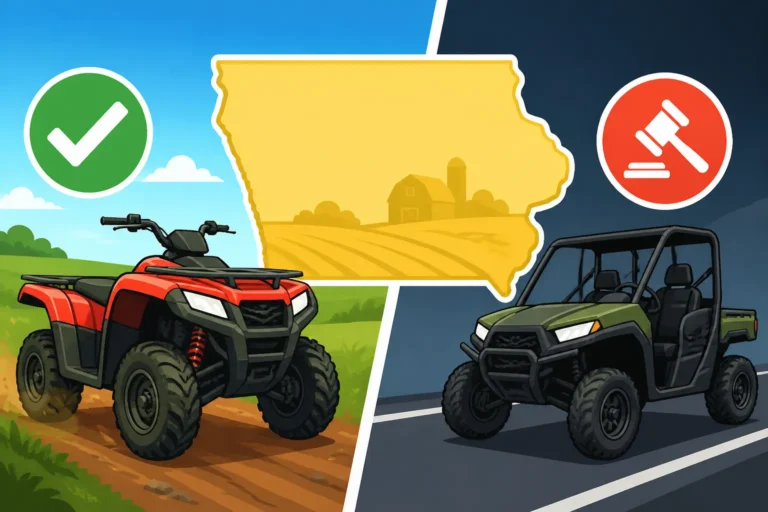
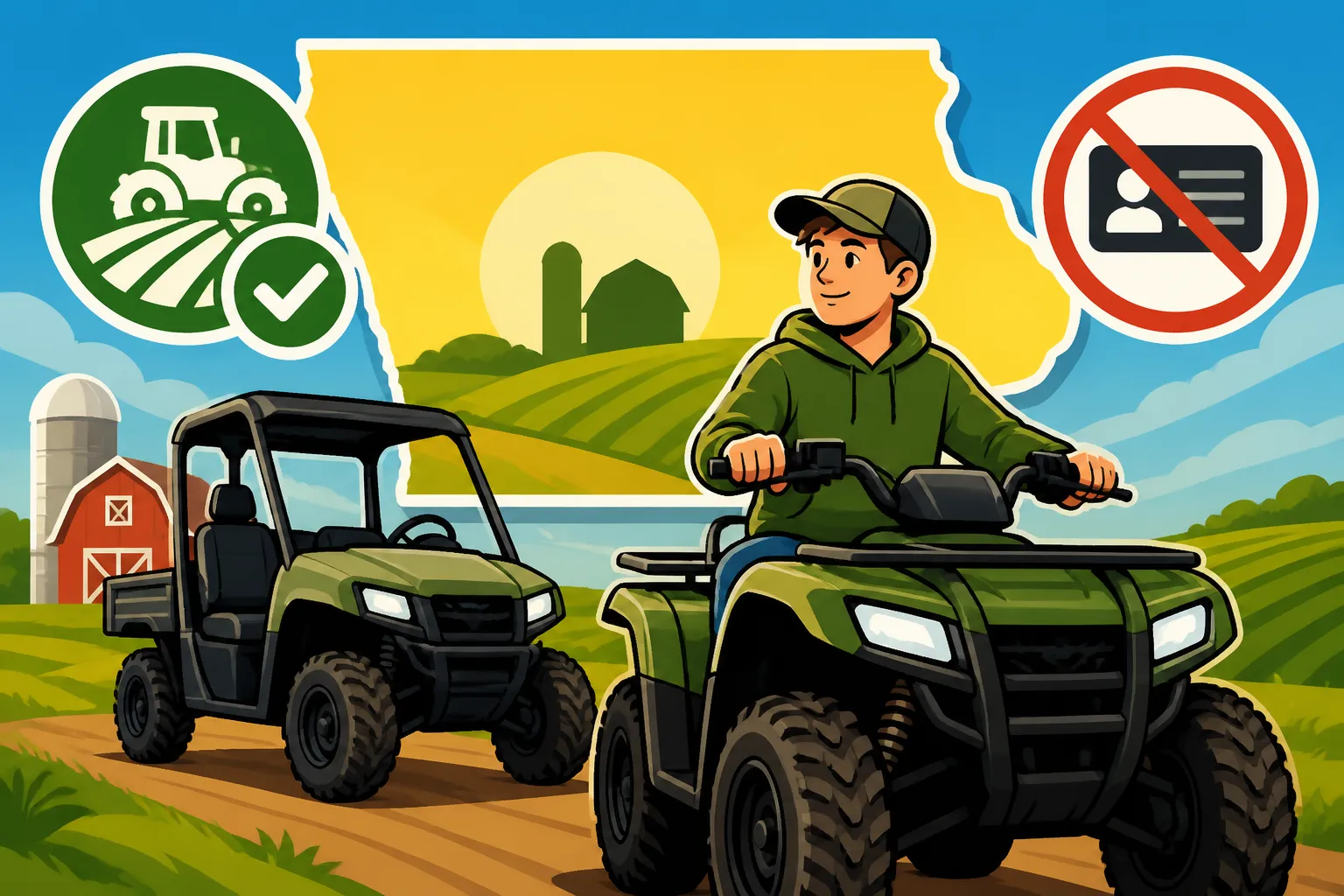
Now, let's get to the heart of the matter for those of us living and working on the land. Iowa law carves out a very important exemption for the operation of ATVs and UTVs when they are being used for agricultural purposes on private land. This means that if you're tending to your farm, managing crops, checking livestock, or performing other duties directly related to the operation of an agricultural business, you generally do not need a driver's license to operate your ATV or UTV, provided you stay on your own property or land you have permission to farm.
This exemption recognizes ATVs and UTVs not as recreational toys in this context, but as vital tools for modern farming. Just as you wouldn't typically need a driver's license to operate a tractor or combine solely within the confines of your farm, the same logic extends to these smaller, more versatile machines. The intent here is to facilitate agricultural work, not to add unnecessary burdens to farmers. It's a pragmatic approach to how these machines are genuinely used day-to-day across Iowa's vast farmlands. This provision is a huge relief for many farm families, allowing younger family members or farmhands to assist with chores without needing to jump through licensing hoops that are designed for public road use.
Who Can Ride Without a License Under This Exemption?
The beauty of this farm exemption is its practical scope, covering those directly involved in the farming operation. Generally speaking, anyone operating the ATV or UTV for bona fide agricultural purposes on the farm property can do so without a state-issued driver's license. This typically includes:
- The landowner or leaseholder: The primary operator of the farm.
- Immediate family members: Spouses, children, and other direct relatives who live on or assist with the farm.
- Employees or hired hands: Individuals employed by the farm to carry out agricultural tasks.
It's important to differentiate this from general public road requirements. On private farm land, there isn't a state-mandated minimum age for ATV or UTV operation linked to licensing, as there would be for public roads. However, common sense and safety still prevail. Parents or farm owners are responsible for ensuring that anyone operating a machine on their property, especially younger or inexperienced riders, does so safely and under appropriate supervision. While Iowa has specific safety certificate requirements for certain ages when riding on public land, these do not apply when the machine is used strictly for farm work on private property.
Defining "Agricultural Purposes" on Your Farm
Understanding what "agricultural purposes" truly means is key to confidently applying this exemption. It's not a vague concept; it refers to activities directly related to the business of farming, ranching, or other agricultural operations. Think about the daily tasks that keep a farm running. This can include:
- Checking fences and irrigation systems: Covering large fields quickly to inspect infrastructure.
- Moving feed and supplies: Transporting bags of seed, tools, or small equipment to various locations on the farm.
- Herding livestock: Using the machine to move cattle, sheep, or other animals.
- Accessing remote fields for crop inspection or repairs: Reaching areas that are difficult to get to with larger vehicles.
- Spraying weeds or applying fertilizer: Utilizing spray attachments for targeted application.
- Hunting on your own property as part of predator control: If removing nuisance wildlife is essential to protecting livestock or crops, it falls under an agricultural purpose.
What this exemption generally doesn't cover is recreational riding, joyriding, or using the ATV or UTV for non-farm related activities, even if they happen to occur on your private land. For example, taking your machine out for an evening cruise on your trails just for fun, or using it to drive to a fishing spot on your property not directly related to farm work, typically falls outside the strict definition of agricultural use. The spirit of the law is to support the working farm, and the use of the machine must align with that intention. Accessories from companies like SuperATV, designed for utility and durability, can greatly enhance a machine's capability for these very agricultural tasks, from heavy-duty cargo boxes to plows, making it an even more indispensable farm tool.
Key Conditions and Limitations of the Farm Exemption
While the farm exemption offers significant freedom for agricultural operations, it's absolutely critical to understand its boundaries. This isn't a blanket pass to operate an ATV or UTV anywhere without a license; it's a narrowly defined exemption that applies specifically to certain circumstances. The moment you step outside these conditions, the standard rules for vehicle operation, including licensing and registration, snap back into place. Overlooking these limitations can lead to unwanted legal trouble, despite your best intentions as a farmer simply trying to get work done.
Many farmers understandably have large tracts of land, and the lines between private property, ditches, and public roads can sometimes feel blurred. It’s this grey area where the most common misunderstandings arise, highlighting the importance of clear knowledge of [Iowa's Rules for Riding a Ditch]. While ditches adjacent to farm fields might feel like part of the farm, they are often considered part of the public right-of-way, and riding there without the proper licensing and registration is usually prohibited.
Staying Strictly on Private Farm Property
This is perhaps the most crucial condition of the farm exemption: it applies only when the ATV or UTV is being operated on private property that is part of the farm. The moment your wheels touch a public road, a public ditch, or any other public right-of-way, the exemption typically ceases to apply. This includes:
- Public gravel roads: Even if these roads border your farm fields, they are public.
- Paved county roads: Clearly public thoroughfares.
- Roadside ditches: As mentioned, these are usually considered public property.
- Township roads: Small, local roads that are still public.
- Public trails or easements: Any land specifically designated for public access.
If you stray even a few feet onto a public road, for example, to get to an adjacent field, you are generally no longer covered by the farm exemption. In that scenario, the operator would typically need a valid driver's license, and the machine itself would need to be properly registered and potentially insured for road use, even if the primary purpose is agricultural. The intent here is to prevent farm vehicles from inadvertently becoming public road hazards. So, while your SuperATV winch might be invaluable for pulling out a fence post on your land, using it to help a neighbor who is stuck on a public road would put you in a different legal category if you're not licensed.
When Your ATV or UTV Stops Being an "Implement of Husbandry"
The concept of an "implement of husbandry" is closely tied to this exemption, even though that term more directly relates to road use rules for large farm equipment. Essentially, when your ATV or UTV is being used directly and exclusively for agricultural purposes on your farm, it is treated much like other farm equipment. However, if the primary use shifts from farm work to recreational activity, even on your own land, its status in the eyes of the law can change.
For instance, if you attach a plow to your UTV and use it to clear snow from your farm lanes, it's definitely an agricultural purpose. But if you then use that same UTV, even with the plow still attached, to go joyriding around your property with friends who are visiting for a weekend, it's harder to argue that it's solely for agricultural purposes. The function and intent of the ride become paramount. While you wouldn't typically need a license for the recreational ride on your own property either (unless crossing public roads), the reason for the exemption regarding agricultural work becomes less relevant. This distinction is vital when considering [When a Quad Counts as an Implement of Husbandry], which helps clarify when certain farm-related road exemptions might apply, further emphasizing the difference between farm use and general recreational riding.
Practical Considerations for Farmers and Landowners
Even with the farm exemption firmly in place, giving you the freedom to operate your ATV or UTV without a license on your own land, practical considerations around safety and responsibility never take a backseat. The law might not require a license, but common sense and good stewardship demand that you approach the operation of these powerful machines with the utmost care. Farm life is inherently risky, and adding ATVs and UTVs to the mix, especially with multiple operators, necessitates clear guidelines and thoughtful planning.
For any farm owner, ensuring the safety of themselves, their family, and their employees is paramount. This means going beyond the letter of the law and implementing best practices that reflect the real-world dangers of operating off-road vehicles. This includes thinking about training, machine maintenance, and having a clear understanding of what happens when farm work necessitates venturing even briefly beyond the private boundaries.
Safety Best Practices, License or Not
A driver's license proves a certain level of competency for road use, but it doesn't guarantee safety, especially in the varied and often challenging terrain of a farm. Therefore, even when a license isn't required, adopting rigorous safety practices is non-negotiable:
- Helmets and Protective Gear: Always encourage or mandate the use of helmets, especially for younger or less experienced riders. Eye protection, gloves, and sturdy footwear are also critical.
- Manufacturer Recommendations: Adhere to the manufacturer's guidelines regarding age, weight limits, and passenger capacity. Youth machines, for example, are designed for specific age ranges for a reason. [Youth Machine Sizes and Iowa Rules] are important considerations here.
- Terrain Awareness: Farms often have varied terrain – steep grades, muddy areas, ditches, and uneven fields. Operators should be intimately familiar with the land and avoid areas that are too dangerous for the machine or their skill level.
- Machine Maintenance: A well-maintained machine is a safer machine. Regularly check tires, brakes, lights, fluid levels, and steering components. Aftermarket parts from companies like SuperATV can often enhance safety and durability, such as heavy-duty tie rods or upgraded suspension components, which are crucial for farm work.
- No Impaired Operation: Never operate an ATV or UTV under the influence of alcohol or drugs, even on private land. This is a recipe for disaster.
- Training and Supervision: Provide thorough training for all operators, especially those new to a specific machine or to ATV/UTV operation in general. Supervise younger or inexperienced riders closely.
Implementing these practices helps create a safer environment on your farm, regardless of whether a driver's license is legally required.
What Happens If You Need to Cross a Public Road?
This is where many farmers can get caught off guard. While operating on your private farm land typically exempts you from the driver's license requirement, that exemption immediately disappears the moment you intend to cross or travel on a public road, even for a very short distance. Iowa law is clear on the distinction between private land and public thoroughfares.
If your farm work requires you to cross a public road to access another part of your property, or if you need to briefly travel down a public road for any reason, the operator will generally need a valid driver's license. Furthermore, the ATV or UTV will typically need to be properly registered with the county recorder, and it must comply with specific lighting, mirror, and insurance requirements for road use. [What Iowa Requires of an ATV on a Public Road] details these specific rules. This is a critical point that cannot be overlooked.
Even if you're just moving a few hundred feet, the state treats that public road segment differently. It's often safer and legally sound to either find an alternative route that stays entirely on private land or to trailer your machine across public roads if possible. If public road use is unavoidable for farm operations, make sure the operator is licensed and the machine meets all [Iowa ATV Registration Cost] and equipment requirements for public road operation.
| Feature / Requirement | On Private Farm Land (Agricultural Use) | On Public Road (Agricultural or Recreational Use) |
|---|---|---|
| Driver's License | Generally NOT required | REQUIRED for operator |
| Machine Registration | Generally NOT required | REQUIRED with county recorder |
| Insurance | Recommended (Farm Liability) | REQUIRED (Minimum coverage) |
| Headlights/Taillights | Recommended | REQUIRED (On all day, specific specs) |
| Mirrors | Recommended | REQUIRED (At least one left-side) |
| Slow-Moving Vehicle Sign | Recommended (if applicable) | REQUIRED (If traveling under 25 mph) |
| Purpose | Agricultural work only | Agricultural work OR recreational |
| Location | Strictly on farm property | Paved, gravel, or designated OHV roads/trails |
This table highlights the stark contrast in requirements depending on where you are operating your ATV or UTV. While the farm exemption on private land offers flexibility, the rules change dramatically when you interact with public infrastructure. It's about being informed and always prioritizing safety and legal compliance, whether you're mending fences in the back forty or just crossing to the next pasture.
Disclaimer
This article is for general informational purposes only and does not constitute professional advice. Laws, prices and regulations vary by location and change over time. Consult a qualified professional for guidance on your specific situation.