Iowa Driver’s License Rules for ATVs
One of the most common head-scratchers for anyone with an ATV or UTV in Iowa is figuring out exactly what kind of driver's license you need to legally ride it, especially when you want to take it beyond your own property. It can feel like a maze of rules, ages, and exceptions, leaving many riders confused and worried about getting a ticket just for enjoying their machine. This guide aims to untangle Iowa's driver's license requirements for ATVs and UTVs, so you can ride with confidence and clarity.
The Core Rule: Why Age Matters on Iowa Roads
Let's cut right to the chase because this is where a lot of the confusion stems from: if you're planning to operate an ATV or UTV on any public road in Iowa, there's a very clear age requirement that directly ties into having a driver's license. This isn't just a suggestion; it's a hard and fast rule that law enforcement takes seriously. Many riders mistakenly believe that because it's an off-highway vehicle, the same rules as driving a car don't apply, but once those tires hit public ground, things change significantly.
Minimum Age for Public Road Riding
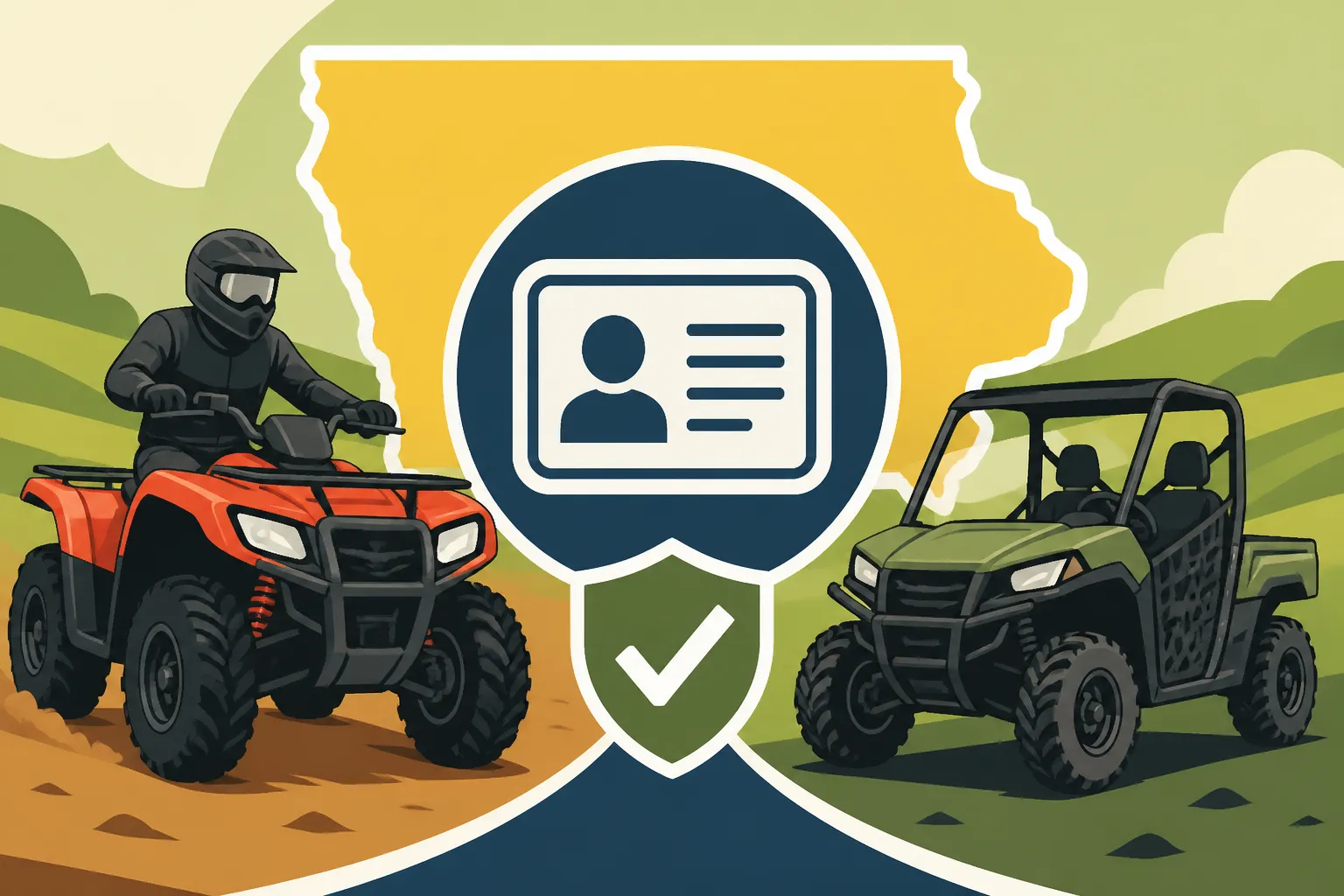
In Iowa, if you want to ride your ATV or UTV on any public road, you absolutely must be at least 18 years old. This isn't an arbitrary number; it's tied directly to the state's licensing laws for operating motor vehicles on public thoroughfares. And yes, you also need to hold a valid driver's license to go along with that age requirement. It's not enough to just be 18; you need to possess the official document proving your eligibility to drive a motor vehicle.
This rule is often a point of frustration for younger riders, especially those who have grown up on ATVs and are perfectly capable of handling their machines. They might have extensive experience off-road, perhaps even racing, but the moment they want to take a short jaunt down a gravel road to a friend's house or access a different part of their property, the 18-and-licensed rule kicks in. It's a critical distinction to remember: off-road prowess doesn't automatically translate to on-road legality for minors. The state considers public roads a different category of risk and requires a full adult driver's license to operate an ATV on them.
The state's reasoning for this rule typically centers on safety and the complexities of sharing public roadways with other traffic. While ATVs and UTVs are incredibly fun and versatile, they handle differently than cars, and their visibility to other motorists can be a concern. By requiring a licensed adult behind the controls, Iowa aims to ensure a baseline level of driving experience, knowledge of traffic laws, and maturity for anyone operating these machines on public roads. It's about minimizing risk for everyone on the road, not just the ATV rider.
Carrying Your Driver's License
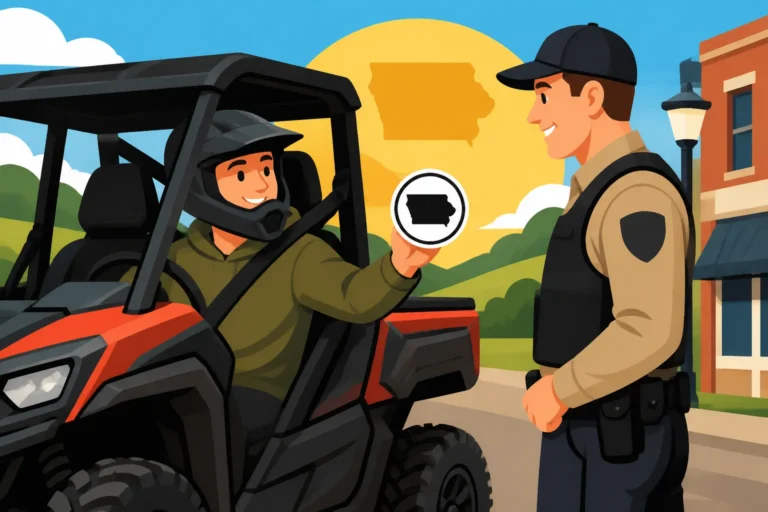
Just like when you're driving your car, if you're operating an ATV or UTV on an Iowa public road, you are required to have your valid driver's license on your person. This isn't something you can leave in your truck back at the trailhead or assume a deputy will just "look up" for you. When a sheriff's deputy or a conservation officer pulls you over, the expectation is that you can immediately present your license, along with your ATV's registration certificate and proof of insurance.
Think of it this way: the moment you venture onto public property, whether it's a gravel road, a paved secondary road, or even the shoulder of an authorized street, you are subject to the same traffic laws as any other motor vehicle operator. A crucial part of those laws is the ability to identify yourself as a legally licensed driver. Failing to produce your license on demand can lead to additional citations or even more serious consequences, depending on the circumstances. It's a small but significant detail that many riders overlook, often to their regret.
It’s always a good practice to keep these important documents in a waterproof bag or a secure pocket on your person, especially when you're out riding and might encounter mud, water, or dust. Many riders find gear from brands like SuperATV, which offers storage solutions and accessories designed to keep essential items safe and dry, incredibly helpful. Having your license readily available makes any interaction with law enforcement smooth and quick, allowing you to get back to your ride without unnecessary delays.
What About Farm Use?
Now, here's where things can get a little nuanced, as Iowa does make allowances for agricultural use. If you're operating an ATV or UTV strictly for agricultural purposes, you might fall under an exemption that affects the driver's license requirement in specific scenarios. This is often referred to as operating an "implement of husbandry," and it's a key distinction for many rural Iowans who use their machines as essential tools for their livelihood. This exemption is not a blanket "get out of jail free" card for all farm-related ATV use, but it does carve out important exceptions.
Specifically, if you're using your ATV or UTV directly in farming, you might be able to operate it on a public road without needing a driver's license, provided you're 16 years old and traveling no more than two miles from the point of origin for farming purposes between sunrise and sunset. This is a very narrow exemption designed to facilitate farm operations, such as checking fences, moving equipment, or tending to livestock. It explicitly doesn't cover recreational riding, hunting access, or even running to town for parts, even if you’re a farmer.
It's absolutely critical to understand the limits of this farm use exemption. The moment your activity deviates from direct agricultural work, or if you exceed the distance or time restrictions, the standard 18-and-licensed rule for public road use snaps back into effect. For example, if you finish checking your fields and decide to take a joyride down the road, even if it’s on the same machine you just used for farm work, you'd need to be 18 and licensed. The intent and nature of the travel are paramount here. For more details, you might want to look into [Iowa's Farm License Exemption].
Navigating Different Road Types with a Driver's License
Iowa has a patchwork of road types, and while some are more welcoming to ATVs and UTVs than others, the driver's license requirement generally remains consistent across those public roadways where ATVs are permitted. It's a common misconception that "gravel roads don't count" or that local rules negate the state-level license requirement. Understanding this can save you a lot of grief.
Gravel Roads and the License Requirement
For many ATV and UTV riders in Iowa, gravel roads are the quintessential public thoroughfare for exploring and getting from one point to another. These unpaved county secondary roads are often open to ATVs and UTVs, making them a popular choice for riders. However, it's vital to remember that "gravel" doesn't mean "unregulated." A gravel road is still a public road, and as such, the state's driver's license rules apply.
This means if you're 18 years or older and hold a valid driver's license, you are generally good to go on these unpaved secondary roads, assuming the county hasn't specifically restricted them. But if you're under 18 or don't have a valid driver's license, riding on a gravel road is just as illegal as riding on a paved road that allows ATVs. The terrain doesn't change the licensing requirement. Law enforcement patrols these roads just like any other, and they will enforce these rules. You can learn more about [Iowa Rules for Riding a Gravel Road].
It’s easy to feel like you’re in a rural bubble out on a quiet gravel road, far from city traffic, but a deputy can appear at any time. They're often looking for compliance with basic safety and legal requirements, including proper registration, insurance, and, of course, a valid driver's license for the operator. Equipping your UTV with appropriate road safety gear, such as mirrors and lights, which are often available from aftermarket suppliers like SuperATV, won't exempt you from the license rule, but it will certainly help with overall road legality and safety.
Paved Secondary Roads and County Authorization
Paved secondary roads in Iowa introduce another layer of complexity. Unlike unpaved gravel roads, paved secondary roads are not automatically open to ATVs and UTVs. A county's Board of Supervisors must specifically pass an ordinance to authorize ATV and UTV use on these paved routes. Even if a county does open its paved roads, the 18-and-licensed rule for operators still applies without exception.
This is a scenario where local authorization is key, but it never overrides the state's fundamental driver's license requirements. If you're on a paved secondary road that a county has authorized for ATV use, you must still be 18 years old and possess a valid driver's license. If you don't meet these criteria, you are operating illegally, regardless of the county's specific road-opening ordinance. The county is merely expanding the types of roads you can use, not lowering the qualifications for who can use them.
It’s crucial to check with the specific county you plan to ride in to understand their ordinances regarding paved roads. Some counties are more open than others, but their openness for ATVs doesn't extend to lowering the age or license requirements. You can find more information about [Paved Secondary Roads and County Authorization]. Always ride defensively and assume other drivers are not expecting an ATV on a paved road, even if it's legal there.
City Streets and Local Ordinances
City streets are perhaps the most restrictive when it comes to ATV and UTV access in Iowa. Generally, ATVs and UTVs are not allowed on city streets unless the city council has passed a specific ordinance to permit them. Even in cities that do allow ATVs and UTVs, the operator must still be 18 years old and hold a valid driver's license. There are no special carve-outs for younger riders or unlicensed adults on city streets.
For instance, a city like Waukon might open some of its streets and alleys to ATVs, recognizing the recreational and practical uses for residents. However, their ordinance will undoubtedly specify that operators must adhere to all state traffic laws, including the age and licensing requirements. You can find more information about [Waukon's Open Streets and Alleys]. This means that even if a local ordinance makes it possible to ride your ATV on a city street, you still need to be a fully licensed adult to do so.
It's a double-layered requirement: first, the city must explicitly allow ATV use, and second, you must meet the state's minimum age and driver's license criteria for operating a motor vehicle on public roads. If either of these conditions isn't met, you could face significant fines or other penalties. Always research specific city ordinances before you consider taking your ATV onto any urban street.
When You Don't Need an Iowa Driver's License for ATV Use
While the rules for public roads are quite strict, there are specific scenarios where an Iowa driver's license is not required to operate an ATV or UTV. These exemptions are important to understand, as they cover a large portion of how many Iowans use their machines. It's about knowing the boundaries between public and private, and between recreation and specific forms of work.
Riding on Private Land
This is the most straightforward exception: you do not need an Iowa driver's license to operate an ATV or UTV on private land that you own, lease, or have explicit permission to ride on. This is where most recreational riding happens, whether it's on your own farm, a friend's timber, or a designated private riding park. The state's driver's license requirements are primarily concerned with public roadways, where you interact with other traffic and state-maintained infrastructure.
On private land, the owner sets the rules, within reason, regarding who can ride and what safety equipment is required. While it's always smart to promote safe riding practices, such as wearing a helmet and appropriate gear (especially for younger riders), the state isn't mandating a driver's license for private property use. This means a 16-year-old, or even a younger child under proper supervision, can ride an ATV on private property without needing any form of state-issued driver's license. [Do You Need to Register an ATV on Private Land in Iowa?] is a related question that often comes up in this context.
This distinction is why many families can enjoy ATVs together, with younger members learning the ropes in a safe, controlled, and private environment. Whether it's carving out trails through a cornfield after harvest or exploring timberland, as long as you stay off public rights-of-way, the driver's license rules for public roads don't apply. This also applies to aftermarket accessories; while SuperATV might offer road-legal kits, you don't need them, nor the associated license, for private land use.
Operating as an Implement of Husbandry
We touched on this earlier, but it's worth reiterating and expanding: Iowa law specifically exempts machines classified as "implements of husbandry" from certain road rules, including some driver's license requirements, under very strict conditions. An implement of husbandry is essentially a vehicle designed and used exclusively for farming operations. This exemption acknowledges that farmers need to move their equipment, including ATVs and UTVs used for farm work, across short stretches of public roads.
To qualify for this exemption regarding the driver's license, the operator must be at least 16 years old, and the ATV or UTV must be used directly in farming operations. Critically, the machine can only be operated on public roads when traveling the most direct route for a distance of no more than two miles from the point of origin to the destination, and only between sunrise and sunset. If you're 16 and meet these conditions, you don't need a driver's license to make that specific agricultural trip.
Any deviation from these precise conditions, such as using the ATV for recreation, traveling more than two miles, or riding after dark, immediately nullifies the "implement of husbandry" exemption, and the standard 18-and-licensed rule for public road use applies. This exemption is not a loophole for recreational riding; it's a narrowly defined provision for legitimate farm work. Understanding [The Implement of Husbandry Exemption in Iowa] can help clarify this further.
The Iowa ATV Safety Certificate (and Why It's Different)
Many riders confuse the Iowa ATV Safety Certificate with a driver's license, and it's a critical distinction to clarify. The Iowa ATV Safety Certificate is required for any ATV or UTV operator aged 12 to 17 years old who wants to ride on public land in Iowa (like designated OHV parks) or on public roads where permissible. However, this certificate is not a substitute for a driver's license when it comes to operating an ATV or UTV on public roads.
While the safety certificate teaches important riding skills, safety practices, and basic rules of the trail, it does not grant the holder permission to operate a motor vehicle on a public roadway if they are under 18 or do not possess a valid driver's license. Think of it as a specialized endorsement for off-highway vehicle operation, particularly for younger riders, rather than a general driving permit. [Iowa ATV Safety Certificate Requirements] details what's involved in obtaining one.
So, while a 16-year-old might have an Iowa ATV Safety Certificate, they still cannot legally operate an ATV on an authorized public road in Iowa unless they also happen to be 18 and have a valid driver's license (which, by definition, they wouldn't be if they're 16). The safety certificate is crucial for public off-road riding for minors, but it simply doesn't apply to the public road licensing rules.
Here's a quick reference table to help visualize the requirements:
| Scenario | Minimum Age | Driver's License Required? | ATV Safety Certificate (12-17)? | Notes |
|---|---|---|---|---|
| Public Roads (General Use) | 18 | Yes | No | This applies to all authorized county/city roads. |
| Private Land (Recreational) | None | No | No | Owner's permission and supervision for minors recommended. |
| Public OHV Parks/Trails (12-17 yrs old) | 12 | No | Yes | Required for riders aged 12-17. An adult must supervise riders under 12. |
| Public OHV Parks/Trails (18+ yrs old) | 18 | No | No | No safety certificate required for adults (18+) on public OHV trails. |
| Implement of Husbandry (Farm Use) | 16 | No (under specific conditions) | No | Must be for direct farm work, < 2 miles, sunrise-sunset. Otherwise, 18 + license required. |
Penalties and Enforcement
Ignoring Iowa's driver's license rules for ATVs and UTVs on public roads can lead to a number of unpleasant consequences. Law enforcement agencies, including county sheriff departments and the Iowa Department of Natural Resources (DNR), actively patrol areas where ATVs and UTVs are used, and they are well-versed in the state's regulations. It's not uncommon for deputies to conduct roadside stops to ensure compliance.
What Happens If You're Caught Without a License
If you're caught operating an ATV or UTV on an Iowa public road without a valid driver's license, and you're not covered by one of the narrow exemptions, you're looking at a citation. This is generally treated similarly to operating any other motor vehicle without a license. Penalties can include fines, which can be significant, and potentially even having your machine impounded, depending on the circumstances and the officer's discretion. It's not a minor slap on the wrist.
Beyond the immediate financial hit of a fine, there could be other repercussions. Depending on your age and prior driving record, repeated offenses could lead to more serious legal issues. It's always a good idea to comply with all laws to avoid these hassles. The hassle of retrieving an impounded vehicle, paying towing fees, and dealing with court dates far outweighs the convenience of taking a shortcut without the proper credentials. The state wants to ensure that anyone operating a vehicle on its public roads has demonstrated basic competency and understanding of traffic laws, which is what a driver's license signifies.
Furthermore, if you are involved in an accident while operating an ATV on a public road without a valid driver's license, you could face even more severe legal liabilities. Your insurance policy might deny coverage, leaving you personally responsible for damages, medical bills, and potential lawsuits. It’s a risk that simply isn't worth taking.
Roadside Stops and What a Deputy Checks
When a deputy or conservation officer initiates a roadside stop of an ATV or UTV in Iowa, they are typically checking for several key compliance points. These often include:
- Valid Driver's License: First and foremost, they'll ask for your driver's license. If you're operating on a public road, you must be 18 and have it on your person. [A Deputy at an Iowa Roadside Stop] will expect to see this.
- ATV Registration Decal and Certificate: They'll verify that your ATV or UTV has a current Iowa registration decal properly displayed and that you have the physical registration certificate with you.
- Proof of Insurance: For road use, proof of liability insurance is mandatory. You'll need to show a valid insurance card. [Iowa ATV Insurance Requirement] is a key law they check.
- Required Equipment: If you're on a public road, your ATV or UTV needs specific equipment, such as a horn, mirrors, headlights, taillights, and potentially a slow-moving vehicle triangle. They'll quickly check for these items.
Having all these documents and required equipment readily available will make the stop quick and stress-free. If you're missing any of these, or if the operator doesn't meet the age and license requirements, you're likely to receive a citation. Officers are generally professional and understanding, but their job is to enforce the law, and that includes ATV regulations.
The Importance of Knowing Local Rules
While state law sets the fundamental driver's license requirements, understanding local ordinances is equally critical when riding an ATV or UTV on roads. As mentioned, counties must authorize paved roads, and cities must authorize their streets. However, even when they do, the 18-and-licensed rule for operators doesn't change. The importance of knowing these local rules can't be overstated.
What might be perfectly legal on a gravel road in one county could be strictly prohibited on a similar road just across the county line. The same goes for city streets. Relying on assumptions or what "everyone else does" can lead to fines and legal trouble. Always take the time to check the specific ordinances of any county or city you plan to ride through on public roads. The Iowa DNR website often has resources, and a quick call to a county recorder's office or city clerk's office can provide the necessary clarity. This due diligence ensures you're riding safely and legally, protecting both yourself and your machine.
Disclaimer
This article is for general informational purposes only and does not constitute professional advice. Laws, prices and regulations vary by location and change over time. Consult a qualified professional for guidance on your specific situation.