Iowa Fines for Illegal ATV Road Use
It's easy to assume your ATV or UTV can go anywhere in Iowa, especially if you're just taking a quick jaunt down a gravel road near your property. But the reality is, Iowa has specific rules for off-highway vehicle road use, and simply not knowing them can lead to some pretty significant fines, court costs, and a whole lot of frustration. This guide is here to walk you through the various penalties you could face for illegal ATV or UTV road use, helping you understand the stakes and how to ride legally and responsibly.
Understanding Iowa's Core Road Use Rules for ATVs and UTVs
Before we dive into the fines, it's crucial to understand what makes ATV and UTV road use "illegal" in the first place. Iowa doesn't just blanket ban these machines from public roads, but it certainly doesn't allow free-for-all riding either. There's a delicate balance, and most fines stem from not adhering to the conditions that do allow some road access.
The Limited Scope of Permitted Road Use
Iowa law is quite clear: off-highway vehicles (OHVs), which include ATVs and UTVs, are generally restricted from public roads. However, there are very specific exceptions. For instance, you might be allowed to operate on unpaved county secondary roads, or even certain paved secondary roads if the county board of supervisors has authorized it. Some cities have also passed ordinances to open specific streets and alleys. The catch? You generally have to be using the "most direct route" to an OHV park, for agricultural purposes, or to cross a highway. It's not about cruising for pleasure; it's about necessity under strict conditions. Knowing these narrow permissions is your first line of defense against a fine. If you're unclear about where you can and cannot ride, it's always best to err on the side of caution or call the local sheriff's department. [Iowa Rules for Riding a Gravel Road] explains some of these conditions in detail.
Essential Equipment and Operator Requirements
Even when you're on a road where OHVs are permitted, your machine and you, as the operator, must meet certain criteria. For your machine, this includes having working headlights, taillights, brake lights, a horn, and at least one rearview mirror. Many off-road machines don't come factory-equipped with all of these, so aftermarket additions are often necessary. Companies like SuperATV offer a fantastic range of aftermarket parts, from turn signal kits to rearview mirrors, that can help bring your off-road machine up to Iowa's street-legal standards. Beyond the machine, the operator must be at least 18 years old and possess a valid driver's license. [Iowa Driver's License Rules for ATVs] provides more information on this. Furthermore, insurance is mandatory for road use, with specific minimum coverage requirements that mirror those for automobiles. Failing to meet any of these equipment or operator standards, even on a legally accessible road, can quickly land you in hot water with law enforcement.
The Financial Blow: Common Fines for Illegal Road Use
Let's get down to the brass tacks: what kind of financial penalties are we talking about here? Iowa's fines for illegal ATV and UTV road use can vary depending on the specific infraction, but rest assured, they are designed to deter non-compliance. These aren't just minor inconveniences; they can be substantial and can compound quickly.
Riding Unregistered or Untitled
One of the most common reasons riders face fines on Iowa roads is operating a machine that isn't properly registered or titled. Even if you're just crossing a short stretch of pavement to get to a trail, your machine needs to be registered with the Iowa DNR through your county recorder's office. The law applies whether you're riding a brand-new side-by-side or a vintage quad you picked up at a farm sale. The fine for operating an unregistered OHV on a public road is significant, often categorized as a scheduled violation, meaning there's a set fine amount. This fine often comes with additional court costs and fees, dramatically increasing the total amount you'll owe. It's a clear message from the state: comply with the registration laws. For details on how to avoid this particular issue, check out [Iowa Fines for an Unregistered ATV].
No Insurance or Proof of Financial Responsibility
Just like with cars, operating an ATV or UTV on any public road in Iowa requires you to have proof of financial responsibility, typically in the form of an insurance policy. The state mandates minimum liability coverage: $20,000 for bodily injury to one person, $40,000 for bodily injury to two or more people, and $15,000 for property damage. If you're pulled over and cannot provide proof of this insurance, you're looking at another substantial fine. This isn't just a paperwork issue; it's a safety and liability one. Without insurance, if you're involved in an accident, you could be personally liable for damages that could easily bankrupt you. The fines for riding without insurance are stiff, sometimes reaching several hundred dollars, and are designed to emphasize the importance of this protection. [Iowa Fines for No Proof of Insurance] delves deeper into these penalties.
Underage or Unlicensed Operation
Iowa has strict age and licensing requirements for operating ATVs and UTVs on public roads. As mentioned, you must be 18 years or older and hold a valid driver's license. Letting a minor, even a responsible teenager, operate an OHV on a public road, or doing so yourself without a proper license, will lead to fines. These fines aren't just aimed at the operator; the owner of the machine who allows such operation can also be held responsible and fined. This particular infraction underscores the state's commitment to road safety, recognizing the unique challenges and risks associated with OHV operation on public thoroughfares. It's not just about knowing how to drive; it's about being a legally recognized and competent operator.
Improper Equipment and Speeding Violations
Even if you have your registration, title, and insurance in order, and you meet the age and licensing requirements, your machine itself must be properly equipped for road use. We're talking about headlights, taillights, brake lights, a horn, and at least one rearview mirror. Failing to have any of these can result in a fine. For example, riding at night without proper lighting can be particularly hazardous and will almost certainly lead to a citation. Similarly, while OHVs are permitted on some roads, they are subject to a maximum speed limit of 35 mph, even if the posted limit for other vehicles is higher. Speeding on an OHV on a public road will earn you a fine, just as it would in a car, and could also be seen as reckless operation, which carries even steeper penalties. [Iowa ATV Speed Limit on Roads] offers more context.
Here's a quick overview of potential infractions and the types of penalties you might face:
| Infraction | Typical Consequence Category | Additional Factors |
|---|---|---|
| Unregistered OHV on Public Road | Monetary Fine + Court Costs | Often a scheduled violation, immediate financial hit. |
| No Proof of Insurance on Public Road | Monetary Fine + Court Costs | Potentially higher fines, points on driving record. |
| Underage Operator on Public Road | Monetary Fine (Operator/Owner) | Could involve juvenile court for minor. |
| Unlicensed Operator on Public Road | Monetary Fine | Could impact driver's license status. |
| Operating Without Required Equipment | Monetary Fine | Usually fixable, but fine still applies. |
| Exceeding 35 mph on Public Road | Monetary Fine + Court Costs | Speeding tickets impact driving record. |
| Operating Off Designated Permitted Roads | Monetary Fine + Court Costs | Could lead to trespass charges on private land. |
| Riding While Intoxicated (OWI) | Significant Fines, License Suspension | Criminal charges, jail time possible. |
Beyond the Fine: Other Consequences of Illegal Road Use
While the immediate financial hit of a fine is certainly a deterrent, it's important to understand that illegal ATV or UTV road use in Iowa can have a ripple effect, leading to other, perhaps less obvious, but equally impactful consequences. These can range from practical inconveniences to serious legal troubles.
Impoundment of Your Machine
One of the most immediate and frustrating non-monetary consequences can be the impoundment of your ATV or UTV. If a law enforcement officer catches you riding illegally – say, on a prohibited road, or without proper registration and insurance – they have the authority to impound your machine. This means your pride and joy is towed away, and you'll incur towing and storage fees on top of any fines. Getting your machine back can be a bureaucratic headache, often requiring you to prove ownership, pay all outstanding fines and fees, and show that you've rectified the reason for the impoundment (e.g., getting proper registration). This can add hundreds of dollars to your expenses and waste precious riding time. It's a stark reminder that the state takes these regulations seriously.
Impact on Your Driving Record and License
Many violations related to illegal OHV road use, especially those involving unlicensed operation, speeding, or reckless endangerment, can impact your standard driver's license. Just because you're on an ATV doesn't mean traffic laws stop applying to your driving record. Accumulating points on your license, experiencing increased insurance premiums for your car, or even facing a suspension of your driving privileges are all very real possibilities. Imagine losing your ability to drive your truck to work because of a decision to take your side-by-side on an unauthorized public road. The long-term effects on your mobility and insurance costs can far outweigh the initial fine.
Legal Trouble and Property Damage Liability
In more severe cases, illegal road use can escalate beyond simple fines. If you're involved in an accident while operating an ATV or UTV illegally on a public road, especially without insurance, you could face significant civil lawsuits for property damage or personal injury. Without the mandatory insurance, you would be personally responsible for covering those costs, which can quickly amount to tens or even hundreds of thousands of dollars. Beyond civil liability, if your actions are deemed reckless or negligent, you could face criminal charges. This is particularly true if you cause an accident with injuries or significant property damage, or if you are found to be operating under the influence (OWI). Iowa's OWI laws apply to OHVs, just as they do to cars, and carry severe penalties including heavy fines, jail time, and license revocation. [Iowa OWI Rules for ATV Riders] details these grave consequences.
Avoiding the Pitfalls: Riding Smart and Legal in Iowa
The best way to avoid fines and other penalties is, quite simply, to ride legally. It might sound obvious, but taking the time to understand and adhere to Iowa's specific regulations for ATV and UTV use on and off roads will save you immense headaches, money, and potential legal trouble.
Know Before You Go: Research Your Route
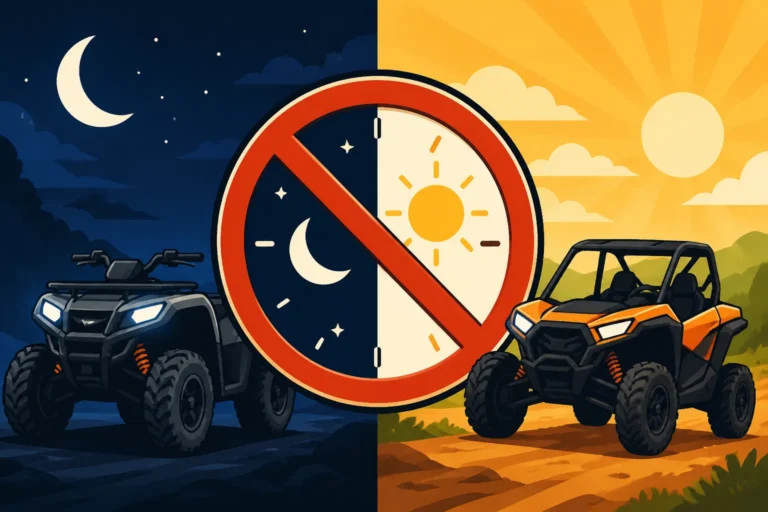
Before you even load your machine onto the trailer, make sure you know exactly where you're permitted to ride. Don't rely on assumptions or what "everyone else does." Check with county recorder offices for specific road ordinances, or consult the Iowa DNR website for designated OHV parks and trails. Remember, permissible roads are generally unpaved county secondary roads, or paved roads and city streets specifically opened by local government action. If you plan to use an ATV for agricultural purposes, be aware that even then, there are rules about distance from the farm and time of day. Riding private land is generally fine, but always ensure you have explicit, ideally written, permission from the landowner to avoid trespassing charges. [Do You Need to Register an ATV on Private Land in Iowa?] answers a common question about private land use.
Equip Your Machine and Yourself Properly
Ensure your ATV or UTV has all the necessary equipment for any potential road use, even if it's just a quick crossing. This means working headlights, taillights, brake lights, a horn, and at least one rearview mirror. Upgrading these components, perhaps with a sturdy SuperATV mirror or an integrated turn signal kit, is a wise investment in safety and compliance. Furthermore, always carry proof of your current registration, title, and insurance with you. Make sure your driver's license is valid and that you are 18 years or older. For younger riders, understand the [Iowa ATV Safety Certificate Requirements] and supervision rules for designated riding areas. Having these documents readily available can often expedite a roadside stop and demonstrate your commitment to legal riding.
Stay Updated and Respect the Rules
Iowa's laws and local ordinances can change. What was allowed last year might not be allowed this year. It's your responsibility as a rider to stay informed. Regularly check the Iowa DNR's official resources and local county or city websites if you plan to ride near specific communities. Additionally, always follow posted signs, whether they are speed limits, trail closures, or restricted access warnings. Ignoring these signs is a direct path to a citation. The off-road community thrives on responsible riding, and respecting the rules helps maintain access for everyone. Remember, many of the rules are in place not just for legal compliance, but for your safety and the safety of others sharing the road or trail. [Iowa DNR and Off-Highway Vehicles] is an excellent resource to stay current.
Disclaimer
This article is for general informational purposes only and does not constitute professional advice. Laws, prices and regulations vary by location and change over time. Consult a qualified professional for guidance on your specific situation.