Iowa’s Nonresident User Permit
Heading to Iowa for some off-road adventures with your ATV or UTV can be incredibly exciting, but navigating the state's registration rules as an out-of-state rider can feel like trying to find your way through a corn maze blindfolded. It's a common point of confusion for many visitors who just want to hit the trails without getting tangled in red tape. This comprehensive guide is here to untangle all that for you, explaining everything you need to know about Iowa's Nonresident User Permit so you can focus on the fun and leave the worry behind.
Understanding Iowa's Nonresident User Permit
When you're dreaming of kicking up dust on Iowa's fantastic trails, the last thing you want is a surprise fine or a denied entry because you missed a crucial step. Iowa has a clear system in place for all off-highway vehicles (OHVs), and that includes visitors. It’s not about making things difficult; it’s about ensuring that all machines operating on public land contribute to the upkeep and safety of those very trails.
Why Nonresidents Need a Permit
It’s a common scenario: you’ve got your machine registered and titled back home in Nebraska, Minnesota, or even further afield. You might assume that registration is good enough everywhere you go, much like a driver's license. Unfortunately, when it comes to off-highway vehicles, each state often has its own set of rules, and Iowa is no exception. While your home state's registration is certainly valid there, it doesn't automatically grant you permission to ride Iowa's designated public trails and parks.
The frustration is understandable. You've already paid your dues once, right? Why should you have to pay again? The key difference lies in where the fees go. Iowa's resident registration fees, and similarly, the nonresident user permit fees, directly support the state's OHV program. This includes funding for trail development, maintenance, safety education, and enforcement within Iowa. So, while it feels like an extra step, it’s actually your contribution to keeping Iowa’s riding areas in top shape for everyone to enjoy. It's a system designed to ensure the resources are there for the very trails you want to ride.
What the Permit Covers and Doesn't
The Iowa Nonresident User Permit is your golden ticket for legally operating your ATV, UTV, or dirt bike on Iowa's designated public OHV trails and parks. Think of places like Gypsum City OHV Park near Fort Dodge, Bluff Creek OHV Park near Eddyville, or the Paul Huting Recreation Area near Waterloo—your permit makes riding these fantastic spots legitimate. It's essentially an annual user fee that grants you access to these state-managed or grant-funded areas.
However, it’s vital to understand its limitations. This permit does not grant you automatic permission to ride on private land without explicit consent from the landowner. Trespassing laws still apply, and a permit won't save you if you're riding someone's cornfield without their knowledge. Similarly, it doesn't automatically make your machine street legal on public roads, paved or unpaved, unless those roads are specifically designated and you meet all other road-use requirements like age, lighting, and insurance. The permit is truly focused on designated off-road areas. Each permit is also specific to one machine, meaning if you bring two ATVs, you'll need two separate nonresident permits. You can find more details about Iowa's rules for riding in these areas in our post on [Iowa Rules for Riding a Designated Riding Area] and [Iowa Rules for Riding Public Land].
How to Obtain Your Iowa Nonresident User Permit
Getting your Iowa Nonresident User Permit isn't overly complicated, but knowing your options and what to expect can save you time and hassle. Iowa understands that visitors need a straightforward process, and they offer a couple of ways to get your permit, catering to different preferences and schedules.
Online vs. In-Person Purchase Options
For many, the easiest and most convenient way to secure your nonresident permit is online through the Iowa Department of Natural Resources (DNR) licensing system. This allows you to purchase your permit from the comfort of your home, days or even weeks before your trip. You simply go to the DNR's online portal, provide the necessary information, pay with a credit card, and print a temporary proof of purchase. The actual decal will then be mailed to you. This method is fantastic for planning ahead and avoiding any last-minute stress.
If you prefer a more hands-on approach or find yourself in Iowa without a permit, you can also purchase one in person. Most Iowa county recorders' offices handle OHV registrations and permits. This means you can walk into a county recorder's office in, say, Mahaska County or Webster County, fill out the paperwork, pay your fee, and often walk out with a temporary permit or proof of purchase right then and there. Some authorized license agents, often sporting goods stores or bait shops, might also offer this service, but county recorders are your most reliable bet. It's always a good idea to call ahead to confirm hours and services, especially if you're driving a long way. The minor difference in cost between online and in-person might guide your choice, but convenience often wins out.
Required Information and Payment
When you're ready to get your permit, whether online or in person, you'll need to have some specific details about yourself and your machine handy. This typically includes your full name, address, and contact information. For your ATV or UTV, you'll need its Vehicle Identification Number (VIN), make, model, and year. It’s crucial to get the VIN absolutely correct, as this number is the unique identifier for your machine and ties the permit directly to it. Just like getting a driver's license or registering your car, accuracy prevents future headaches.
Payment is straightforward. Online purchases usually require a credit or debit card. For in-person transactions at a county recorder's office, you'll generally have options for cash, check, or credit card, though credit card acceptance can vary, and there might be a small processing fee. Always confirm payment methods if you're visiting in person. Double-checking all your information before finalizing the purchase ensures that your decal arrives promptly and correctly, avoiding any delays that could cut into your riding time. Remember, the goal is a seamless process so you can enjoy Iowa's fantastic riding opportunities without a hitch.
The Permit's Validity and Display
Once you’ve successfully navigated the purchase process for your Iowa Nonresident User Permit, the next crucial steps involve understanding how long it's good for and, just as importantly, where to put that little sticker. These details are often overlooked but are absolutely critical for a worry-free riding experience. Ignoring them could lead to a citation, which nobody wants when they're trying to have fun.
How Long the Permit Lasts
Iowa's Nonresident User Permit, just like its resident ATV registrations, operates on a calendar year cycle. This means that regardless of when you purchase your permit—whether it's in March, July, or even November—it will always expire on December 31st of that same year. There's no prorating the cost based on the purchase date, so it's a flat annual fee. This system can sometimes catch riders off guard if they buy a permit late in the year, expecting it to last 12 months from the purchase date.
It's a fixed expiration date that keeps the renewal cycle consistent for everyone, from individuals to the DNR's administrative processes. For avid riders who plan multiple trips to Iowa throughout the year, purchasing the permit early in the year ensures you get the full value. If you're planning a late-season ride in November or December, just be aware that the permit will only be valid for a short time before needing renewal for the following year. This information is vital for budgeting and planning your Iowa riding adventures. Our guide [When an Iowa ATV Registration Expires] sheds more light on Iowa's uniform expiration dates.
Proper Placement of the Decal
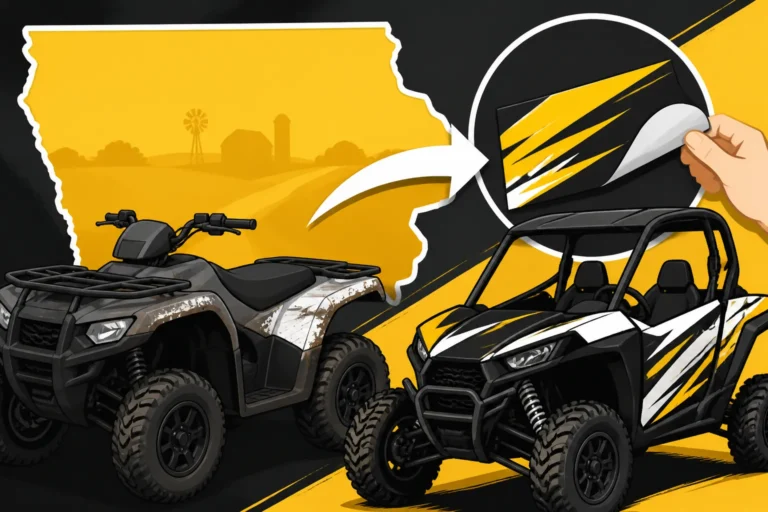
Once your Nonresident User Permit decal arrives in the mail (or is handed to you in person if you get a temporary one), the next step is applying it correctly to your machine. This isn't just about aesthetics; it's about compliance and easy identification for law enforcement. Iowa Admin Code 571-46.7, along with practical enforcement considerations, dictates that the decal must be affixed to the rear of your ATV or UTV, in a clearly visible location. Think of it like your license plate; it needs to be easily spotted at a glance by a conservation officer or sheriff's deputy.
Often, this means placing it on the rear fender, a dedicated decal area on the back of the machine, or a visible part of the rear rack. The key is that it shouldn't be obscured by mud, equipment, or any part of your machine. Make sure the surface is clean and dry before applying the decal for the best adhesion. Improper placement, or a decal that's faded or peeling to the point of being unreadable, could lead to questions during a roadside or trailhead check. Having your decal mounted correctly means less time spent explaining yourself and more time riding. You can read more specifics about this in [A Decal on the Rear of an Iowa Machine] and [Iowa Admin Code 571-46.7 and Decal Placement].
Cost Breakdown: What You'll Pay for the Permit
Understanding the fees associated with your Iowa Nonresident User Permit helps you budget accurately for your riding trip. While the costs are relatively modest, knowing exactly what contributes to the total helps demystify the process and ensures there are no surprises when you go to make your purchase.
The Base Nonresident Permit Fee
The core of your expense will be the nonresident user permit fee itself. Iowa maintains a slight distinction in cost depending on how you purchase it. If you opt for the convenience of buying it online through the Iowa DNR's license system, the fee is typically a specific amount. If you choose to purchase it in person at a county recorder's office or an authorized license agent, the fee might be a dollar or two higher. This small difference usually accounts for the administrative overhead or agent's fee associated with over-the-counter transactions.
These fees, while seemingly minor, are crucial for the state's OHV program. They contribute to a dedicated fund that supports everything from the physical construction and maintenance of trails at parks like Gypsum City to safety education programs and enforcement efforts. So, every dollar you spend on that permit goes directly back into making Iowa a better place to ride. It's a user-pay, user-benefit system. For the most current figures, you'll always want to check the official Iowa DNR website or contact a county recorder, as specific amounts can adjust over time. We cover this topic more broadly in [Iowa's Nonresident User Permit Cost].
Comparing Nonresident vs. Resident Costs
It's helpful to understand how the nonresident permit fits into Iowa's broader OHV fee structure, especially when comparing it to what Iowa residents pay. For an Iowa resident, acquiring an OHV involves two primary costs: a one-time title fee and an annual registration fee. The title fee, a specific amount, is paid when the machine is first titled in Iowa or when ownership is transferred. The annual registration fee, a different specific amount, covers the annual decal. This means a resident will typically pay a higher initial amount due to the title, plus the yearly registration.
The nonresident permit, on the other hand, is much simpler. It's an annual user fee that completely bypasses the titling requirement. This is because nonresidents are expected to have their machines titled and registered in their home state. Iowa's nonresident permit is designed purely as an access pass for its public OHV areas, without requiring you to go through the full titling and registration process that permanent residents do. This streamlined approach makes it more palatable for visitors who only ride in Iowa occasionally. While the per-machine cost for a nonresident permit might feel like an additional expense, it's generally a more straightforward and often less expensive route than if Iowa required full nonresident titling and registration.
What Happens After You Get Your Permit?
Once that permit is in your hand and securely affixed to your machine, you're almost ready to hit the trails! But a couple of final checks will ensure your Iowa OHV adventure is not only fun but also fully compliant with state regulations. It's about more than just the sticker; it's about what you carry and how you ride.
Carrying Your Permit and Other Documents
Just like you carry your driver's license when operating a car, it's essential to have proof of your Iowa Nonresident User Permit with you whenever you're riding in the state. This means either the physical registration certificate that comes with your decal or, if you've recently purchased it online, the temporary proof of purchase you printed out. This document is what a conservation officer or sheriff's deputy will ask to see if they stop you on a trail or at a staging area. Keep it somewhere safe, like a waterproof pouch on your machine, in a backpack, or even in your pocket. The goal is to make it easily accessible and protected from the elements.
Beyond the permit, if you're a younger rider between the ages of 12 and 17, Iowa law requires you to have completed an approved ATV safety course and carry your safety certificate with you. This certificate proves you've received the necessary education to operate an OHV safely. While adults 18 and over don't need a safety certificate, it's always a good idea to consider taking a course for your own knowledge and safety. Remember, having all your papers in order means a quick check if you're ever stopped, letting you get back to enjoying the trails sooner. You can learn more about this in our articles [Carrying the Certificate on an Iowa Ride] and [Can the Safety Certificate Ride in Your Pocket?].
Riding Rules for Nonresidents in Iowa
Having your Nonresident User Permit is the first step, but it doesn't exempt you from Iowa's general OHV operating rules. These rules apply to everyone, resident or nonresident, on public lands. For instance, Iowa generally requires helmets for all riders at designated OHV parks like Paul Huting Recreation Area. Speed limits and riding hours are also enforced within these parks. Riding on designated trails and staying off closed areas is paramount for safety and environmental protection.
It’s crucial to remember that your permit specifically allows you to ride on designated public trails. It does not give you free rein across all public lands, such as state parks or wildlife management areas, unless those specific areas are explicitly marked as open to OHVs. Always check the rules of the specific OHV park or riding area you plan to visit before you load up and head out. Ignorance of the law is not a valid excuse, and a friendly conservation officer will still issue a citation for rule violations, even if your permit is current. We have a lot of helpful information on these topics, including [Iowa Rules for Riding a Designated Riding Area] and [Iowa Rules for Riding Public Land].
Common Questions and Troubleshooting
Even with all the information available, questions can pop up, or unexpected situations might arise. Knowing how to handle these common scenarios can save you a lot of grief and ensure your Iowa riding experience remains positive. It's all about being prepared for the "what ifs."
What If Your Permit Is Lost or Damaged?
It happens. Maybe your decal started peeling off after a particularly muddy ride, or perhaps the certificate blew out of your pocket. Whatever the reason, if your Iowa Nonresident User Permit decal or registration certificate becomes lost, stolen, or so damaged it's unreadable, you'll need to get a replacement. Riding with an unidentifiable or missing decal is just as problematic as not having one at all, as it prevents law enforcement from verifying your compliance.
The process for getting a replacement usually involves contacting the same entity where you originally obtained the permit—either the Iowa DNR online system or a county recorder's office. There will likely be a small fee for the duplicate. You'll need to provide your machine's VIN and other identifying information to verify your original purchase. It's wise to do this as soon as you notice the issue, especially if you have another ride planned. Don't wait until you're pulled over to realize you need a replacement. Check out [Iowa ATV Decal Replacement] for more guidance on this topic.
Out-of-State Registration and Reciprocity
One of the most frequently asked questions from visiting riders is, "Does Iowa honor my home state's registration?" This is where it gets a little tricky and often leads to confusion. For riding on Iowa's designated public OHV trails and parks, the answer is generally no, your out-of-state registration is not sufficient. Iowa requires its own Nonresident User Permit for these areas. This is because, as mentioned, the permit fees directly fund Iowa's specific OHV program and trail system. Your home state's registration fees go to their state's program, not Iowa's.
While some states have reciprocal agreements for certain vehicle types or specific uses, Iowa's OHV laws typically do not extend full reciprocity to out-of-state ATV/UTV registrations for trail use. So, even if you’re coming from a neighboring state like Minnesota, Missouri, or Nebraska, you’ll still need that Iowa Nonresident User Permit to legally ride Iowa's dedicated OHV parks. It's always best to assume you need the Iowa permit unless you have specific, current information directly from the Iowa DNR stating otherwise for your particular situation. Our posts like [Iowa Reciprocity With Minnesota] and [Iowa Reciprocity With Missouri] delve deeper into this common misconception.
Essential Considerations for Out-of-State Riders
Beyond just getting your permit, there are a few other crucial elements that out-of-state riders should keep in mind to ensure their trip to Iowa is as smooth, safe, and enjoyable as possible. A little extra planning can make a big difference in avoiding unforeseen problems.
Planning Your Iowa OHV Trip
Iowa's OHV parks are fantastic, offering diverse terrain and well-maintained trails, but their conditions can change rapidly. Before you even load your machine onto the trailer, make sure to check the current trail conditions and any potential park closures. Iowa's weather can be unpredictable, and trails often close after heavy rain to prevent damage and ensure rider safety. The Iowa DNR website typically has an alert feed or a dedicated section for OHV park statuses. Imagine driving hours only to find your chosen park is closed for the day—a quick check beforehand can save you that disappointment.
Consider purchasing your Nonresident User Permit in advance, especially if you plan to visit a popular park on a busy weekend. While you can sometimes get permits in person, doing it ahead of time online means you're not scrambling at the last minute or facing potential delays at a county recorder's office when you'd rather be riding. This forward-thinking approach is key to maximizing your time on the trails. Our articles on [Iowa Trail Conditions Before You Ride] and [Iowa Trail Closures to Check First] are excellent resources for this pre-trip research.
Legal Implications of Non-Compliance
It might be tempting to "chance it" and ride without the proper Iowa Nonresident User Permit, especially if you're just passing through or plan a short visit. However, the legal and financial consequences of non-compliance are simply not worth the risk. Iowa conservation officers and county sheriff's deputies regularly patrol OHV parks and staging areas, checking for valid decals and compliance with other regulations. If you're caught operating an OHV without the required permit or registration, you could face significant fines. These aren't just minor penalties; they can quickly add up, turning an enjoyable day into an expensive headache.
Beyond fines, having your machine impounded or being asked to leave a riding area can be a major disruption to your trip. It's a stark reminder that even though you're a visitor, you're expected to respect and adhere to Iowa's laws. The cost of a Nonresident User Permit is a small investment compared to the potential financial hit and aggravation of a citation. Playing by the rules ensures everyone can continue to enjoy Iowa's beautiful OHV opportunities. You can get more details on potential consequences in [Iowa Fines for an Unregistered ATV] and [Getting Cited for Riding Without a Recorder Decal].
Ensuring a Smooth Experience
A great ATV or UTV trip isn't just about having the right machine and the right permit; it's also about being prepared for all aspects of your ride, both on and off the trail. Thinking through potential scenarios and having your documentation in order can provide immense peace of mind.
Documenting Private Land Permission
While your Iowa Nonresident User Permit grants you access to designated public trails, many fantastic riding opportunities exist on private land, whether it's a friend's farm, a relative's timber, or a property you've gained permission to ride. However, relying on verbal permission alone can be risky, both for you and the landowner. A written agreement, even a simple one, clarifies the terms of access, demonstrates due diligence, and can protect both parties in case of an unforeseen incident.
Creating a landowner permission form doesn't have to be complicated. Resources like LawDepot offer templates for various legal documents, including property access agreements. Using such a tool helps ensure that key details are covered, such as the dates of access, the specific areas permitted for riding, any special conditions (like speed limits or noise restrictions), and contact information for both the rider and the landowner. This kind of clear, written permission from a platform like LawDepot removes ambiguity and fosters good relationships, which are essential for expanding private land riding opportunities.
Comprehensive Ride Planning
A successful OHV adventure in Iowa, especially as a nonresident, goes beyond just securing the permit. It involves a holistic approach to planning. This includes ensuring you have any other necessary documents, such as proof of insurance. While insurance isn't always mandated for riding within dedicated OHV parks, it is absolutely required if you plan to operate your machine on any public roads (even gravel secondary roads) that Iowa permits for OHV use. Having at least the state minimum liability coverage (20/40/15) is non-negotiable for road use.
Developing a pre-departure checklist is invaluable. This might include checking tire pressure, fluid levels, packing emergency tools, and bringing adequate water and snacks. Consider creating a comprehensive checklist that integrates your documentation needs alongside your mechanical checks. For group rides or if you're renting machines, you might even consider utilizing templates from services like LawDepot for waivers or liability releases, which can offer an extra layer of protection and clarity for all participants. Thinking through these details, from the legalities to the logistics, ensures that your focus remains on enjoying the thrilling Iowa landscape, rather than worrying about what you might have forgotten.
| Feature | Iowa Resident Registration | Iowa Nonresident User Permit |
|---|---|---|
| Purpose | Legal operation and ownership in Iowa | Legal operation on designated OHV trails in Iowa |
| Titling Required? | Yes, for ownership proof | No, assumed to be titled in home state |
| Validity | Annual, January 1 – December 31 | Annual, January 1 – December 31 |
| Cost Structure | Title fee (one-time) + Annual Registration Fee | Annual User Permit Fee only |
| Where to Obtain | County Recorder's Office | Online (DNR) or County Recorder's Office |
| Decal Placement | Rear of machine, clearly visible | Rear of machine, clearly visible |
| Reciprocity | No, not honored in other states (usually) | Not honored from other states for IA trails |
| Primary Beneficiary | Iowa's general OHV program & infrastructure | Iowa's specific OHV trail maintenance |
Disclaimer
This article is for general informational purposes only and does not constitute professional advice. Laws, prices and regulations vary by location and change over time. Consult a qualified professional for guidance on your specific situation.