Iowa Rules for a Dirt Bike at an OHV Park
Taking a dirt bike to an Iowa OHV park involves more than loading it onto a trailer. You need the right registration or visitor permit, and the park must allow your type of machine on its trails. Here’s how to check the paperwork, understand the safety-certificate exception for off-road motorcycles, and avoid arriving at a closed or unsuitable riding area.
Confirm your dirt bike’s paperwork before you go
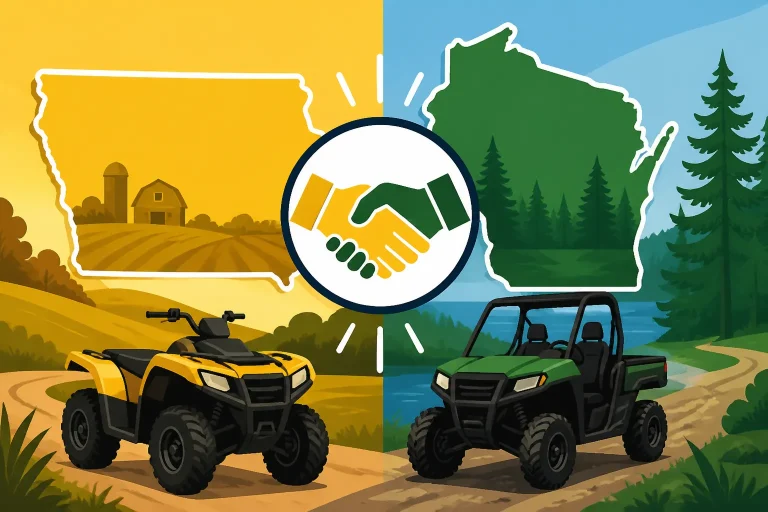
For an Iowa resident, a dirt bike used as an off-highway vehicle generally needs the required Iowa registration. A visiting rider may need an Iowa nonresident user permit unless the machine’s home-state registration qualifies under Iowa’s reciprocity rules. The key is to determine which rule applies to your circumstances before heading to a park.
A dirt bike’s registration and its permission to ride a particular park are related, but they are not the same thing. The registration or permit addresses the machine’s legal status for Iowa off-highway use. The park’s own rules determine where that machine may be ridden, what equipment is required and whether the area is open.
If you live in Iowa, check the registration status and decal before your first ride of the season. For general details about the process, see Registering a Dirt Bike in Iowa. If you’re visiting from another state, start with Iowa ATV Registration for a Nonresident and Does Iowa Honor Out-of-State Registration?. Reciprocity may depend on your home state’s rules and the type of registration you carry, so don’t assume that an out-of-state plate or registration automatically covers every situation.
The paperwork question is especially important when you travel with more than one machine. A permit or registration belongs to the specific vehicle it covers; it is not a general pass for every bike in the trailer. If you’re unsure whether a visitor permit is needed or where to get one, review Where to Buy an Iowa Nonresident Permit before setting out.
A useful first check is:
| Rider and machine situation | What to verify before riding |
|---|---|
| Iowa resident with a dirt bike | Current Iowa registration and the required decal |
| Visitor with an out-of-state dirt bike | Whether Iowa recognizes the home-state registration or requires a nonresident permit |
| Rider bringing more than one bike | That each machine has its own required registration or permit |
| Anyone heading to a specific park | That the park is open and accepts dirt bikes on the intended trails |
Keep the registration certificate and other required documents accessible, rather than buried beneath riding gear or left at home. A photo on a phone can be useful as a backup, but don’t rely on it instead of carrying whatever document the rules require. If your paperwork is incomplete, resolve that before you arrive at the riding area; a park’s willingness to admit a machine does not replace state registration requirements.
The safety-certificate exception
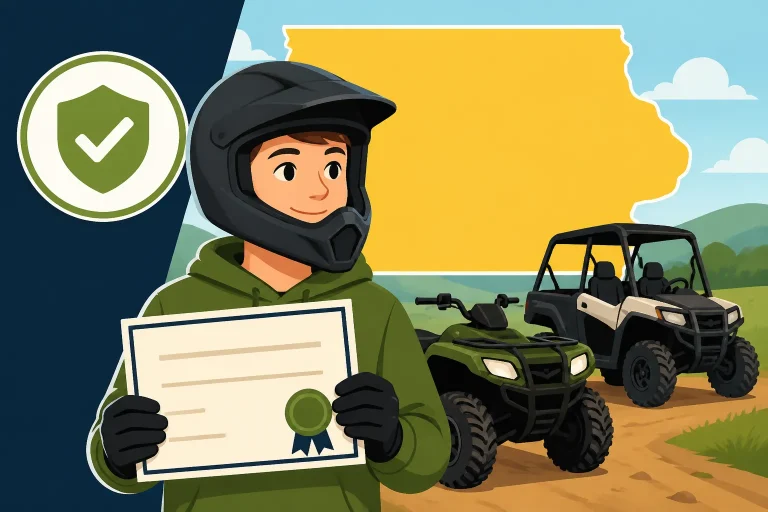
Iowa’s safety-certificate rules distinguish between types of machines. Off-road motorcycle operators are exempt from the certificate requirement that applies to certain other OHV operators. That means a dirt bike rider should not assume that a rule written for an ATV rider automatically applies to an off-road motorcycle. See Why an Iowa Off-Road Motorcycle Operator Is Exempt for the specific distinction.
The exemption is limited. It does not cancel registration or permit requirements, authorize riding on a closed trail, or override a park’s posted conditions. Nor should a family treat it as a substitute for instruction and supervision. Young riders still need an appropriate machine, protective equipment, and an adult’s attention. Check the individual park’s age, supervision and waiver rules before bringing a child.
If a group includes both dirt bikes and ATVs, check the rules for each machine type rather than assuming all riders have identical requirements. The same is true when a machine’s classification is unclear. A small motorcycle designed for off-road use may be treated differently from an ATV, side-by-side or road-registered motorcycle. If the vehicle has been modified or its status is unusual, confirm how it is classified before relying on an exemption.
Check whether the park and trail accept dirt bikes
Iowa OHV parks do not necessarily offer the same kind of riding. A park may have trails or areas suited to motorcycles, while another may have restrictions that make it a poor choice for a dirt bike. A park being called an OHV area does not, by itself, guarantee that every off-road machine can ride every marked route.
Before you load the bike, check the park’s current information for:
- Whether dirt bikes or off-road motorcycles are allowed.
- Which trails or riding areas are open to motorcycles.
- Any limits based on trail width, vehicle type or posted route.
- Required safety equipment, waivers or rider conduct rules.
- Whether the site is open and whether weather has caused closures.
Start with the state’s information on Iowa’s Eight Designated OHV Parks, then check the specific park’s latest notices. Park operations and trail layouts can change, and rain or other conditions may close trails even when the broader riding area is normally open. Iowa Trail Conditions Before You Ride and Iowa Trail Closures to Check First can help you plan that last check.
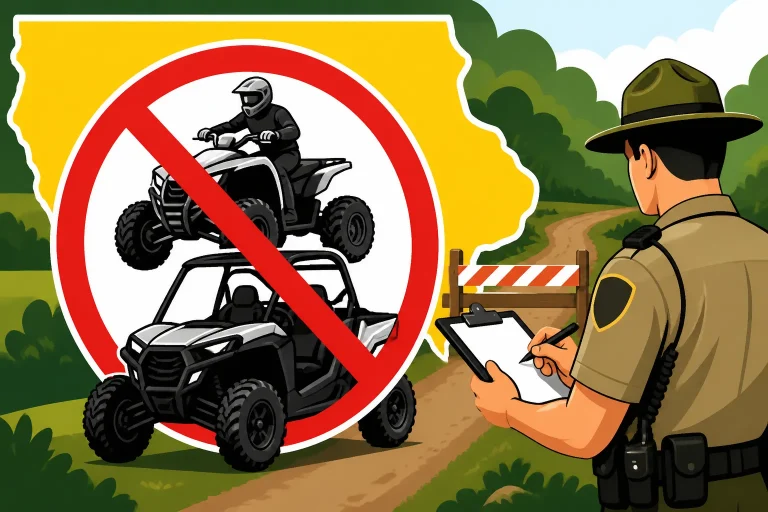
Pay close attention to the difference between a park entrance and a particular trail. A bike may be allowed at the site but restricted from a route built or marked for another vehicle type. Follow signs and maps on the ground, and ask park staff or the managing club if the information is unclear. Don’t treat an unmarked cut-through or a route used by another rider as permission to leave the designated trail.
Rules can also vary by facility. One Iowa park may have requirements that another does not, including helmet requirements or specific procedures at the gate. Check the rules for the place you intend to ride, not just a general summary of Iowa OHV rules. For example, helmets are mandatory at Paul Huting Recreation Area, so riders going there should verify the current entry requirements and bring suitable helmets.
Weather and closures matter
Trail conditions can change quickly, particularly after heavy rain. Iowa soil can become slick and easily damaged when wet. A route that seemed appropriate for a dirt bike in dry conditions may be unsafe or closed after precipitation. Riding on a closed trail can damage the surface and put other users at risk; it may also lead to enforcement action.
Check the park’s own notices before leaving home and again if conditions change during the drive. If the park posts a closure, respect it even if the access road and parking area remain open. For broader guidance on riding after rain, see Iowa Trails Closed After Rain. If your preferred area is shut, choose a confirmed open alternative rather than trying to find an unofficial route nearby.
Follow park rules once you’re riding
Once you’re at the park, ride only on designated routes and obey signs, barriers and staff directions. A registration decal does not grant permission to ride off-trail, cut around a closure or enter private ground. Iowa’s rules for designated areas still apply, and the facility may add site-specific requirements. For the statewide distinction between riding in an authorized area and riding elsewhere, see [Iowa Rules on Designated Riding Areas].
Stay on the marked route, even if a shortcut looks harmless. Riding around a gate or across a closed section can damage the trail and create a new path that other riders may follow. A route that is muddy, blocked or difficult is not an invitation to bypass it through vegetation or across another marked trail. If you cannot safely continue, stop and turn around where it is safe to do so.
Trail sharing calls for extra care. Dirt bikes are smaller and quieter than some larger machines, and riders may approach each other from opposite directions around a bend. Keep a controlled speed, stay to the expected side of the trail, and slow down when visibility is limited. Give other users room, especially children and less experienced riders. If a trail is marked for a specific kind of traffic, follow that designation rather than assuming every vehicle uses it.
Protective gear is a practical part of preparing, whether or not a specific item is required at a particular site. A properly fitted helmet, eye protection, gloves, boots and clothing suited to the terrain can reduce exposure to common riding hazards. Check the park’s posted rules for mandatory equipment, then use judgment beyond the minimum. Dirt, gravel, branches and other riders are all reasons to protect your eyes and hands.
Before starting, make sure the bike is in sound condition. Check the tires, brakes, controls, chain and fuel level, and secure loose equipment. A mechanical problem on a trail can become a safety issue for the rider and for people trying to pass. If you carry tools or fuel, use secure containers and follow the park’s rules for storing or transporting them. Do not refuel near an open flame or leave fuel where it could spill.
Be considerate at the staging area, too. Unload and prepare the bike without blocking other trailers or access routes. Keep noise within the park’s rules, and don’t rev the engine unnecessarily near other visitors or campsites. Pack out rubbish and leave gates, signs and trail markers in place. These small habits help keep riding areas usable and reduce conflict between riders, neighbors and park managers.
Use a simple pre-ride checklist
A short check before leaving can prevent the most common problems: the wrong permit, a park closure, or a dirt bike that is not allowed on the intended trail. The checklist below is a practical starting point, not a replacement for the current state and park rules.
- Identify the machine correctly. Confirm that it is being treated as an off-road motorcycle, not as an ATV or a road-registered motorcycle for the purpose of the rules you are checking.
- Confirm registration or permit status. Iowa residents should check their registration and decal. Visitors should verify whether their home-state credentials qualify or whether an Iowa nonresident permit is needed.
- Check the specific park. Confirm that dirt bikes are accepted and identify which routes are open to them.
- Read current closure notices. Check again close to departure, especially after rain or other poor weather.
- Review age and site requirements. The motorcycle safety-certificate exemption is not a blanket exemption from a park’s own age, supervision or waiver procedures.
- Bring documents and gear. Carry the required paperwork and the protective equipment required by the park, along with gear appropriate for the trail.
- Follow signs on site. Stay on designated routes and follow directions from the park manager or staff.
If you arrive and discover that a trail is not suitable for a dirt bike, don’t try to make it work by riding around a sign or using an unmarked route. Ask park staff whether another route is open to motorcycles. If none is, save the ride for a location that accepts the bike.
The essential distinction is simple: the right paperwork lets you meet Iowa’s off-highway requirements, but it does not guarantee access to every trail. Confirm both the machine’s permit or registration status and the individual park’s current dirt-bike rules before you travel.
Disclaimer
This article is for general informational purposes only and does not constitute professional advice. Laws, prices and regulations vary by location and change over time. Consult a qualified professional for guidance on your specific situation.