Registering a Dirt Bike in Iowa
Trying to make sense of the Iowa regulations for registering your dirt bike can feel like navigating a maze on a muddy trail – confusing, frustrating, and a little overwhelming. Many dirt bike enthusiasts just want to hit the trails, but the paperwork often stands in the way. This comprehensive guide is here to cut through the confusion, walking you step-by-step through the process of registering your dirt bike in Iowa, ensuring you understand exactly what you need to do to stay legal and enjoy your ride.
Understanding Iowa's OHV Registration Landscape for Dirt Bikes
It's a common thought: "My dirt bike is just for off-road use, so why would I need to register it?" This is a perfectly understandable assumption, especially if you're new to the Hawkeye State or coming from a place with different rules. However, Iowa has a specific framework for Off-Highway Vehicles (OHVs), which includes dirt bikes, and it's designed to ensure proper use, funding for trails, and accountability. Navigating these rules successfully means understanding the state's intent and how dirt bikes fit into the larger picture.
Why Dirt Bikes Need Registration Even for Off-Road Use
Iowa views dirt bikes as a type of OHV, just like ATVs or side-by-sides. This means that if you plan to ride your dirt bike anywhere other than entirely private property that you own or have explicit permission to ride on, it needs to be registered. This includes designated OHV parks, state riding areas, and even crossing certain public rights-of-way that might allow OHV access. The state uses registration fees to fund trail maintenance, develop new riding areas, and manage the OHV program, so it's a vital part of keeping Iowa's riding opportunities alive.
The key distinction here is "public land." Even if it feels like you're way out in the sticks, if the land is publicly managed or if you're using designated trails, your dirt bike needs to be registered. It's not about being street legal; it's about being trail legal. This often catches new riders off guard, as they might think "off-road" means "no rules." Iowa is actually quite clear on this. While there are some machines Iowa exempts from registration, dirt bikes generally aren't among them if they're used for recreation.
Failing to register a dirt bike when it's required can lead to fines and other penalties. It's far better to invest a little time and effort upfront to get your machine properly documented than to face a citation down the line. Plus, knowing you're fully compliant means you can ride with peace of mind, focusing on the joy of the ride rather than worrying about whether you're breaking a rule.
The Core Requirements: Title and Registration
For most dirt bikes in Iowa, you're looking at a two-pronged approach: you need both a title and a registration. These are distinct but equally important aspects of legal ownership and operation. Think of the title as the official proof of ownership, like the deed to a house, and the registration as your permit to operate the vehicle on public OHV lands, similar to how a license plate allows a car on public roads.
Titling an ATV in Iowa (and by extension, a dirt bike) establishes who legally owns the machine. This is crucial for proving your ownership, especially if you ever need to sell it, finance it, or even if it's stolen. Without a proper title, proving ownership can become a nightmare, making it difficult to transfer the machine or resolve disputes. Iowa requires almost all OHVs to be titled, especially if they are new or being transferred between owners.
The registration, on the other hand, is what allows you to actually ride your dirt bike on public OHV trails and parks. This is the part that needs to be renewed annually and comes with the physical decal that gets affixed to your machine. Both processes typically happen at the same location, but they serve different legal purposes. It can feel like a lot of hoops to jump through, especially if your dirt bike is primarily a weekend toy, but understanding the purpose behind each step makes the process a bit less daunting.
Step-by-Step: How to Register Your Dirt Bike in Iowa
Now that you understand the "why," let's get into the "how." The process itself isn't overly complicated, but it does require attention to detail and making sure you have all your ducks in a row before you head out. Being prepared will save you a lot of time and potential frustration, especially if you're driving a bit to reach your County Recorder's office.
Gathering Your Essential Paperwork
Showing up unprepared to the County Recorder's office is a common pitfall that can lead to multiple trips and wasted time. Trust me, you don't want to get all the way there only to find you're missing a critical piece of paper. The more organized you are beforehand, the smoother your experience will be.
Here's a breakdown of the key documents you'll need:
- Proof of Ownership: This is paramount. If your dirt bike is brand new, you'll need the Manufacturer's Statement of Origin (MSO) or Manufacturer's Certificate of Origin (MCO). This is essentially the birth certificate of your dirt bike. If you bought it used, you'll need the previous owner's signed-over Iowa title. If the previous owner never titled it (which can happen, especially with older dirt bikes or those from states with different titling rules), you might need a bit more legwork, potentially involving a bill of sale and perhaps even a VIN verification.
- Bill of Sale: Even if you have a title for a used machine, a bill of sale is highly recommended. It clearly states the purchase price, date, and seller/buyer information. This is critical for calculating sales tax (Iowa collects sales tax on private OHV sales) and proving the transaction. If you're looking for a reliable template, resources like LawDepot offer easily customizable bill of sale forms that cover all the necessary legal points. This helps protect both the buyer and the seller.
- Personal Identification: Bring your valid driver's license or state ID. This confirms your identity as the person registering the dirt bike.
- Iowa DNR Off-Highway Vehicle Registration Application: This form (Form 542-8067) is what Iowa's registration form asks for. While you can often fill this out at the Recorder's office, having it partially completed with your personal and machine information can speed things up. It asks for details like your name, address, the dirt bike's make, model, year, and Vehicle Identification Number (VIN).
Ensuring all these documents are accurate and complete before you leave home will prevent the frustrating experience of being turned away and having to return another day. Double-check everything, especially VINs, to avoid any discrepancies.
The Role of Your County Recorder's Office
Unlike cars and trucks, which are handled by the county treasurer (often referred to as the DMV), all OHV registrations and titles in Iowa are processed exclusively through your local County Recorder's Office. This can be a point of confusion for many first-time registrants, so it's good to be aware of the distinction. The Recorder's Office is responsible for a variety of public records, and OHV documentation falls under their purview.
When you arrive at the County Recorder's Office, you'll present your gathered paperwork. A clerk will review your documents, verify the information, and guide you through filling out any remaining sections of the application form. This is where you'll also officially apply for the title if one is needed (for a new machine or a transfer of ownership) and pay all the associated fees. They're typically quite helpful, so don't hesitate to ask questions if you're unsure about anything.
Here's a quick summary of what you'll typically need to bring to make your visit efficient:
| Document Type | Purpose | Important Notes |
|---|---|---|
| Proof of Ownership | Establishes legal ownership of the dirt bike. | MSO for new; signed title for used. |
| Bill of Sale | Confirms purchase price, date, and parties for tax and record. | Essential for private sales. LawDepot provides good templates. |
| Photo ID | Verifies your identity. | Valid driver's license or state ID. |
| Registration Form | Formal application for registration and title. | Often available at the Recorder's office, but can be pre-filled. |
| Payment | For registration, title, and sales tax fees. | Check current fees with your County Recorder. Cash, check, or card (fees may apply). |
Once everything is processed and fees are paid, the clerk will issue you a temporary registration (sometimes just a receipt) and typically your permanent registration certificate immediately. The actual decal, however, might be mailed to you, which we'll discuss next.
Fees and What They Cover
Nobody likes unexpected costs, and when you're registering a dirt bike, it can sometimes feel like there's a fee for everything. It's helpful to understand what each charge covers, so you know exactly where your money is going. While I can't give you exact dollar amounts (these can change, and you should always verify current figures with your County Recorder), I can explain the common categories.
First, there's the core registration fee. This is the main annual charge for the privilege of riding your dirt bike on public lands. Part of this is the $15 base fee inside an Iowa registration. This goes towards the broader OHV program, supporting trails and administration. You'll also typically see a smaller "writing fee" (often $2) that covers the administrative cost of processing the paperwork. And don't be surprised by a "license agent fee" (usually $1); this is a small charge that goes to the entity processing the transaction (in this case, the County Recorder's office). Finally, there's often an Iowa NRC Administration Fee, another small charge that helps fund various conservation and recreation initiatives.
If you're also titling the dirt bike (which is likely if it's new, or if you're transferring ownership), there will be a separate title fee. This covers the cost of creating and maintaining the official ownership record. If you've financed your dirt bike, the lender will likely require their lien to be noted on the title, which incurs an additional lien notation fee. And, of course, don't forget the Iowa sales tax! This is typically collected at the time of registration, based on the purchase price you listed on your bill of sale. It's a percentage of the sale, so prepare for that when budgeting your purchase.
It's easy to feel like these fees add up, but they are all part of a system designed to manage and maintain the OHV opportunities that many Iowans cherish. Knowing what to expect financially can ease some of the stress when you're at the counter.
What Happens After You Register: Decals, Renewal, and Compliance
Getting your dirt bike registered isn't just a one-and-done deal. There are ongoing responsibilities, primarily related to displaying your proof of registration and keeping it current. Understanding these aspects will help ensure you remain compliant for years to come.
Receiving and Displaying Your Decal
After you've successfully registered your dirt bike and paid all the fees, the County Recorder's office will issue you an official registration certificate. This is a small paper document that you are legally required to carry with you whenever you are operating the machine on public lands. It's your proof that the machine is registered to you.
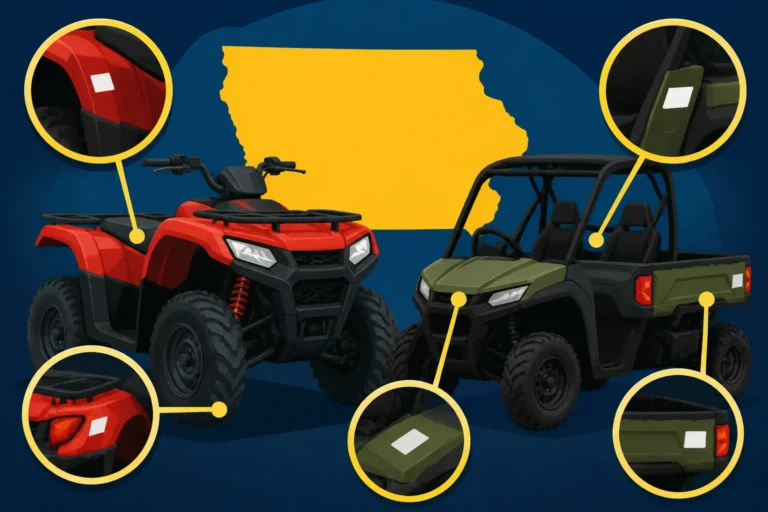
In addition to the certificate, you'll receive a physical decal (sticker). This is the highly visible proof of registration that needs to be affixed to your dirt bike. For most OHVs, including dirt bikes, Iowa law is specific about its placement. The decal should be permanently affixed in a clearly visible location on the rear of an Iowa machine. This ensures that law enforcement or trail officials can easily see that your dirt bike is legally registered without having to stop you. Keep in mind that while you might receive your certificate right away, it can take a couple of weeks before an Iowa decal arrives in the mail. Don't worry if it's not immediate; your temporary receipt usually serves as proof while you wait.
Proper decal placement is important for compliance. Don't just stick it anywhere; follow the guidelines to avoid any issues. If your decal gets damaged or falls off, you'll need to contact your County Recorder's office for a replacement.
Understanding Iowa's Renewal Cycle
Iowa OHV registrations, including those for dirt bikes, operate on an annual cycle. This is a crucial detail that many riders forget, leading to expired registrations and potential late fees or citations. All Iowa OHV registrations expire December 31st each year. It's a fixed date, regardless of when you initially registered your machine.
To make things a bit easier, Iowa opens its renewal window early. You can typically renew your dirt bike's registration starting September 1st for the upcoming year. This gives you a full four months (September, October, November, December) to get your renewal processed before the current registration expires. Renewing on time is key. If you miss the December 31st deadline, you could face an Iowa's late registration penalty if you're caught riding an unregistered machine.
You can renew your registration in a couple of ways: often online through the Iowa DNR's licensing system or by visiting your County Recorder's office again. Many riders prefer the online option for convenience, but if you have questions or prefer in-person service, the County Recorder is always there to help. Setting a reminder on your phone or calendar for September 1st is a great way to ensure you never miss the renewal window.
Special Cases: Used Machines, Out-of-State, and Nonresidents
Life happens, and sometimes the straightforward process needs to adapt to unique circumstances. Whether you're buying a used dirt bike, moving to Iowa, or just visiting, there are specific considerations for your registration.
Buying a Used Machine: This is incredibly common. When buying a used ATV in Iowa (or a dirt bike), it's imperative to get the signed-over title from the seller. This is your proof of ownership. If the seller doesn't have a title, things get more complicated, and you might need to apply for a bonded title or research options for registering an inherited machine in Iowa if the original owner is deceased. Always ask for the title and a bill of sale, like one you could easily generate from LawDepot, even in a private sale. This protects you by documenting the transaction and providing necessary information for the County Recorder.
Moving to Iowa: If you're bringing a dirt bike from another state, you'll generally need to get it titled and registered in Iowa. Your out-of-state title will be used to apply for an Iowa title, and then you'll proceed with the registration process as if it were a new machine to the state. Don't assume your previous state's registration carries over for an extended period.
Nonresidents: Planning a visit to Iowa with your dirt bike? You'll need an Iowa's nonresident user permit. This permit allows out-of-state OHV owners to legally ride on Iowa's designated public trails. It's separate from your home state's registration and is specifically for use within Iowa. You can typically purchase these online or at certain vendors, and they are valid for a set period. It's always best to secure this permit before you arrive to avoid any issues on the trails.
Navigating these special situations can sometimes add a layer of complexity, but with the right information and preparation, you can ensure your dirt bike is properly documented and ready for action in the great state of Iowa.
Disclaimer
This article is for general informational purposes only and does not constitute professional advice. Laws, prices and regulations vary by location and change over time. Consult a qualified professional for guidance on your specific situation.