A Bridge on an Iowa Secondary Road
There's a unique sense of freedom that comes with exploring Iowa's beautiful countryside on an ATV or UTV, especially when you can connect trails and properties by utilizing our network of secondary roads. But often, this adventure brings you to a bridge—a common, yet sometimes confusing, point in your journey. Many riders wonder if the rules change, if extra caution is needed, or if their machine is even allowed on that particular stretch of pavement or gravel over water. This guide aims to clear up those uncertainties, offering a comprehensive look at what you need to know when riding your ATV or UTV across a bridge on an Iowa secondary road.
Understanding Iowa's Secondary Road Rules for ATVs and UTVs
Before we even get to the bridge itself, it's absolutely crucial to grasp the foundational rules for riding ATVs and UTVs on Iowa's secondary roads. These aren't like riding on private land; you're entering a shared space with specific legal requirements that protect everyone. Ignoring these rules can lead to hefty fines and put both yourself and others at risk. It's a common mistake for riders to assume "gravel road" means "anything goes," but that's simply not the case in our great state.
What Qualifies as an "Authorized" Secondary Road?
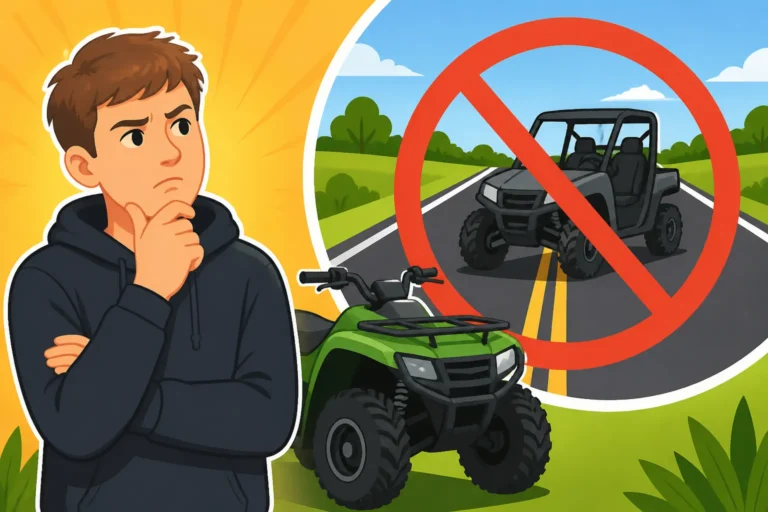
Iowa's regulations distinguish between different types of roads, and not all are open to ATV and UTV traffic. Generally, we're talking about secondary roads, which are maintained by the county. The key here is "unpaved" versus "paved" and whether the county has specifically authorized use.
Many of Iowa's beautiful [Unpaved County Secondary Roads in Iowa] are open for ATV and UTV use, often forming the backbone of connecting routes for riders. These are typically the gravel roads you think of when picturing rural Iowa. However, even on these roads, you're expected to operate your machine just like any other vehicle, following traffic laws and being courteous to others. It's not a free-for-all; speed limits, stop signs, and common sense still apply. The spirit of these rules is to allow access while maintaining safety for all road users, including farmers moving equipment and families driving to town.
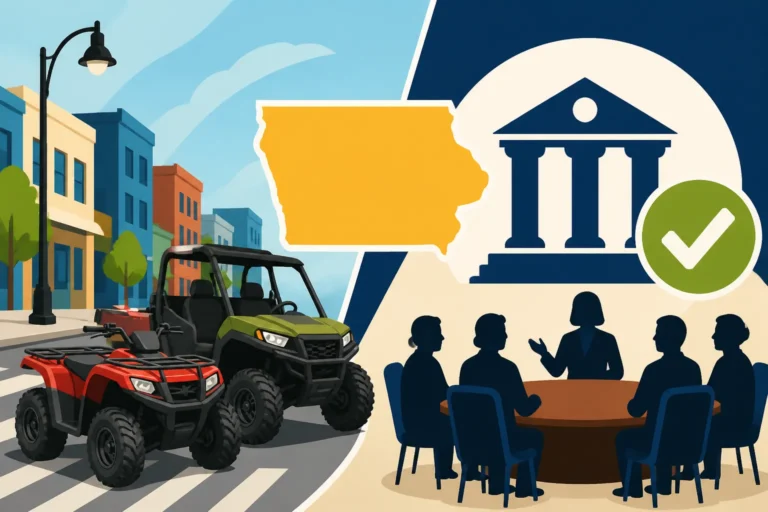
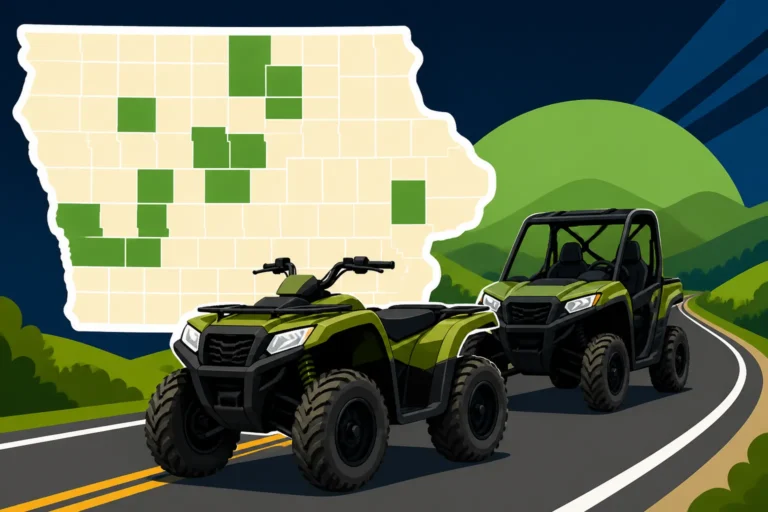
When it comes to [Paved Secondary Roads and County Authorization], the rules get a bit tighter. A county's board of supervisors must specifically vote to open up specific paved secondary roads to ATV and UTV traffic. This isn't automatic, and it's not universal across all 99 counties. What might be legal in one county could be completely off-limits in a neighboring one. This means you can't just assume that because a road is "secondary," you're good to go. It’s always your responsibility to check with the specific county's sheriff's office or highway department before venturing onto a paved secondary road. A quick call can save you a significant headache and potential citation. This local authorization process ensures that each county can weigh the specific traffic patterns, safety concerns, and resident feedback unique to their area.
The "Most Direct Route" Principle and Road Use
Iowa law incorporates a very important concept for ATV and UTV riders: the "most direct route." This isn't just a suggestion; it's a legal guideline that dictates how you can use public roads. Essentially, you're allowed to use authorized public roads to get from one authorized area to another, but you must take the shortest, most reasonable path.
This means you can use an approved secondary road to travel [The Most Direct Route to an Iowa OHV Park] or to travel [The Most Direct Route Home in Iowa] after a day of riding. You can't just cruise around aimlessly on public roads for pleasure. For example, if your destination is an OHV park, and there are two routes, you are legally bound to take the shorter, most straightforward one that utilizes approved roads. You can't take the scenic route that adds ten miles and passes through areas not specifically authorized for ATV/UTV use, even if it feels more fun. This principle is designed to minimize the time ATVs and UTVs spend on public roads, thereby reducing potential conflicts with other vehicles and residents, and limiting wear and tear on roads not designed for extensive off-highway vehicle traffic.
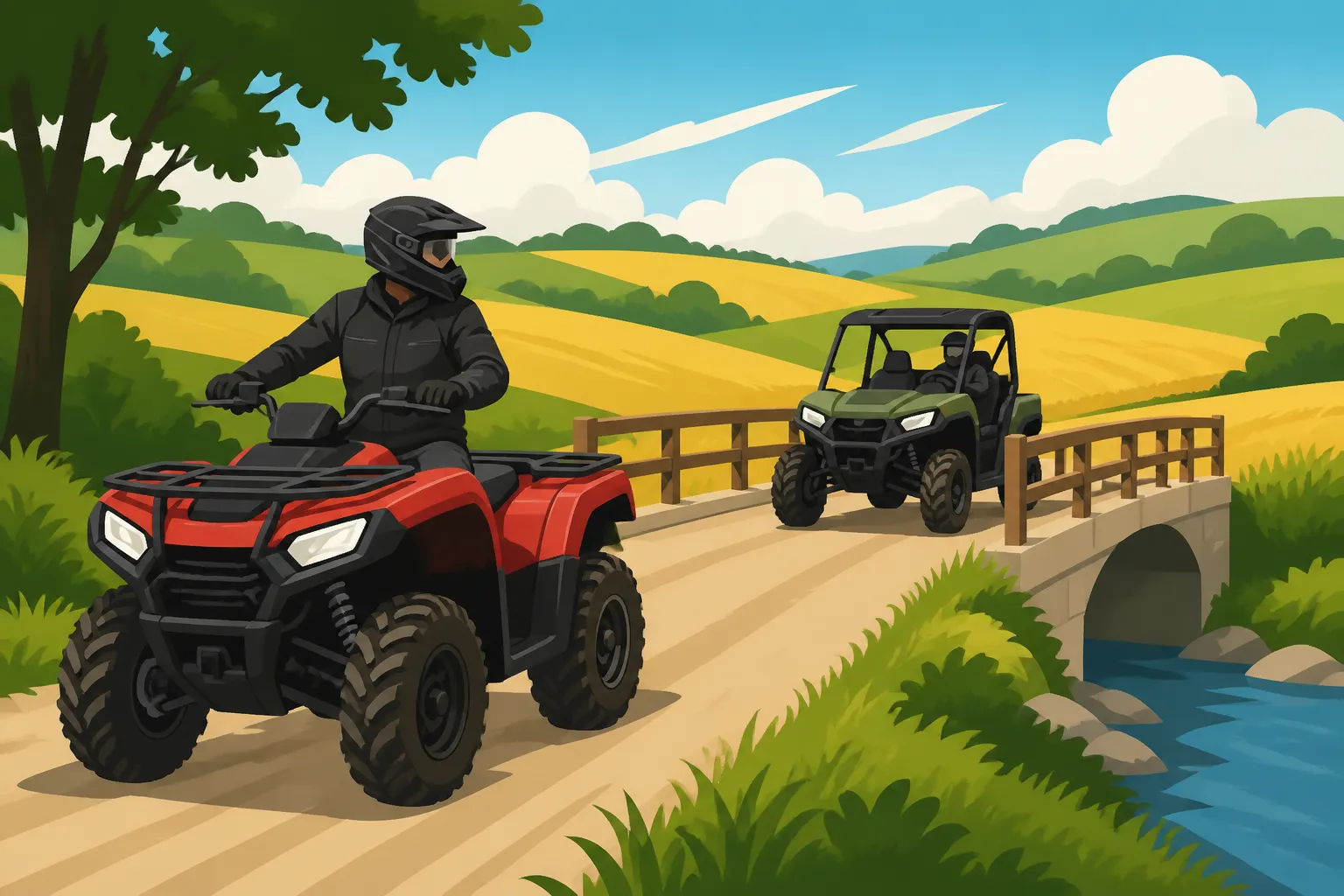
When you encounter a bridge on one of these designated "most direct routes," that bridge is considered part of the route. The presence of a bridge does not typically invalidate the "most direct route" principle itself, but it does introduce specific safety and operational considerations, which we'll delve into shortly. The intention is clear: roads are for transit to and from riding areas, not for joyriding.
Basic Requirements for Road-Legal Machines
Riding on any public road in Iowa, including secondary roads with or without bridges, means your ATV or UTV needs to meet certain requirements, much like any other vehicle. It's not enough just to be on an "authorized" road; your machine and your readiness as a driver are also under scrutiny. Ignoring these can lead to fines and a potentially unsafe situation for everyone. Many riders think their machine is fine as is, but often, a few additions are needed.
First off, your machine needs to be properly equipped. This means having working headlights and taillights, ideally on at all times, especially on roads. [Headlights On All Day in Iowa] isn't just a good idea; it's often a legal expectation for visibility. You also need a functioning horn and at least one mirror that allows you to see 200 feet to the rear. If your machine doesn't have these from the factory, you'll need to add them. Aftermarket suppliers like SuperATV offer a wide array of road-legal kits and individual components—from turn signals to mirrors—that can help you bring your machine into compliance. These aren't just for avoiding tickets; they are critical safety features when sharing the road with faster, larger vehicles.
Beyond the machine itself, you, the operator, have requirements. You must be at least [Iowa's 18-Year-Old Driver Requirement] to operate an ATV or UTV on public roads. This means no minors, even with a valid safety certificate, can legally ride on these routes. You also need a valid driver's license. This isn't a special ATV license, but a standard Iowa driver's license, demonstrating you've passed basic driving tests and understand road rules. [Iowa Driver's License Rules for ATVs] are clear on this point: you need to be a licensed adult.
Finally, you absolutely must carry proof of [Iowa ATV Insurance Requirement]. Iowa law mandates liability insurance with specific minimum coverage limits: $20,000 for bodily injury to one person, $40,000 for bodily injury to two or more people, and $15,000 for property damage. If you're pulled over and cannot provide proof of insurance, you could face significant penalties, including fines of $250 or more. This isn't just a bureaucratic hurdle; it's protection for you and others in case of an accident. Make sure your policy is current and easily accessible, perhaps stored digitally on your phone or a laminated card in your machine's storage compartment.
Navigating Bridges on Iowa's Secondary Roads
So, you're on an authorized secondary road, you're taking the most direct route, and your machine is street legal. Now, you see a bridge up ahead. This specific situation brings its own set of considerations, both legal and practical. Bridges, by their very nature, can be pinch points in the road, demanding extra vigilance and adherence to safety.
Legal Implications of Crossing a Bridge
In most cases, if the secondary road itself is authorized for ATV or UTV use, then the bridges along that road are considered part of the authorized roadway. There aren't typically separate, specific prohibitions against ATVs or UTVs only on bridges if they are otherwise allowed on the road. The bridge is simply a segment of that road.
However, this doesn't mean you can throw caution to the wind. The general rules for road riding still apply, sometimes with even greater emphasis due to the unique characteristics of bridges. For instance, [Iowa's 35 mph Cap] on public roads is especially critical on a bridge. Bridges often have reduced sight lines, narrower lanes, and no shoulders, making high speeds incredibly dangerous. You should always be prepared to slow down significantly when approaching and crossing a bridge, even if the road leading up to it allowed for higher speeds.
Furthermore, remember that you are sharing the road. Bridges concentrate traffic, meaning your chances of [Meeting a Combine on a Gravel Road] or another vehicle are higher in that confined space. The legal expectation is that you will operate your machine safely and defensively, yielding to larger vehicles when necessary and maintaining your lane. There are no special "bridge rights" for ATVs; you are simply another vehicle using a segment of the public road system.
Safety Considerations for Bridges
Crossing a bridge on your ATV or UTV demands a heightened level of awareness and specific safety practices. These structures present unique challenges that aren't always present on the open road.
One of the biggest concerns is reduced traction. Many older Iowa bridges, particularly on secondary roads, may have steel grate decks, wooden planks, or worn pavement that can be slick, especially when wet or icy. Even modern concrete bridges can have expansion joints or metal plates that reduce tire grip. Always approach a bridge at a reduced speed, and avoid sudden braking or accelerating while on the bridge deck. Be especially cautious if you have mud on your tires from a trail ride, as this can further reduce traction on a smooth bridge surface.
Width limits and blind spots are also major issues. Some secondary road bridges, especially those in very rural areas, can be quite narrow, allowing barely enough room for two vehicles to pass. Your UTV, especially if it's a wider model, might feel very constrained. Always assume there could be oncoming traffic, even if you can't see it. Approach blind curves or rises on a bridge with extreme caution. Consider adding additional mirrors or even a rear-view camera, like those offered by SuperATV, if your machine doesn't provide adequate visibility for tight situations.
Finally, sharing with other vehicles is non-negotiable. Bridges are not places to test your machine's limits or assume you have the right-of-way. Always be prepared to stop, slow down, or pull over safely if a larger vehicle needs to pass. Farm equipment, semi-trucks, and cars move faster and have less maneuverability. Your smaller, more agile machine needs to defer to them in these confined spaces. Make eye contact with other drivers if possible, and use hand signals if your turn signals aren't clearly visible. The goal is to cross the bridge without incident, and that means prioritizing safety and common courtesy above all else.
Equipment and Preparedness for Bridge Crossings
While your general road-legal equipment checklist covers most situations, there are a few specific points to emphasize when it comes to bridges. Being adequately prepared can make a significant difference in your safety and confidence.
Visibility is paramount. On a bridge, especially a narrow one or one with blind approaches, being seen by other motorists is critical. Ensure your headlights and taillights are clean and fully functional. Consider adding auxiliary lighting, particularly brighter LED options, if you frequently ride during dusk, dawn, or in adverse weather. Reflective tape on your machine, especially if it's a darker color, can also enhance visibility. A bright, slow-moving vehicle triangle mounted on the rear of your ATV or UTV is often required and always a good idea, as it warns others that you'll be traveling at a reduced speed.
Proper tire pressure and condition are also more important on bridges. Ensure your tires are properly inflated for road use (which might be higher than for trail use) and that they have adequate tread. Worn tires will have significantly less grip on potentially slick bridge surfaces. Before heading out, quickly inspect your tires for any damage or excessively low pressure.
Finally, having a communication plan can be beneficial. While not legally required, if you're riding with a group, consider using two-way radios to communicate about oncoming traffic or hazards ahead, especially on blind bridge approaches. This can provide valuable seconds to react. Also, always have your cell phone charged, even in rural areas where signal might be spotty, in case of an emergency or breakdown on or near a bridge. Aftermarket accessories, such as secure phone mounts from SuperATV, can keep your device accessible yet protected.
Road-Sharing Etiquette and Enforcement
Riding on Iowa's secondary roads, whether traversing a bridge or just enjoying the open gravel, is a privilege that comes with significant responsibilities. How you conduct yourself can impact not only your own experience but also the future of ATV and UTV access on public lands.
Sharing the Road with Other Traffic
When you're out on a secondary road, remember that ATVs and UTVs are still somewhat novel in this environment for many other drivers. You're sharing the space with cars, pickup trucks, and especially large farm equipment. Understanding how to interact with these different types of vehicles is crucial for a safe and enjoyable ride.
When you [Meeting a Combine on a Gravel Road], for instance, your small machine needs to yield. Combines and other large agricultural implements are incredibly wide, slow, and often have blind spots. They cannot easily maneuver around you. The safest practice is to slow down, pull over as far to the right as safely possible (or even onto the shoulder if it's stable enough), and let them pass. Making eye contact with the farmer if possible can help ensure they've seen you. Never try to race a combine or squeeze by in a tight spot; it's simply too dangerous. The same goes for semi-trucks, particularly those hauling grain or livestock, which have very long stopping distances and limited visibility.
Always use appropriate signals for turns and stops. Even if your machine doesn't have factory turn signals, use clear, unambiguous hand signals. This communicates your intentions to other drivers and reduces the chance of misjudgment. Maintain a safe following distance, just as you would in a car, and avoid kicking up excessive dust directly into other drivers' paths. Common courtesy goes a long way in fostering good relations between ATV riders and other rural road users. Remember, your actions reflect on the entire riding community.
What to Expect from Law Enforcement
A common concern for riders on public roads is encountering law enforcement. Deputies and conservation officers are well-versed in Iowa's off-highway vehicle laws, and they're primarily out there to ensure safety and compliance. Knowing [What an Iowa Deputy Checks Roadside] can help you be prepared and confident during a stop.
When you're pulled over, the deputy will first and foremost be looking for the basics:
- Registration Decal: Your current Iowa ATV/UTV registration decal must be properly displayed on the rear of your machine.
- Proof of Insurance: You must have your insurance card or digital proof readily available.
- Driver's License: Your valid Iowa driver's license.
- Age: Confirmation that you are 18 years of age or older.
- Machine Equipment: They'll check for the required lighting (headlights, taillights), horn, and mirror(s). They might also check for a visible slow-moving vehicle triangle if required for road use.
Be polite and cooperative. Provide the requested documents promptly. If you have questions about specific rules, a roadside stop can sometimes be an opportunity to learn, but it's not the time to argue. If you're confident in your compliance, you should have no issues. If you're unsure about any aspect of your machine or documents, it's best to sort it out before you hit the public roads.
Common Misconceptions and Fines
There are a lot of misconceptions floating around about ATV and UTV use on Iowa roads, and these can lead to costly mistakes. One big one is the idea that "if it's gravel, it's open." As discussed, this isn't always true, especially for specific routes or if a county has specific restrictions. Another myth is that you only need a safety certificate, not a full driver's license, for road riding. Again, this is incorrect; a valid driver's license is required for anyone 18 or older operating on public roads.
The consequences for non-compliance can be significant. [Iowa Fines for Illegal ATV Road Use] can quickly add up. Riding without registration, insurance, or a valid driver's license can result in hundreds of dollars in fines, not to mention potential towing fees for your machine and court costs. Operating under the influence is treated with the same severity as operating a car while impaired, leading to severe legal penalties.
The table below summarizes some key requirements for riding your ATV or UTV on authorized Iowa secondary roads, including those with bridges. It's a handy checklist to ensure you're always riding legally and safely.
| Requirement | Description | Why it's Important |
|---|---|---|
| Registration Decal | Current Iowa registration decal, displayed on the rear. | Legal proof machine is registered; funds trails. |
| Proof of Insurance | Minimum 20/40/15 liability coverage. | Protects you and others in case of an accident. |
| Driver's License | Valid Iowa driver's license. | Demonstrates competence to operate on public roads. |
| Age Requirement | Operator must be 18 years or older. | Safety and maturity for road hazards. |
| Headlights & Taillights | Fully functional, on day and night. | Essential for being seen by other vehicles. |
| Horn | Audible warning device. | To alert others to your presence or impending action. |
| Mirror(s) | At least one allowing 200 feet visibility to the rear. | Crucial for awareness of surrounding traffic. |
| Slow-Moving Vehicle Sign | Required on machines traveling less than 25 mph. | Warns faster traffic of your reduced speed. |
| Speed Limit | Max 35 mph on authorized roads. | Matches speed with road conditions and other slow vehicles. |
| Direct Route | Use only the most direct route between authorized points. | Minimizes time on public roads, reduces nuisance. |
| County Authorization | For paved secondary roads, ensure county has specifically authorized ATV/UTV use. | Guarantees legal access on specific paved sections. |
| Yield to Traffic | Be prepared to yield to larger and faster vehicles, especially farm equipment. | Prioritizes safety and traffic flow. |
The landscape of Iowa offers incredible opportunities for ATV and UTV enthusiasts, from sprawling trails to connecting rural routes. Riding across a bridge on an Iowa secondary road is a common part of that experience, but it's one that demands respect for the rules and a keen sense of awareness for safety. By understanding the regulations, properly equipping your machine, and practicing vigilant road-sharing etiquette, you can ensure that your adventures on Iowa's secondary roads—bridges and all—are both legal and enjoyable. Always prioritize safety, be prepared for the unexpected, and ride responsibly.
Disclaimer
This article is for general informational purposes only and does not constitute professional advice. Laws, prices and regulations vary by location and change over time. Consult a qualified professional for guidance on your specific situation.