Meeting a Combine on a Gravel Road
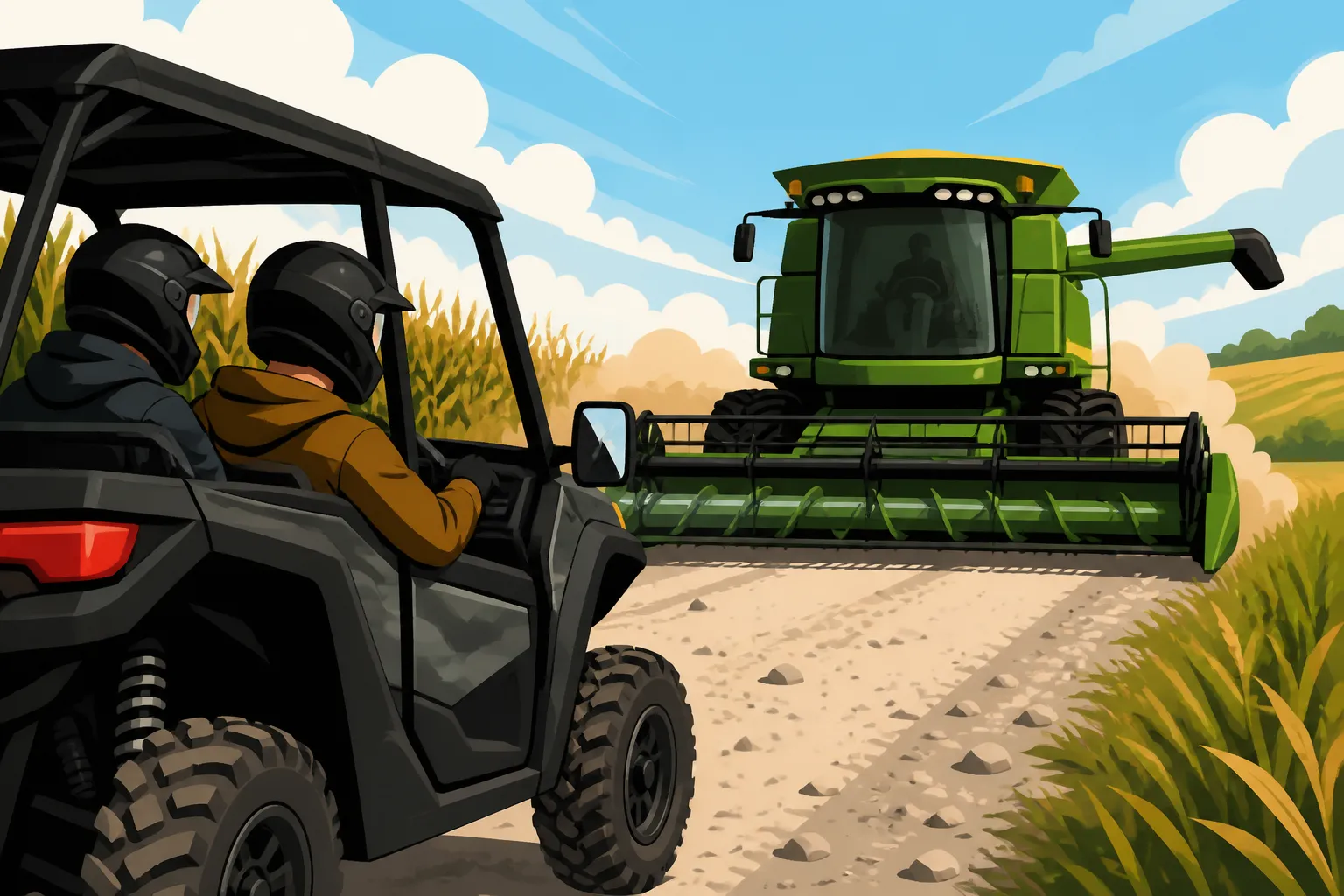
A combine can fill most of an Iowa gravel road, and its operator may not see a quad or side-by-side tucked beside a dusty shoulder. This guide explains how to prepare for that meeting, where to position your machine, when to stop, and how to avoid turning a routine encounter into a close call.
Before You Ride on an Iowa Gravel Road
Check that the road and your machine are eligible
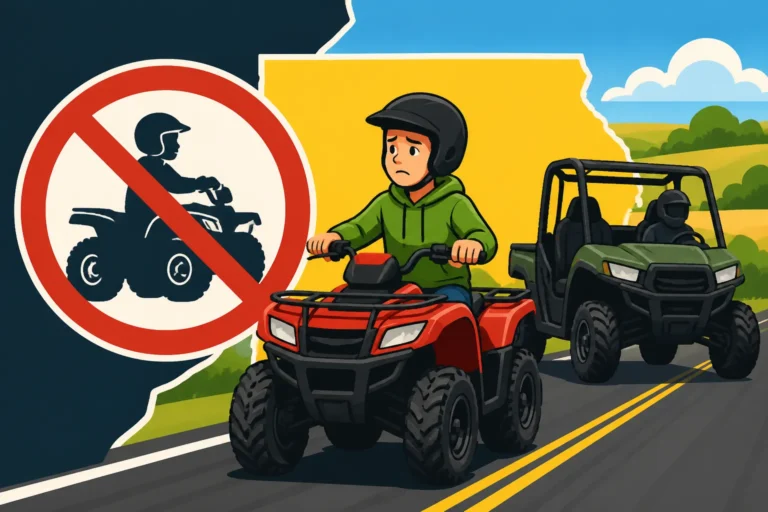
A gravel surface does not automatically mean every ATV or UTV can use that road. Iowa has rules for off-road vehicles on public roads, and local restrictions or road conditions can affect where riding is allowed. Before setting out, review [Iowa Rules for Riding a Gravel Road] and [Iowa's Unpaved Secondary Road Rule]. If your trip includes connecting roads, also check [Iowa's Most Direct Route Rule] rather than assuming a route is permitted just because it is convenient.
Your machine and your own riding situation matter, too. Road-use requirements can include registration, a valid driver’s license for the operator, insurance, lighting, a mirror, a horn, and a slow-moving vehicle emblem. The specifics depend on the rules that apply to your ride, so use [Are ATVs Street Legal in Iowa?] and [Iowa ATV Insurance Requirement] as starting points for checking what you need. Don’t wait until a combine appears behind a rise to discover that a required item is missing.
Road legality and safe riding are related, but they are not the same thing. A machine that meets the rules may still be difficult for farm equipment to see, especially in dust, at a hill crest, or when the combine is pulling a grain wagon. Make sure your lights work and your mirror is adjusted before you leave. A properly fitted mirror, including options from manufacturers such as SuperATV, can help you monitor traffic approaching from behind—but it does not replace looking carefully and making a safe decision.
Make yourself easier to notice
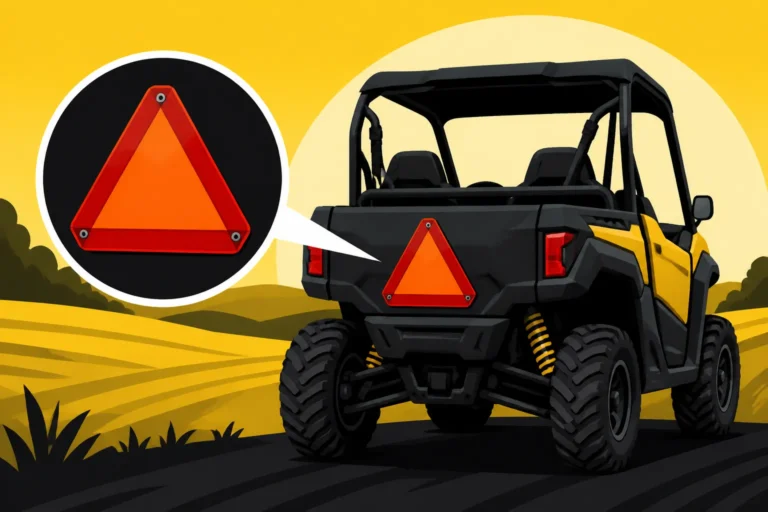
A combine operator’s view can be limited by the cab, mirrors, equipment, dust, and the machine’s size. Don’t assume the operator has seen you just because your ATV or UTV is brightly colored. Use required lights and visibility equipment as intended, and keep them clean enough to do their job. Check [Headlights On All Day in Iowa] and [Iowa Slow-Moving Vehicle Sign Rules] for more detail on visibility requirements.
For a road ride, think about visibility before you think about speed. Keep your machine in good working order, make sure your horn can be heard, and avoid riding so close to another vehicle that the operator has little time to react. If your setup includes aftermarket mirrors or lighting, such as equipment offered by SuperATV, check that it is installed securely and doesn’t obstruct your view or interfere with controls. Accessories can support visibility, but no accessory can guarantee that another driver will notice you.
A helpful pre-ride habit is to walk around the machine and check its lights, tires, brakes, mirror, and horn. Then ask yourself what a combine operator would see from the cab: Is your machine visible against the road and field? Is dust covering a lamp or reflector? Can you pull off without dropping into a deep ditch? These small checks are much easier to handle in the driveway than beside a large machine on a narrow road.
What to Do When You See a Combine
Slow down early and stay predictable
If you see a combine ahead, coming toward you, or approaching from behind, ease off the throttle early. Avoid sudden braking, swerving, or trying to squeeze past before the machine reaches you. On a loose gravel surface, abrupt changes can make a quad or side-by-side harder to control. A steady, unhurried response gives both you and the operator more time to judge the space available.
Keep to the right side of the traveled portion of the road when it is safe to do so, but don’t treat the shoulder as automatically safe. Gravel edges can be soft, rutted, sloped, or partly hidden by grass. A ditch may be close to the edge, and a heavy machine can leave little room for an ATV to recover if a tire slips. If you need to stop, choose firm, level ground where you can wait without blocking the combine’s path.
Use your mirror to watch what is behind you, but don’t fix your attention on it. A quick check can help you understand whether the combine is gaining on you; then return your eyes to the road and the space around your machine. A mirror from a brand such as SuperATV may help with rearward awareness, but it can’t show every blind spot or replace turning to check when it is safe.
Give the combine room to pass
If the combine is coming toward you, reduce speed and move right only as far as the surface allows. Stop if the road is too narrow for a safe meeting. Don’t ride onto an unstable shoulder or into a ditch simply to keep moving. If you’re unsure whether there is enough room, stopping in a safe place is usually less risky than trying to judge a tight gap while both vehicles are moving.
If the combine is approaching from behind, avoid racing ahead to find a place to pull over. Instead, slow down in a controlled way and look for a wide, firm turnout or driveway where you can get fully clear of the traveled lane. Signal your intention if you can do so safely, then wait until the combine has passed and there is enough visibility to re-enter. Don’t assume the operator will move over, stop, or give you a particular signal.
When you’re stopped, stay clear of the equipment and its path. A combine may be wider than it first appears, and attached equipment or a grain wagon can change how much space the whole setup needs. Give the operator room to maneuver, and don’t pull back onto the road until the entire machine and any trailing equipment are past. If dust makes it hard to see, wait for it to settle rather than following immediately into a cloud.
| Situation | Safer response | Avoid |
|---|---|---|
| Combine approaching from ahead | Slow early, keep right on firm ground, and stop if the road is too narrow | Squeezing through a tight gap |
| Combine approaching from behind | Find a safe, wide place to pull fully clear and wait | Accelerating to stay ahead or dropping into a ditch |
| Heavy dust after a pass | Wait until you can see the road and traffic clearly | Re-entering immediately into low visibility |
| No safe place to pull over | Reduce speed and remain predictable while looking for a suitable spot | Stopping abruptly in the travel lane |
Handling Tight, Dusty, or Unclear Encounters
Don’t use the ditch as your default escape route
A ditch can look like the quickest way to make room, but it may be steep, uneven, muddy, or hidden by grass. Driving into it can tip a machine, damage a tire, or leave you stuck where the combine operator can’t easily see you. Iowa’s rules for roadside riding also deserve attention: review [Iowa Rules for Riding a Ditch] instead of assuming that moving off the road is always allowed or safe.
If the road has a firm, wide shoulder, use judgment and make sure you can stop and remain stable there. If the edge is soft or sloped, stay on the road and stop in a safe position rather than forcing your machine off the gravel. Keep enough space from the centerline to allow the combine to pass, but don’t put a wheel where the ground may give way. If the road is too tight, wait for the operator to slow or find a wider area.
Avoid parking across a driveway, field entrance, or gate. Those openings may be exactly where the operator needs to turn or pull off. When you choose a place to wait, think beyond the immediate pass: Is the turnout level? Can you see approaching traffic? Can the combine clear you without cutting across your space? If the answer is uncertain, look for a better spot before stopping.
Treat dust and blind spots as real hazards
Dust can make a normal pass feel disorienting. Once a combine has gone by, your first instinct might be to follow right behind it or get moving again quickly. Take a breath and wait until you can see the road surface, the lane ahead, and any traffic coming from either direction. On gravel, visibility may take longer to return than you expect, especially on a dry road or in a crosswind.
Don’t linger close beside the combine cab or near the wheels while it is moving. The operator may have limited visibility around the machine, and the equipment can shift position as it navigates the road. Give it room to complete the pass. If you are riding with others, agree beforehand that the group will slow and pull over together when there is safe space, rather than splitting up or trying to pass one at a time.
A horn can help alert someone in an unusual situation, but it is not a substitute for patience, distance, or a safe stopping place. Use it only when it makes sense to communicate—not as a way to pressure the operator to move over. If you are uncertain about the equipment’s path, stay stopped and visible rather than attempting to thread through. For a closer look at road equipment basics, see [A Horn and a Mirror for Iowa Road Use] and [What an Iowa Deputy Checks Roadside].
After the Combine Passes
Re-enter only when you can see and move safely
Before pulling back onto the road, check both directions and make sure the combine and any trailing equipment are fully past. Look for dust, loose gravel, ruts, and oncoming traffic. If the shoulder slopes toward the road, re-enter gently rather than turning sharply at speed. Keep your machine under control as you accelerate; gravel can shift under the tires.
If you have been waiting near a hill, curve, or field entrance, take extra care. The combine may have blocked your view of traffic approaching from behind, and another vehicle could be following it. Use your mirror, look over your shoulder when safe, and wait for a clear opening. Don’t follow the combine closely just because its larger size makes the road ahead feel protected.
If the road remains dusty or the surface is roughened by heavy equipment, reduce speed until visibility and traction feel manageable. The safest place to resume riding is not necessarily the exact spot where you stopped. If you need to move a short distance to reach a better sightline, do so cautiously and without entering the combine’s path or blocking other traffic.
Plan for farm traffic rather than reacting at the last second
On rural Iowa roads, a combine may be only one part of a farm-traffic day. You may also encounter tractors, wagons, trucks, or equipment moving between fields. Build extra time into your ride so you don’t feel rushed to pass or squeeze through a narrow opening. A calm rider who is willing to wait is easier for other road users to anticipate.
When you’re riding with a group, tell everyone to keep a generous following distance and avoid bunching up near the farm equipment. The lead rider can signal the group to slow or stop, but each rider should still make their own safe decision. Don’t assume that a gap large enough for the first ATV will also be safe for a wider side-by-side or a trailer.
If you regularly ride gravel roads, review the road rules and equipment requirements before the season starts, and recheck them if your route, machine, or local conditions change. A roadside encounter is much easier to handle when the basic decisions—where to ride, what equipment is required, and how to stop safely—have already been considered. For related guidance, see [Iowa's Most Direct Route Rule] and [Iowa's Unpaved Secondary Road Rule].
Disclaimer
This article is for general informational purposes only and does not constitute professional advice. Laws, prices and regulations vary by location and change over time. Consult a qualified professional for guidance on your specific situation.