Iowa Counties That Allow ATVs on Paved Roads
Navigating Iowa's road rules for ATVs and UTVs can feel like trying to untangle a fishing line after a strong gust of wind – confusing, frustrating, and without a clear starting point. Many riders want to know if they can take their machine on paved roads in Iowa, especially when just trying to get from point A to point B or access trails. This guide will cut through the confusion and explain exactly how different parts of Iowa approach ATV and UTV use on paved surfaces, and what you, as a rider, need to do to stay on the right side of the law.
The Tricky Landscape of Iowa's Paved Roads for ATVs
Let's be upfront: Iowa's default stance on ATVs and UTVs on public roads is that they are generally allowed on unpaved secondary roads. This is the baseline, the standard, the rule you can count on almost everywhere. But, like many things in life, there are layers and exceptions, particularly when it comes to paved surfaces. The biggest frustration riders face is the lack of a single, statewide answer to "Can I ride my ATV on this paved road?" The short answer is, it depends entirely on where you are.
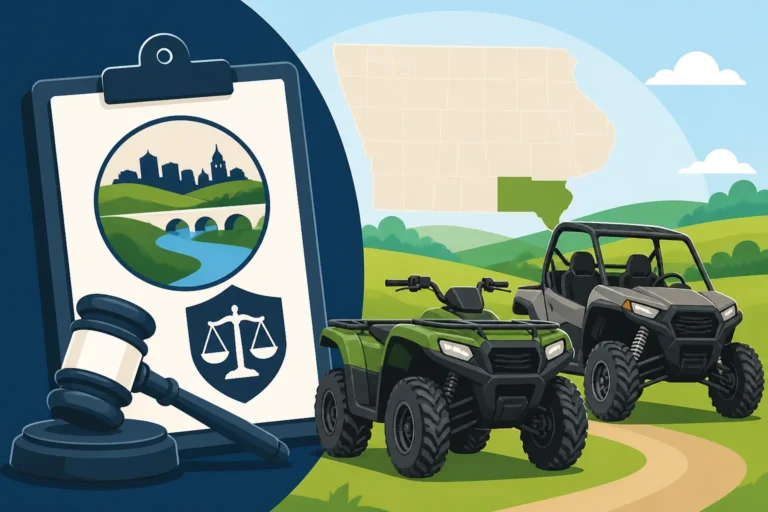
The state law provides a framework, but it gives a significant amount of autonomy to local governing bodies – specifically county boards of supervisors for secondary roads and city councils for city streets. This means that while some counties might open up certain paved secondary roads for ATV use, others might not, and the same goes for cities and their streets. You might drive from one county into the next, and suddenly, the rules change without a clear signpost. This patchwork of regulations can be a real headache for riders, especially those exploring new areas or just passing through.
It’s not like there's a neat little list published by the Iowa Department of Natural Resources (DNR) or the Department of Transportation (DOT) saying, "Here are all the paved roads you can ride." Unfortunately, that resource just doesn't exist. Each county and each city makes its own decision, and it's up to you, the rider, to figure out what those decisions are for your specific location. This can involve making phone calls, checking local government websites, or even physically looking for posted ordinances in county courthouses or city halls. It's a bit of a treasure hunt, but it's essential to avoid any unwelcome interactions with local law enforcement. For general guidance on where ATVs are allowed, you might find [Iowa Rules for Riding a Gravel Road] helpful as a starting point.
Why No Statewide Paved Road List Exists
The reason there isn't a comprehensive list is rooted in Iowa's legal structure itself. The state grants authority to local jurisdictions to make these specific decisions, rather than imposing a blanket rule. This local control allows counties and cities to consider their unique traffic patterns, population density, road conditions, and local sentiment when deciding whether to permit ATVs on paved roads. What works for a rural county with minimal traffic might not be suitable for a bustling urban center. This decentralization, while understandable from a local governance perspective, certainly complicates things for riders who just want a clear answer.
Think of it this way: your ATV registration decal makes you legal to ride in Iowa's designated OHV parks and on authorized public lands, but it doesn't automatically grant you access to every paved road. That access is a separate layer of local permission. For instance, you could be riding an [Unpaved County Secondary Roads in Iowa] all day long, enjoying the scenery, and then hit a stretch of pavement. If that specific paved section hasn't been explicitly authorized by the county, then your ATV might not be legally permitted on it.
This is why understanding the local authorization process is crucial. Without a central database, the burden falls on the rider to investigate. It’s not fair, perhaps, but it’s the reality of the system we operate in. When you plan a ride, especially one that might involve linking gravel roads with short stretches of pavement, you absolutely have to do your homework. You don't want to receive [Iowa Fines for Illegal ATV Road Use] for something you thought was permissible.
How Counties Authorize Paved Secondary Roads
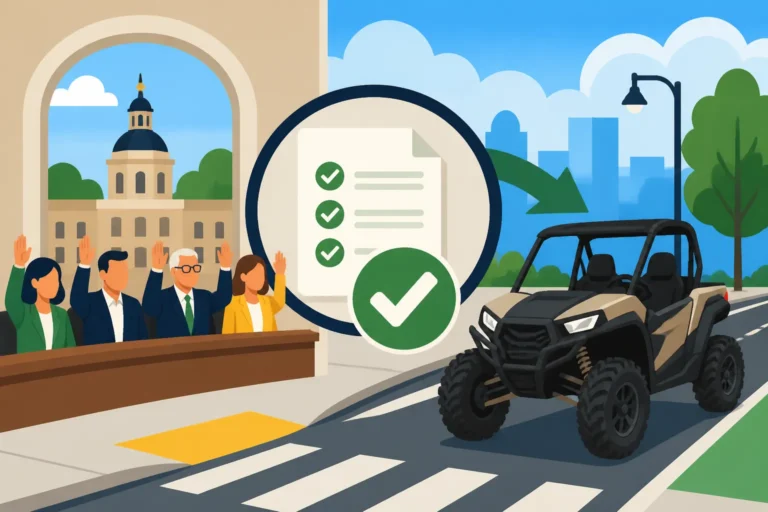
So, if there's no master list, how does a paved road become "open" to ATVs and UTVs in Iowa? It all comes down to the county's board of supervisors. These elected officials have the power to pass a resolution or ordinance that specifically allows off-highway vehicles (OHVs) on certain paved secondary roads within their jurisdiction. This isn't a casual decision; it's a formal legal act.
A county might choose to open a paved road for a variety of reasons. Perhaps it's a short connector between two gravel roads, providing better access for farmers or recreational riders without major disruption to traffic. Maybe it's a road that leads directly to an OHV park, making it easier for riders to get there from a nearby town or staging area. They weigh factors like road safety, traffic volume, community input, and the economic impact of recreational riding when making these decisions. For detailed information on the state's baseline, consult [Paved Secondary Roads and County Authorization].
When a county board of supervisors decides to authorize paved secondary roads for OHV use, they typically specify which roads or sections of roads are included. They might also outline specific conditions for use, such as time of day restrictions, speed limits (beyond the general 35 mph cap for ATVs on roads), or even vehicle types. It’s not just a free-for-all. For example, a county might open a paved road only from sunrise to sunset, or restrict it to machines that meet certain noise regulations. Understanding [How an Iowa County Authorizes a Paved Road] is key to grasping why some roads are open and others aren't.
Steps to Verify County Paved Road Authorization
Since there's no central resource, you, the rider, become the detective. Here’s a practical approach to finding out if a specific paved secondary road is open for ATV use:
- Identify the County: First, determine which county the paved road is located in. This seems obvious, but road names can be misleading.
- Contact the County Auditor or Recorder: These offices are typically the repositories for county ordinances and resolutions. Give them a call or check their website. You'll want to ask specifically for any resolutions or ordinances related to "off-highway vehicle use on paved secondary roads." Be prepared to provide the specific road name or number you're interested in. The County Recorder is also where you'd go for [Registering at an Iowa County Recorder] so they are familiar with ATV regulations.
- Check County Board of Supervisors Meeting Minutes: Many counties post their meeting minutes online. You can often search these for keywords like "ATV," "UTV," "off-highway vehicle," or "road use." This can give you historical context or upcoming discussions.
- Look for Local Signage: While not always comprehensive, some counties might post signs on authorized paved roads indicating that OHV use is permitted. However, relying solely on signage is risky, as signs can be missing or unclear.
It's always better to get information directly from the source. A quick phone call or email to the county auditor's office could save you a lot of headache and potential fines. Don't assume anything, because assumptions are often wrong when it comes to localized regulations.
| Step | Action | Best Contact/Resource | Key Question to Ask |
|---|---|---|---|
| 1 | Identify County Road | Google Maps, Local Maps | Which county is this road in? |
| 2 | Research County Ordinances | County Auditor's Office, County Recorder's Office Website | "Are ATVs/UTVs permitted on paved secondary roads in this county? If so, which ones are authorized by ordinance?" |
| 3 | Review Board Minutes | County Board of Supervisors Website | Search for "ATV road use," "OHV ordinance" |
| 4 | Check for Signage | On-site inspection of road | Are there specific signs indicating ATV use is allowed or restricted? |
| 5 | Verify with Law Enforcement | Non-emergency Sheriff's Office Line | "Can I ride my ATV on [Road Name] in [County]?" |
City Streets and Local Municipal Authority
Just like counties have authority over secondary roads, cities and towns have authority over their own streets. This means that even if a county opens a paved secondary road, once you enter city limits, a whole new set of rules might apply. A city council can pass an ordinance allowing ATVs and UTVs on certain designated city streets. This is often done to facilitate access to local businesses, allow residents to get to trailheads, or simply to accommodate the local culture where OHVs are a common mode of transportation for short distances.
However, the inverse is also true: many cities explicitly prohibit ATVs and UTVs on all paved city streets, or only allow them under very strict conditions. [City Streets and Iowa Council Authorization] highlights this local control. Some cities might allow ATVs on certain streets during specific hours, or only for residents to access their property or a designated off-road area. Others might have blanket bans, citing safety concerns with mixed traffic.
The challenge here is compounded because, as mentioned earlier, there is [Why Iowa Publishes No List of City Ordinances]. This means you can't just check one website for a statewide overview. You have to investigate each individual city or town you plan to ride in. This can feel overwhelming, but it's the reality.
Navigating City Ordinances for Paved Roads
If you’re planning to ride your ATV or UTV into a town or on city streets, here's how to approach it:
- Identify the City/Town: Know which specific municipality you're dealing with.
- Contact the City Clerk's Office: This is your primary point of contact. The city clerk is responsible for maintaining all city ordinances. Ask if there are any ordinances pertaining to "off-highway vehicle use on city streets" and be specific about the streets or areas you're interested in.
- Check City Websites: Many cities will post their ordinances online. Look for sections on "vehicles," "traffic," or "recreational vehicles."
- Community Bulletin Boards/Local News: Sometimes, local decisions like opening streets to ATVs are announced in local newspapers or on community bulletin boards, though this isn't a reliable method for comprehensive research.
For example, a small town might open its main street to ATVs on a specific weekend for a community event, while strictly prohibiting it otherwise. Or a city might have a standing ordinance allowing ATVs on all streets except major arterial roads. Without contacting the city clerk, you simply won't know for sure. Remember, [What an Iowa Deputy Checks Roadside] includes verifying your compliance with local ordinances.
What About the "Most Direct Route" Rule?
Even if a specific paved road isn't formally "authorized" for general ATV use by a county or city, there's a crucial exception in Iowa law that allows for temporary use of paved roads in certain situations: the "most direct route" rule. This rule is a lifesaver for many riders and it's important to understand its limitations.
Iowa law allows an ATV or UTV to operate on the shoulder or the extreme right of a paved road or highway, for the most direct route to or from:
- An authorized OHV trail or park (like getting to Gypsum City OHV Park).
- A gravel or unpaved secondary road where ATVs are generally permitted.
- The operator's farm or residence.
This isn't a free pass to cruise down the highway on your ATV. It's strictly about efficiency and necessity – using the shortest possible paved stretch to connect legal riding areas or access your property. For example, if you're on a gravel road, and the next gravel road over requires a half-mile stretch on an otherwise unauthorized paved county road, the "most direct route" rule would generally allow you to use that half-mile section. The key is that you must be actively traveling to or from one of those designated points. You cannot just take the scenic route or use it for general transportation. We've discussed this in detail in [Iowa's Most Direct Route Rule].
Limitations of the Most Direct Route
While helpful, the "most direct route" rule has strict boundaries:
- Temporary Use Only: This isn't permission for extended travel on paved roads. It's meant for short, connecting segments.
- Most Direct: You can't choose a longer, more convenient paved route if a shorter, direct paved route is available. It truly means the most direct.
- Shoulder or Right-Hand Lane: You must operate on the shoulder or the extreme right-hand side of the paved roadway, exercising due caution.
- Not All Paved Roads: The rule generally applies to paved secondary roads and state highways, but not necessarily to interstates or four-lane divided highways, which are almost universally prohibited for ATV use.
- All Other Road Rules Still Apply: Even on a "most direct route," you still need to follow all other Iowa road regulations for ATVs, including the 35 mph speed limit, being 18 years or older with a valid driver's license, carrying appropriate [Iowa ATV Insurance Requirement], having working headlights, taillights, a horn, and a mirror. You should also ensure you have a Slow-Moving Vehicle (SMV) triangle displayed on the rear of your machine. Riding your UTV or ATV down the highway to [Iowa Rules for Riding to an OHV Park] still means adhering to these critical safety and legal requirements.
So, while a county might not have explicitly "opened" a paved secondary road, you might still be able to use a small section of it to connect your ride under the "most direct route" provision. However, it's always safer and less ambiguous if the road is formally authorized. If you're riding home from a trail, the same rule applies, guiding your [Iowa Rules for Riding Home From an Iowa Trail].
What to Do Before You Ride on Paved Roads
Given the complexity and the localized nature of these rules, preparing before you ride is paramount. You don't want to find yourself in a situation where you're unknowingly breaking the law or, worse, putting yourself and others at risk.
Here's a checklist for any time you plan to ride your ATV or UTV on a paved road in Iowa:
- Check County Ordinances: For any paved secondary road outside of a city, contact the county auditor or recorder to see if a specific ordinance has opened it to OHVs. Remember that [Iowa Rules for Riding a Paved Secondary Road] are distinct from those governing gravel roads.
- Check City Ordinances: If your route involves any city streets, contact the city clerk's office for that specific municipality.
- Understand the "Most Direct Route": If no specific ordinance exists, ensure your paved road travel falls strictly within the "most direct route" rule, connecting authorized riding areas or your property.
- Confirm Your Machine Meets Road-Legal Requirements: This includes proper lighting (headlights, taillights, brake lights, turn signals if applicable), a horn, at least one mirror, and the slow-moving vehicle triangle. Many riders opt for accessory kits from companies like SuperATV to ensure their machines are fully compliant with these requirements.
- Verify Insurance and License: Make sure you have the mandatory liability insurance and a valid driver's license.
- Maintain 35 MPH or Less: Adhere to the speed limit of 35 mph or less on any public road.
- Know Your Position: Always ride on the extreme right-hand side of the road or on the shoulder.
It might seem like a lot of work, but a little bit of research upfront can save you from a lot of hassle and potential fines later on. The goal is always to enjoy your ride safely and legally, making sure you respect both the law and other road users.
Disclaimer
This article is for general informational purposes only and does not constitute professional advice. Laws, prices and regulations vary by location and change over time. Consult a qualified professional for guidance on your specific situation.