Which Machines Iowa’s Off-Road Vehicle Law Covers
It's easy to get tangled up in the jargon when you're just trying to figure out if your beloved quad or side-by-side actually fits into Iowa's "off-road vehicle" definition. The rules aren't always clear-cut, and what applies to your buddy's mud machine might be completely different for your farm UTV. This comprehensive guide is here to untangle the complexities of Iowa's off-road vehicle laws, explaining precisely which machines are covered and what that means for you, the rider.
Defining "Off-Road Vehicle" in Iowa
When you look at Iowa's code, the term "off-road vehicle" (ORV) isn't just tossed around casually; it has a very specific legal meaning. Understanding this definition is the first step in knowing where your machine stands in the eyes of the law. It impacts everything from where you can ride to whether you need a title or registration. The Iowa Department of Natural Resources (DNR) is the agency that oversees these definitions, and they're quite particular about the distinctions.
The Core Legal Definition
Iowa Code sets out clear parameters for what constitutes an "off-road vehicle." Generally, it refers to any motorized flotation-tire vehicle that's not registered as an automobile or truck, or licensed as a motorcycle. This definition broadly encompasses a few categories: off-road utility vehicles (UTVs), all-terrain vehicles (ATVs), and off-road motorcycles (dirt bikes). The key is that these machines are designed for off-highway use, meaning they're built to tackle unpaved terrain, trails, fields, and other environments where a standard road vehicle wouldn't typically go. They usually have features like high ground clearance, knobby tires, and suspension systems geared for rugged conditions. It's not just about where you currently ride it, but what it was manufactured to do. For example, a vehicle built to navigate rocky trails or deep mud bogs fits squarely into this category.
What the Law Doesn't Explicitly Cover
One of the biggest sources of confusion is often what the ORV law doesn't cover, or where it overlaps with other vehicle classifications. For instance, standard automobiles or trucks, even if they're 4x4s used extensively off-road, aren't typically considered ORVs in Iowa's legal sense because they are registered as road vehicles. Similarly, low-speed vehicles or golf carts, while often used off pavement, have their own specific definitions and regulations that set them apart from traditional ATVs or UTVs. The intent behind the design of the machine is paramount here. If it was made for the golf course, it's a golf cart, regardless of how many times you've taken it through the back forty. This is important because trying to register a golf cart as an ATV, or vice versa, will lead to a lot of frustration and probably a denied application at the county recorder's office.
The Importance of Weight and Width
Beyond the general design intent, specific physical characteristics like weight and width play a significant role in how an ORV is classified. While the general definition of an ATV often caps its width at 50 inches and its weight at a certain poundage, UTVs (or side-by-sides) typically exceed these measurements. These dimensions aren't just arbitrary numbers; they often dictate where a machine can legally ride on designated trails, what kind of safety equipment it might need, and even its eligibility for certain exemptions. Many trails, especially those managed by the DNR or local conservation areas, have width restrictions to prevent damage to the trail system and natural habitats. A wider UTV, while fantastic for hauling gear or multiple passengers, might find itself excluded from tighter ATV-specific trails. This distinction is critical for anyone looking to hit the trails at parks like Gypsum City OHV Park or Bluff Creek, as certain trail sections may only be suitable for narrower machines.
ATVs: The Traditional Trail Machine
For many Iowans, the term "off-road vehicle" immediately brings to mind the classic all-terrain vehicle, or ATV. These machines have been a staple for recreation, hunting, and light utility work across the state for decades. They represent the quintessential image of solo or two-up riding, tackling diverse landscapes with agility.
Quads and Their Distinguishing Features
When we talk about ATVs, we're generally referring to what are colloquially known as "quads" or "four-wheelers." These machines are characterized by their straddle seating position, handlebar steering, and four low-pressure tires. They're designed for a single operator, though some larger models are built to accommodate a passenger. Their typically narrower stance, often around 48 to 50 inches wide, gives them excellent maneuverability on tight trails and through wooded areas. This makes them ideal for exploring the varied terrain of Iowa's state parks and public lands where larger machines might struggle. The rider actively shifts their weight to control the ATV, making it a very engaging and physical riding experience. It's a direct connection to the machine and the ground, offering a sense of freedom that's hard to replicate.
Youth ATVs and Specific Regulations
Iowa also has specific provisions and regulations for "youth ATVs," designed for younger riders. These are typically smaller displacement machines, often with speed limiters or other safety features built in. The intent here is to provide a safe entry point for children to learn riding skills appropriate for their age and size. However, simply having a smaller machine isn't enough; Iowa law also dictates age restrictions and supervision requirements for operating these youth ATVs, especially on public lands. For example, riders under a certain age must typically be supervised by an adult, and there are requirements around obtaining an [Iowa ATV Safety Certificate Requirements]. Parents considering a youth ATV for their child should meticulously review these rules to ensure compliance and, more importantly, to prioritize their child's safety and proper training. It's not just about horsepower; it's about responsibility and appropriate skill development.
The Registration and Decal Requirements for ATVs
In Iowa, if your ATV is going to be operated on public land, designated trails, or even along the shoulders of certain public roads (where permitted), it must be registered with the county recorder's office. This process involves submitting proper documentation, including proof of ownership, and paying the required fees. Once registered, your ATV will receive an annual decal that must be prominently displayed on the machine. This decal serves as proof of registration and is your ticket to legal riding on public lands. Think of it as your license plate for the trails. Without it, you could face fines and penalties if caught by law enforcement. The [Iowa ATV Decal Placement] rules are strict, usually requiring the decal to be affixed to the rear of the machine in a visible location. This ensures that conservation officers and other authorities can easily verify that the machine is legally permitted to be where it is. Getting your ATV registered in Iowa is generally a straightforward process, but knowing the requirements beforehand can save you a lot of time and hassle. You'll want to visit your local county recorder, as that's where the actual registration happens, not the DMV. You can learn more about this process in [Registering an ATV in Iowa].
UTVs (Side-by-Sides): The Versatile Workhorse and Recreational Rig
While ATVs have a strong legacy, the rise of Utility Terrain Vehicles, commonly known as UTVs or side-by-sides, has dramatically reshaped the off-road landscape. These machines offer a different experience, blending recreational fun with serious utility, making them incredibly popular across Iowa for everything from farming to family trail rides.
Distinguishing UTVs from ATVs
The most immediate difference between a UTV and an ATV is the seating arrangement: UTVs feature side-by-side bucket seating, often with a steering wheel and foot pedals, much like a small car. They also typically have a roll-over protection structure (ROPS) and seatbelts for occupants. Unlike ATVs where the rider straddles the machine, UTV riders sit in the vehicle. This design allows for carrying multiple passengers (from two up to six in some models) and often includes a cargo bed, making them incredibly versatile for hauling tools, hunting gear, or camping supplies. UTVs are generally wider and heavier than ATVs, which, as discussed earlier, can affect where they can legally be operated. Think of a UTV as a compact, rugged utility vehicle that can also be a blast on the trails. Many UTV owners customize their rigs with aftermarket accessories for specific uses, from heavy-duty suspension for rough terrain to specialized plows for winter work. Companies like SuperATV offer a vast array of parts for UTVs, allowing owners to truly tailor their machines to their specific needs, whether it's for farm work, extreme trail riding, or simply enhancing comfort and capability.
The Passenger and Cargo Capacity Nuances
The ability to carry multiple passengers and significant cargo is a defining feature of UTVs and a major draw for many Iowa owners. This makes them ideal for group outings, family trail rides, or even assisting with work on larger properties where tools and supplies need to be moved frequently. However, with this increased capacity comes responsibility. Iowa law, and good sense, dictates that passengers should only ride in designated seating positions, utilizing the provided seatbelts. Overloading a UTV or allowing passengers to ride in the cargo bed can be extremely dangerous and is often illegal. It's crucial to consult your machine's owner's manual for specific weight limits and passenger guidelines to ensure safe operation. This capacity also ties into why [Iowa ATV Registration for a Side-by-Side] is typically handled in the same manner as an ATV, requiring proper registration and display of a decal for public land use. The core rules of off-road vehicle identification remain consistent, even with the differing form factor and utility.
Road Use Implications for UTVs
Because of their car-like features, UTVs often blur the line between off-road recreation and road-legal vehicles, leading to much confusion about their use on Iowa's public roads. While some cities and counties in Iowa do allow UTVs on certain designated roads, this is not a statewide blanket permission. Generally, UTVs are considered ORVs and are not designed or legal for extensive public road use without specific local ordinances and adherence to strict equipment requirements (like lights, mirrors, and turn signals). If you're hoping to cruise your UTV down Main Street, you'll need to check with your local city council and county board of supervisors for their specific rules. Attempting to ride a UTV on a public road where it's not explicitly permitted can lead to fines and citations. This is a critical distinction that many UTV owners overlook, assuming that because their machine has a steering wheel and seatbelts, it must be street-legal. Always check [Iowa Rules for Riding an ATV on Iowa Roads] to understand the specific limitations and requirements before you even think about putting tires on pavement.
Dirt Bikes and Off-Road Motorcycles
When the Iowa DNR defines "off-road vehicles," it's not just quads and side-by-sides. Off-road motorcycles, commonly known as dirt bikes, are also explicitly included under this umbrella. These are machines built for agility, speed, and navigating challenging terrain, offering a completely different riding experience than their four-wheeled counterparts.
The Specifics of Off-Road Motorcycles
Off-road motorcycles are two-wheeled vehicles specifically designed for unpaved terrain. They typically feature long-travel suspension, knobby tires for traction in dirt and mud, and lightweight frames. Unlike street motorcycles, dirt bikes often lack features required for road legality, such as headlights, tail lights, turn signals, and mirrors, or these features are minimalist and not DOT-compliant. Their engines are tuned for quick acceleration and power delivery suited for off-road conditions, rather than sustained highway speeds. Riders operate them by straddling the seat and using handlebars, similar to an ATV, but the balance and control techniques are unique to two wheels. Places like the motocross track at Gypsum City OHV Park are perfect examples of where these machines shine, allowing riders to push their limits on jumps, berms, and technical sections.
How They Differ from Street-Legal Motorcycles
The primary distinction between an off-road motorcycle and a street-legal motorcycle lies in their intended use and equipment. A street-legal motorcycle is manufactured and equipped to meet federal and state highway safety standards, allowing it to be registered and operated on public roads. This includes proper lighting, mirrors, speedometer, horn, and often emissions controls. Dirt bikes, on the other hand, prioritize lightweight construction, suspension travel, and off-road performance over street legality. While some "dual-sport" motorcycles are designed to be street-legal and capable off-road, a pure dirt bike is typically not. Trying to ride a pure dirt bike on public streets in Iowa will run into immediate legal issues due to missing safety equipment and lack of proper registration. It's crucial not to confuse the two; just because it has an engine and two wheels doesn't mean it can go anywhere.
Iowa's Registration Approach to Dirt Bikes
Similar to ATVs and UTVs, off-road motorcycles must be registered in Iowa if they are to be ridden on public land or designated trails. This means going through the same process at the county recorder's office, providing proof of ownership, and obtaining the annual decal. The decal serves the same purpose: it signifies that the machine is legally permitted for off-highway use within the state's public trail systems. If you purchase a new or used dirt bike in Iowa, understanding the registration and [Titling an ATV in Iowa] process (which often applies similarly to off-road motorcycles) is essential to avoid any legal surprises down the line. Many riders might assume that because their dirt bike isn't street legal, it doesn't need any form of registration. This is a common misconception that can lead to citations. If you plan to ride your dirt bike at any of Iowa's designated OHV parks or on other public lands, get that decal!
Exemptions and Special Cases
While Iowa's off-road vehicle law casts a wide net, there are specific situations and types of machines that either fall outside the typical registration requirements or are granted special exemptions. Understanding these nuances can save you time, money, and potential legal headaches.
Agricultural and Implement of Husbandry Exemptions
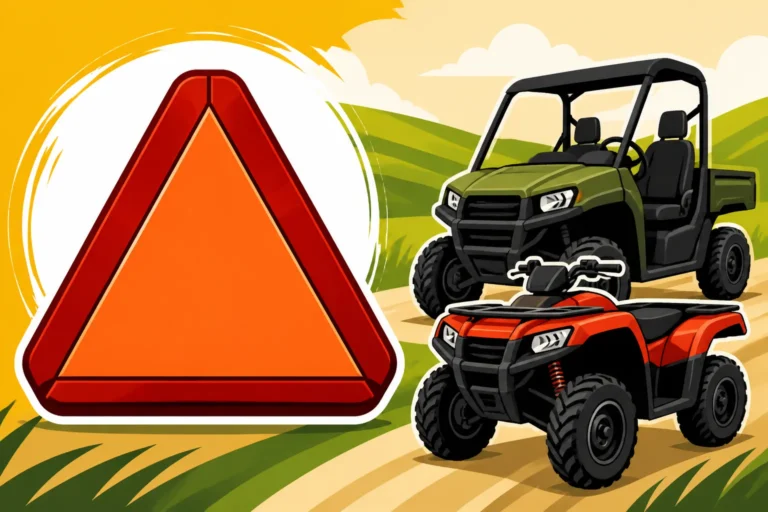
One of the most significant exemptions in Iowa's off-road vehicle law applies to machines used primarily for agricultural purposes. An "implement of husbandry" is broadly defined as a vehicle or special mobile equipment manufactured, designed, or adapted for agricultural purposes. This can include many UTVs and some ATVs when they are directly used in farming operations. If your UTV is primarily used for tasks like hauling feed, inspecting crops, moving equipment around a farm, or spreading fertilizer, it might qualify for this exemption. This means it might not need to be registered as an ORV. However, this exemption is not a free pass to ride anywhere. There are strict conditions, such as the machine being used only for agricultural purposes and not for recreational riding on public lands. If you take your "farm UTV" to Gypsum City for a weekend trail ride, it needs to be registered. There are also rules about how far an implement of husbandry can be operated on a public road (often limited to two miles from the farmstead) and only from sunrise to sunset. Understanding [The Implement of Husbandry Exemption in Iowa] is critical for farmers and landowners.
Closed-Course Competition Machines
Another area with specific considerations is machines used exclusively for closed-course competition. These are typically highly specialized dirt bikes or ATVs that are modified for racing and are only operated within the confines of a private, designated race track. Because they are not used on public lands or trails and are strictly for competition, they often fall outside the general ORV registration requirements. The key here is "closed-course." If a machine is used for practice at a private facility and never sees a public trail, it usually doesn't need an Iowa ORV registration. However, this is a very narrow exemption. Any deviation from strictly private, closed-course use, such as riding it on a public trail even "just for a minute," could void the exemption and put you in violation of the law.
Machines Iowa Exempts From Registration
Beyond agricultural implements and closed-course racers, there are a few other specific scenarios where machines might be exempt from Iowa's ORV registration requirements. For instance, machines owned and operated by the state of Iowa or a political subdivision (like a county or city) are typically exempt. Additionally, machines that are exclusively operated on private land, with the landowner's permission, do not require registration. This is a common scenario for many rural Iowans who only ever ride their ATV or UTV on their own property or a neighbor's field. The moment that machine crosses onto public property – even a roadside ditch or a public snowmobile trail – the registration requirement usually kicks in. It's vital to remember that "private land" means truly private, not publicly accessible land, even if it feels remote. You can find more detail on these specific scenarios in [Machines Iowa Exempts From Registration]. Always err on the side of caution and get clarification from your county recorder or the Iowa DNR if you're unsure about your specific situation.
Why Understanding Your Machine's Classification Matters
Navigating the world of ATVs, UTVs, and off-road motorcycles in Iowa isn't just about picking your favorite machine; it's about understanding the specific legal framework that governs its use. Misinterpreting these classifications can lead to everything from frustrating paperwork delays to costly fines.
Impact on Registration and Titling
The fundamental reason to understand whether your machine is an ATV, UTV, or off-road motorcycle under Iowa law is its direct impact on registration and titling. If your machine fits the definition of an off-road vehicle and you intend to operate it anywhere beyond private land, you must register it. This involves obtaining a title, especially if you're buying a new or used machine that hasn't been titled before. [Titling an ATV in Iowa] is generally required for transfer of ownership. The specific classification will guide the county recorder's office in processing your paperwork correctly. Without proper registration and the annual decal, your machine is essentially illegal for public use in Iowa. This means no riding at state OHV parks like Bluff Creek or Nicholson-Ford, and no venturing onto legal gravel roads. It also impacts [Iowa's Nonresident User Permit] for visitors; their home-state registration needs to align with Iowa's machine definitions.
The Connection to Road Use Rules
Perhaps one of the most common points of confusion and contention arises when riders consider operating their off-road vehicles on public roads. Iowa has very specific, and often restrictive, laws regarding [Iowa Rules for Riding an ATV on Iowa Roads]. The type of machine you have (ATV, UTV, or dirt bike) will dictate if and how you can operate it on certain public roads. For instance, while some UTVs might look like small cars, they are still considered off-road vehicles by default, and their road use is heavily regulated by county and city ordinances, not a blanket state rule. The specific requirements for lighting, mirrors, insurance, and operator age often differ depending on the machine type and the local ordinance. Trying to use an ORV on a public road without understanding these intricate rules can quickly lead to a citation, and potentially, the machine being impounded. Don't assume your UTV is street legal just because you added a horn and turn signals; the underlying legal classification is what truly matters.
Safety Certificates and Operator Requirements
Finally, the classification of your machine also influences operator requirements, particularly concerning safety certificates and age restrictions. For example, Iowa requires an ATV safety certificate for operators between the ages of 12 and 17 who wish to ride on public land. This certificate proves they've completed an approved safety course, understanding the basics of safe operation. However, there are nuances. [Iowa ATV Safety Certificate Requirements] might differ for UTV operators (who are often exempt if they hold a valid driver's license) or for those operating off-road motorcycles. Understanding these distinctions ensures that every rider in your family, especially the younger ones, meets the legal requirements for safe and responsible operation. It's not just about avoiding a fine; it's about preventing accidents and ensuring everyone has a safe and enjoyable experience on the trails. Ultimately, knowing your machine's place within Iowa's legal framework for off-road vehicles protects you, your passengers, and your investment in what can be a significant hobby. Understanding [What an ATV Costs to Own in Iowa] goes beyond the purchase price; it includes the cost of compliance.
Here's a quick overview of how different machines typically fall under Iowa's ORV law:
| Machine Type | Key Characteristics | Primary Use | Iowa ORV Registration Required for Public Use? | Typical Road Legal Status | Common Exemptions (if any) |
|---|---|---|---|---|---|
| ATV (Quad) | Straddle seat, handlebars, 4 wheels, < 50" width | Recreation, hunting | Yes | No | Private land use, implements of husbandry |
| UTV (Side-by-Side) | Side-by-side seating, steering wheel, foot pedals, cargo bed | Recreation, utility, farm | Yes | No (unless local ordinance) | Private land use, implements of husbandry |
| Dirt Bike | Two wheels, straddle seat, handlebars, knobby tires | Recreation, racing | Yes | No | Private land use, closed-course competition |
| Golf Cart | Designed for golf courses, slower speeds, lighter construction | Golf courses, private roads | No (separate rules for road use) | No (unless local ordinance) | |
| Street Motorcycle | Designed for public roads, DOT compliant lights, mirrors, etc. | Public roads | No (street registered) | Yes | N/A |
| Implement of Husbandry | Manufactured/adapted for agricultural purposes, limited road use | Farm work | No (if strictly agricultural) | Limited | Strict agricultural use, limited road travel |
Disclaimer
This article is for general informational purposes only and does not constitute professional advice. Laws, prices and regulations vary by location and change over time. Consult a qualified professional for guidance on your specific situation.