Iowa Rules for Riding a Levee
There's a natural draw to levees for ATV and UTV riders in Iowa. They often look like perfect, ready-made trails – elevated, sometimes with a clear path, and offering unique views of the landscape. But the reality is far more complex than just spotting a nice stretch of ground and deciding to ride. Understanding the rules and risks associated with riding ATVs and UTVs on Iowa's levees is crucial for avoiding fines, ensuring safety, and respecting land ownership. This guide will walk you through the often-confusing landscape of levee access, ownership, and the regulations that dictate where you can and cannot ride your off-highway vehicle.
Understanding Levees in Iowa
When you see a levee, especially after heavy rains or along one of Iowa's many rivers, it can seem like an inviting, elevated pathway. However, their true purpose and the way they're managed are vital to understanding why recreational riding is largely restricted.
What Exactly is an Iowa Levee?
At its core, a levee is an engineered earthen structure designed to prevent or contain the flow of water. Think of them as protective barriers, holding back rivers, streams, or floodwaters from low-lying areas, farmland, and communities. In Iowa, with our extensive river systems like the Mississippi, Missouri, Des Moines, and Cedar Rivers, levees are absolutely critical for flood control. They're built with specific slopes and materials to withstand immense pressure from water, and their integrity is paramount. While they might look like a dirt path or a gradual hill, they are much more than that – they are part of a complex flood management system. Visually, they often present as long, elevated embankments, sometimes grassy, sometimes gravelly, stretching for miles along waterways. It's easy to mistake them for a natural feature or an informal trail, but their construction is highly intentional and regulated.
Who Owns Iowa's Levees?
This is where the ownership picture becomes really intricate, and it's a critical factor in determining riding access. Levees in Iowa can be owned and managed by a variety of entities, which directly impacts whether you can ride on them. Many major levees, particularly those along the Mississippi and Missouri Rivers, are part of federal flood control projects and are maintained by the U.S. Army Corps of Engineers. These are essentially federal property, or at least under federal jurisdiction. Then you have state-owned levees, often managed by the Iowa Department of Natural Resources (DNR) or other state agencies, usually protecting state parks or wildlife areas. Beyond that, many local levee districts, counties, or municipalities own and maintain sections of levees that protect specific communities or agricultural areas. Finally, and perhaps most confusingly for riders, a significant number of smaller levees or sections of larger ones are privately owned, often by farmers whose land they protect. This patchwork of ownership means that a blanket "yes" or "no" answer for riding is almost impossible without knowing the specific levee in question and who is responsible for it. It's rarely as simple as just assuming it's public land. [Iowa Rules for Riding Public Land] delve into this complexity further.
The General Rule: No Riding on Public Levees
It's a tough pill to swallow for many riders, but the general rule of thumb for public levees in Iowa is clear: recreational ATV and UTV riding is prohibited. This isn't just an arbitrary restriction; it's rooted in serious concerns about public safety, environmental protection, and the structural integrity of these vital flood control structures.
Federal and State Regulations
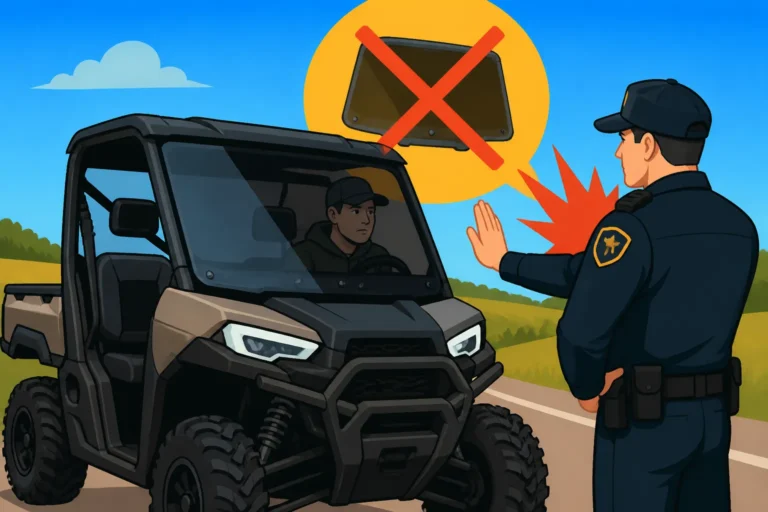
When it comes to federal levees, like those maintained by the U.S. Army Corps of Engineers, access is almost universally restricted to authorized personnel and vehicles only. These regulations are strict, and they are enforced. The Corps takes the integrity of its flood control structures very seriously because a breach can lead to catastrophic damage and loss of life. Similarly, state-owned levees, especially those within state parks, wildlife management areas, or other protected lands managed by the Iowa DNR, typically fall under rules that prohibit unauthorized motorized vehicle use. These areas are usually designated for specific recreational activities like hiking, fishing, or hunting (with specific regulations for vehicle use), but not general ATV/UTV recreation on levees. Attempting to ride on these structures without explicit, written permission from the managing authority can lead to significant fines, impoundment of your machine, and even legal action. It’s a costly risk that isn't worth taking.
Why the Restrictions Exist
The reasons behind prohibiting ATV and UTV riding on public levees are numerous and crucial. First and foremost is the structural integrity of the levee itself. Even seemingly minor ruts or compaction from tires can compromise the levee's ability to hold back water, especially during a flood event. Heavy machines, sharp turns, and repeated passes can erode the surface, damage the underlying soil structure, and create weaknesses that could lead to a breach. For the agencies responsible for these levees, maintaining their functionality is a top priority, and any activity that jeopardizes that is forbidden.
Then there's the issue of erosion and environmental impact. Levee slopes are often vegetated to help stabilize the soil. ATV and UTV tires can tear up this vegetation, leading to accelerated erosion, particularly on steep grades or after rain. This not only damages the levee but can also contribute to waterway pollution through sediment runoff. From a liability standpoint, allowing unrestricted recreational use opens up public agencies to immense legal risk in case of an accident. Levees can have steep drops, unstable surfaces, or hidden hazards, and agencies are keen to avoid situations where they might be held responsible for rider injuries. Finally, safety concerns for riders are also a factor. Levees are not designed as recreational trails, and riding on them can be inherently dangerous due to their construction and proximity to water. No matter how capable your machine, like a powerful UTV from SuperATV, the environment itself is often unsuitable for casual recreational riding.
Private Levees and Landowner Permission
While public levees are largely off-limits for recreational riding, the situation changes when you venture onto private land. However, even here, permission is not just a polite request – it’s a legal necessity, and it comes with its own set of responsibilities.
The Critical Role of Permission
If you're eyeing a levee that runs through private property, the only way you can legally ride your ATV or UTV on it is with the explicit, written permission of the landowner. This isn't a suggestion; it's a fundamental aspect of [Iowa Landowner Permission Rules]. Simply knowing someone who knows the landowner isn't enough; you need direct, unequivocal consent. This typically means a face-to-face conversation, a clear understanding of what areas you're allowed to access, and ideally, a written agreement. This protects both you and the landowner. Without it, even if the levee appears to be on private ground, you are trespassing, which can lead to legal penalties, fines, and a damaged reputation for all riders. Never assume implied permission just because a gate is open or there isn't a "No Trespassing" sign prominently displayed. A quick conversation can save a lot of headaches, and building a good relationship with a landowner can open up riding opportunities that would otherwise be closed.
Discussing Liability with Landowners
One of the biggest concerns for any landowner considering allowing ATV or UTV riding on their property, including on a levee, is liability. They worry about what happens if you get hurt on their land. In Iowa, specific laws like the Recreational Use Statute can offer some protection to landowners who allow recreational use of their land for free. However, these laws can be complex, and many landowners are still rightfully hesitant.
When approaching a landowner, be prepared to discuss these concerns. Here are a few points you might consider:
- Offer to sign a waiver: A signed waiver acknowledging the risks can sometimes provide additional peace of mind for the landowner.
- Proof of insurance: Demonstrate that you carry adequate ATV/UTV insurance. This shows responsibility and can help cover costs if there's property damage or an injury. [Iowa ATV Insurance Requirement] details minimum coverages.
- Discuss safe riding practices: Reassure them you're a responsible rider, will stick to agreed-upon paths, and will respect their property.
- Respect their rules: If they say no riding after dark, or only on certain days, adhere strictly to those rules.
- Offer help: Sometimes, offering to help with a task on their property, like hauling brush or doing some light maintenance with your UTV (using the robust capabilities of a machine equipped with SuperATV accessories, for example), can build goodwill and trust.
Remember, a landowner's generosity is a privilege, not a right. Addressing their concerns proactively and showing genuine respect for their property and wishes is the best way to gain and maintain access.
Exceptions and Misconceptions
While the general rule for recreational riding on levees is "no," there are specific situations or uses that might lead to confusion, as well as outright misconceptions about access. Understanding these nuances is key to navigating Iowa's rules responsibly.
Agricultural Use and Levees
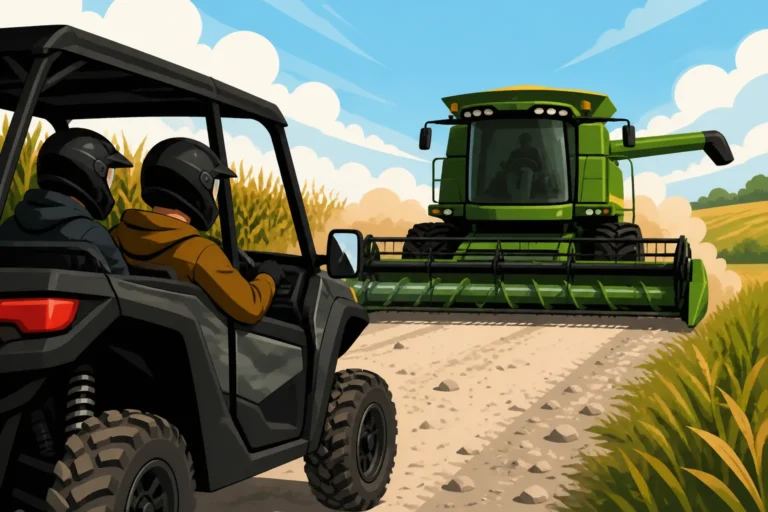
This is where the line can get a little blurry for some riders. Iowa law has provisions for "implements of husbandry," which are machines primarily used for agricultural purposes. Farmers often use ATVs and UTVs on their land, including areas near or on private levees, for tasks such as inspecting crops, maintaining fences, moving equipment, or checking on livestock. In these instances, the use of the ATV or UTV is directly tied to the agricultural operation, and it's not considered recreational riding. For example, a farmer might drive their UTV, perhaps outfitted with heavy-duty components from SuperATV for hauling or towing, along a levee to check on drainage tiles or assess flood damage to their fields. This is legitimate agricultural use.
However, the "implement of husbandry" exemption does not magically grant recreational riders access to levees, even if they're on farmland. Just because a levee runs through a cornfield doesn't mean you can ride it for fun. The exemption applies to the purpose of the ride, not just the location. If you're joyriding, you're not engaged in agricultural work, and thus, the exemption doesn't apply. [The Implement of Husbandry Exemption in Iowa] explains this concept in more detail. It's about functionality and intent, not just having a farm nearby.
Organized Events and Special Permits
On very rare occasions, you might hear about an organized event or a specific project that involves ATV or UTV use on a levee. These are almost always highly controlled situations, requiring special permits, extensive planning, and often involve official entities. For instance, a local levee district might organize a clean-up day where ATVs or UTVs are used to haul debris, or a sanctioned race might have a temporary permit to cross a specific levee section.
These are not opportunities for the general public to just show up and ride. They involve:
- Official application processes: Applying to the relevant federal, state, or local authority for a permit.
- Insurance and liability waivers: Comprehensive insurance coverage and detailed liability agreements are always required.
- Strict route and time restrictions: The permit will specify exactly where and when machines can operate.
- Supervision: Often, official personnel will be present to oversee the activity.
It's a misconception to think that because an event once had access, the levee is now open for all. These special permits are granted under very specific circumstances and are not a green light for general recreational riding. Unless you are part of an officially sanctioned and permitted event, assume that these exceptions do not apply to your individual recreational use.
Summary of Levee Access Rules
To help clarify the often-confusing world of levee riding, here's a quick summary of the general access rules:
| Levee Type | Ownership/Management | Recreational ATV/UTV Riding | Typical Reasons for Restriction |
|---|---|---|---|
| Federal Levees | U.S. Army Corps of Engineers | Prohibited | Structural integrity, erosion, liability, public safety |
| State Levees | Iowa DNR, other state agencies | Prohibited | Conservation, habitat protection, structural integrity, liability |
| Local Levees | County, city, levee districts | Generally Prohibited | Structural integrity, erosion, local ordinances, liability |
| Private Levees | Private landowners (e.g., farmers) | Permitted with WRITTEN landowner consent ONLY | Trespassing laws, landowner liability concerns, private property rights |
Remember, your best bet for legal, enjoyable riding in Iowa is to utilize the state's designated [Iowa's Eight Designated OHV Parks] or other clearly marked public trails. Riding on an unauthorized levee, even one that seems remote or unused, can have serious consequences, including [Iowa Fines for an Unregistered ATV] or for illegal operation. Always respect the land and the rules to keep riding fun and safe for everyone.
Disclaimer
This article is for general informational purposes only and does not constitute professional advice. Laws, prices and regulations vary by location and change over time. Consult a qualified professional for guidance on your specific situation.