Undivided Two-Lane Primary Highways in Iowa
It can be incredibly frustrating to look at a map, see an open stretch of road, and wonder why your ATV or UTV can't just take the most direct path to the next trail or even to the nearest gas station. Iowa's rules about riding off-highway vehicles (OHVs) on public roads are a complex tapestry, especially when it comes to those critical links in the road system – the undivided two-lane primary highways. This guide is here to untangle those rules, specifically addressing when, how, and if you can legally navigate these specific types of state roads, helping you avoid a ticket and ride with confidence.
Understanding Iowa's Road Use Laws for ATVs and UTVs
Before we dive into the specifics of primary highways, it's crucial to grasp the overarching philosophy behind Iowa's ATV and UTV road laws. The state generally wants to keep these machines off paved public roads due to safety concerns and their design, which isn't optimized for typical road speeds and traffic. However, Iowa recognizes the need for riders to connect trails, access private property, or perform agricultural tasks, so it carves out very specific exceptions. These exceptions are often what create the confusion, as they come with a long list of caveats.
The General Prohibitions and Exceptions
The core rule is simple: you generally cannot operate an ATV or UTV on a public street or highway in Iowa. But, as with most things in life, there's a "but." Iowa law then details specific scenarios where an OHV can be on a public road. These exceptions are highly conditional and often depend on the type of road, the purpose of the trip, the time of day, and the machine's equipment. For instance, riding on gravel county secondary roads is often permitted by default, while riding on paved secondary roads usually requires specific authorization from the county supervisors. It’s this mosaic of permissions and prohibitions that makes planning a ride so challenging. Many riders get confused, thinking a relaxed rule for a gravel road applies to a state highway, leading to unforeseen fines and headaches.
It's not about prohibiting fun; it's about ensuring public safety on roads not designed for the unique characteristics of ATVs and UTVs. These machines have different handling, braking, and visibility profiles compared to cars and trucks. The state's goal is to minimize interactions between these different vehicle types where possible, and where not possible, to regulate them strictly. This underlying principle helps explain why [Iowa Rules for Riding a State Highway] are so much more restrictive than rules for local gravel roads.
Age and Driver's License Requirements
One of the first hurdles you'll encounter when considering any public road use for your ATV or UTV is the age and licensing requirement. Iowa is quite clear on this: to operate an ATV or UTV on any public road where it is legally permitted, the operator must be at least 18 years old and possess a valid driver's license. This isn't just a suggestion; it's a hard and fast rule designed to ensure that anyone operating a machine in traffic has the experience and judgment expected of a licensed driver.
This requirement often catches younger riders, or even experienced off-roaders who don't hold a traditional driver's license, off guard. The state makes no exceptions for minors, even if they have completed an ATV safety course, when it comes to road operation. This means that a 16-year-old with a provisional license, who might be perfectly capable of operating their machine on a trail, is strictly prohibited from riding it on a public road. It's a significant point of frustration for many families who want to use their machines for practical purposes, like short trips to a neighbor's farm, but are restricted by these age guidelines. For more on this, check out [Iowa Minimum Age to Ride a Road]. The intent here is to prioritize the safety of all road users by requiring a minimum level of maturity and driving knowledge.
Equipment Mandates for Road Use
Simply being old enough and licensed isn't enough; your ATV or UTV must also meet specific equipment standards to be considered "street legal" on the roads where it's permitted. These requirements are put in place to ensure your machine is visible and can communicate its intentions to other drivers, just like any other vehicle on the road. Iowa mandates items like working headlights, tail lights, brake lights, a horn, and at least one rearview mirror. Additionally, your machine must display a slow-moving vehicle triangle on the rear.
Think about it: you're sharing the road with vehicles traveling at much higher speeds. Your machine needs to be seen, especially during dawn, dusk, or adverse weather conditions. Ensuring your [Headlights On All Day in Iowa] are functioning, and that your machine is equipped with a [A Triangle on the Back of an Iowa Machine] isn't just about avoiding a ticket; it's about making yourself as visible as possible to prevent accidents. Many riders often upgrade their lighting, horn, and mirrors to exceed minimum requirements, recognizing that enhanced visibility is paramount. It’s a common scenario for riders to realize, when planning a road trip, that their stock ATV or UTV might not meet all these requirements, necessitating a trip to the parts store or an online order.
Defining "Undivided Two-Lane Primary Highways" in Iowa
To truly understand the rules, we need to be crystal clear on what kind of road we're actually talking about. Not all "highways" are created equal in Iowa, and the legal distinctions can make all the difference. Misidentifying a road can lead to serious consequences.
What Constitutes a Primary Highway?
In Iowa, primary highways are typically those roads maintained by the state, often designated with numbers like U.S. 30, Iowa 14, or similar. These are major arteries designed for significant traffic flow and higher speeds, connecting cities and towns across the state. They are distinct from county secondary roads (which are maintained by counties and often have lower speed limits, especially if gravel) and municipal streets (which are maintained by cities and have their own local ordinances).
The designation of "primary" implies a certain level of traffic volume and speed, making them inherently more dangerous for slower-moving ATVs and UTVs. These roads are the backbone of Iowa's transportation network, but their design and purpose mean they are generally off-limits for most OHV use. It's easy for a rider, unfamiliar with the nuances of Iowa's road classifications, to assume any paved road is just a "road," without realizing the crucial difference in jurisdiction and rules. The Iowa Department of Transportation (DOT) manages these routes, and their primary concern is the safe and efficient flow of vehicle traffic, which often means keeping slower, off-road machines off them.
Identifying "Undivided Two-Lane" Characteristics
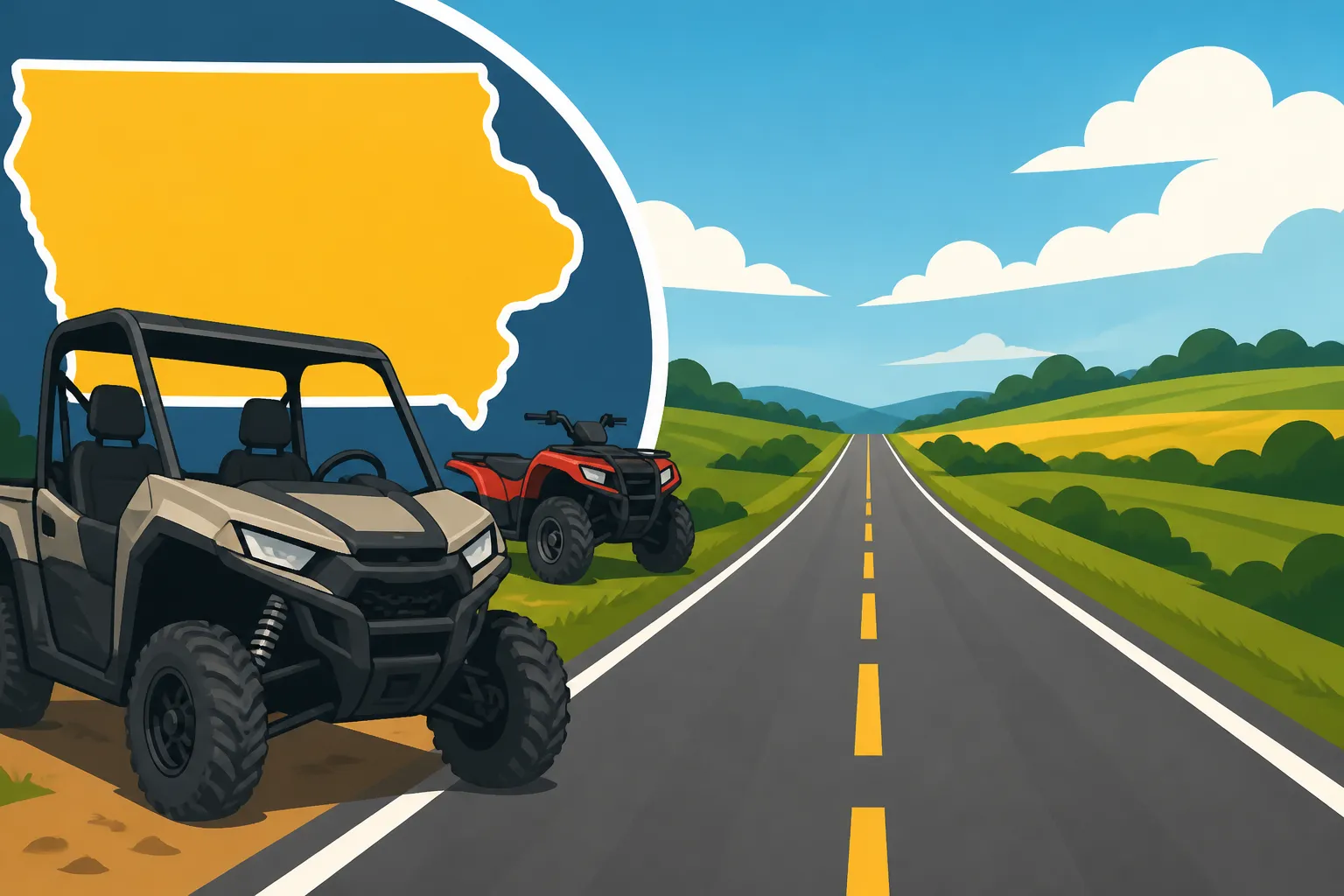
The "undivided two-lane" part of the description is equally important. This refers to a primary highway that consists of two lanes of traffic – one for each direction – without a physical barrier or wide median separating them. Think of a typical state highway where opposing traffic is separated only by painted lines, whether single or double yellow. This is in contrast to a four-lane highway with a median, or a multi-lane highway where traffic in opposing directions is separated by a substantial distance or barrier.
The distinction matters because undivided two-lane roads present a different set of risks than their divided counterparts. There's no buffer zone if a vehicle swerves, and passing maneuvers require entering the lane of oncoming traffic. For an ATV or UTV, which typically operates at much lower speeds than other highway traffic, this lack of separation can significantly increase the risk of collision. The absence of a physical divider means that head-on collisions are a real possibility, and the speed differential with cars and trucks becomes a critical safety factor. Riding these roads requires heightened awareness of these characteristics.
Examples in the Iowa Landscape
Across Iowa, you'll find countless examples of undivided two-lane primary highways. These are the roads that might take you between smaller towns, or serve as connectors to larger interstates. For instance, sections of Iowa Highway 2, 92, or even portions of U.S. 6 might fit this description, depending on the specific stretch. These aren't the interstates (which are entirely off-limits for ATVs/UTVs), nor are they the heavily built-up four-lane divided highways. They are often scenic, winding roads that traverse rural landscapes, making them seem inviting for an OHV rider looking for a shortcut.
However, their rural appearance can be deceiving. Even if they pass through sparsely populated areas, they still carry state highway traffic, including heavy trucks and faster-moving vehicles. It's important for riders to recognize these roads for what they are – state-maintained primary highways – and not confuse them with quieter county blacktops or rural gravel roads. Riders often express frustration when they see a seemingly empty stretch of such a highway, only to be told it's illegal to ride there, especially when [The Most Direct Route to an Iowa OHV Park] might involve a short section of one.
Specific Rules for Riding Undivided Two-Lane Primary Highways
Now that we understand what these roads are, let's look at the very narrow exceptions Iowa makes for OHVs on them. These aren't blanket permissions; they are highly specific circumstances.
The "Most Direct Route" Principle
Iowa law does provide a very limited exception for ATVs and UTVs to use undivided two-lane primary highways only when taking the most direct route to or from a designated off-highway vehicle park or trail, or to cross a highway at an intersection. This "most direct route" principle is crucial. It means you cannot joyride on a primary highway; your travel must be purposeful and minimal. You are essentially using the highway as a short bridge to get to a legal riding area.
This rule is often misinterpreted. It does not mean you can take the "most convenient" or "most scenic" route, but strictly the "most direct." If there's an alternative route on a gravel road or an authorized secondary road that adds a mile or two but avoids the primary highway, that alternative is likely the one you should take. The intent is to allow riders to access official trail systems, like [Riding to Gypsum City the Short Way] or [Riding to Bluff Creek the Short Way], without creating unnecessary detours, but only for the shortest possible distance on the highway. This is not an invitation for extended highway travel.
Speed Limits and Time of Day Restrictions
Even when you are legally on an undivided two-lane primary highway for the "most direct route," you are still subject to significant restrictions. One of the most critical is the speed limit: you cannot exceed 35 mph. This is a drastically lower speed than the posted limits for typical vehicles on these highways, which can easily be 55 mph or higher. This speed differential is a major safety concern, as other vehicles will approach and pass you much faster.
Furthermore, Iowa law generally restricts ATV and UTV operation on public roads to between sunrise and sunset. This means no night riding on primary highways, even if you have proper lighting. This restriction is again rooted in safety; visibility is inherently reduced at night, and the risks associated with the speed differential between OHVs and other vehicles are amplified in the dark. Imagining [Riding Home After an Iowa Sunset] on a primary highway highlights the danger. These limitations emphasize that the privilege of using these roads is conditional and designed to minimize danger during specific times.
Insurance and Registration Essentials
No matter the road type, if you're operating an ATV or UTV on any public land or road in Iowa, you are absolutely required to have it properly registered and display a valid Iowa DNR decal. This decal signifies that your machine is recognized by the state and that you've paid the necessary fees. Without a current registration, you're not only subject to fines but also operating illegally, regardless of other compliance factors. Your decal is also your admission to state OHV parks. For specifics on annual costs, see [Iowa ATV Registration Cost].
Beyond registration, Iowa mandates that any ATV or UTV operated on a public road must carry liability insurance. This isn't optional; it's a legal requirement designed to protect you and others in the event of an accident. The minimum coverage limits are generally 20/40/15, meaning $20,000 for bodily injury per person, $40,000 for bodily injury per accident, and $15,000 for property damage. If you're pulled over and cannot provide proof of insurance, you could face significant penalties. This rule is a major point of consideration when planning any road-legal ride, as many off-road-only policies don't cover road use. Understanding [Iowa ATV Insurance Requirement] is critical for any rider considering hitting the pavement.
Safety Considerations and Best Practices
Given the inherent risks of mixing slower-moving ATVs and UTVs with faster highway traffic, safety isn't just about following the law—it's about survival. You need to be extra vigilant and proactive in mitigating risks.
Visibility and Lighting for Highway Travel
As mentioned, proper lighting is legally required, but merely meeting the minimum isn't always enough, especially on a primary highway. Your machine needs to be seen from a significant distance, both day and night (if permitted, which for primary highways, is generally not). This means bright, properly aimed headlights and tail lights. Consider adding auxiliary lighting, especially on the rear, to make your machine more conspicuous. Bright, reflective clothing for riders is also a must.
For UTVs, ensuring your turn signals are highly visible and your brake lights are functioning flawlessly can literally be a lifesaver. When cars are approaching you at 55 mph and you're doing 35 mph, they close the gap quickly. Any enhancement to your visibility, such as additional LED light bars from brands like SuperATV, can make a significant difference. Riders often underestimate how much the larger size and speed of other vehicles affect how they perceive a smaller, slower OHV on the road. Making yourself impossible to miss is your primary defense.
Rider Preparedness and Road Awareness
Riding an ATV or UTV on a primary highway is not like riding a trail. It demands a completely different mindset. You must be hyper-aware of your surroundings: continually checking your mirrors, listening for approaching traffic, and anticipating potential hazards. Lane positioning is also critical; generally, you should stay as far to the right as safely possible without riding on the shoulder if it's not designed for traffic.
Road awareness extends to understanding the behavior of other drivers. Many motorists might not expect to see an OHV on a primary highway, or they might misjudge your speed. Always assume other drivers don't see you. This means being prepared to take evasive action, riding defensively, and never assuming you have the right-of-way. It's a stressful environment, and maintaining focus is paramount. Many seasoned riders will tell you that the most dangerous part of their ride is often the short stretch on a public road, not the technical trails.
Modifying Your Machine for Enhanced Safety
While stock machines might meet minimum requirements, many riders choose to enhance their ATVs and UTVs for better road safety. This can include upgrading to brighter LED lights, adding more robust mirrors for a wider field of view, or even improving the horn to ensure it's heard over highway noise. Stability can also be a factor; machines with wider stances or better suspension might handle road imperfections and crosswinds more predictably.
For example, aftermarket parts from companies like SuperATV offer a range of windshields, mirrors, and lighting options that can significantly improve your machine's road manners and visibility. Adding a full-size rearview mirror or even side mirrors can give you a much better awareness of traffic behind and beside you. Similarly, a more robust and weather-resistant windshield can protect you from road debris. These aren't just aesthetic upgrades; they are functional improvements that contribute directly to your safety when briefly sharing the highway with other vehicles.
Consequences of Non-Compliance and Enforcement
Ignoring Iowa's strict rules for OHV road use, especially on primary highways, carries significant penalties that go beyond just a slap on the wrist. Law enforcement in Iowa, including county sheriffs and DNR conservation officers, are well-versed in these regulations.
Fines and Penalties for Illegal Road Use
Operating an ATV or UTV illegally on a primary highway, or failing to meet the equipment, age, or licensing requirements, can result in substantial fines. These aren't minor parking tickets. A single citation can easily run into the hundreds of dollars, and multiple violations can stack up quickly. For instance, riding without proper registration, without insurance, or by an underage driver on a prohibited road could lead to several separate citations.
Beyond the monetary fines, there could be other consequences. Repeated offenses could lead to your machine being impounded, or in some cases, even more serious legal ramifications, particularly if an accident occurs. These penalties are designed to be a strong deterrent, reflecting the state's emphasis on safety on its primary road network. It's not uncommon to hear stories of riders who thought they were taking a quick, harmless shortcut, only to end up with a hefty bill and a lesson learned the hard way. Understanding [Iowa Fines for Illegal ATV Road Use] is essential for any rider.
Insurance Implications and Liability
Operating your ATV or UTV on a public road without the required liability insurance, or in a manner that violates state law, can have devastating financial consequences in the event of an accident. If you're involved in a collision and found to be operating illegally, your insurance policy (if you even have one that covers road use) might deny your claim, leaving you personally liable for damages. This could include medical bills for injured parties, repairs to other vehicles, and even legal fees.
Imagine a scenario where you're illegally riding on a primary highway, and an unforeseen event leads to a collision with a car. If your machine is unregistered, uninsured for road use, or you're violating age/licensing laws, you could be facing a financial catastrophe. The costs associated with such an incident can quickly run into tens or even hundreds of thousands of dollars. It's a risk that far outweighs the convenience of taking a shortcut. Always ensure your [Iowa ATV Insurance Minimum Coverage] meets the state's requirements before even considering public road use.
Deputies and the Roadside Stop
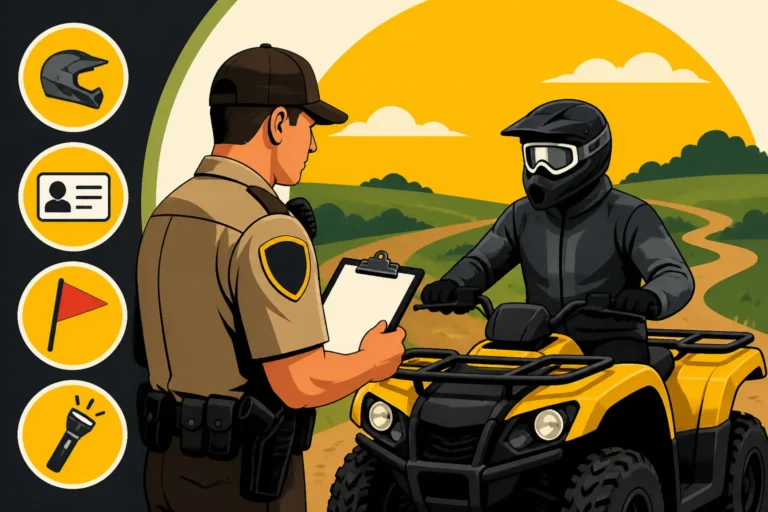
Law enforcement officers in Iowa are vigilant about ATV and UTV road use. If you're spotted on a primary highway, especially without the proper equipment or if you appear to be riding for purposes other than the "most direct route" exception, you will likely be pulled over. During a roadside stop, deputies or DNR officers will check your registration, insurance, driver's license, and verify that your machine meets all the necessary equipment requirements. They'll also assess if you're actually on a "most direct route" to an authorized riding area.
A typical scenario might involve an officer observing an OHV on a highway for an extended period, or seeing one turn onto a highway not leading directly to an OHV park. They might ask for your intended destination and route. If there's any discrepancy or if you cannot produce the required documentation, expect a citation. It's important to be polite and cooperative, but also understand that officers are enforcing laws designed to protect public safety. Knowing what [A Deputy at an Iowa Roadside Stop] checks can help you be prepared, or avoid the situation entirely by staying off prohibited roads.
Navigating Intersections and Crossing Wider Roads
Even if you're not riding on a primary highway, you may still need to cross one to get from one legal riding area to another. Iowa law accounts for this, but with very specific guidelines.
Crossing Multi-Lane Highways at Intersections
Iowa law permits ATVs and UTVs to cross a multi-lane highway, including four-lane divided primary highways, only at an intersection. This is a critical distinction. You cannot simply cross mid-block or at an undesignated point. The crossing must be made perpendicular to the highway, directly across the intersection, to get from one side to the other. You cannot ride along the shoulder or the median to reach an intersection; you must approach the intersection from a side road or an area where OHV use is already permitted.
This rule is about minimizing the time your machine spends in the path of high-speed traffic. Intersections typically have traffic controls (lights or stop signs) that can create gaps in traffic, making a crossing safer. However, even with traffic controls, you must exercise extreme caution. The speed and volume of traffic on a multi-lane highway can be overwhelming. Always yield to existing traffic and ensure you have a clear, safe path to complete the crossing before proceeding. For more details, consult [Crossing a Multi-Lane Highway at an Intersection].
Entering and Exiting Primary Highways
When using the "most direct route" exception to briefly travel on an undivided two-lane primary highway, the rules for entering and exiting are crucial. You must enter the highway directly from an authorized road or private property and exit as soon as your direct route is completed. You cannot "cruise" the highway looking for an exit. Your entry and exit points should be the shortest possible distance required to connect to your destination.
This often means carefully planning your route to identify the exact point where you must briefly utilize the highway. It might be from a gravel county road connecting to a private trail system, or from one trail section to another, with the highway as the unavoidable link. Riders must merge carefully into traffic, maintaining the 35 mph speed limit, and signal their intentions well in advance. The goal is to be on and off the primary highway as quickly and safely as possible, minimizing your exposure to faster traffic.
Yielding and Right-of-Way
Whenever you are operating an ATV or UTV on any public road, including when crossing or briefly using a primary highway, you must always yield to all other motor vehicle traffic. ATVs and UTVs do not have special right-of-way privileges, and in fact, due to their slower speed and unique design, they are generally expected to defer to other vehicles. This means coming to a complete stop, looking in all directions, and waiting for a completely clear path before proceeding.
Never assume another driver sees you or will yield to you. Highway traffic moves quickly, and an ATV or UTV can be harder to spot, especially in busy traffic conditions or low light. The onus is on the OHV operator to ensure a safe maneuver. This includes signaling turns well in advance, giving plenty of space to other vehicles, and being prepared to stop or slow down unexpectedly. Prioritizing safety by always yielding helps prevent conflicts and potential accidents.
Here's a quick overview of road types and general ATV/UTV access rules in Iowa:
| Road Type | General ATV/UTV Access | Minimum Age & License | Speed Limit | Key Considerations |
|---|---|---|---|---|
| Gravel County Secondary Roads | Generally Permitted | 18+ with Driver's License | 35 mph or Posted | Often the most accessible, but still require proper registration, insurance, and equipment. |
| Paved County Secondary Roads | County Authorization Required | 18+ with Driver's License | 35 mph or Posted | Specific counties must pass ordinances to allow ATV/UTV use; always check local rules. |
| Undivided Two-Lane Primary Highways | Limited (Direct Route Only) | 18+ with Driver's License | 35 mph (Max) | Only for the most direct route to/from designated OHV areas or for crossing at an intersection. No joyriding. |
| Four-Lane Divided Primary Highways | Crossing at Intersection Only | 18+ with Driver's License | N/A (crossing) | Only permitted to cross at an intersection; no riding along the highway. |
| Interstate Highways | Prohibited | N/A | N/A | Absolutely no ATV/UTV operation allowed. |
| City Streets/Alleys | City Authorization Required | 18+ with Driver's License | As Posted or Local Cap | Many cities prohibit, some have specific ordinances allowing use (e.g., [Riding the Streets of Waukon]). Check local rules. |
Disclaimer
This article is for general informational purposes only and does not constitute professional advice. Laws, prices and regulations vary by location and change over time. Consult a qualified professional for guidance on your specific situation.