Why Iowa Requires No Helmet on a Road
It's a common point of confusion for riders, especially those new to the Hawkeye State or visiting from areas with stricter regulations: why does Iowa, a state with a vibrant off-highway vehicle (OHV) scene, not require helmets when you're riding your ATV or UTV on public roads? This guide will dive deep into Iowa's unique approach to off-highway vehicle road use, demystifying the regulations, explaining the philosophy behind the helmet law (or lack thereof), and outlining everything else you need to know to ride safely and legally on Iowa's gravel and paved secondary roads.
Understanding Iowa's Approach to Off-Highway Vehicle Road Use
Iowa has a distinct legal framework for off-highway vehicles, which includes ATVs, UTVs, and dirt bikes. Unlike some states that might categorize these machines purely as recreational vehicles, Iowa recognizes their diverse uses, from agricultural work to recreational trail riding, and even limited road access. This multifaceted view influences how the state regulates everything from registration to safety gear.
The Distinct Legal Categories of OHVs
When we talk about ATVs and UTVs in Iowa, it's crucial to understand they fall under the umbrella of "off-highway vehicles" (OHVs). This designation means they are primarily designed for off-road use, not for conventional highway travel like cars or motorcycles. However, Iowa law carves out specific circumstances where these machines can operate on public roadways, albeit with significant restrictions and requirements. These aren't blanket "street legal" conversions in the sense that you can just put a license plate on your quad and hit any highway. Instead, it's a conditional allowance, balancing the practical needs of residents, particularly in rural areas, with public safety concerns.
The law differentiates between riding on designated OHV trails and using public roads to access those trails, get to a specific destination, or perform certain types of work. This distinction is foundational to understanding why certain rules apply in one scenario but not another. For instance, the safety certificate requirements for young riders are primarily aimed at off-road environments, while road-use rules focus more on equipment and driver qualifications. Understanding these nuances is key to staying out of trouble and ensuring you're operating your machine appropriately for the specific environment you're in. It's not a one-size-fits-all rulebook; it's a series of conditional permissions based on where and why you're riding.
The Rationale Behind Iowa's Road Use Laws
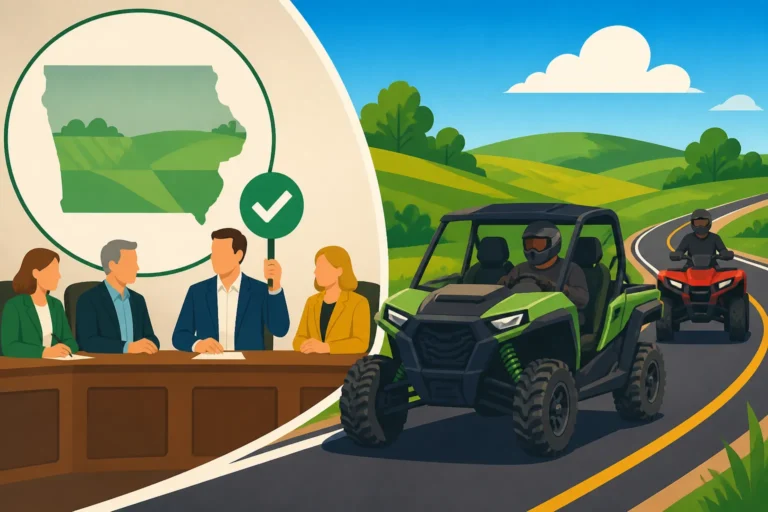
Iowa's road use laws for OHVs are a pragmatic response to the state's geography, economy, and culture. A significant portion of Iowa is rural, with vast stretches of farmland and small communities. For many residents, ATVs and UTVs aren't just toys; they're essential tools for farming, property maintenance, and short-distance travel between properties or to local businesses. The idea of completely barring these vehicles from roads would create undue hardship and inconvenience for many Iowans. Instead, the state has opted for a controlled integration, allowing limited road use where it makes sense, primarily on county secondary roads and under strict conditions.
This approach acknowledges that rural roads often see less traffic and have lower speed limits than major highways, making them a somewhat more suitable environment for OHVs than congested urban thoroughfares. The regulations aim to ensure that when an OHV is on a public road, it is as visible and controllable as possible, given its design. This includes requirements for lighting, mirrors, and slow-moving vehicle emblems, all designed to alert other motorists to the presence and nature of the OHV. It's a balance between enabling practical use and mitigating potential hazards, rather than an outright endorsement of OHVs as street-legal vehicles in the traditional sense. It's about recognizing their role in the fabric of rural Iowa life.
What "Street Legal" Really Means in Iowa
The term "street legal" can be incredibly misleading when it comes to ATVs and UTVs in Iowa. In many states, "street legal" implies that a vehicle meets all the requirements to be registered and operated just like a car, including passing inspections for features like crashworthiness, emissions, and comprehensive lighting. Iowa does not consider ATVs or UTVs to be fully street legal in this broad sense. You cannot simply modify your quad, get a regular license plate, and drive it anywhere a car can go.
Instead, Iowa allows for conditional or limited road use. This means you can operate your ATV or UTV on specific types of roads (primarily unpaved county secondary roads, and some paved ones if authorized by the county) and city streets (if authorized by local ordinance), provided you meet certain criteria. These criteria typically include carrying liability insurance, having a valid driver's license (if 18 or older), equipping your machine with required safety features like headlights, taillights, a horn, and mirrors, and maintaining a speed limit of 35 mph or less. The goal is to allow practical transit without reclassifying these machines as highway vehicles. It's a nuanced distinction that allows for functionality without full integration into the passenger vehicle fleet. Always check local ordinances, as what's permitted in one county or city might be prohibited in another.
The Specifics of Iowa's Helmet Law (or Lack Thereof)
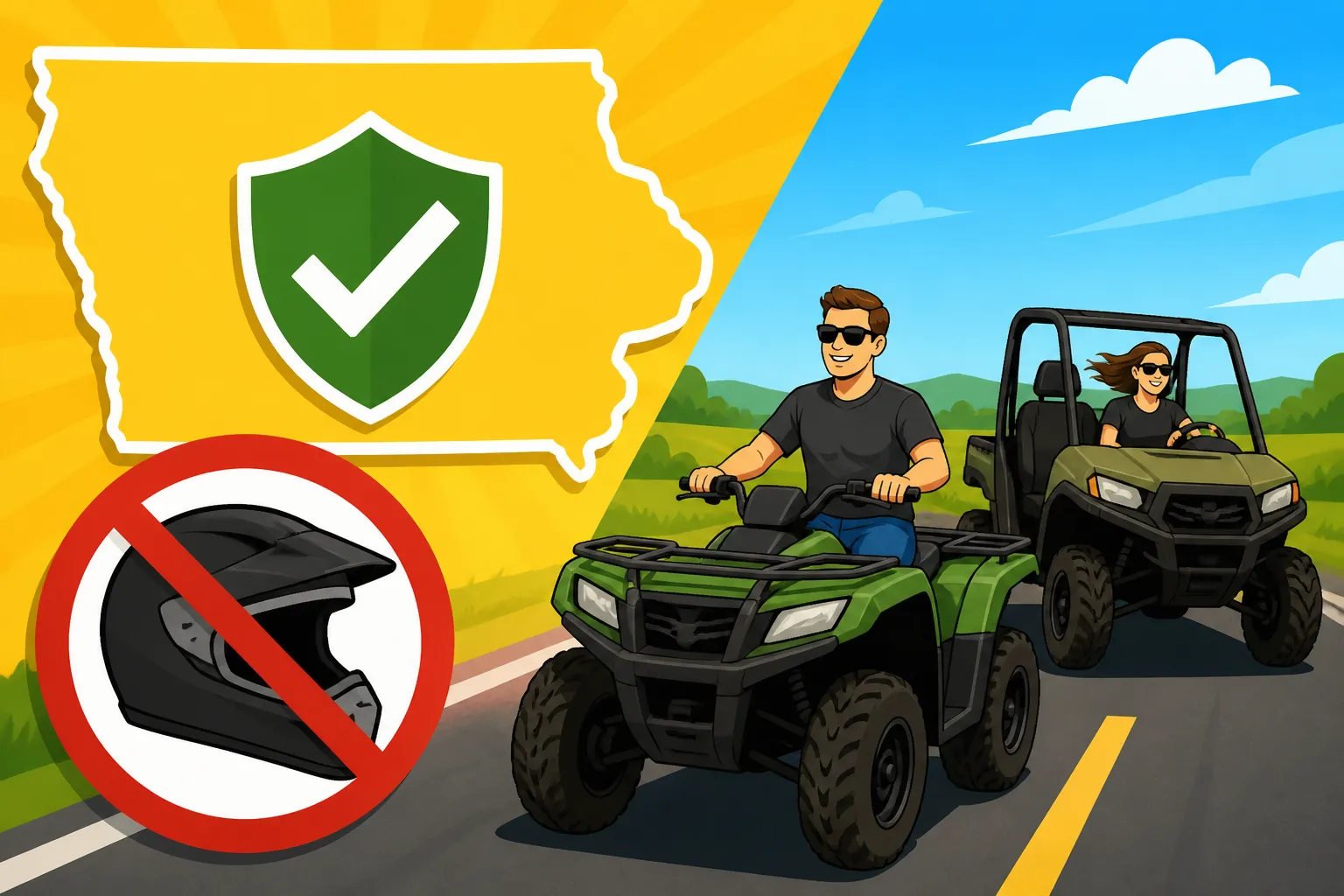
One of the most surprising aspects for many riders approaching Iowa's ATV and UTV road laws is the absence of a mandatory helmet requirement for adults riding on public roads. This stands in contrast to many other states and even some of Iowa's own regulations for other riding environments. It’s a point of frequent discussion and occasional confusion, so let’s get into the details of what is and isn't required.
Where Helmets ARE Mandatory (and why it's not roads)
While Iowa does not mandate helmets for adult ATV and UTV riders on public roads, there are specific situations and locations where helmets are absolutely required, primarily for minors and in certain designated recreational areas. For example, any rider under the age of 18 operating an ATV or UTV on designated OHV trails or public lands must wear a helmet. This rule is in place to protect younger, potentially less experienced riders who may be more prone to accidents or less capable of assessing risk on challenging terrain. The emphasis here is on the off-road environment, which by its nature often involves greater speeds, steeper inclines, jumps, and uneven surfaces – all factors that increase the risk of head injury during a fall or collision.
Furthermore, some privately run or managed OHV parks in Iowa, or specific sections within public parks, may enforce their own helmet rules for all riders, regardless of age. For example, some motocross tracks or more extreme riding areas might have a "no helmet, no ride" policy. This is often due to the higher intensity and specialized nature of riding in these areas, where crashes are a more expected part of the activity. So, while you might not need a helmet for a short jaunt on a gravel road, you absolutely should not assume that applies to all riding scenarios. Always check the rules of any specific park or trail system before you load up, especially if you're planning a trip to a place like the Paul Huting Recreation Area at Waterloo, where helmets are mandatory.
Rider Discretion and Personal Responsibility on Roads
Given the absence of a statewide mandatory helmet law for adult OHV riders on Iowa roads, the decision to wear a helmet largely falls to the individual rider. This places a significant emphasis on personal responsibility and risk assessment. The state essentially trusts adult riders to make their own choices regarding safety gear when operating on roads, assuming they understand the potential consequences. For many riders, especially those who grew up in Iowa's rural communities, this reflects a broader cultural value of self-reliance and individual liberty. It's similar to how motorcycle helmet laws vary across the country, with some states opting for universal mandates and others allowing adult riders the choice.
However, choosing not to wear a helmet carries inherent risks. While OHVs on roads are typically restricted to lower speeds, collisions with other vehicles, fixed objects, or even unexpected wildlife can occur, and head injuries are often the most severe outcome in such incidents. Even a minor fall at a low speed can result in a serious head impact if not protected. Therefore, even though the law doesn't require it, many seasoned riders, and those concerned with their personal safety, still opt to wear a helmet when operating on public roads. They recognize that while the law provides freedom, it doesn't eliminate danger. Equipping yourself with appropriate gear, whether legally mandated or not, is a hallmark of responsible riding.
Comparing Iowa to Other States' Helmet Laws
Iowa's stance on helmet requirements for OHVs on public roads is certainly not unique, but it does differentiate it from some neighboring states and those with more stringent universal helmet laws. For instance, some states have universal helmet laws for all motorcycle riders, and these laws often extend to OHVs when they are allowed on public roads. Other states might have age-based requirements, similar to Iowa's rules for minors, but then extend adult discretion to road use as well.
It's a patchwork across the country, reflecting diverse legislative priorities, cultural attitudes towards personal freedom versus public safety, and varying statistics on accident severity. Riders coming from states with universal helmet laws for OHV road use, such as Minnesota or Wisconsin, might find Iowa's lack of a requirement surprising or even concerning. Conversely, riders from states with no adult helmet laws for motorcycles might find Iowa's approach quite familiar. The key takeaway for any rider, especially those traversing state lines, is that regulations are highly localized. What's legal and expected in Nebraska or Missouri might be different in Iowa. Always check the specific laws of the state you're riding in, and if there's any doubt, err on the side of caution and wear a helmet. For more information on what a visiting out-of-state quad needs, you might want to read [What Sticker a Visiting Out-of-State Quad Needs].
Essential Requirements for Riding an ATV/UTV on Iowa Roads (Beyond Helmets)
While the helmet rule is notable for its absence on Iowa roads for adults, don't be fooled into thinking it's a free-for-all. Iowa has a robust set of requirements that must be met before you can legally take your ATV or UTV onto any public roadway. These rules are designed to ensure the safety of the OHV operator and other motorists sharing the road, compensating for the lack of a helmet mandate with other forms of regulation.
Age and Driver's License Requirements
One of the most critical aspects of legal OHV road use in Iowa revolves around the operator's age and licensing status. For anyone 18 years of age or older, operating an ATV or UTV on a public road in Iowa requires a valid driver's license. This is not a special OHV license, but a standard automobile driver's license. The rationale is clear: if you're going to share the road with cars, trucks, and other licensed vehicles, you need to demonstrate a baseline understanding of traffic laws and safe driving practices. This ensures that the operator has passed the state's driving test and is legally permitted to operate motor vehicles on public thoroughfares.
For individuals under 18, the rules are much stricter, effectively barring them from operating an OHV on public roads. Iowa law explicitly states that a minor may not operate an ATV or UTV on a public street or highway. This age restriction is a crucial safety measure, recognizing that younger riders often lack the experience, judgment, and physical maturity required to safely navigate the complexities of road traffic, even on less-trafficked secondary roads. While a 12 to 17-year-old might be able to obtain an Iowa ATV Safety Certificate, this certificate allows them to ride off-road, not on public roads. The age of 18 is a hard line for road access. For a deeper look into this, check out [Why Iowa Requires a Driver 18 or Older].
Insurance: A Non-Negotiable Necessity
If you plan to ride your ATV or UTV on any public road in Iowa, carrying liability insurance is not just a good idea; it's a legal requirement. This isn't optional, and it's a vital component of responsible road use, especially in the absence of a helmet mandate. The state mandates that you must have a liability insurance policy that meets specific minimum coverage limits, similar to what's required for automobiles. Currently, Iowa requires minimum coverage of $20,000 for bodily injury or death of one person, $40,000 for bodily injury or death of two or more people, and $15,000 for property damage. This is often referred to as 20/40/15 coverage.
The purpose of this insurance is to protect you and other road users in the event of an accident where you are at fault. OHVs, despite their robust appearance, can cause significant damage or injury in a collision, and without insurance, you could be personally liable for substantial costs. A deputy making a roadside stop will often check for proof of insurance, and riding without it can lead to hefty fines and penalties. It’s a foundational element of road legality, ensuring that potential financial burdens from accidents are covered. So, before you ever think about hitting that gravel road, make sure your insurance card is current and accessible. Discover more about this topic by reading [Iowa ATV Insurance Requirement].
Machine Equipment: Making Your OHV Road-Ready
Beyond age, licensing, and insurance, your ATV or UTV itself needs to be properly equipped to be legally ridden on Iowa roads. These requirements are in place to ensure your machine is visible and controllable, compensating for the fact that it wasn't originally designed for road use. You can't just pull your trail machine straight onto the pavement and expect to be legal.
Here’s a breakdown of essential equipment:
- Headlights and Taillights: Your machine must have at least one headlight and one taillight, and they must be turned on at all times when operating on a public road, regardless of daylight conditions. This is crucial for visibility to other drivers.
- Brakes: Functional brakes are, of course, a given for any vehicle on the road.
- Horn: A horn capable of emitting sound audible from at least 200 feet is required to signal other drivers or pedestrians.
- Mirrors: At least one rearview mirror, securely attached to the machine, is mandatory. This allows you to see traffic approaching from behind, a critical safety feature. Many riders choose to add a second mirror for even better visibility. SuperATV offers a wide range of robust mirrors designed for off-road vehicles that can easily adapt for road use.
- Slow-Moving Vehicle (SMV) Emblem: Because OHVs are typically slower than other road traffic, a reflective orange and red slow-moving vehicle triangle must be displayed on the rear of your machine. This emblem warns other drivers that your vehicle will be traveling at 35 mph or less.
- Muffler and Spark Arrester: While primarily for off-road noise and fire prevention, these are generally expected to be present and functional for any OHV.
- Windshield (Optional, but regulated if present): If your OHV has a windshield, it must meet certain visibility standards. For instance, it cannot be tinted too darkly.
- Tires: Tires must be designed for highway use or be of a type that will not damage the road surface. This generally means avoiding highly aggressive knobby tires that can tear up pavement.
These equipment requirements are not suggestions; they are mandates. A roadside inspection by a deputy or conservation officer will likely include a check of these items. Failing to have them can result in fines and a citation for illegal road use. Equipping your machine correctly is a fundamental step in ensuring your safety and compliance with Iowa law. Many aftermarket companies, including SuperATV, specialize in providing these types of street-legal accessories for ATVs and UTVs.
Where You Can (and Cannot) Ride on Iowa Roads
Understanding the specifics of Iowa's road use laws for ATVs and UTVs is about more than just equipment and driver qualifications; it's also about knowing which roads you are actually allowed to ride on. Iowa's regulations are very particular about road classifications, and mistakenly riding on a prohibited road can lead to citations and fines.
Navigating County Secondary Roads and City Streets
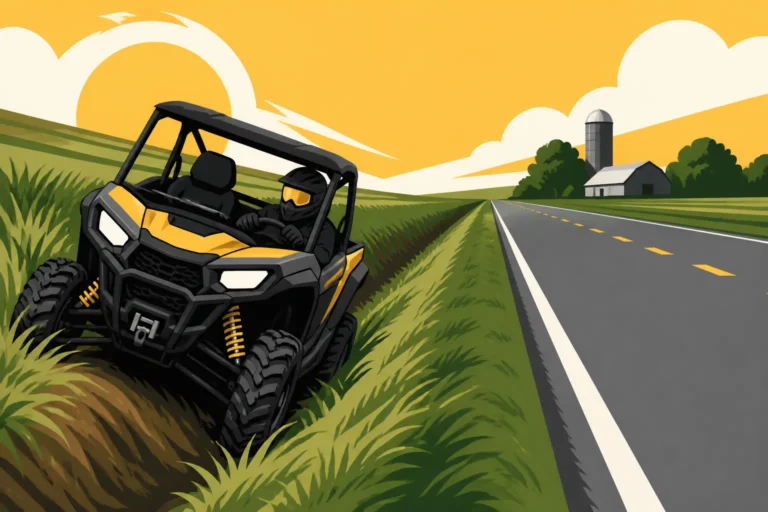
The vast majority of legal ATV and UTV road use in Iowa occurs on county secondary roads. These are the roads maintained by the county, often unpaved gravel, but can also include paved two-lane roads. The law generally permits OHVs on unpaved county secondary roads without special authorization, provided all other requirements (age, license, insurance, equipment) are met. This is where most rural riders will legally operate their machines. However, for paved county secondary roads, the situation is different: a county's board of supervisors must specifically authorize OHV use. This means that while some paved county roads might be open, many are not, and it's up to you to verify the local ordinances for [Unpaved County Secondary Roads in Iowa] versus paved ones.
When it comes to city streets, the rules become even more localized. An ATV or UTV can only be operated on city streets if the city council has passed an ordinance specifically allowing it. This is not a statewide blanket permission. Many cities choose not to allow OHVs on their streets due to concerns about safety, noise, and traffic flow. Some cities that do allow it, like Waukon, might impose further restrictions, such as specific hours of operation or limitations on which streets can be used. This creates a patchwork of regulations across Iowa's municipalities. Therefore, if you plan to ride your OHV within city limits, it is absolutely essential to contact the city clerk or police department to inquire about their specific ordinances. Never assume city streets are open simply because a neighboring town allows it.
Primary Highways and Restricted Zones
There are strict prohibitions on where ATVs and UTVs can operate in Iowa, particularly concerning state and federal highways. You absolutely cannot ride an ATV or UTV on interstate highways or any four-lane primary highway. These roads are designed for high-speed, high-volume traffic, and OHVs simply do not meet the safety or speed requirements to operate on them. The risks associated with an OHV attempting to navigate these fast-moving thoroughfares are extreme, both for the OHV operator and other motorists.
Even undivided two-lane primary highways, which might seem less intimidating, are generally off-limits except for specific, limited circumstances, usually involving agricultural purposes or crossing at an intersection. The rule is quite clear: OHVs are largely excluded from primary highways. Trying to use these roads for general travel or recreational riding will result in a quick citation and potential impoundment of your machine. This restriction highlights that Iowa's road use allowances for OHVs are very specific and narrow, intended for local access and rural travel rather than statewide transit. Understanding these restricted zones is paramount to avoiding illegal operation and ensuring your safety.
The "Most Direct Route" Rule Explained
One crucial concept that riders often overlook or misunderstand when it comes to Iowa's ATV and UTV road laws is the "most direct route" rule. This rule applies when you are using public roads to access designated OHV riding areas (like a state park or a private trail system) or for other specific, authorized purposes. It means you are only permitted to use the shortest and most direct path from your point of origin (e.g., your home, a staging area, or another legal riding area) to your intended destination that is legally open to OHV traffic.
You cannot, for example, take a scenic detour through a town or along a county road that is not part of the most direct route to your destination. The intent of this rule is to minimize the time and distance OHVs spend on public roads, thereby reducing potential conflicts with other traffic and preserving the primary off-road nature of the activity. It's a pragmatic approach that allows for necessary travel to and from trailheads without encouraging extensive road cruising. Knowing and adhering to the [The Most Direct Route to an Iowa OHV Park] is critical for staying compliant. Always plan your route carefully and ensure it aligns with this regulation to avoid any issues with law enforcement.
| Road Type | ATV/UTV Use (Adults 18+ w/ License, Insurance, Equipment) | Helmet Required (Adults) | Notes |
|---|---|---|---|
| Unpaved County Secondary Road | Generally Permitted | No | Speed limit 35 mph, must display SMV emblem, lights on. |
| Paved County Secondary Road | Permitted ONLY if county board authorizes | No | Check local county ordinances. Speed limit 35 mph, SMV emblem, lights on. |
| City Street | Permitted ONLY if city council authorizes | No | Check local city ordinances. May have additional restrictions (e.g., hours). Speed limit 35 mph, SMV. |
| Undivided Two-Lane Primary Highway | Generally Prohibited, except for direct crossing/ag use | N/A | Highly restricted. Not for general travel. |
| Four-Lane Primary Highway / Interstate | Strictly Prohibited | N/A | Illegal and extremely dangerous. |
| Designated OHV Trails / Parks | Permitted (with registration/permit) | Yes (for minors under 18) | Some parks may require helmets for all riders regardless of age. Check park rules. |
| Private Land | Permitted (with landowner permission) | No (but highly recommended) | Owners can set their own rules. [Do You Need to Register an ATV on Private Land in Iowa?] provides more. |
Enhancing Safety When Helmets Aren't Required
Since Iowa law doesn't mandate helmets for adult ATV and UTV riders on public roads, it places an even greater emphasis on individual riders to proactively adopt safety measures. This isn't just about avoiding tickets; it's about safeguarding your well-being and preventing serious injury. When the law provides discretion, personal responsibility becomes your most important piece of safety gear.
Proactive Gear Choices and Defensive Riding
Given the legal flexibility, choosing to wear a helmet, even when not required, is a fundamental proactive safety choice. A DOT-approved helmet offers critical protection against head injuries, which are often the most devastating outcome in any accident. Beyond helmets, consider other protective gear:
- Eye Protection: Goggles or a full-face helmet visor are essential. Dust, insects, road debris, and even small rocks kicked up by other vehicles can cause serious eye injuries and impair your vision, leading to further hazards.
- Gloves: Protect your hands from impacts, abrasions, and fatigue, while also improving grip on the handlebars.
- Long Sleeves and Pants: Durable long sleeves and pants (denim or specialized riding gear) offer protection against scrapes, cuts, and road rash in a fall.
- Over-the-Ankle Boots: Sturdy boots protect your feet and ankles from impacts and help maintain a secure grip on footrests.
Beyond gear, adopting a defensive riding style is paramount. Assume other drivers don't see you, as ATVs and UTVs are smaller and less common on roads. Maintain extra following distance, ride predictably, and avoid sudden movements. Always use your turn signals, if equipped, or clear hand signals to communicate your intentions. Be particularly cautious at intersections and when entering or exiting roads. Riding sober and alert is non-negotiable; impairment significantly increases risk.
Visibility: Making Sure You're Seen
One of the biggest challenges for OHVs on public roads is visibility. Cars and trucks are larger and their drivers are often not expecting to encounter an ATV or UTV. Therefore, making your machine as visible as possible is a critical safety strategy. Even though Iowa mandates headlights, taillights, and an SMV emblem, there's always more you can do.
Consider adding:
- Bright Clothing: Wear highly visible colors, such as fluorescent yellow, green, or orange. Reflective materials, especially for riding at dawn, dusk, or night, are also extremely effective.
- Additional Lighting: While not legally required for road use beyond basic headlights and taillights, adding auxiliary LED lights (within legal limits for brightness and aiming) can significantly increase your presence, especially from the front and sides. SuperATV offers various lighting upgrades that can boost your visibility.
- Flags: A brightly colored safety flag mounted on a whip can increase your vertical profile, making you more noticeable over hills or around corners, especially if your machine is small.
- Mirrors: As mentioned, one mirror is required, but adding a second mirror for a wider field of view significantly enhances your ability to monitor traffic around you. Ensure your mirrors are clear and correctly adjusted before every ride.
Even in broad daylight, your machine can blend into the background. By actively enhancing your visibility, you’re taking control of one of the most significant risks associated with OHV road use.
Machine Maintenance for Road Reliability
Reliable machine operation is a cornerstone of road safety. An ATV or UTV that breaks down on a public road, especially one with traffic, immediately becomes a hazard. Regular and thorough maintenance is therefore not just about prolonging the life of your machine; it's a vital safety practice.
Before every road ride, conduct a quick pre-ride inspection, often referred to as a T-CLOC (Tires, Controls, Lights, Oil, Chassis) check:
- Tires: Check tire pressure and inspect for any damage, excessive wear, or embedded objects. Proper tire pressure affects handling, braking, and ride stability.
- Controls: Ensure your throttle, brakes, steering, and clutch (if applicable) operate smoothly and correctly. Check for any binding or excessive play.
- Lights & Electrics: Verify that all lights (headlights, taillights, brake lights, turn signals if installed) are working. Check the horn and battery charge.
- Oil & Fluids: Check engine oil, coolant, and brake fluid levels. Low fluids can lead to system failures.
- Chassis: Inspect the frame, suspension components, drive train, and wheel bearings for any loose bolts, cracks, or damage. Ensure your mirrors and SMV emblem are securely attached.
Regular scheduled maintenance, according to your owner's manual, is also crucial. This includes oil changes, air filter cleaning/replacement, brake inspections, and chain/belt adjustments. A well-maintained machine is a predictable machine, and predictability is a key element of safety on the road. Don't risk a breakdown or malfunction on a public road due to neglected maintenance. Think of it as another layer of protection, just like your gear.
The Bigger Picture: Balancing Freedom and Safety
Iowa's approach to OHV road use, particularly regarding helmets, reflects a delicate balance between individual freedom and public safety. It’s a policy that often sparks debate, highlighting the complexities of regulating recreational and utility vehicles on shared roadways. Understanding this broader context can help riders appreciate the intent behind the laws and make informed decisions about their own safety.
The Ongoing Debate and Rider Advocacy
The discussion around ATV and UTV helmet laws, especially for adults on roads, is not unique to Iowa. It's an ongoing debate in many jurisdictions, often pitting personal liberty advocates against those who prioritize public health and safety statistics. Proponents of mandatory helmet laws often point to data on head injuries and fatalities in OHV accidents, arguing that a simple piece of equipment could prevent serious harm and reduce healthcare burdens. They might argue that the state has a vested interest in protecting its citizens, even from their own choices, when those choices impact public resources or create risks for others.
On the other side, many riders and advocacy groups champion the right of adults to make their own choices about personal safety gear, particularly when they are licensed, insured, and operating within legal parameters. They might argue that education, training, and equipment mandates (like lights and mirrors) are more appropriate than a universal helmet law for adults on roads. Groups like the Iowa ATV/UTV Association often play a role in these discussions, advocating for rider rights and responsible access while also promoting safety education. The current Iowa law reflects a compromise, granting adult riders discretion on roads while still imposing strict requirements for equipment, insurance, and designated riding areas for minors.
Understanding the Risks and Consequences
Even with all the proper equipment and a defensive riding style, operating an ATV or UTV on a public road carries inherent risks. These machines are designed for off-road environments, where unpredictable terrain, not other vehicles, is the primary hazard. On a road, you are sharing space with vehicles that are much heavier, faster, and whose drivers may not be accustomed to seeing an OHV. The consequences of a collision between a car and an ATV or UTV can be severe for the OHV operator, especially if they are unhelmeted.
Consider potential scenarios: a distracted driver failing to see your slow-moving vehicle, a sudden stop by traffic ahead, or an unexpected maneuver by another motorist. Even a low-speed impact can throw an unbelted OHV operator from their machine, leading to head trauma, broken bones, and internal injuries. The lack of a protective cage (in many ATVs) and the open-air design mean there's little to no crash protection for the rider. While the law allows for helmet-free road use, it does not absolve you from the physical and financial consequences of an accident. Medical bills, lost wages, and long-term recovery are very real possibilities that weigh heavily on riders who choose to forgo maximum protection. The decision to ride without a helmet is a personal one, but it should be made with a full and sober understanding of these potential risks.
How Local Ordinances Can Impact Your Ride
While state law sets the overarching framework for OHV road use, it's crucial to remember that local ordinances, particularly at the county and city level, can significantly impact where and how you ride. As previously mentioned, paved county roads require county authorization, and city streets require city council approval. This means that a rider might be perfectly legal on a gravel road in Mahaska County, but crossing into the city limits of Oskaloosa or onto a specific paved road could instantly make them illegal.
These local rules can cover a range of details beyond just permission, including:
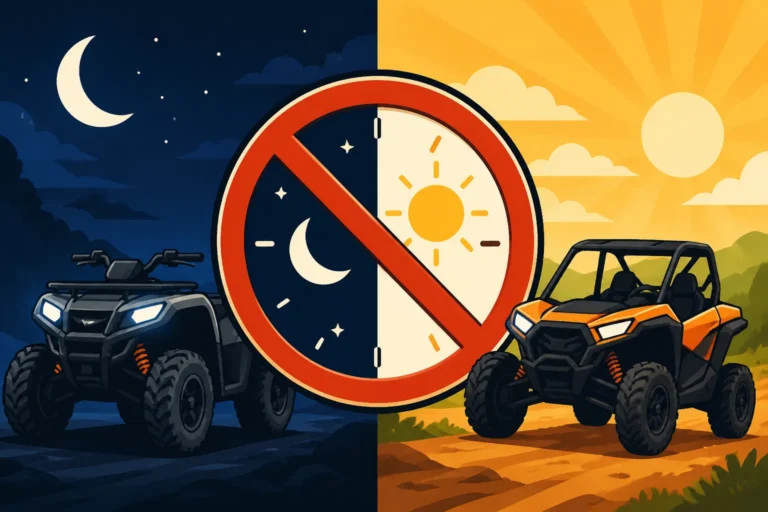
- Operating Hours: Some cities may restrict OHV use to certain hours, prohibiting night riding or early morning operation.
- Designated Routes: Rather than opening all streets, a city might designate specific routes or corridors for OHV access.
- Speed Limits: While state law caps OHVs at 35 mph on roads, local ordinances might impose even lower speed limits in residential or congested areas.
- Noise Restrictions: Local laws might have stricter noise limits than state regulations, especially in residential zones.
The responsibility falls entirely on the rider to research and understand these hyper-local rules before venturing out. Ignorance of an ordinance is not a valid defense against a citation. Checking with the county recorder, sheriff's office, or city clerk's office before you ride is a proactive step that can save you from fines, legal trouble, and the inconvenience of having your ride cut short. For more detailed information, look into [Iowa Rules for Riding a City Alley].
Disclaimer
This article is for general informational purposes only and does not constitute professional advice. Laws, prices and regulations vary by location and change over time. Consult a qualified professional for guidance on your specific situation.