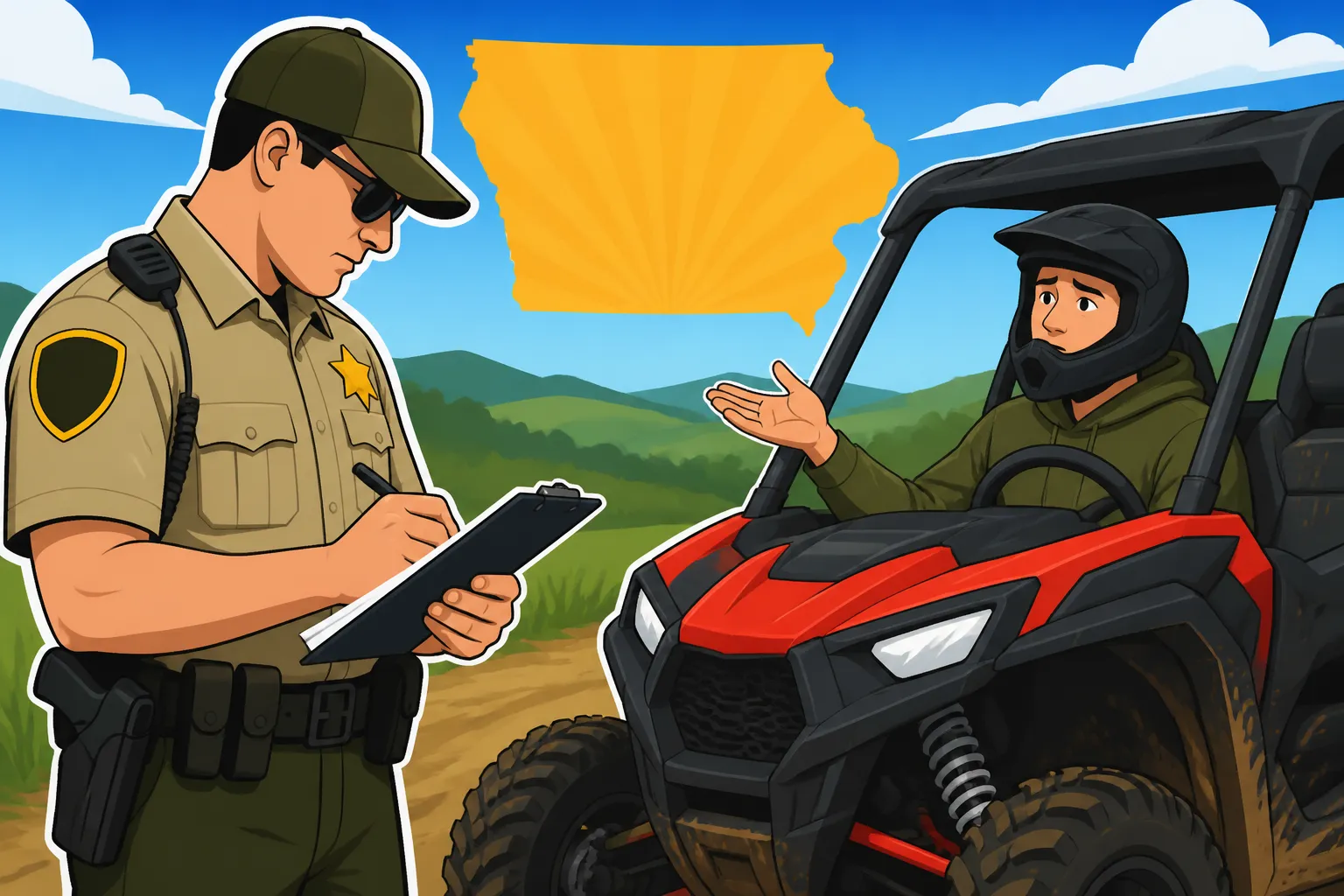
Getting Cited by a County Sheriff’s Deputy
Getting cited by a county sheriff’s deputy while riding an ATV or UTV in Iowa can be unsettling, especially if you are unsure what the alleged violation means. The safest response is to stay calm, understand what the citation says, and preserve the details that could matter later. Here’s how to handle the stop and decide what to do next.
At the roadside: stay safe and understand the stop
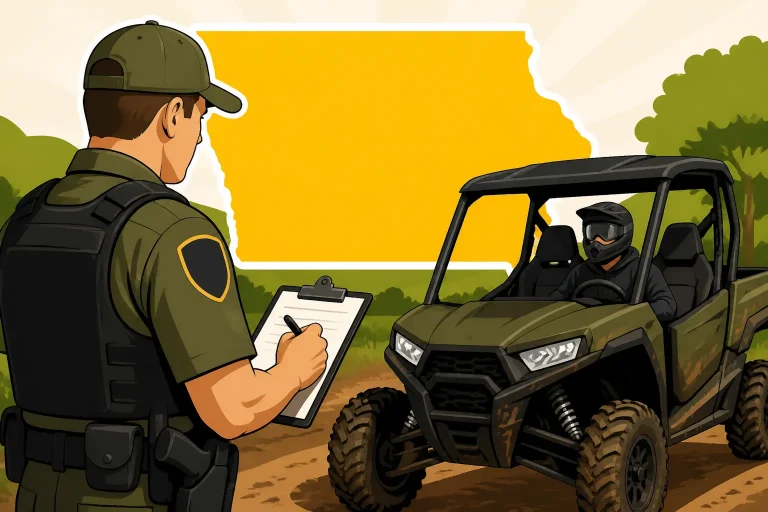
When a deputy signals you to stop, slow down and pull over as soon as it is safe. Choose a place where you and the officer are away from moving traffic, if possible. Turn off the machine, keep your hands visible, and follow instructions. If you are with a group, ask riders to stop in a safe place too, but don’t crowd the deputy or block the road.
Keep the conversation calm and brief. You can ask what the stop is about, but avoid arguing over the law or trying to persuade the deputy to change the decision on the roadside. If you think the officer has misunderstood what happened, make a note of the details and address the issue through the process shown on the citation.
The deputy may ask for identification and documents relevant to the ride. Depending on the circumstances, that could include your registration certificate, proof of insurance for road use, or a permit for a nonresident machine. Keep required papers accessible, but don’t reach into a bag or storage compartment without saying what you are doing and getting permission if needed. For a rundown of documents that can come up, see Iowa ATV Registration Paperwork.
A stop is not the time to guess at an answer. If you don’t know whether a decal, permit, or document is current, say so rather than inventing an explanation. Do not make sudden movements, leave the scene without being told you may go, or ride off while the deputy is still speaking with you.
Before the encounter ends, make sure you know whether you received a warning or a citation. A warning is not the same as a ticket, but either can be a reason to review your riding setup and route. If you receive a citation, ask where the instructions are printed and whether you need to appear, respond, or take another action. The citation and any accompanying paperwork control; don’t rely on an informal estimate of how much time you have.
A short record of the stop can help you later. Once you are safely away, write down:
- The date, time, and location
- The route you were using and where you were headed
- What the deputy said the alleged violation was
- Which documents or equipment the deputy checked
- The names of people who were with you and may have seen the stop
- Any directions the deputy gave you about the next step
Don’t photograph or record in a way that interferes with the stop or creates a safety risk. If you already have a recording, retain the original file and avoid editing it. Keep any paperwork, photographs, maps, or messages that could help show where you were riding and what was on the machine.
What a deputy may be checking
A county sheriff’s deputy may be concerned with different issues depending on where you were riding. A stop on a public road can involve road access, required equipment, insurance, or the rider’s eligibility to operate there. A stop at a trail or other riding area may involve registration, a visitor permit, rider requirements, or whether the machine is being used in an allowed place. The specific allegation on the citation matters more than a general assumption about what deputies usually check.
| Possible issue | What to review after the stop |
|---|---|
| Registration or decal | Check the machine’s registration status, the decal, and the certificate details |
| Nonresident permit | Confirm whether the permit was required for that machine and whether the correct machine was covered |
| Road access | Identify the exact road, route, and local authorization involved |
| Road equipment or insurance | Compare the cited requirement with the machine’s equipment and documents at the time |
| Rider or safety requirement | Check the rider’s age, machine type, location, and any applicable certificate or supervision requirement |
If the citation concerns registration, check the certificate and decal rather than relying on memory. A decal that is present but expired, damaged, or assigned to another machine may raise a different issue from having no decal at all. The details can matter when you decide whether the record supports the allegation. What an Iowa Deputy Checks Roadside offers more context on the kinds of items that may be examined during a stop.
Visitors should also review the rules that apply to an out-of-state machine. An out-of-state registration does not automatically answer every question about riding in Iowa. Whether a visitor needs an Iowa permit can depend on the ride and the applicable rules, so check the details in Iowa ATV Registration for a Nonresident and Iowa’s Nonresident User Permit.
If the deputy says the violation involved road use, write down exactly where you were stopped and what kind of road you were on. “A gravel road” or “near town” may not be enough detail to understand the allegation later. Note the road name or nearby intersection, whether you were traveling along the road or crossing it, and what route you were taking. Iowa’s rules can differ by road type and local authorization. Iowa Rules for Riding a Gravel Road explains one common situation, while Iowa Rules for Riding a Paved Secondary Road covers a different one.
Insurance is another issue to take seriously when riding on a road. If the citation names insurance or proof of coverage, preserve the policy card or other document that was current at the time of the stop. A policy purchased afterward may help with future rides, but it does not establish what coverage existed during the cited ride. Review Iowa ATV Insurance Requirement and check the exact language on your citation.
A ticket may also involve more than one alleged violation. For example, a road-use concern and an equipment concern are separate issues even if they arose during one stop. Read every line and any attached paperwork. Don’t assume that fixing one item disposes of the others.
How to respond to the citation
Treat the citation as a document with instructions, not as a final explanation of every legal issue. Read it carefully as soon as you are able. Check that you can identify the alleged violation, the date and location, any required response, and the office or court named on the paperwork. If something appears incorrect or unclear, contact the office listed on the citation and ask how to clarify the process. Keep a record of whom you spoke with and what they told you.
Do not ignore the response instructions because you believe the stop was unfair, the machine is now compliant, or the deputy said the matter was minor. Missing a required step can create a separate problem. If you are unsure whether you must appear or how to respond, ask the listed court or a qualified Iowa attorney rather than relying on advice from a friend or an online discussion.
There are usually two practical paths: address the matter as instructed, or dispute it using the procedure available for that citation. The right choice depends on the exact charge, the evidence, and the consequences involved. A deputy’s citation is an allegation, but deciding whether to contest it requires more than disagreeing with the officer. Consider getting legal advice if the citation could affect your driving privileges, insurance, finances, or record, or if the paperwork is confusing.
If you plan to dispute the citation, organize the information while it is fresh:
- Make a copy or clear photograph of every page of the citation and any related document.
- Write a factual timeline of the ride and stop, separating what you personally observed from what someone else told you.
- Save relevant registration, permit, insurance, and equipment records that show the situation on the date of the stop.
- Preserve photographs, video, GPS records, maps, and witness contact information that could clarify the route or circumstances.
- Follow the response instructions and ask the listed court or a lawyer about anything you do not understand.
Keep your notes factual. Avoid adding assumptions about the deputy’s motives or changing your account to fit what you think the rules require. If several people were present, ask each person to record their own recollection separately. That can preserve useful details without unintentionally blending everyone’s version into one.
If the ticket appears to involve an illegal route, compare the citation’s location with the applicable road rules and any local authorization. Don’t assume that a road open to other vehicles is automatically open to ATVs or UTVs. Conversely, don’t assume that every road-use allegation is correct simply because a deputy issued a citation. The facts and the specific rule cited are what matter. For context on potential penalties, see Iowa Fines for Illegal ATV Road Use.
If you decide to contest the citation, Appealing an Iowa ATV Citation can help you understand why it is important to follow the process on the paperwork. Procedures and deadlines depend on the specific citation, so use the instructions provided for your case and confirm any uncertainty with the court or a qualified professional.
Preventing another citation
Once you understand the allegation, use it as a prompt to check the machine and your planned route before riding again. Fixing a problem can prevent another stop, but it does not automatically resolve an existing citation. Keep those as separate tasks: follow the citation instructions, then make the changes needed for future rides.
For a registration issue, verify that the certificate matches the machine and that its decal is current and properly displayed. If the machine recently changed hands, moved into Iowa, or has paperwork that doesn’t match its identification information, sort that out before riding. Registering an ATV in Iowa explains the general process, and Iowa ATV Decal Placement covers where the decal belongs.
For a road-use citation, plan the full route before leaving home. Check the type of road and whether the relevant county or city has authorized ATV or UTV use. A route that seems like the shortest connection between two places may still cross a road where riding is not permitted. Don’t treat a past ride without a stop as proof that a route is authorized.
For an equipment or insurance issue, check the requirement named on the ticket and make sure the machine actually meets it. Keep proof of current coverage with you when it is required for the ride. A vague recollection that the machine was insured, or that a mirror or light was installed, may not be enough to resolve a roadside question.
For an age or safety-certificate issue, check the requirements for the rider and machine type before the next outing. Requirements may differ for an ATV, a UTV, and an off-road motorcycle, and the place where the machine is operated can matter too. If a young rider is involved, confirm both the certificate question and any supervision requirement rather than assuming one rule covers every part of the ride.
If the deputy’s explanation and the citation appear to describe different issues, read the paperwork closely and ask the listed court how to get clarification. Keep copies of any documents you provide. Avoid contacting the deputy to argue about the case; use the formal process identified in the citation.
A calm roadside response, accurate notes, and attention to the written instructions put you in a better position to handle a citation. They do not guarantee that a ticket will be dismissed, but they help you understand what is alleged, protect relevant information, and avoid turning one stop into an additional problem.
Disclaimer
This article is for general informational purposes only and does not constitute professional advice. Laws, prices and regulations vary by location and change over time. Consult a qualified professional for guidance on your specific situation.