Where to Take an Iowa ATV Safety Course
Where to take an Iowa ATV safety course can be confusing if you are looking for a local classroom or hands-on ride day. For Iowa’s required off-highway safety certificate, the usual route is an approved online course. The key is to select the Iowa course for the right type of machine, then save proof that the rider completed it.
Where to find an Iowa ATV safety course
Start with the Iowa Department of Natural Resources’ official off-highway vehicle safety information. Follow its link to the approved course and check that the course is valid for Iowa before enrolling. Course providers and their enrollment details can change, so using the state’s current information is safer than choosing a course from a general search result.
The Iowa course is generally completed online; it is not a scheduled riding lesson at an ATV park. That makes it possible to work through the material at home, but it also means riders should not expect a supervised practice ride as part of course completion. The course’s purpose is safety education, not an assessment of a rider’s ability to handle a particular machine.
| Where you look | What to check |
|---|---|
| Iowa DNR off-highway vehicle safety information | The link is for Iowa and is currently approved |
| The course provider’s enrollment page | The course covers off-highway vehicle safety and issues the required Iowa certificate |
| A search result or third-party listing | Confirm its details against the Iowa DNR information before paying or starting |
| A local riding club or park | Ask whether it offers safety advice or events, but do not assume it provides the required course |
Some riders expect to take a class at a county recorder, dealership, or riding area. Those places may be able to answer general questions, but they are not automatically course providers. If you want in-person instruction, contact a local club or riding facility to ask what it offers. Treat that as additional learning unless the Iowa DNR confirms that a particular program satisfies the state certificate requirement.
The approved course may have a charge, and the amount or enrollment process can change. Check the course provider for current details before registering. For a closer look at how charges are handled, see Iowa ATV Safety Course Cost. The important point is to verify the course itself first rather than choosing a class based only on convenience or price.
Check that the course fits the rider and machine
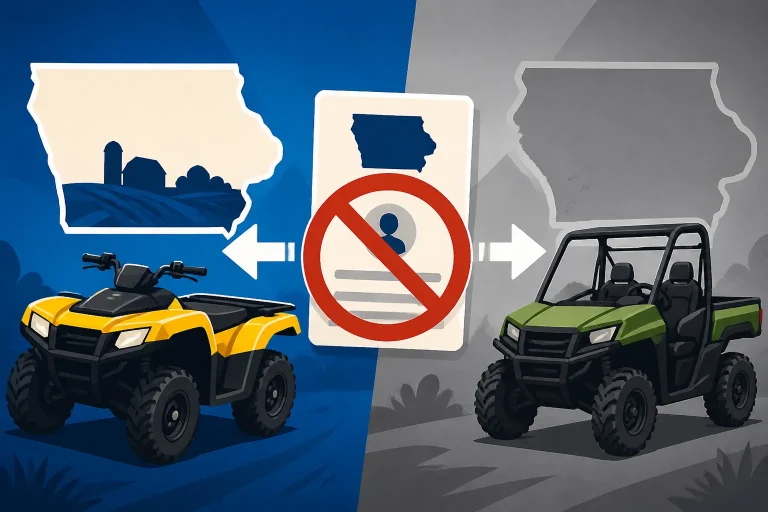
Before enrolling, confirm that the rider is in the group required to earn a certificate and that the course applies to the machine they will operate. Iowa’s rules do not treat every age and machine type the same way. A certificate requirement that applies to an ATV rider may not apply to an adult, a side-by-side operator, or an off-road motorcycle rider.
Iowa’s certificate rules are generally relevant to ATV operators from age 12 through 17 in covered riding situations. Because requirements can depend on the rider, machine, and where the ride will take place, check the current state rules before relying on a general summary. Iowa ATV Safety Certificate Requirements explains the certificate requirement, and Iowa Safety Certificate Age Range focuses on the ages involved.
Machine type matters, too. The course is not a substitute for checking whether a particular operator needs a certificate for a side-by-side or off-road motorcycle. See [Does an Iowa UTV Operator Need a Certificate?] and Why an Iowa Off-Road Motorcycle Operator Is Exempt for those distinctions. If a child is younger than 12, review Iowa Rules for Riders Under 12 before planning a ride. A certificate does not by itself make every machine or riding situation appropriate for a child.
It also helps to distinguish the safety certificate from registration and visitor requirements. Completing a course does not register a machine, provide an Iowa registration decal, or serve as a nonresident permit. Those are separate issues. Residents should review Registering an ATV in Iowa, while visitors can check Iowa’s Nonresident User Permit and Iowa ATV Registration for a Nonresident.
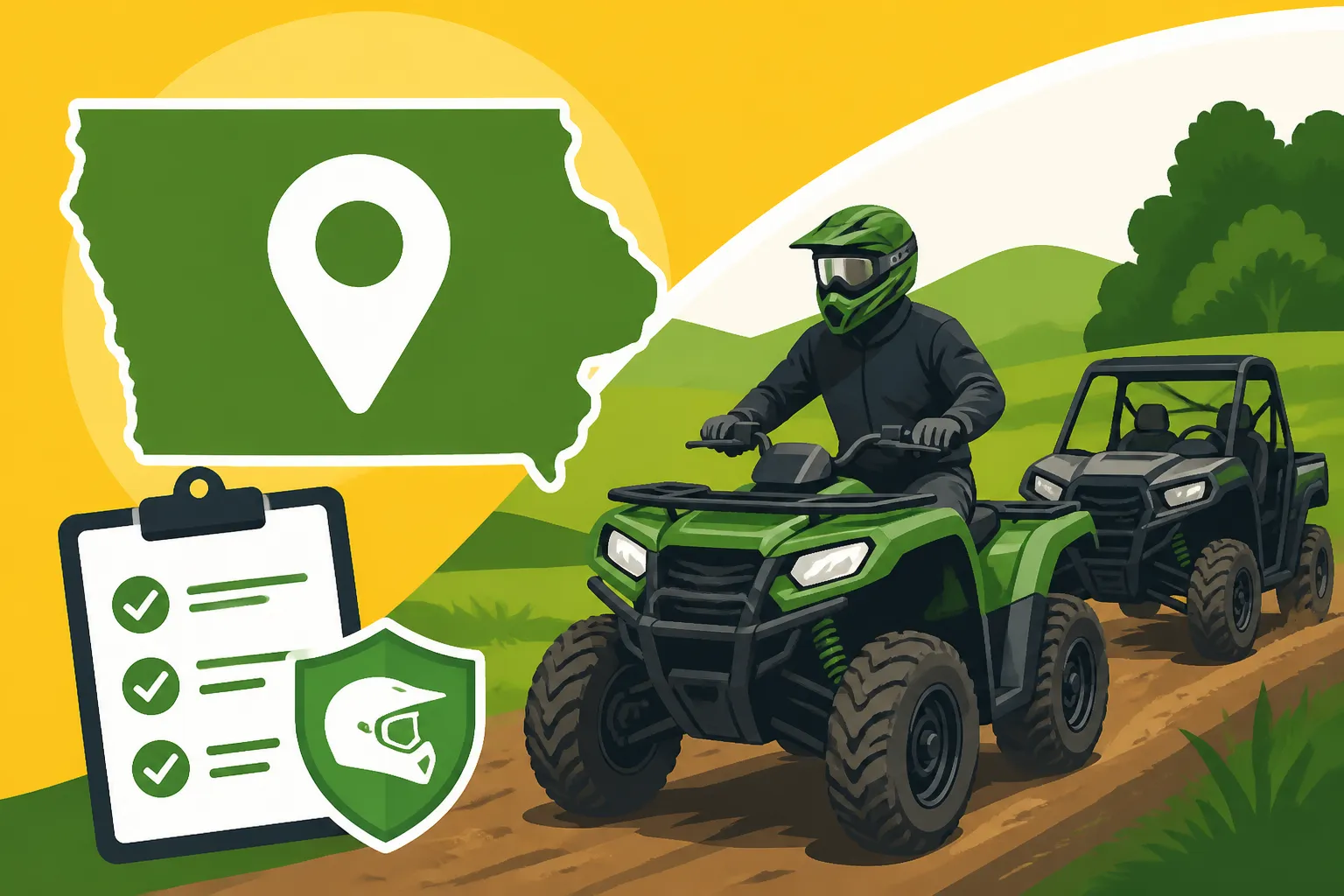
Before starting, make a quick checklist:
- Confirm the rider’s age and whether the certificate requirement applies.
- Confirm the machine is an ATV or other vehicle covered by the course and rule.
- Verify that the course is approved for Iowa, not simply available online.
- Check what identification or account information the provider requires.
- Review how the provider issues the certificate after completion.
- Keep registration, permit, and riding-area rules separate from course completion.
That last point matters when planning a trip. A rider may have completed the course but still need the correct registration or permit, and a machine may need to meet additional requirements for a particular riding area. The course answers a safety-education requirement; it is not a universal pass for all Iowa trails and land.
What to expect when taking the course
The course is designed to be completed online. It covers safe operation and responsible riding, and the learner works through the required material before completing the provider’s assessment. Plan for focused time rather than trying to rush through screens while distracted. A young rider may benefit from an adult helping with setup and discussing the material, while still following the provider’s rules about who must complete the work and assessment.
A practical way to do it is:
- Open the Iowa DNR’s current off-highway vehicle safety information.
- Follow the course link and verify that the provider offers the Iowa-approved course.
- Read the provider’s instructions, including its age, account, and completion requirements.
- Complete the lessons and any required assessment.
- Follow the provider’s directions for receiving or accessing the certificate.
- Save a copy and confirm the rider can produce it when needed.
Do not assume that registering for the course is the same as completing it. The certificate is earned only after the provider’s required steps are finished. Likewise, do not assume that a card will arrive immediately or that it will be mailed. The provider’s current instructions explain how proof is delivered and what to do if it does not appear.
Iowa’s online course does not replace hands-on experience. A certificate shows completion of safety education; it does not demonstrate that a rider can safely control a machine on rough terrain, manage speed, or ride in a group. New riders should practice in a controlled, permitted setting with an appropriate machine and close adult supervision when needed. A course can help establish a foundation, but judgment and practice still matter.
If you are enrolling a young rider, review the material together and talk through real decisions: how to choose a safe speed, what to do when visibility is poor, why riders should stay on permitted routes, and how to respond if the machine becomes stuck or develops a problem. Avoid treating course completion as a reason to move immediately to more challenging terrain. The machine’s size, the rider’s maturity, and the conditions all matter.
After completion: keep proof and check the ride rules
Once the rider finishes, save the certificate in a place that is easy to access. Keep a digital copy and, if practical, a printed copy with the rider’s other riding documents. If the certificate is lost, check the provider’s account or reissue process and review Replacing a Lost Iowa Safety Certificate. Carrying proof is a sensible precaution even when the precise document-checking practice can vary by riding area.
Before heading out, check the requirements for the machine and destination separately. A course certificate does not establish that a trail is open, that the machine has the right registration, or that a visitor has met Iowa’s permit rules. For example, Iowa’s registration decal and a nonresident permit serve different functions from a safety certificate. The requirements for a specific park or other designated riding area may also include rules about equipment, supervision, or where riders may travel.
A short pre-ride check helps prevent common misunderstandings:
- Confirm the certificate belongs to the rider and is accessible.
- Check whether the machine needs Iowa registration or a nonresident permit.
- Verify the destination is open and allows that type of machine.
- Review age, supervision, and safety requirements for the planned ride.
- Confirm the rider understands that course completion does not authorize riding on closed or off-limits routes.
If a provider’s course page does not clearly identify Iowa approval or explain what certificate it issues, pause before enrolling. Confirm through the Iowa DNR’s current information or contact the provider for clarification. A course may discuss ATV safety generally without satisfying Iowa’s specific certificate requirement.
The simplest answer to where to take an Iowa ATV safety course is: begin with the Iowa DNR’s off-highway vehicle safety information and use the approved online course linked there. Verify the rider and machine are covered, finish every required step, and keep the certificate. Then check registration, permits, and the riding area’s rules as separate parts of trip planning.
Disclaimer
This article is for general informational purposes only and does not constitute professional advice. Laws, prices and regulations vary by location and change over time. Consult a qualified professional for guidance on your specific situation.