Why One Town Says Yes and the Next Says No
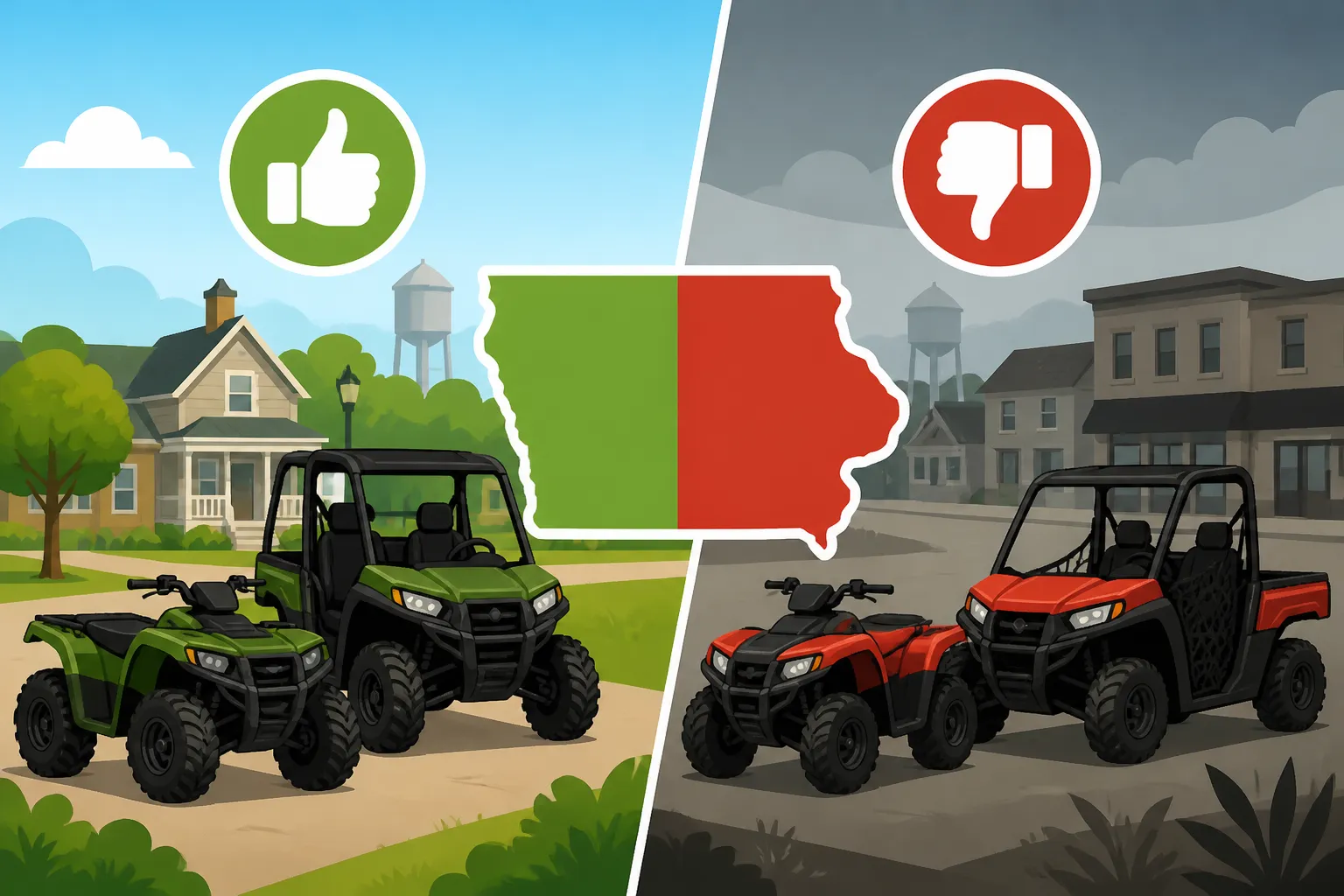
It's incredibly frustrating, isn't it? You might hear from a friend that ATVs are allowed on city streets in one Iowa town, only to drive an hour down the road and discover the next town over will ticket you instantly for the same thing. This seemingly random patchwork of rules can leave any rider feeling confused and, frankly, a bit annoyed. This guide will peel back the layers of Iowa law to explain why some towns embrace ATV and UTV use on their streets, while others firmly shut the door, helping you understand this complex landscape.
The Core of Iowa's Local Control Over ATV Road Use
The biggest reason for the varied rules you see across Iowa's cities and counties boils down to a fundamental principle of state law: local control. Iowa doesn't have a blanket statewide rule that says "all city streets are open to ATVs" or "all city streets are closed." Instead, the state legislature has given cities and counties the power to make these decisions for themselves, within certain defined parameters. This delegation of authority means that while some overarching state requirements apply, the ultimate "yes" or "no" for city streets rests squarely with your local elected officials.
How State Law Delegates Authority to Localities
Iowa Code sections specifically address off-highway vehicles (OHVs), which include ATVs and UTVs. While these sections lay out general rules for things like registration, safety certificates, and even some aspects of riding on unpaved secondary roads, they also contain provisions that allow local authorities to establish their own ordinances. This is where the divergence begins. For city streets, the state essentially says, "We'll set the baseline, but if your city council wants to open its streets, they can, provided they follow certain procedures and conditions."
This legal framework is designed to empower local communities to make choices that best suit their unique circumstances, populations, and infrastructure. A small, rural town heavily reliant on outdoor recreation or agriculture might see value in opening its streets to OHVs, whereas a bustling urban center with high traffic density might prioritize safety and noise reduction, opting to keep them closed. It’s not an oversight; it’s an intentional grant of power to local governments. Understanding [Iowa Rules for Riding a Snow-Covered Road] helps clarify some of these nuances, but remember, city rules often override or add to these general provisions.
The Specifics of City Council Authorization
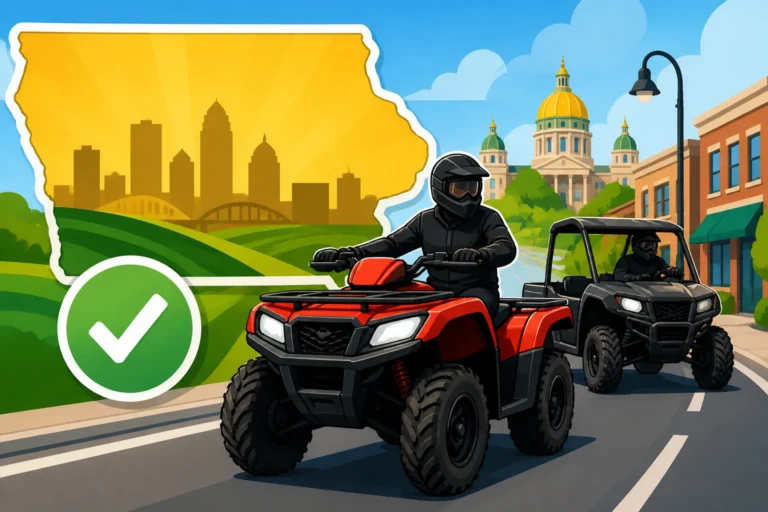
So, what does it actually mean for a city council to "authorize" ATV or UTV use on its streets? It's not just a casual nod of approval. For a city to legally allow OHVs on its public roads, its city council must pass a formal ordinance. This ordinance is a binding local law that specifically outlines which streets (or classes of streets) are open, under what conditions, and during what hours.
For example, a city might pass an ordinance that opens all streets with a speed limit of 35 mph or less, but explicitly excludes state highways that run through town. They might also impose specific curfews, such as no ATV use between midnight and 5 AM, as is the case in some communities. These ordinances often detail the types of machines allowed, the minimum age of operators, and the safety equipment required beyond state minimums. Before you plan a ride through an unfamiliar town, finding and reading their specific ordinance is absolutely crucial. You might find information on [Iowa Cities That Allow ATVs on Streets] through their official websites or by contacting the city clerk. Many riders use aftermarket accessories, such as those from SuperATV, to ensure their machines meet any additional local requirements like mirrors or enhanced lighting.
Factors Influencing a City's Decision to Open Streets
When a city council sits down to debate whether to open its streets to ATVs and UTVs, they weigh a multitude of factors. These aren't arbitrary decisions; they're usually the result of community input, economic considerations, public safety assessments, and logistical challenges. Understanding these influences can shed light on why one community says "yes" and another says "no."
Community Demand and Economic Impact
One of the most powerful drivers for opening city streets to OHVs is strong community demand and the potential for economic benefit. In many rural Iowa towns, OHV riders represent a significant demographic, and allowing them street access can stimulate local businesses. Imagine a small town located near a popular trail system or an OHV park. If riders can legally travel from the trail directly into town to grab a meal, refuel their machines, or pick up supplies, it brings direct revenue to local shops, restaurants, and gas stations.
Local businesses might actively lobby the city council, presenting data on potential tourism dollars and increased foot (or tire) traffic. Rider groups and clubs often play a vital role in advocating for these changes, highlighting the responsible nature of their hobby and the economic boost it could provide. For example, a town might consider [Riding to Gypsum City the Short Way] through its streets if it means riders will stop and spend money there. Conversely, if there's little local demand or perceived economic benefit, a council might see no compelling reason to change existing restrictions.
Public Safety Concerns and Local Infrastructure
On the flip side, public safety is often the paramount concern that leads cities to maintain or impose restrictions on OHV use on streets. City councils are responsible for the well-being of all their citizens, and introducing OHVs into mixed traffic can raise legitimate safety questions. Concerns typically include:
- Increased Accident Risk: The differing speeds, maneuverability, and visibility of ATVs/UTVs compared to cars can lead to collisions, especially in congested areas or at intersections.
- Noise Pollution: OHVs, particularly those with aftermarket exhausts, can be significantly louder than standard vehicles, leading to complaints from residents about disturbance.
- Road Wear and Tear: While ATVs/UTVs are lighter than many cars, their tire treads and off-road design can potentially contribute to accelerated wear on asphalt, especially with frequent use.
- Traffic Congestion: In towns with already busy streets, adding another type of vehicle could exacerbate traffic problems.
Furthermore, a city's infrastructure plays a role. Are the streets wide enough? Are there adequate shoulders? Is visibility good at intersections? If a city has narrow, winding streets, or if its police department is already stretched thin, enforcement of new OHV rules might be a concern. These practical considerations can often outweigh perceived economic benefits, leading a council to vote against opening its streets.
Local Ordinances and Their Specifics
When a city does decide to open its streets, the resulting ordinance isn't usually a free-for-all. Instead, it's a carefully crafted document that tries to balance rider access with public safety. These ordinances will almost always stipulate specific conditions that riders must meet, often stricter than general state requirements for off-road use. Common stipulations include:
- Designated Streets: Often, not all city streets are opened. Major thoroughfares, state highways running through town, or particularly congested areas might remain closed. Riders must know [Iowa Rules for Riding a Paved Secondary Road] if they encounter one.
- Time Restrictions: Many ordinances include "sunrise to sunset" rules or specific hours of operation to prevent night riding.
- Age and Licensing: While state law dictates age and licensing for certain road uses, cities might reiterate or add to these, though generally, [Iowa Minimum Age to Ride a Road] applies universally.
- Equipment Requirements: Beyond state minimums (like headlights, taillights, and a horn), an ordinance might require additional items such as multiple mirrors, turn signals, or even specific tire types. Brands like SuperATV offer a range of accessories that can help riders meet these specific local requirements.
- Speed Limits: Cities will often set a specific, lower speed limit for OHVs, sometimes 25 or 35 mph, even if the posted car speed limit is higher.
- Insurance: Proof of liability insurance that meets Iowa's minimums for motor vehicles is almost always required, as detailed in [Iowa ATV Insurance Requirement].
- Registration and Decals: Your machine must be properly registered with the county recorder, and display the current Iowa decal. This is a non-negotiable state-level requirement that cities will enforce.
You can often find examples of these rules by looking up specific city ordinances. For instance, [Waukon's Open Streets and Alleys] provides a concrete example of how one Iowa city has structured its local rules for ATV use. It’s crucial to understand that simply having an Iowa registration decal isn't enough; you must also comply with the local ordinance of the specific city you are riding in.
What This Means for Riders on Iowa City Streets
Navigating the varied landscape of Iowa's city street rules for ATVs and UTVs requires diligence and awareness from riders. You can't assume that because one town welcomes OHVs, the next one will too. This often means doing a bit of homework before you load up your machine and head out.
Always Check Local Ordinances First
This cannot be stressed enough: before you ride your ATV or UTV on any city street in Iowa, always check the specific local ordinance for that city. A quick phone call to the city clerk's office or a visit to the city's official website can save you a hefty fine and a lot of headaches. Simply because your machine has a valid registration and you have the required insurance doesn't automatically mean you can ride anywhere.
Asking questions like, "Are ATVs allowed on city streets here?" "If so, which streets?" "Are there any time restrictions?" and "What specific equipment do I need?" will give you the clarity you need. Remember, ignorance of the law is not a defense, and deputies will issue citations for non-compliance. Understanding [Iowa Fines for Illegal ATV Road Use] highlights the importance of checking these rules beforehand. Many riders customize their machines with items from SuperATV, knowing that these upgrades often help meet local equipment requirements.
State-Level Requirements That Still Apply
Even if a city has an ordinance allowing ATV/UTV use on its streets, you are still subject to all applicable state-level requirements for operating an OHV on public roads. These are non-negotiable and apply statewide, regardless of local permissions. Key state requirements include:
- Age and Licensing: You must be at least 18 years old and possess a valid driver's license to operate an ATV/UTV on any public road (paved or unpaved) in Iowa. [Why Iowa Requires a Driver 18 or Older] is a critical piece of information.
- Insurance: Liability insurance meeting Iowa's minimum coverage requirements ($20,000 for one injury, $40,000 for two, and $15,000 for property damage) is mandatory. [Iowa ATV Insurance Minimum Coverage] provides these details.
- Lighting: Your machine must have working headlights and taillights, and these often need to be on at all times while operating on public roads, even during daylight hours.
- Speed Limit: A speed limit of 35 mph or less applies to OHVs on public roads, unless a city ordinance specifies a lower limit.
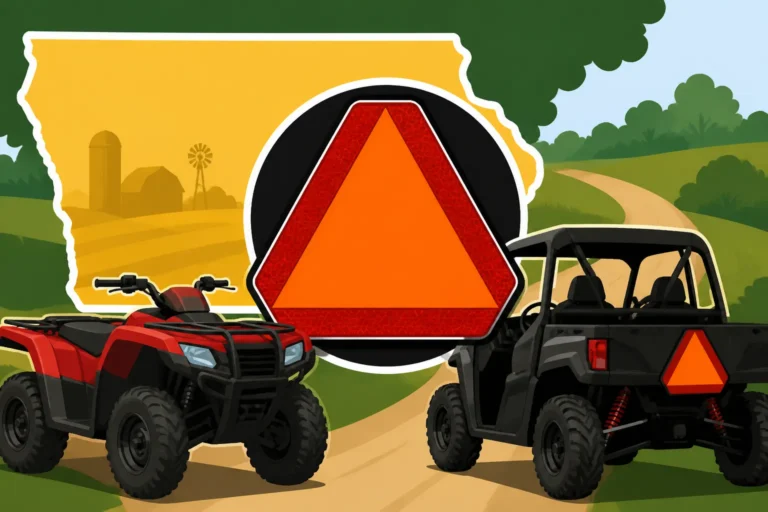
- Slow-Moving Vehicle Sign: A reflective orange slow-moving vehicle triangle must be displayed on the rear of your machine.
- Horn and Mirror: Your ATV/UTV must be equipped with a functional horn and at least one rearview mirror.
These state requirements form the baseline; local ordinances then add to them. Failing to meet either the state or local requirements can result in a citation from a county sheriff's deputy or an Iowa conservation officer.
The Role of Advocacy and Community Engagement
If you live in a town where ATV/UTV street access is currently restricted, but you believe it would be beneficial, don't lose hope. Local rules are often a reflection of community priorities and can change over time through advocacy and engagement. Attending city council meetings, speaking with your local representatives, and organizing fellow riders can be incredibly effective.
Presenting a well-reasoned case that highlights potential economic benefits, outlines a plan for safe integration, and addresses common concerns can sway public opinion and influence policy. Demonstrating responsible riding behavior is also key; when local riders are respectful of laws and property, it builds trust within the community. Conversely, irresponsible riding can quickly lead to tighter restrictions or the closure of previously open routes. Understanding [How a City Council Votes to Open Streets] can help you navigate this process effectively.
| Aspect | Why a Town Might Say "YES" | Why a Town Might Say "NO" |
|---|---|---|
| Economic Impact | Boosts local businesses (restaurants, gas, retail) | No perceived economic benefit, or fear of negative impact |
| Community Demand | Strong local rider base, advocacy from residents/clubs | Low demand, or vocal opposition from non-riders |
| Public Safety | Believes rules can mitigate risks, low traffic volume | High traffic, safety concerns for mixed vehicle use |
| Infrastructure | Streets can accommodate OHVs, low road wear concern | Narrow streets, potential for accelerated road damage |
| Noise & Disturbance | Minimal issue, or willingness to enforce sound limits | Concerns about noise pollution, resident complaints |
| Enforcement Capacity | Police department has resources to enforce ordinance | Limited law enforcement resources, difficulty policing rules |
| Tourism | Attracts recreational riders, links to trail systems | Not a tourism priority, or focus on other types of tourism |
Disclaimer
This article is for general informational purposes only and does not constitute professional advice. Laws, prices and regulations vary by location and change over time. Consult a qualified professional for guidance on your specific situation.