Eighteen Years Old Behind the Bars
It can be incredibly frustrating to think you're ready to hit the gravel roads or zip through a small town on your ATV or UTV, only to realize that Iowa has very specific rules about who can operate these machines on public roadways. Many riders, especially younger enthusiasts, feel a real pinch when they discover that the freedom of the trail doesn't automatically extend to the asphalt or county gravel. This guide is here to untangle those rules, specifically focusing on the age requirements for riding your off-highway vehicle (OHV) on Iowa's streets and secondary roads.
The Age Requirement for Iowa Road Riding
Let's cut right to the chase because this is often the biggest hurdle for excited riders. Iowa has a firm stance when it comes to operating ATVs and UTVs on its public roads: you need to be at least 18 years old. This isn't just some arbitrary number; it's rooted in a broader understanding of driver maturity, experience, and the legal responsibilities that come with sharing the road with other vehicles.
The Eighteen-Year-Old Standard
For many riders, the idea of being "of age" might bring to mind other milestones, but for operating an ATV or UTV on an Iowa public road, eighteen is the magic number. This is directly tied to the requirement of holding a valid driver's license, which in Iowa, generally means you've reached this age threshold. The state sees public roads as a different beast than designated off-road parks. On a trail, you might encounter other riders, but on a public road, you're interacting with cars, trucks, and potentially even semis, all moving at different speeds with varying levels of driver attention.
The intent behind this rule is really about safety and liability. An 18-year-old is legally considered an adult, capable of understanding and adhering to traffic laws, making sound judgments in complex road situations, and bearing the full legal weight of their actions if an accident were to occur. It's a significant jump from the rules governing off-road riding, where a minor might obtain a safety certificate at a much younger age, but is typically still supervised. The public road demands a higher level of responsibility, and the age of 18 is where Iowa draws that line. This is why the question of [Why Iowa Requires a Driver 18 or Older] comes up so often.
Understanding the "Public Road" Definition
So, what exactly counts as a "public road" in Iowa? This isn't always as clear as it seems, and it's where many riders get confused. When we talk about public roads, we're generally referring to:
- Unpaved Secondary Roads: These are your classic gravel county roads. Many of us picture ourselves cruising down these on a sunny afternoon. They are generally open for ATV/UTV use in most counties, provided you meet all other requirements. [Unpaved County Secondary Roads in Iowa]
- Paved Secondary Roads: Some counties have taken steps to authorize ATV/UTV use on certain paved secondary roads. This isn't universal, so you absolutely need to check with the specific county's board of supervisors to see if they've passed an ordinance allowing it. [Paved Secondary Roads and County Authorization]
- City Streets: Similarly, a city council can pass an ordinance to allow ATVs/UTVs on specific city streets. Again, this is highly localized, and you can't assume a city street is open unless you confirm it. [City Streets and Iowa Council Authorization]
- Road Ditches: This is often a grey area. In Iowa, the road right-of-way typically includes the ditch beside the road. If the road itself is open to ATVs/UTVs, riding in the ditch might be permissible, but it's crucial to understand local interpretations and always err on the side of caution. Generally, if you're traveling along the road, the road itself is the designated path.
What's definitely not included are interstate highways and generally, four-lane divided primary highways, which remain closed to OHVs. The important takeaway is that "public road" isn't a blanket term allowing you access everywhere; it's about specific types of roads and whether the local jurisdiction has opened them up, all while adhering to the age rule.
What an 18-Year-Old Needs to Ride an Iowa Road
So, you've hit the big 18, and you're ready to legally ride your ATV or UTV on Iowa's approved public roads. Great! But age alone isn't enough. You need to ensure both you and your machine meet several other critical requirements before you even think about putting rubber to gravel. This goes beyond just being old enough; it's about being equipped and insured for the public roadway environment.
Driver's License and Proof of Insurance
These two items are absolutely non-negotiable for anyone operating an ATV or UTV on an Iowa public road, regardless of their age (as long as they are 18+).
First, you must possess a valid driver's license. This isn't a special ATV endorsement, but your standard driver's license that allows you to operate a car or truck. It proves you've passed the state's driving exams and are considered competent behind the wheel. Always carry this with you, just as you would in your car. A sheriff's deputy or conservation officer will definitely want to see it at a roadside stop. For more details on this, you can look into [Iowa Driver's License Rules for ATVs].
Second, and equally important, you need to have proof of financial responsibility, which for most of us, means carrying ATV or UTV insurance. Iowa law mandates minimum liability coverage to protect others in case you're involved in an accident. These minimums are: [Twenty Thousand for One Injury], [Forty Thousand for Two] or more injuries, and [Fifteen Thousand for Property Damage]. These are often referred to as 20/40/15 limits. Showing proof of this insurance is crucial, and riding without it can lead to significant penalties. [Iowa Fines for No Proof of Insurance] are not to be taken lightly. Before you even pull out of the driveway, double-check that your insurance policy is active and meets these requirements. Your insurance card should always be with you, just like your driver's license.
Machine Requirements for Road Use
Beyond your personal credentials, your ATV or UTV itself needs to be properly outfitted to be considered road-legal in Iowa. This isn't about looking cool; it's about safety and visibility for everyone on the road.
Here's what your machine typically needs:
- Headlights and Tail Lamps: These are essential for visibility, especially during dawn, dusk, or in adverse weather. Headlights must be on even during the day when riding on a public road in Iowa. [Iowa Lighting Requirements for ATVs] cover these specifics.
- Brake Lights: Clear, functional brake lights are vital to signal your intentions to traffic behind you.
- Horn: You need an audible warning device to alert others to your presence or to avoid potential hazards. A good, loud horn is a must-have. You can find robust horn kits from brands like SuperATV that are designed for off-road machines needing road capabilities. [Iowa Horn Requirement for Road Use] details this.
- Mirrors: At least one rearview mirror is required. This allows you to monitor traffic approaching from behind without having to constantly turn your head. Again, SuperATV offers various mirror options that can be easily integrated into your machine. [Iowa Mirror Requirement for Road Use] discusses the specifics.
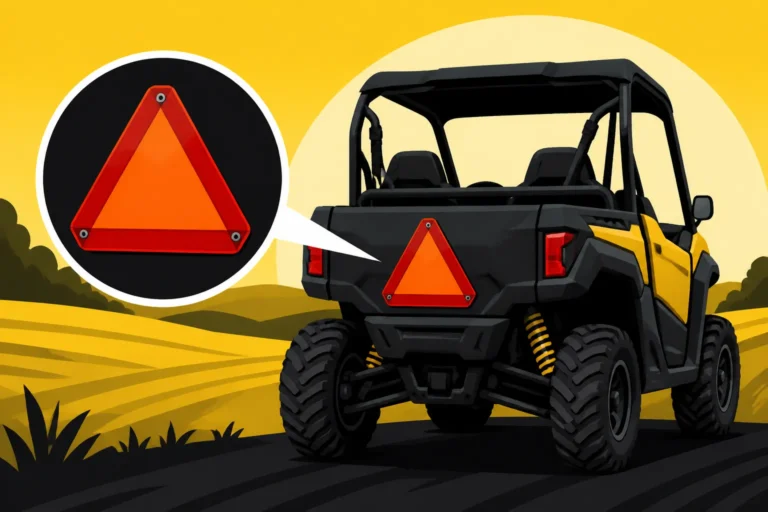
- Slow-Moving Vehicle (SMV) Triangle: If your ATV/UTV is designed to operate at 25 mph or less (though most ATVs/UTVs can go faster, the state law often defaults to this for road-use equipment), it may need an orange SMV triangle displayed on the rear. This warns other drivers that you're moving slower than typical traffic.
- Muffler and Spark Arrester: While not always solely for road use, these are generally required for any public operation to control noise and prevent wildfires.
Ensuring your machine is properly equipped means you're not just hoping for the best; you're actively contributing to road safety. Don't assume anything; check each of these boxes before you head out.
Why a 17-Year-Old Cannot Ride a Public Road (and other minors)
It's a common source of disappointment for many younger riders and their parents. A teenager might be a fantastic, experienced off-road rider, perhaps even holding a safety certificate, but the moment they want to take their machine onto an Iowa public road, the rules change dramatically. The short answer is: if you're under 18, you cannot legally operate an ATV or UTV on an Iowa public road. There's no special permit, no parental consent waiver, and no amount of riding experience that changes this.
Protecting Young Riders
The rationale behind [Why No Iowa Minor May Ride a Road] is primarily centered on protecting young riders and ensuring public safety. While an ATV safety certificate allows those between the ages of 12 and 17 to operate an OHV on designated trails or private land, these environments are controlled and differ significantly from public roadways. On a trail, hazards are often natural (trees, rocks, mud) and other users are typically also on OHVs. On public roads, however, the risks include:
- High-speed traffic: Cars and trucks move at speeds far exceeding what's common on a trail.
- Complex traffic laws: Road riding requires understanding and quickly reacting to signs, signals, and the flow of traffic.
- Lack of dedicated protection: Unlike a car with a metal frame, airbags, and seatbelts, ATVs/UTVs offer less protection in a collision with a larger vehicle.
The state simply doesn't deem a minor, regardless of their off-road proficiency, to have the necessary legal maturity, driving experience, and judgment to navigate these complex and potentially dangerous road conditions. The rules are designed to prevent tragedies and minimize liability for all involved.
Exceptions and Misconceptions
Despite the clear age limit, there are often questions about potential exceptions. Let's clear up some common misconceptions:
- No Special Permits: Some states might have limited permits for minors to operate farm equipment on roads, but for general ATV/UTV use in Iowa, there isn't a "junior" road-use permit. The 18-year-old and valid driver's license rule is absolute for public roads.
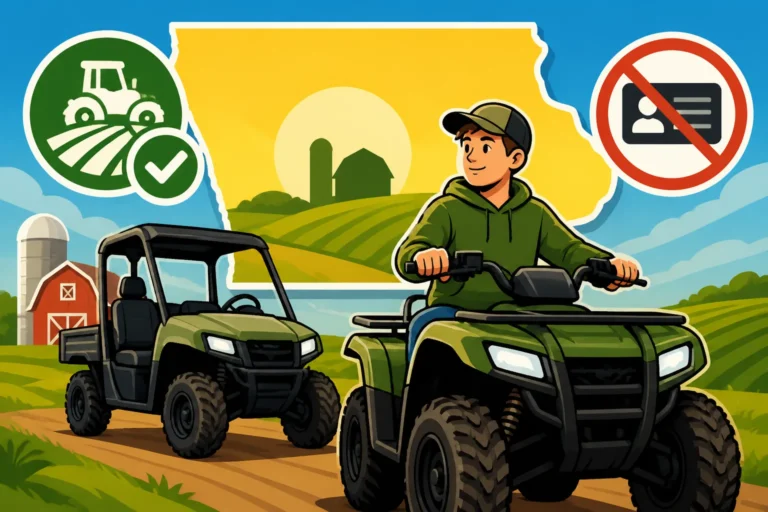
- Farm Use Exemptions: This is where it gets a little nuanced, but it's not a loophole for general riding. Iowa law does have provisions for operating an ATV or UTV as an "implement of husbandry" for specific agricultural purposes. This exemption typically applies when the machine is being used directly for farming operations, often within a short distance (e.g., [2 Miles From the Farm in Iowa]) of the farm property, and usually for tasks like hauling feed or checking crops. This is a very specific exemption and does not grant a minor the right to joyride on public roads. The machine must genuinely be engaged in bona fide agricultural work. If you're using your ATV for hunting or recreational purposes, this exemption does not apply, even if you live on a farm.
- Parental Supervision: While parental supervision is key for minors riding off-road with a safety certificate, it holds no sway when it comes to public road access. An 11-year-old with a parent on a separate ATV on a gravel road is still breaking the law.
So, while it can be a tough pill to swallow for eager young riders, the rule is clear: wait until you're 18 and have your driver's license before taking your ATV or UTV onto Iowa's public roads.
Important Road Rules Beyond Age
Once you're 18 and your machine is properly equipped and insured, you're not entirely free to roam wherever you please. Iowa has additional rules governing where and how you can operate your ATV or UTV on public roads. Understanding these specifics is crucial to avoid tickets and ensure a safe ride. Many riders get the age part right but then stumble on these other operational requirements.
Where You Can Actually Ride
This is a big one. Just because you can legally operate your OHV on some roads doesn't mean all roads are open. Iowa's regulations are quite specific:
- Unpaved Secondary Roads: As mentioned earlier, most unpaved county gravel roads are fair game. These are often the most popular choice for ATV/UTV road use. [Iowa Rules for Riding a Gravel Road] cover this in more detail.
- Authorized Paved Secondary Roads: This is where you need to do your homework. A county's board of supervisors must pass an ordinance specifically authorizing ATV/UTV use on its paved secondary roads. If they haven't, those roads are off-limits. You cannot assume pavement is open.
- Authorized City Streets: Similar to paved county roads, a city council must pass an ordinance to open up certain city streets to OHV traffic. This might be only specific streets, or it might exclude certain hours (like late at night). Always check with the city clerk if you're unsure. Cities like Waukon have opened parts of their street system, but this isn't universal.
- "Most Direct Route" Rule: Even when riding on authorized roads, you often can't just meander aimlessly. Iowa law frequently stipulates that you must take the "most direct route" between your point of origin (like your home or a staging area) and an authorized trail or riding area. This prevents recreational cruising on roads. For example, if you're heading to [Gypsum City OHV Park at Fort Dodge], you need to take the most direct route there and back. [Iowa's Most Direct Route Rule] explains this concept further.
- Highways and Interstates: Generally, ATVs and UTVs are prohibited from state highways and interstate roadways, especially multi-lane ones. You can often cross them at an intersection, but sustained travel on them is typically not allowed.
The key here is local knowledge. What's allowed in one county or city might be strictly prohibited in the next. Always verify the rules for the specific area you plan to ride in.
Speed Limits and Safe Operation
Even on roads where you are permitted to ride, you're not exempt from traffic laws, and there are specific speed limits for ATVs and UTVs:
- 35 mph Speed Cap: Regardless of the posted speed limit for cars, Iowa law typically caps the speed for ATVs and UTVs on public roads at 35 miles per hour. Even if the gravel road has a 55 mph limit for vehicles, you must keep your OHV under 35 mph. [Iowa's 35 mph Cap] is a critical rule to remember. Going faster not only puts you at risk but also makes you more susceptible to citations.
- Obey All Traffic Laws: When operating on a public road, your ATV or UTV is considered a vehicle, and you must obey all standard traffic laws. This includes stop signs, yield signs, traffic signals, and general rules of the road. Don't assume that because you're on an OHV, regular road rules don't apply.
- Safe Operation and Passengers: Operate your machine responsibly. Don't engage in stunts, reckless driving, or anything that could endanger yourself or others. If your machine is designed to carry a passenger, ensure they are seated properly and securely. [Iowa Rules for a Passenger on a Road] outlines these guidelines. Many ATVs are designed for a single rider, and carrying a passenger on a single-rider ATV on a public road can lead to fines and dangerous situations.
- Weather Conditions: Be mindful of weather. While your ATV might handle mud well, a snow-covered or icy public road presents different challenges and risks when sharing with other traffic.
Here's a quick comparison of requirements for minors on trails versus adults on roads:
| Feature | Minor (12-17) on OHV Trail | Adult (18+) on Iowa Public Road |
|---|---|---|
| Minimum Age | 12 years (with certificate) | 18 years |
| Required Credential | Iowa ATV Safety Certificate | Valid Driver's License |
| Insurance Required | Not required for private/trails | Mandatory (20/40/15 minimums) |
| Machine Registration | Yes (Iowa DNR Decal) | Yes (Iowa DNR Decal) |
| Lighting (Head/Tail) | Recommended for visibility | Mandatory (on even during day) |
| Brake Lights | Recommended | Mandatory |
| Horn | Recommended | Mandatory |
| Mirrors | Recommended | Mandatory (at least one) |
| Slow-Moving Triangle | No | May be mandatory (if speed < 25) |
| Speed Limit | No specific cap (safe speed) | 35 mph maximum |
| Roads Permitted | Designated trails, private land | Authorized gravel/paved roads |
Always remember that public road riding carries a different level of responsibility than off-road trail riding. Be informed, be equipped, and be safe!
Disclaimer
This article is for general informational purposes only and does not constitute professional advice. Laws, prices and regulations vary by location and change over time. Consult a qualified professional for guidance on your specific situation.