How an Iowa County Authorizes a Paved Road
It’s a common frustration for many Iowa ATV and UTV riders: you’re out enjoying a ride on a gravel road, navigating the beautiful rural landscapes, and then you hit a section of perfectly good pavement. You think, "Why can't I just keep going?" or "This paved stretch would make a perfect connection to the next trail!" But more often than not, that paved road is off-limits. This guide is here to shed light on exactly why that is, and more importantly, how an Iowa county can actually go about authorizing Off-Highway Vehicle (OHV) use on its paved secondary roads, and what it means for you as a rider.
The Baseline: Why Paved Roads Are Different from Gravel in Iowa
Iowa's approach to OHV access on public roads can feel like a patchwork quilt of rules and regulations, and one of the biggest sources of confusion often centers around the distinction between gravel and paved roads. It's not just a matter of surface; it's a matter of law and local control.
Unpaved Roads: A Different Set of Rules
For many riders, the expectation is that if it's a public road and not a state highway, it should be open. This often stems from the rules surrounding Iowa's unpaved secondary roads, which have a somewhat more lenient default. Generally speaking, if a county hasn't specifically passed a resolution or ordinance to close them, [Unpaved County Secondary Roads in Iowa] are often open to OHV use. This means you can typically ride on those scenic, dusty routes without needing explicit county permission for each segment. Riders have been enjoying these roads for years, traversing fields and connecting communities, often abiding by a set of well-established rules regarding speed, licensing, and machine equipment. It's a fantastic way to experience the state's rural charm. This general openness of gravel roads contributes to the bewilderment when a paved section, seemingly just an extension of the same road system, suddenly becomes a forbidden zone. You're riding along, hitting the 35 mph speed limit, and suddenly the gravel ends, and so, frustratingly, does your legal ride.
Paved Roads: The Default is "No"
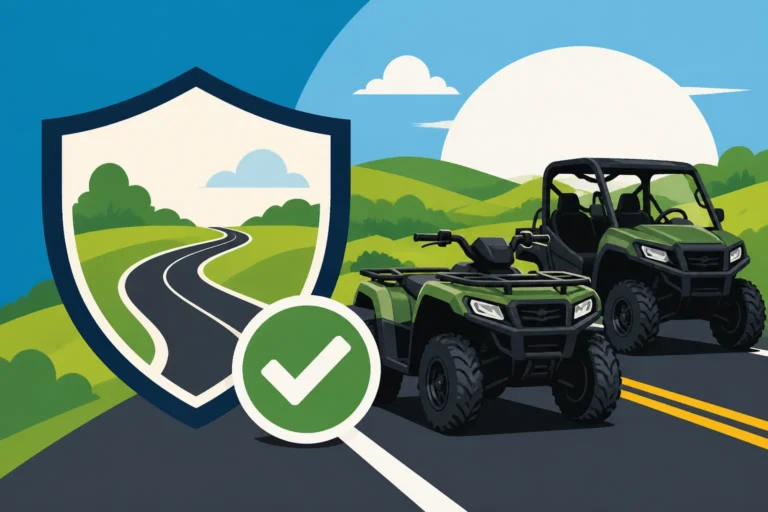
Here's the critical difference: paved county roads in Iowa are, by default, closed to OHVs. Unlike their gravel counterparts, a county’s paved secondary roads require an explicit act from the county's governing body – the Board of Supervisors – to be opened. This isn't just a suggestion; it's rooted in state law, which grants counties the authority to regulate traffic on their own roads. The rationale behind this default closure often revolves around public safety, the higher volume and speed of conventional vehicle traffic on paved surfaces, and concerns about wear and tear on these more expensively maintained roads. For many riders, this distinction feels arbitrary. Why can a machine that's perfectly legal and safe on gravel suddenly become illegal and dangerous the moment it touches asphalt? It's a valid question that speaks to the sometimes-slow pace of legislation catching up with the evolving use of OHVs. You might have your machine fully equipped for road use – turn signals, mirrors, a horn, even a [Slow-Moving Vehicle Sign Rules] – and still find yourself stuck at the edge of a paved road, unable to proceed. It's a moment that can certainly dampen the spirit of an otherwise great ride.
The Path to Authorization: How a County Board Opens Paved Roads
So, if paved roads are generally closed, what's the actual mechanism for getting them opened? It's not a quick fix or a simple petition. It requires a formal process involving the county's legislative body.
The Authority of the County Board of Supervisors
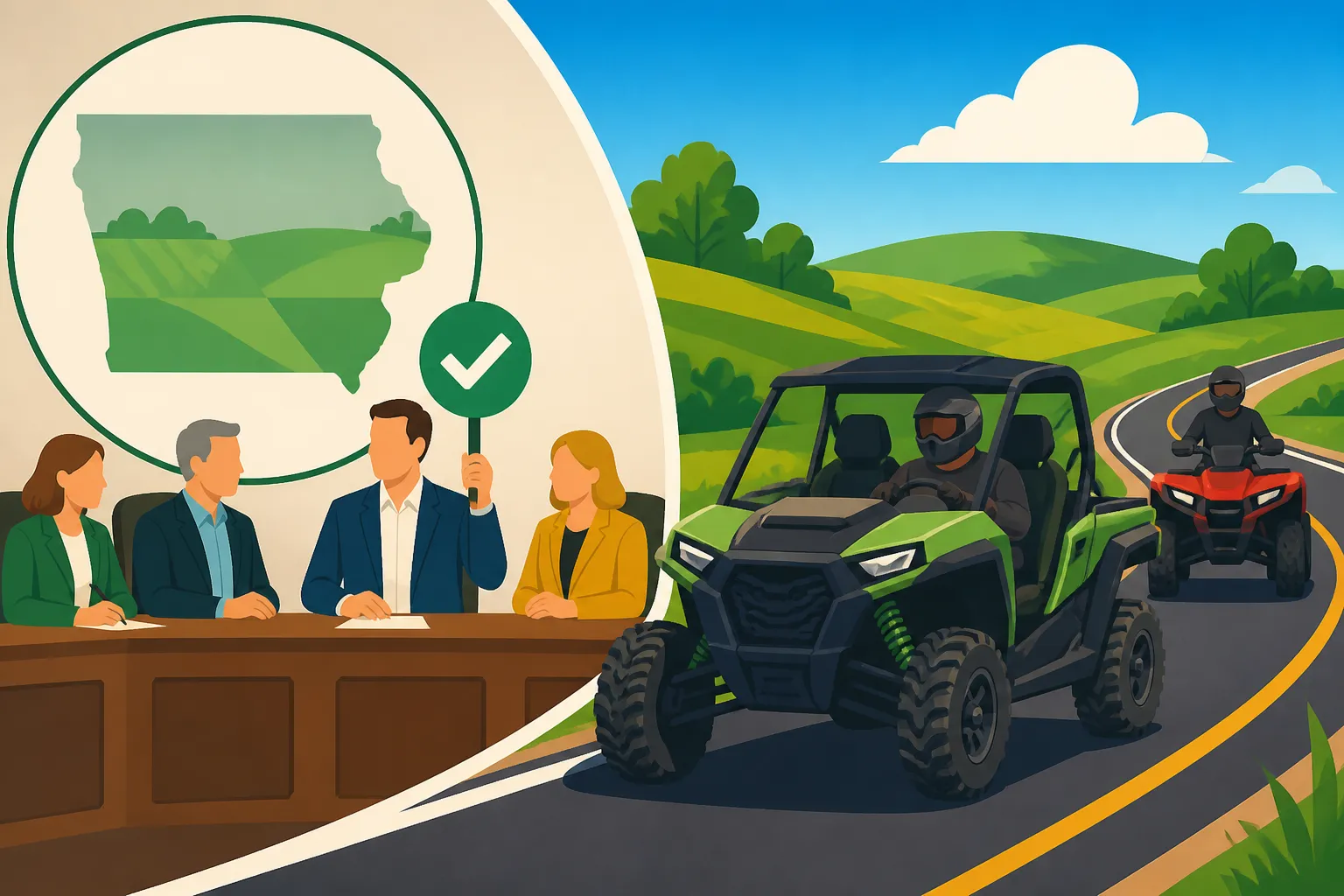
In Iowa, the power to authorize OHV use on paved secondary roads rests solely with the elected County Board of Supervisors. These three (or sometimes five) individuals are responsible for governing the county, making decisions on everything from budgets to road maintenance, and yes, to traffic ordinances. They have the authority to pass resolutions or ordinances that specifically open certain paved segments of the county's secondary road system. It's important to understand that "secondary roads" generally refer to those maintained by the county, not the state-managed primary highways (like US or State routes), which remain closed to OHVs except for direct crossings at intersections. The DNR plays a role in registration and trail development, but when it comes to opening county roads, the decision-making power lies firmly with the local county board. This means that if you're looking to ride a [Paved Secondary Roads and County Authorization] in your area, your efforts need to be directed at your local county government.
The Process of Public Discussion and Decision Making
Getting a paved road authorized for OHV use isn't typically a swift process. It usually involves several stages of public discussion and consideration. First, it might start with a request from local riders, an OHV club, or even a community looking to boost tourism. This request would likely go before the County Board of Supervisors during one of their public meetings. From there, the board might initiate a study or discussion, often involving the county engineer's office, local law enforcement (the Sheriff's Department), and other relevant departments to assess the feasibility and safety implications.
Crucially, counties are generally required to hold public hearings before enacting new ordinances or resolutions that impact the public significantly. This provides an opportunity for all stakeholders – local residents, farmers, businesses, and OHV enthusiasts – to voice their opinions, concerns, and support. Imagine a scenario where a local OHV club has identified a key paved section that connects their favorite [Iowa Trails for a Wide Machine] to a local gas station or restaurant. They would gather their data, show up at board meetings, present their case, perhaps even conduct their own informal traffic studies or safety proposals. This public input is vital; it allows the board to gauge community sentiment and address potential issues proactively. It's not uncommon for these discussions to take several months, or even longer, as the board carefully weighs all the pros and cons.
What a County Considers Before Opening a Paved Road
When a County Board of Supervisors contemplates opening a paved road to OHVs, they're not just thinking about rider convenience. They're balancing a multitude of factors, with public safety almost always at the top of the list. They'll consider:
- Safety Concerns: This includes traffic volume on the road, existing speed limits, sightlines, intersection safety, and the potential for increased accidents between OHVs and conventional vehicles.
- Road Condition and Maintenance: Paved roads are expensive to build and maintain. The board will assess if OHV use could accelerate wear and tear, and what the financial implications might be for the county's road maintenance budget.
- Traffic Volume and Patterns: Heavily trafficked paved roads are less likely to be opened due to higher risk. Counties will look at how many vehicles use the road daily and at what times.
- Proximity to Residential Areas: Roads passing through towns or densely populated rural areas might face more opposition due to noise concerns or perceived safety risks to pedestrians and children.
- Economic Impact: Conversely, counties might consider the positive economic impact of opening roads, such as increased tourism for local businesses like gas stations, restaurants, or lodging, especially if the road connects to an OHV park or popular riding area.
- Enforcement: Local law enforcement will need to be capable of enforcing any new rules, including proper [Iowa Lighting Requirements for ATVs], age restrictions, and insurance requirements.
- Public Opinion: The board will gauge whether there's broad community support or significant opposition. A well-organized OHV community presenting a unified, safety-conscious plan can make a big difference, but strong local opposition can also sway decisions.
It's a delicate balancing act, and counties often move cautiously. Their primary duty is to the safety and well-being of all their constituents, so every aspect of a proposed authorization gets scrutinized.
Riding on Authorized Paved Roads: Rules and Responsibilities
Let's say your county takes the plunge and authorizes a paved road for OHV use. That's fantastic news! But it doesn't mean it's a free-for-all. There are still very specific rules and responsibilities you need to adhere to, which are often codified directly into the county's ordinance.
Specific Requirements for Road-Legal OHVs in Iowa
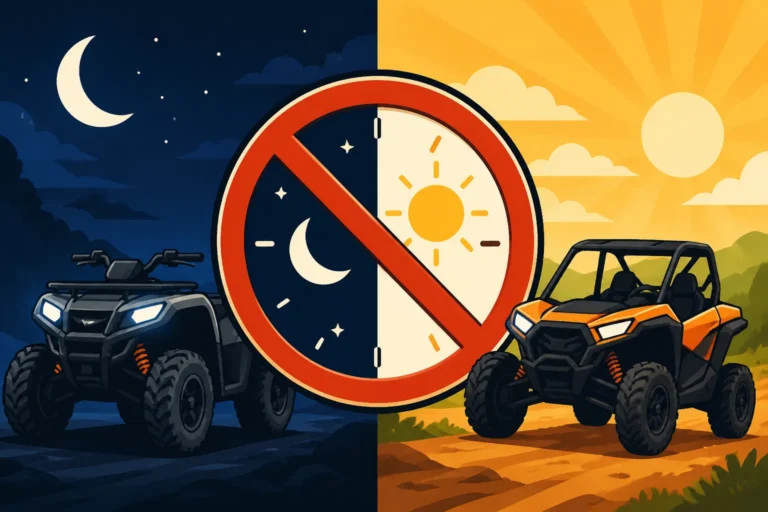
Even on an authorized paved road, your machine needs to be legally equipped for road travel. Iowa law is pretty clear on what's required for an OHV to be considered "street legal" on any public road, paved or unpaved, where it's permitted. This includes functional headlights, taillights, and brake lights – remember, [Headlights Burning at Noon] are required on Iowa roads. You'll also need [A Horn and a Mirror for Iowa Road Use] (at least one rearview mirror). Many riders find themselves looking for aftermarket solutions to ensure their machines are compliant. Companies like SuperATV offer a wide range of accessories, from turn signal kits to mirrors and horn setups, specifically designed to help riders meet these legal standards. Additionally, you must display a [Iowa Slow-Moving Vehicle Sign Rules] on the rear of your machine.
Beyond the machine itself, the operator also has requirements:
- Age: You must be [Iowa Minimum Age to Ride a Road], which is 18 years old. No exceptions for minors on public roads, even if they have a safety certificate.
- License: A valid driver's license is mandatory. [Iowa Driver's License Rules for ATVs] mean you can't just be a licensed rider; you need a full driver's license.
- Insurance: Perhaps one of the most critical requirements, you must carry proof of liability insurance that meets Iowa's minimum coverage limits (20/40/15). This is not optional, and deputies absolutely check for it. [Iowa ATV Insurance Requirement] is a serious matter, and the penalties for non-compliance can be steep.
- Speed Limit: No matter what the posted speed limit is for other vehicles, your OHV cannot exceed [Iowa ATV Speed Limit on Roads], which is 35 mph on any public road in Iowa.
Failing to meet any of these requirements, even on a legally authorized paved road, can result in fines and citations.
Understanding the Specifics of a County Ordinance
It's crucial to understand that a county's authorization to open paved roads isn't a blanket permission for all paved roads within its borders. Instead, the ordinance or resolution will typically specify which roads or even which sections of roads are open to OHV traffic. This might be a particular paved county road connecting two small towns, or a segment that provides access to a specific [Iowa OHV Parks With a Staging Lot]. It's your responsibility as a rider to know exactly where you're permitted to ride.
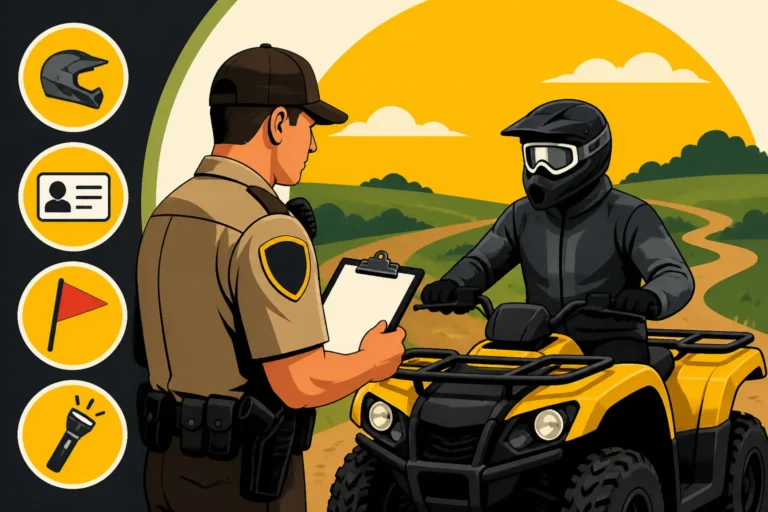
How do you find this out? The best sources are often the county clerk's office, the county's official website, or the local Sheriff's Department. Some counties might also install clear signage indicating which roads are open. You wouldn't want to rely on hearsay; always verify the information directly from official county sources. Furthermore, always carry your registration certificate, proof of insurance, and your driver's license with you when riding. A deputy at a roadside stop will want to see these. Knowing the specific rules for [Iowa Rules for Riding a Paved Secondary Road] in any given county is key to a hassle-free experience.
Being a Responsible Rider on Paved Roads
When a county decides to open its paved roads to OHVs, it's often a trial. The continued privilege relies heavily on riders demonstrating responsibility and respect. This means:
- Setting a Good Example: Every time you ride on an authorized paved road, you're representing the entire OHV community. Ride courteously, quietly, and safely. Your actions can influence future decisions about OHV access.
- Stay on Route: Stick strictly to the roads that have been authorized. Veering off onto closed roads, private property, or into ditches where not permitted will only create negative impressions and jeopardize future access.
- Respect Property: Be mindful of noise, especially in residential areas. Keep your speed appropriate, and always yield to other traffic. Remember, you're sharing the road with cars, trucks, and potentially agricultural equipment.
- Know the Consequences: Riding an OHV illegally on a closed paved road, or failing to meet the legal requirements on an open one, can lead to significant fines and penalties. [Iowa Fines for Illegal ATV Road Use] are not something you want to discover firsthand. The best approach is always to be informed and compliant.
By understanding the rules, advocating responsibly, and riding respectfully, we can collectively work towards expanding and preserving OHV access on Iowa's diverse road network. It's a journey, not a sprint, but every step towards clearer, more accessible rules helps the entire riding community.
Comparison of Iowa Road Types for OHV Use
Here’s a quick overview to help clarify the differences between types of Iowa roads when it comes to OHV use:
| Feature | Unpaved Secondary Roads (Gravel/Dirt) | Paved Secondary Roads (County Maintained) | Primary Highways (State Maintained) |
|---|---|---|---|
| Default OHV Status | Generally OPEN (unless specifically closed) | Generally CLOSED (unless specifically opened) | CLOSED to OHV travel |
| Authorization Body | County Board of Supervisors (for closures) | County Board of Supervisors (for openings) | Iowa DOT |
| Common Use | Recreation, farm access, connecting routes | Faster travel, general public access | Major arteries, high speed/traffic |
| Equipment Requirements | Full road-legal equipment (lights, horn, mirror, SMV triangle), insurance, driver's license, 18+ operator | Full road-legal equipment (lights, horn, mirror, SMV triangle), insurance, driver's license, 18+ operator | N/A (not permitted for travel) |
| Speed Limit | Max 35 mph for OHVs | Max 35 mph for OHVs | N/A (not permitted for travel) |
| Rider Frustration Level | Low, generally accessible | High, often seen as an arbitrary barrier | Moderate, understood as off-limits |
Disclaimer
This article is for general informational purposes only and does not constitute professional advice. Laws, prices and regulations vary by location and change over time. Consult a qualified professional for guidance on your specific situation.