Insurance Iowa Requires on a Road
It’s a common frustration for Iowa ATV and UTV owners: you've finally navigated the registration and titling process, maybe even found a few gravel roads that your county has opened up for riding, and then you hit a wall of confusion about insurance. Suddenly, your off-road machine is subject to on-road rules, and understanding what coverage you absolutely need to avoid costly penalties can feel like trying to solve a puzzle in the dark. This guide is here to shed light on Iowa's specific insurance requirements for ATVs and UTVs when you take them onto public roads, helping you ride legally and with peace of mind.
Why Insurance Becomes a Must for Iowa Road Riding
For most of us, our ATVs and UTVs are synonymous with off-road adventure—roaming private timber, tearing up the trails at Gypsum City OHV Park, or working hard around the farm. In these scenarios, while having insurance is always a smart idea for personal protection and property, it isn't always a legal mandate from the state itself. However, the moment your wheels touch an authorized public road, whether it's a gravel county secondary road or a city street that a local ordinance has opened up, the game changes entirely. The Iowa code shifts, and your machine, often considered a recreational vehicle, suddenly takes on characteristics akin to a traditional motor vehicle, demanding specific financial responsibility.
The Legal Mandate: Iowa's Stance on Roadway ATVs
Iowa law is quite clear: if you operate an all-terrain vehicle (ATV) or an off-road utility vehicle (UTV) on any public road, you must carry liability insurance. This isn't a suggestion; it's a legal requirement designed to protect other motorists, pedestrians, and property owners from potential financial harm should you be involved in an accident. The intent behind this legislation is to ensure that if an unfortunate incident occurs, there's a safety net in place to cover the damages caused to others, rather than leaving victims in a difficult financial bind. Without this mandate, a small fender bender could quickly escalate into a life-altering debt for an uninsured rider or an injured party.
This requirement specifically applies to roads that have been officially opened for ATV and UTV use by county boards of supervisors or city councils. It’s not about where you think you can ride, but where the law explicitly states you may ride. Crossing from private land onto a paved secondary road, even for a short distance to get to another section of timber, instantly triggers this insurance obligation. This is a critical distinction that many riders overlook, assuming that because their machine is primarily off-road, it somehow remains exempt from standard motor vehicle laws when briefly on public thoroughfares.
Beyond the Trails: Understanding the Risk Shift
Riding on a dedicated off-road trail, while certainly carrying its own risks, is inherently different from navigating public roads. On a trail, you're typically dealing with other like-minded riders, often at lower speeds, and the environment is designed for off-road machines. When you venture onto a public road, however, you're entering an environment shared with passenger cars, trucks, motorcycles, and even farm implements, all operating at varying speeds and with different expectations. This dramatically increases the potential for more severe accidents, involving higher speeds, heavier vehicles, and more complex traffic situations.
The transition from a muddy trail to a paved or gravel road introduces new variables: blind corners, oncoming traffic, intersections, and the need to obey standard traffic laws. The physical characteristics of an ATV or UTV—their open design, lack of enclosed protection, and different handling dynamics compared to a car—also contribute to a higher risk profile when sharing the road with conventional vehicles. An insurance policy acknowledges this heightened risk, providing a financial cushion that simply isn't necessary for trail-only use. It's about recognizing that the potential for significant property damage or personal injury to others dramatically increases when you leave the controlled environment of an OHV park for the open road.
Protecting Your Investment and Your Future
While the primary purpose of mandatory road insurance is to protect others, it inherently protects you, the rider, as well. Imagine an accident where you're at fault, and another vehicle sustains significant damage, or worse, someone is seriously injured. Without liability insurance, you would be personally responsible for all the associated costs—vehicle repairs, medical bills, lost wages, and potentially legal fees. These expenses can quickly run into the tens or even hundreds of thousands of dollars, far exceeding what most individuals could afford out-of-pocket. Such an event could lead to personal bankruptcy, wage garnishment, and the loss of assets, completely derailing your financial future.
For many, their ATV or UTV represents a substantial investment, often thousands of dollars. While liability insurance doesn't cover damage to your machine (we'll discuss optional coverages later), it prevents the catastrophic financial fallout that could force you to sell your prized machine, or other valuable possessions, just to cover accident-related debts. It's a pragmatic safety net that allows you to enjoy the freedom of riding on approved roads without the constant, underlying dread of financial ruin from an unexpected mishap. Think of it as investing in peace of mind, allowing you to focus on the ride itself rather than worrying about the "what ifs."
Unpacking Iowa's Minimum Coverage Requirements
When Iowa says you need liability insurance for road riding, they don't mean just any insurance. They mean a specific level of coverage, often referred to by a set of three numbers, that outlines the minimum financial responsibility you must carry. This "minimum" is precisely that—the lowest amount allowed by law—and is designed to cover bodily injury to other people and damage to their property if you are deemed at fault in an accident. It's a critical set of figures that every Iowa ATV and UTV road rider needs to understand, as falling short of these minimums can lead to the same penalties as having no insurance at all.
The "20/40/15" Rule Explained
Iowa's minimum liability insurance requirements for ATVs and UTVs operated on public roads are often expressed as "$20,000/$40,000/$15,000." While I can't provide the exact current numbers, this common shorthand represents the structure of the coverage. The first number refers to the maximum amount your insurance will pay for bodily injury to one person in an accident where you are at fault. The second number is the maximum amount your insurance will pay for bodily injury to all persons in a single accident, regardless of how many people were injured. The third number specifies the maximum amount your insurance will pay for damage to the property of others in a single accident.
It's vital to recognize that these are the minimums. Many insurance professionals and experienced riders will tell you that while these figures satisfy the letter of the law, they might not be sufficient to cover the true costs of a serious accident. Medical bills, vehicle repair costs, and legal fees can quickly exceed these amounts, especially in an era of rising healthcare and repair expenses. If the damages from an accident surpass your policy limits, you, the insured, are personally responsible for paying the difference out of your own pocket. This is why many riders choose to carry higher liability limits than the state minimum, opting for greater protection and peace of mind.
Bodily Injury Liability: Covering Others
The first two components of the Iowa minimum—the "per person" and "per accident" bodily injury limits—are perhaps the most crucial aspect of your liability coverage. This part of your policy is specifically designed to pay for the medical expenses, lost wages, pain and suffering, and other related costs for anyone you injure in an accident where you are at fault. This could be a passenger in another vehicle, a pedestrian, or even a fellow rider on a separate machine. The "per person" limit applies to each individual injured, while the "per accident" limit is the maximum total the policy will pay for all injured parties in one incident.
For example, if you were to collide with a car on a county gravel road, and the driver sustained a broken arm requiring surgery and extensive physical therapy, your bodily injury liability would kick in to cover those costs up to your policy's "per person" limit. If there were also a passenger in that car who suffered a concussion, your policy would cover their injuries as well, up to the "per accident" limit for all combined injuries. This coverage is absolutely essential because medical expenses can skyrocket incredibly fast, and without it, you could face years of financial struggle trying to pay for someone else's recovery. This is truly the bedrock of responsible road riding.
Property Damage Liability: Protecting Against Property Loss
The third component of Iowa's minimum liability insurance—the "per accident" property damage limit—is dedicated to covering the costs associated with damage you cause to another person's property. This most commonly refers to repairs or replacement of another vehicle involved in an accident with your ATV or UTV. However, it can also extend to other types of property, such as fences, mailboxes, utility poles, or even buildings, if your machine were to strike them during an accident. The amount specified is the maximum your policy will pay for all property damage resulting from a single incident.
Consider a scenario where you're riding an authorized public road in Mahaska County, and you swerve to avoid a deer, inadvertently hitting and damaging a homeowner's custom-built wooden fence. Your property damage liability would cover the cost of repairing or replacing that fence, up to your policy limit. Similarly, if you were to back into someone's parked truck at a staging area while legally accessing it via a public approach, this coverage would handle the truck's repair bill. Given the cost of vehicle repairs today, even minor incidents can quickly exceed the minimum property damage coverage, which again highlights why some riders opt for higher limits to better protect themselves from unexpected financial burdens.
The Consequences of Riding Uninsured on Iowa Roads
The state of Iowa takes its insurance requirements for road-legal ATVs and UTVs very seriously, and for good reason. Riding without the mandatory liability insurance isn't just a minor infraction; it carries significant legal and financial repercussions that can have a lasting negative impact on your life. Many riders, perhaps thinking they'll just take a quick run down the road or that they won't get caught, underestimate the severity of these penalties. It's a gamble that simply isn't worth taking, as the cost of an insurance policy pales in comparison to the potential fallout of riding uninsured.
Fines and Legal Headaches
If you are stopped by law enforcement—whether it's an Iowa State Patrol trooper, a county sheriff's deputy, or a conservation officer—and you cannot provide proof of valid liability insurance for your ATV or UTV while operating it on a public road, you will face immediate legal consequences. The initial penalty for riding without insurance in Iowa is usually a substantial fine. This isn't just a small parking ticket; these fines are designed to be a deterrent and can quickly run into the hundreds of dollars. Beyond the monetary penalty, you might also face additional court costs and administrative fees, further adding to the expense.
What’s more, a citation for operating an uninsured vehicle isn't just a slap on the wrist. It can appear on your driving record, potentially affecting your ability to get insurance for other vehicles in the future or leading to higher premiums. In some cases, repeated offenses or involvement in an accident while uninsured could lead to the suspension of your driver's license or ATV registration privileges. This means not only would you be unable to ride your ATV or UTV legally on roads, but you might also be unable to drive your car. Navigating the legal system, appearing in court, and dealing with these bureaucratic hurdles can be a significant source of stress, consuming your time and energy.
The Personal Financial Devastation
While fines are certainly a pain, the true financial devastation of riding uninsured comes to light if you're involved in an accident where you are at fault. As discussed, your liability insurance is designed to cover the costs of bodily injury and property damage to others. Without it, you become personally responsible for every single penny of those expenses. Imagine this scenario: you're riding on an authorized secondary road in Webster County, and you misjudge a turn, colliding with an oncoming vehicle. The driver of that vehicle suffers significant injuries requiring hospitalization and a lengthy recovery period, and their vehicle is totaled.
The medical bills alone could easily reach into the tens of thousands, or even hundreds of thousands, of dollars. The cost to replace a modern vehicle can also be substantial. Without insurance, these bills would come directly to you. This could mean liquidating savings, selling assets like your home or farm equipment, having your wages garnished, or even facing bankruptcy. The emotional toll of knowing you've caused harm and are unable to financially assist the victims, coupled with the immense personal debt, can be overwhelming and life-altering. This is where the true gravity of skipping insurance becomes horrifyingly clear.
Potential Machine Impoundment and Registration Issues
Beyond the fines and potential for catastrophic personal debt, riding an uninsured ATV or UTV on an Iowa road can lead to other immediate and long-term problems, including the impoundment of your machine. If you're pulled over and found to be operating without the legally required insurance, law enforcement has the authority to impound your vehicle on the spot. This means your pride and joy—your hard-earned quad or side-by-side—could be towed away, leaving you stranded. To get it back, you'd not only have to pay the impound fees, storage fees, and potentially other administrative costs, but you'd also have to prove you've obtained valid insurance.
Furthermore, repeated offenses or a serious incident while uninsured can lead to issues with your ATV or UTV registration. The state may revoke your registration, making it illegal to operate your machine anywhere in Iowa, even off-road, until the situation is resolved and you demonstrate compliance with all state laws. This could mean a significant period where your machine sits idle, unable to be ridden, until you jump through all the necessary hoops. It's a cascade of negative consequences, all stemming from the seemingly small decision to forgo an insurance policy that is surprisingly affordable for many. You might also find yourself unable to renew your [Iowa ATV Registration] next time.
Finding the Right ATV/UTV Insurance Policy in Iowa
Navigating the world of insurance can sometimes feel like deciphering a foreign language, but finding the right policy for your road-legal ATV or UTV in Iowa doesn't have to be overly complicated. Many reputable insurance providers offer specialized coverage for these machines, recognizing their unique needs and the specific risks associated with their operation. The key is to understand what you're looking for, compare options, and ask the right questions to ensure you're adequately protected without overpaying.
Specialized ATV/UTV Policies vs. Auto Add-ons
When it comes to insuring your ATV or UTV for road use in Iowa, you generally have two main avenues: purchasing a standalone, specialized ATV/UTV insurance policy or, in some limited cases, adding it to an existing auto or recreational vehicle policy. A dedicated ATV/UTV policy is often the most comprehensive and recommended option. These policies are specifically designed to cover the unique characteristics of off-highway vehicles, including their typical usage, potential modifications (like those from SuperATV), and the types of accidents they are prone to. They usually offer a broader range of coverages tailored for these machines, from liability to physical damage to your own ATV or UTV.
While some insurance companies might offer the option to add basic liability coverage for your ATV or UTV onto an existing auto policy, it's crucial to understand the limitations. These add-ons are often very restrictive, perhaps only covering you for the absolute minimum liability and usually not offering any physical damage coverage for your machine. They may also have specific clauses about how and where the ATV can be operated, potentially voiding coverage if you deviate from those terms. For complete peace of mind and robust protection, especially if you plan to frequently ride on authorized public roads, a specialized ATV/UTV policy is generally the superior choice, providing clarity and comprehensive protection.
Factors Influencing Your Premium
Just like with car insurance, several factors will influence the cost of your ATV or UTV insurance premium in Iowa. Understanding these can help you shop smarter and potentially find ways to reduce your costs. One of the most significant factors is the type of machine you own. High-performance ATVs, larger displacement engines, or more powerful UTVs generally come with higher premiums due to their increased speed and potential for more severe accidents. The age and value of your machine also play a role; newer, more expensive machines will cost more to insure, especially if you opt for collision and comprehensive coverage.
Your riding history and demographics are also key. A clean driving record, free of accidents or traffic violations (including those on your ATV), will likely result in lower premiums. Younger, less experienced riders, particularly those under 25, might face higher rates due to statistical risks. Where you live in Iowa can also impact your premium, with higher rates potentially in areas with more reported thefts or accidents. Finally, the coverages and deductibles you choose—higher liability limits, additional coverages, or lower deductibles—will directly increase your premium. Conversely, choosing higher deductibles (the amount you pay out-of-pocket before insurance kicks in) can often lower your monthly or annual cost.
What to Look for in a Policy
When you're comparing ATV/UTV insurance policies in Iowa, it's about more than just finding the cheapest premium. You want to ensure you have adequate coverage that truly protects you. First and foremost, make sure the policy meets Iowa's minimum liability requirements for bodily injury and property damage when riding on public roads. Don't settle for less. Beyond that, consider your personal risk tolerance and financial situation. If you couldn't afford to replace your machine out-of-pocket after an accident, then collision and comprehensive coverage are well worth considering.
Look for policies that offer coverage for accessories and modifications. Many riders personalize their machines with winches, light bars, or specialized suspension components from companies like SuperATV, and you want to ensure these investments are protected. Some policies offer specialized "off-road" or "trail" coverage that extends beyond public road use, which can be a huge bonus if you frequently ride OHV parks or private lands. Ask about roadside assistance, coverage for riding gear, and medical payments coverage for yourself and your passengers. Finally, read reviews of the insurance provider, check their financial stability, and ensure they have a good reputation for customer service and claims handling. Don't be afraid to ask an insurance agent about bundling discounts if you have other policies with the same company.
What Happens at an Iowa Roadside Stop: Proving Your Coverage
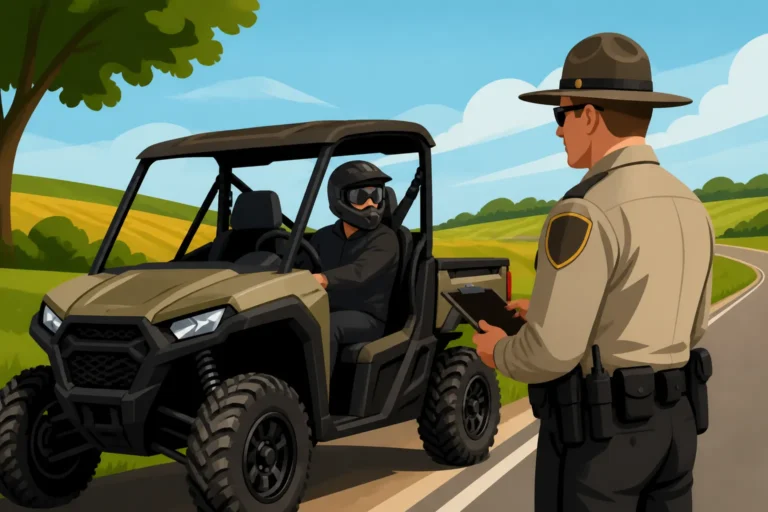
The moment a law enforcement officer pulls you over on an Iowa public road while you're riding your ATV or UTV, one of the first things they'll ask for is proof of your identity, registration, and insurance. This isn't just a formality; it's a critical check to ensure you're complying with state law and that the public is protected. Being prepared for this interaction can save you a lot of hassle, fines, and potential delays, ensuring your ride stays on track.
The Proof You Need to Carry
When you're operating an ATV or UTV on an authorized public road in Iowa, you must be able to immediately provide proof of valid liability insurance upon request by a law enforcement officer. This proof typically comes in the form of an insurance card, either a physical card provided by your insurer or a digital version displayed on your smartphone. Many insurance companies now offer mobile apps that store your insurance ID cards, which can be incredibly convenient. It’s crucial that this proof clearly shows your policy number, the effective dates of the coverage, the name of the insured (you), and details about the machine being covered.
It’s not enough to simply have insurance; you must carry readily accessible proof while riding. Tucking a crumpled insurance card into your wallet or having it easily retrievable on your phone ensures a smooth interaction during a stop. Leaving it at home, in your truck, or in another vehicle effectively means you cannot provide proof when asked, which can lead to the same penalties as having no insurance at all. Make it a habit to double-check that you have your insurance card, driver's license, and [Carrying the Certificate on an Iowa Ride] registration certificate every single time you head out onto a public road.
What a Deputy Checks Roadside
During a roadside stop, an Iowa deputy or officer will be looking for a few key pieces of information on your insurance card to verify its validity. First, they'll check the effective dates to ensure the policy is current and hasn't expired. An expired card, even if you’ve renewed the policy, won't suffice. They'll also confirm that the policy holder's name matches yours or that you are a listed driver on the policy for that specific machine. Perhaps most importantly, they'll verify that the policy number and the description of the insured vehicle (make, model, VIN/serial number) correspond to the ATV or UTV you are currently operating.
If there's any discrepancy or if the information appears fraudulent, the officer may conduct further checks with their dispatch or directly with your insurance provider. It's a quick process for them, often taking only a minute or two, but it's thorough. Providing clear, legible, and accurate proof of insurance without hesitation will help facilitate a quick and polite interaction, allowing you to get back to your ride with minimal delay. Officers are trained to spot inconsistencies, so always present your most current and correct documentation.
Handling an Uninsured Citation
If, for whatever reason, you're unable to provide valid proof of insurance at a roadside stop in Iowa, you will likely be issued a citation for operating an uninsured ATV or UTV on a public road. This is a situation no rider wants to be in. The officer will explain the violation and the associated fine. It's important to remain calm and respectful, even if you believe there's been a mistake or if you're frustrated. Arguing with the officer at the scene is unlikely to change the outcome and could potentially escalate the situation.
Upon receiving the citation, you'll generally have a set period to address it, which may involve appearing in court or paying the fine. In some cases, if you genuinely have insurance but simply didn't have proof with you, you might be able to present valid proof to the court or the issuing agency, which could lead to the citation being dismissed or reduced. However, this often involves additional administrative fees and can be a time-consuming process. The best defense against an uninsured citation is always to ensure you have active, valid insurance and the proof of that coverage readily available whenever you operate your ATV or UTV on Iowa's public roads.
Beyond the Bare Minimum: Additional Coverage Considerations
While meeting Iowa's minimum liability insurance requirements is crucial for legal road riding, savvy ATV and UTV owners often look beyond the bare minimum. The state-mandated liability coverage only protects other people and their property if you're at fault in an accident; it does nothing to cover damage to your own machine, your medical bills, or scenarios where the other party is uninsured. Exploring additional coverage options can provide a far more comprehensive safety net, protecting your investment and your well-being.
Collision and Comprehensive Coverage for Your Machine
If your ATV or UTV is a significant investment—and for many riders, it certainly is—then collision and comprehensive coverage are worth serious consideration. Collision coverage pays for damage to your own ATV or UTV if it collides with another vehicle or object (like a tree or a ditch embankment) regardless of who is at fault. So, if you're riding an authorized trail connection on a county paved road and swerve to avoid a hazard, resulting in your machine flipping over and getting damaged, collision coverage would help pay for the repairs or even replace the machine, minus your deductible. This can be a huge relief, especially with the rising cost of parts and repairs.
Comprehensive coverage, on the other hand, protects your ATV or UTV from damages not caused by a collision. This includes a wide range of perils such as theft, vandalism, fire, hail, floods, falling objects (like a tree branch), or even animal strikes. For instance, if your UTV is stolen from your garage in Des Moines County, or if it sustains damage from a severe hailstorm while parked, comprehensive coverage would step in. Given that ATVs and UTVs are often stored outdoors or in less secure locations than cars, and their value makes them targets for theft, comprehensive coverage is a valuable addition for many Iowa riders, safeguarding their investment from unpredictable events.
Uninsured/Underinsured Motorist Protection
This is a coverage that many people overlook, but it can be incredibly important, especially when sharing public roads. Uninsured motorist (UM) and underinsured motorist (UIM) coverage protects you and your passengers if you're involved in an accident with another driver who either has no liability insurance at all (uninsured) or who has insufficient liability insurance to cover the full extent of your injuries and damages (underinsured).
Imagine you're riding your ATV on an authorized road near an OHV park, and another driver, who happens to be uninsured, runs a stop sign and collides with you. Your medical bills and the damage to your ATV could be substantial. Without UM/UIM coverage, you would have to sue the at-fault driver (who might have no assets to collect from) or pay for everything out of your own pocket. This coverage acts as a critical buffer, paying for your medical expenses and, in some cases, damage to your machine when the at-fault party can't or won't. It essentially covers you for the costs that someone else should have paid, ensuring you're not left in a financial lurch by another person's irresponsibility.
Medical Payments and Accessories Coverage
Beyond the main coverages, there are other useful options to consider for your ATV or UTV policy. Medical Payments (MedPay) coverage is designed to pay for medical expenses for you and your passengers, regardless of who is at fault in an accident. This coverage kicks in quickly and can help with immediate medical costs, co-pays, and deductibles before other health insurance plans might take over. It’s a convenient layer of protection, especially when riding with friends or family on your machine, as injuries can happen unexpectedly.
Another crucial coverage for many riders is accessories and modifications coverage. If you've invested in aftermarket parts, custom wheels, a lift kit, a high-quality winch (perhaps from SuperATV), or upgraded lighting, you'll want to ensure these additions are covered. Standard policies might only cover the machine as it came from the factory, leaving your significant investments unprotected. Many insurers offer an option to declare these accessories and add them to your policy, often for a relatively small increase in premium. This way, if your customized machine is damaged or stolen, you won't be out the cost of all those valuable upgrades.
| Coverage Type | What It Protects | When It's Essential in Iowa |
|---|---|---|
| Bodily Injury Liability (BI) | Injuries to other people if you're at fault | REQUIRED for all public road riding |
| Property Damage Liability (PD) | Damage to other people's property if you're at fault | REQUIRED for all public road riding |
| Collision | Damage to your ATV/UTV from an accident | Highly recommended for newer/valuable machines |
| Comprehensive | Damage to your ATV/UTV from non-collision events | Crucial for theft, fire, natural disasters, vandalism |
| Uninsured/Underinsured Motorist | Your injuries/damages if other driver lacks insurance | Smart protection against irresponsible drivers |
| Medical Payments | Medical expenses for you and your passengers | Provides immediate medical bill assistance |
| Accessories/Custom Parts | Aftermarket parts and modifications | Necessary if you've customized your machine |
Common Myths and Misconceptions About Iowa ATV/UTV Road Insurance
In the world of ATVs and UTVs, particularly concerning their legality on public roads, there's a fair amount of misinformation floating around. These myths can lead riders down a dangerous path, potentially resulting in fines, legal troubles, and massive financial burdens if they are involved in an accident without proper coverage. Separating fact from fiction is essential for responsible and worry-free riding in Iowa.
"My Car Insurance Covers It" Myth
Perhaps the most pervasive and dangerous myth among ATV and UTV owners is the belief that their existing automobile insurance policy automatically extends to cover their off-highway vehicle when it’s used on public roads. This is almost universally false. Standard auto insurance policies are specifically designed to cover traditional cars, trucks, and SUVs. They typically contain explicit exclusions for recreational vehicles, including ATVs, UTVs, dirt bikes, and snowmobiles, especially when these machines are operated off-road or in ways not intended for conventional road vehicles.
Even if your auto policy offers some extremely limited liability coverage for an ATV, it’s rarely sufficient for road use and almost never includes physical damage coverage for your machine. Trying to rely on your car insurance for your ATV on an Iowa gravel road is a recipe for disaster. If you get into an accident and attempt to file a claim, you'll likely find yourself denied, suddenly responsible for all damages, and potentially facing penalties for riding uninsured. Always verify with your insurance agent that you have a specific policy or rider dedicated to your ATV or UTV for road use.
"Only Large Machines Need Insurance" Fallacy
Another common misconception is that only bigger, more powerful ATVs or UTVs—like a large side-by-side or a high-performance quad—require insurance for road use. The thinking might be that smaller, less powerful machines pose less of a risk. This is absolutely incorrect and a dangerous fallacy. Iowa law, specifically addressing the requirements for operating off-highway vehicles on public roads, does not differentiate based on engine size, horsepower, or physical dimensions. If it's classified as an ATV or UTV and you're operating it on an authorized public road, the same insurance requirements apply, regardless of whether it's a 90cc youth quad or a 1000cc utility side-by-side.
A small ATV, despite its size, can still cause significant property damage or bodily injury if involved in an accident with a car, pedestrian, or another ATV. Even a low-speed collision can result in costly medical bills or vehicle repairs. The focus of the law is on the potential for harm when operating any off-highway vehicle in an on-road environment, not its specific power output. So, whether you're riding a nimble youth machine on a county road connection in Benton County or a robust UTV for farm work that briefly crosses a public thoroughfare, the insurance mandate remains the same.
"Private Land Means No Insurance Rules" Clarification
This myth isn't entirely wrong, but it's often misinterpreted in a way that leads to problems. It is generally true that if your ATV or UTV never leaves private property—such as your own farm, a friend's timber, or a completely private riding park—then Iowa law does not mandate liability insurance. In these contained environments, insurance is a matter of personal choice and financial prudence, not a legal requirement. Many riders still choose to carry it for personal protection, but it's not enforced by the state.
The critical point of confusion arises when private land abuts a public road. Some riders mistakenly believe that if they're "just crossing" a road to get from one section of private land to another, or if they're "only riding the ditch" adjacent to a public road, they are still considered to be on private land and thus exempt from insurance rules. This is where the misunderstanding can lead to trouble. The moment your wheels touch the legally defined public right-of-way—which includes the paved or gravel surface, the shoulders, and often the ditch—you are operating on a public road, and Iowa's insurance mandate immediately applies. Even riding [2 Miles From the Farm in Iowa] on a farm exemption can still be subject to insurance requirements if crossing a public road. Always assume that if you are touching public ground, the rules are in effect.
Navigating the Iowa Landscape: Road Riding Rules and Insurance
Understanding Iowa's insurance requirements for ATVs and UTVs on roads isn't an isolated piece of information; it's intricately linked to the broader framework of road legality for these machines. To ride legally and safely, you need to grasp not only the insurance mandates but also the specific types of roads you're allowed to use, age restrictions, equipment requirements, and the importance of local ordinances. All these elements combine to define the parameters of responsible road riding in the Hawkeye State.
Permitted Road Types and Insurance Implications
Iowa does not generally allow ATVs and UTVs on all public roads. The law specifically grants counties and cities the authority to open certain types of roads to these machines. Most commonly, this involves unpaved county secondary roads (gravel roads), and in some instances, paved secondary roads if authorized by the county board of supervisors. Cities can also pass ordinances to open specific streets or alleys within their municipal limits. Major highways, interstates, and multi-lane primary roads are almost universally off-limits. You can find more detail on [Iowa Rules for Riding a Gravel Road] and [Iowa Rules for Riding a Paved Secondary Road].
The insurance implication here is straightforward: your liability policy is only valid if you are operating your ATV or UTV legally on an authorized road. If you venture onto a road that has not been opened for ATV/UTV use, even if you have insurance, you could potentially void your coverage in the event of an accident, as you would be operating outside the parameters of the law and likely your policy's terms. Insurance companies expect you to comply with all traffic laws and regulations. Therefore, always verify which roads are open in your specific county or city before you ride, and ensure your insurance will cover you on those specific types of thoroughfares.
Age, Speed, and Equipment: How They Intersect with Coverage
Beyond insurance, Iowa has other critical requirements for operating ATVs and UTVs on public roads that are equally important for maintaining the validity of your insurance coverage. For instance, operators must be at least 18 years old and hold a valid driver's license to ride on public roads. There's also a strict speed limit, typically 35 mph or less, depending on the specific road type and local ordinances. Furthermore, machines must be equipped with specific safety features, including headlights (on at all times), taillights, brake lights, a horn, mirrors, and often a slow-moving vehicle (SMV) triangle on the rear. [What Iowa Requires of an ATV on a Public Road] details these requirements.
These rules aren't just arbitrary; they're designed to enhance safety and integrate ATVs/UTVs more smoothly into road traffic. If you're involved in an accident while underage, without a valid license, exceeding the speed limit, or operating a machine that lacks the required safety equipment, your insurance provider could deny your claim, arguing that you were operating the vehicle illegally or in a negligent manner. This underscores the comprehensive nature of responsible road riding: it's a combination of proper insurance, adherence to age and speed limits, and ensuring your machine is correctly equipped.
Checking Local Ordinances: A Critical Step
Iowa's approach to ATV/UTV road legality is decentralized, meaning each of the 99 counties and countless cities can make their own decisions about opening roads. This creates a patchwork of regulations across the state. What's legal in one county or city might be strictly forbidden just across the county line or in the next town over. Relying on word-of-mouth or assumptions about local rules is a recipe for trouble. For example, some cities like Waukon have opened their streets, but with specific hours or restrictions. You can learn more about this in [Waukon's Open Streets and Alleys].
Before embarking on any road ride, it is absolutely essential to check the specific ordinances for the county or city you plan to ride in. This can usually be done by visiting the county recorder's office, the county auditor's website, or the city clerk's office. Many county websites will have a dedicated section for ATV/UTV regulations and maps of authorized roads. Being familiar with these local rules not only ensures you avoid trespassing or receiving a citation but also safeguards your insurance coverage. Operating your machine on an unauthorized road, even unintentionally, could be interpreted as illegal use, potentially jeopardizing your ability to make a claim if an accident occurs. Always do your homework!
Disclaimer
This article is for general informational purposes only and does not constitute professional advice. Laws, prices and regulations vary by location and change over time. Consult a qualified professional for guidance on your specific situation.