Riding to Bluff Creek the Short Way
There's nothing quite like the open road, especially when that road leads to a fantastic riding destination like Bluff Creek OHV Park. But if you’re looking to ride your ATV or UTV to the park on public roads in Iowa, you might be scratching your head trying to figure out the rules. It’s not as simple as just firing up your machine and heading out. This guide is all about understanding Iowa’s specific regulations so you can take the "short way" to Bluff Creek safely and legally, without any unwelcome surprises from law enforcement.
Understanding Iowa's "Most Direct Route" Rule for OHVs
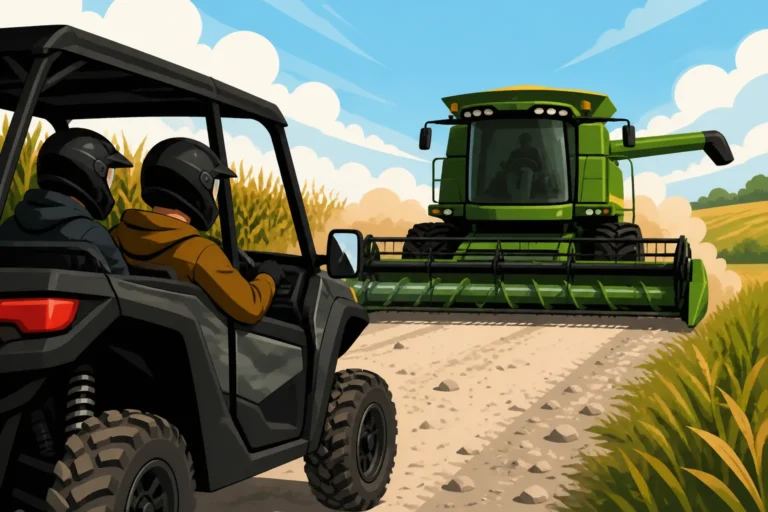
Iowa's approach to allowing ATVs and UTVs on public roads is often misunderstood, and for good reason—it’s not exactly a free-for-all. The state operates under what's called the "most direct route" rule when it comes to accessing designated off-highway vehicle (OHV) parks or private land. This means you can't just joyride on any public road you choose; your travel must have a specific, justifiable purpose: getting from point A to point B in the most straightforward manner possible.
Imagine you're at home, and Bluff Creek OHV Park is your destination. Iowa law permits you to use certain public roads only if that route is the shortest, most efficient way to reach the park. This isn't about taking the scenic route or exploring new gravel roads for fun before you even hit the trails. It's strictly about direct access. This rule can be a real head-scratcher for riders who just want to connect trails or enjoy a longer road ride, but it's crucial to understand this limitation to avoid fines. The spirit of the law is to facilitate access to riding areas, not to turn every gravel road into an ATV trail. It means you might use a county road for a short stretch, but if there's a more direct way via a trail or private land you have permission for, that's what's expected. For more details, check out [Iowa's Most Direct Route Rule].
This "most direct route" also applies when you're leaving Bluff Creek and heading back home, or even moving between a private property where you have permission to ride and another allowed riding area. The journey needs to be purposeful and direct, not a leisurely drive. It often surprises riders to learn that even with all the right gear and insurance, simply cruising down a public road without this direct purpose can still land you in trouble. It’s a common frustration, especially if you’ve invested in aftermarket parts from a place like SuperATV to make your machine more road-friendly. You’ve put in the effort, but the law still dictates how and where you can use those improvements. So, before you load up and head out, visualize your path and make sure it genuinely is the most direct way to get to [Bluff Creek OHV Park at Eddyville] or another designated area.
What Your Machine Needs to Be Road-Legal in Iowa
Just having a clear purpose for your road journey isn't enough; your ATV or UTV itself needs to meet specific equipment and operator requirements to be considered "street legal" on Iowa's permitted roads. This is where many riders get tripped up, thinking a quick dash down the gravel is no big deal. But deputies and conservation officers are looking for these details.
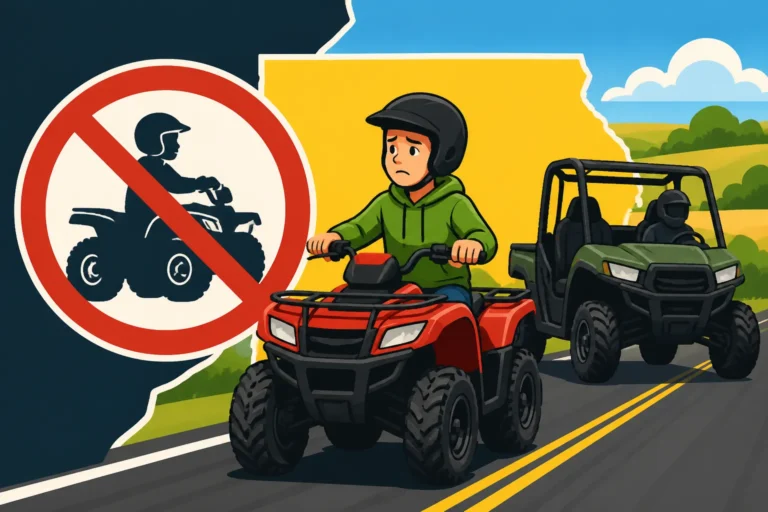
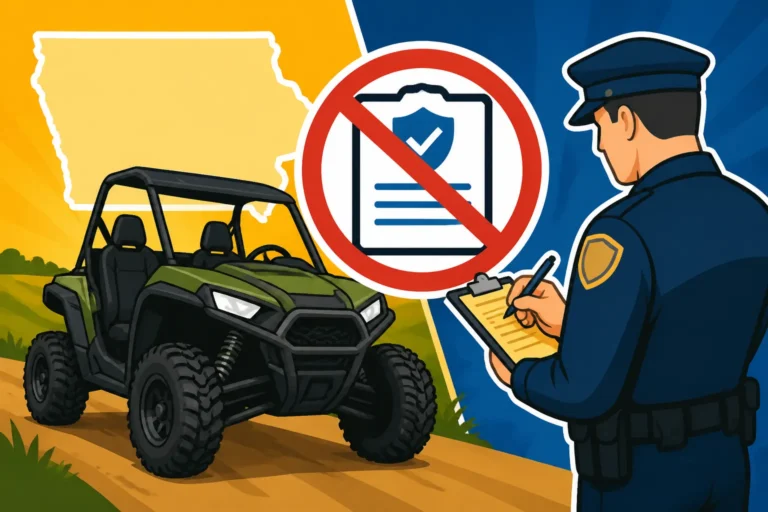
First and foremost, the operator must be at least 18 years old and possess a valid driver's license. Iowa has a strict [Iowa Minimum Age to Ride a Road] rule, so no minors are allowed to operate these machines on public roads, even if they have an ATV safety certificate for trail riding. Beyond the operator, your machine needs proper insurance coverage. This isn't just a suggestion; it’s a requirement, similar to what you’d need for a car. The minimum liability coverage is 20/40/15: $20,000 for bodily injury to one person, $40,000 for bodily injury to two or more people, and $15,000 for property damage. Not having this can result in significant fines, so always carry proof of your [Iowa ATV Insurance Requirement].
Your machine also needs to be outfitted with specific safety equipment. This includes a headlight that is on at all times, even during daylight hours, and a taillight that functions properly. You'll also need at least one mirror, a functional horn, and a slow-moving vehicle (SMV) triangle sign mounted prominently on the rear of your machine. This triangle alerts other drivers to your slower speed, which brings us to the next crucial point: speed limits. On Iowa roads, ATVs and UTVs are capped at a maximum speed of 35 mph, even if the posted speed limit for cars is higher. This [Iowa's 35 mph Cap] is non-negotiable and something deputies actively enforce. While you might have upgraded your suspension or added stronger tires from a company like SuperATV, remember these road limitations. Getting caught over 35 mph can negate any effort you've made to be compliant.
Navigating Different Road Types to Reach Bluff Creek
Understanding which roads you can actually use to take the most direct route to Bluff Creek is another layer of complexity. Iowa's rules aren't uniform across all road types, and what's permissible on one might be strictly forbidden on another. This patchwork of regulations can be frustrating, especially if you're unfamiliar with the local road classifications.
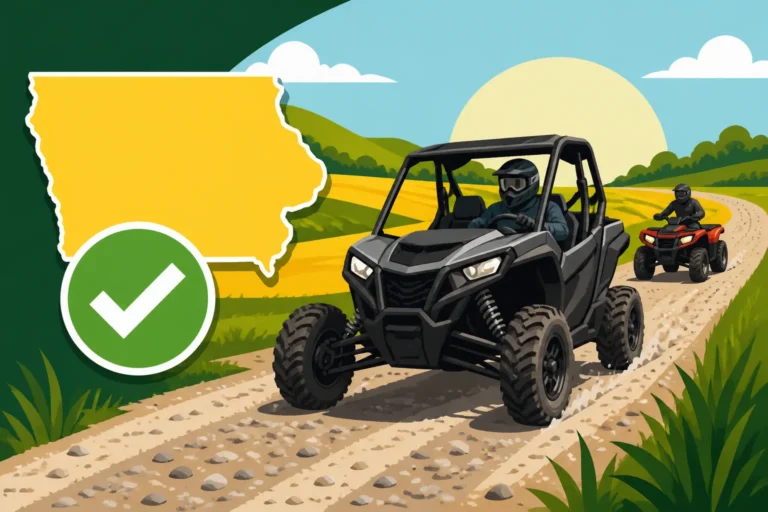
Generally, your safest bet will be unpaved county secondary roads, often referred to simply as gravel roads. These are the most commonly allowed routes for ATVs and UTVs following the "most direct route" principle. Many counties have ordinances that specifically open these types of roads to OHV traffic. However, paved county secondary roads are a different story. These can only be used if the specific county board of supervisors has passed an ordinance authorizing their use. Don't assume that if gravel roads are open, paved ones are too; always check with the local county for specific ordinances. Primary highways (state roads) are generally off-limits, with very few exceptions, such as crossing at an intersection. Likewise, multi-lane highways and interstates are typically prohibited for OHV use. For more on this, consult [Iowa Rules for Riding a Gravel Road] and [Iowa Rules for Riding a Paved Secondary Road].
City streets present yet another challenge. While some cities, like Waukon, have passed ordinances to open specific streets or alleys for OHV use, this is a local decision and not a statewide standard. There's no central list of cities that allow ATVs on their streets, so if your most direct route to Bluff Creek involves cutting through a small town, you must contact the city clerk or local law enforcement to confirm their specific ordinances. Attempting to navigate city streets without explicit permission can lead to fines, even if you’re just trying to get to the next county road. The key takeaway here is: always verify the specific rules for each road type and jurisdiction your "most direct route" will take you through. It’s a bit of homework, but it’s far better than getting a citation when all you wanted was a fun day at the park.
Important Considerations Before You Ride to Bluff Creek
Before you even load up your machine or start planning your direct route to Bluff Creek, there are a few other critical details you need to keep in mind. These considerations can make the difference between a smooth trip and a frustrating encounter with law enforcement. The goal is always to have an enjoyable and legal ride.
First, your ATV or UTV must be properly registered and titled in Iowa, and you need to carry proof of registration with you. If your machine isn't registered, it shouldn't be on any public land or road, period. The registration decal, which is your admission to [Iowa's Eight Designated OHV Parks] like Bluff Creek, should be clearly displayed. If you're a nonresident visiting Iowa, you'll need to purchase an Iowa Nonresident User Permit. This permit, not your home state's registration, is what allows you to legally ride on Iowa's trails and designated roads. For more information, check out [Iowa ATV Registration for a Nonresident].
Secondly, remember that "most direct route" applies rigorously. It's not about making a quick stop at the convenience store that's slightly off your path. It's about getting to the park. Any deviation from the shortest, most practical route to your destination can be interpreted as illegal road use. This rule is often enforced strictly because the primary intent is to facilitate access, not to create a new form of public road recreation. While it might feel overly restrictive, understanding and adhering to this principle is essential for staying out of trouble. For many, it reinforces the idea that trailering your machine to the park is often the easiest and least complicated way to go.
Finally, always be aware of local conditions and potential closures. While Bluff Creek is a fantastic park, like all [Iowa Trails Closed After Rain], it can temporarily shut down due to weather or trail conditions. Riding a closed trail or an area not permitted can lead to serious fines. It's always a good idea to check the Iowa DNR's website or the specific park's social media pages for current conditions before you leave home. Planning your ride to Bluff Creek "the short way" involves not just understanding the road rules, but also ensuring the destination itself is open and welcoming. Being prepared with all your paperwork, the right equipment, and knowledge of the route and destination ensures you can focus on the fun once you hit the dirt.
| Requirement/Rule | Description | Applies to OHV Road Use in Iowa |
|---|---|---|
| Operator Age | Must be 18 years old or older. | Yes |
| Driver's License | Must possess a valid driver's license. | Yes |
| Insurance | Minimum 20/40/15 liability coverage required. | Yes |
| Speed Limit | Max 35 mph, regardless of posted automotive speed limits. | Yes |
| Headlights | Must be on at all times, day or night. | Yes |
| Taillights | Must be functional and visible. | Yes |
| Mirror | At least one mirror required. | Yes |
| Horn | Must have a functional horn. | Yes |
| SMV Sign | Slow-moving vehicle triangle sign on the rear. | Yes |
| Registration | Machine must be currently registered in Iowa (or have nonresident permit). | Yes |
| Road Type | "Most direct route" on unpaved county roads (some paved by ordinance). | Yes |
| Purpose | Strictly for direct access to OHV parks or private land. | Yes |
Disclaimer
This article is for general informational purposes only and does not constitute professional advice. Laws, prices and regulations vary by location and change over time. Consult a qualified professional for guidance on your specific situation.