Iowa ATV Speed Limit on Roads
So, you’ve got your ATV or UTV, and you're dreaming of taking it out beyond the trails, maybe just a quick run down the county road to a friend's house or to access a different section of your property. It's easy to assume that if the speed limit for cars is 55 mph on that stretch, your off-highway vehicle (OHV) can just blend in. But here in Iowa, there are specific, and often frustrating, rules that dictate how fast you can actually go when you venture onto public roads. This comprehensive guide will walk you through Iowa's strict 35 mph speed limit for ATVs and UTVs on roads, helping you understand the regulations, the rationale, and how to stay safe and legal.
Understanding Iowa's General Speed Restriction for ATVs on Roads
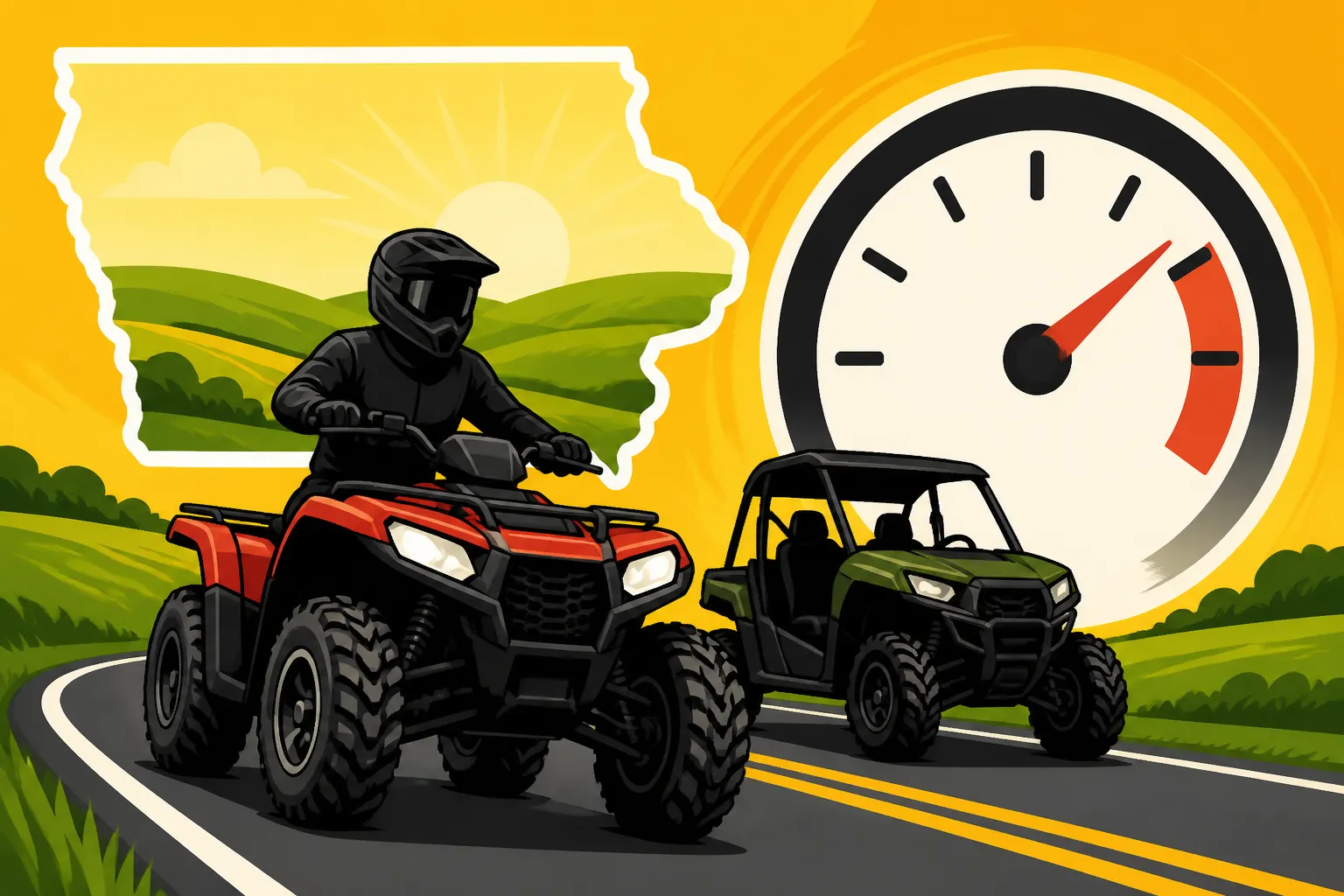
One of the most common misconceptions I hear from riders, especially those new to the Iowa OHV scene or even seasoned veterans, is about how fast they can legally travel on a public road. It’s natural to think that if a road has a posted speed limit of 55 mph, and you’re just trying to get from point A to point B, your UTV should be able to keep up. However, Iowa law has a very clear, very firm cap on the speed of ATVs and UTVs when they are operating on any authorized public road. You guessed it: it's 35 miles per hour. This isn't just a suggestion; it's a hard and fast rule, regardless of the posted speed limit for other vehicles.
The Rationale Behind the 35 MPH Cap
Now, why 35 mph? It can feel incredibly restrictive, especially if your machine is capable of much higher speeds. The primary reason boils down to safety and the inherent design of ATVs and UTVs. These machines are engineered for off-road performance – for navigating rough terrain, climbing hills, and tackling mud, not for sustained high speeds on paved or even well-maintained gravel surfaces. Their suspension systems, tire compounds, and steering geometries are optimized for agility and traction in unpredictable environments, not for the stability and braking performance required at higher speeds on a road.
Think about it: an ATV at 60 mph on asphalt handles very differently than a passenger car designed for that speed. There's a higher center of gravity, a shorter wheelbase, and tires that are typically knobby and designed for grip in loose dirt, not smooth pavement. These factors can lead to instability, longer braking distances, and increased risk of rollover, especially if you have to swerve or brake hard. The 35 mph cap is a legislative effort to mitigate these risks, forcing riders to operate their machines at a speed where they can maintain better control and react more safely to unexpected situations, like another vehicle approaching too quickly or a sudden obstacle. It’s about recognizing the limitations of the machine type when it’s used in an environment it wasn’t primarily built for.
Where the Speed Limit Applies and Where it Doesn't
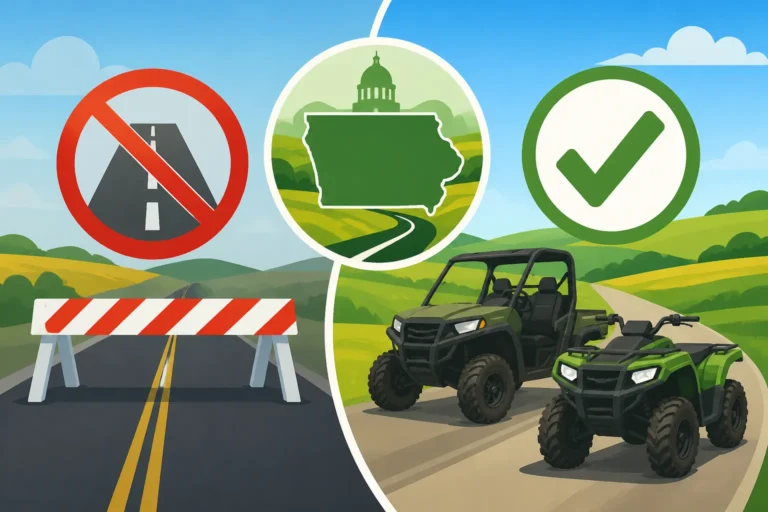
The 35 mph speed limit for ATVs and UTVs in Iowa applies quite broadly to any public road that these machines are legally allowed to operate on. This includes the vast majority of county gravel roads, which are often the most common avenues for OHV road access, as well as any paved secondary roads or city streets that have been specifically authorized for OHV use by the local county board of supervisors or city council. It's crucial to understand that the speed limit isn't just for primary highways or busy routes; it's the statewide maximum for any ATV or UTV on any public road where their presence is permitted.
For example, imagine you're a rider in a rural area of Mahaska County, and you want to take your UTV a couple of miles down a well-maintained gravel road to check on a distant field or visit a neighbor. The posted speed limit for cars on that road might be 55 mph. It's incredibly tempting to just match that speed, especially if the road feels smooth and empty. However, under Iowa law, you would still be restricted to 35 mph. Exceeding that, even if it feels safe and you're just trying to keep up with the flow of traffic (which there likely isn't much of anyway on those rural routes), puts you at risk of a citation. This applies universally across the state – whether you're cruising down a quiet backroad in Allamakee County or navigating an authorized street in a small town like [Waukon's Open Streets and Alleys], the 35 mph rule is your constant companion. It does not apply, however, to riding on designated OHV trails or private land, where the rules of the trail or the landowner's stipulations would govern your speed.
Navigating Other Road Use Requirements Beyond Speed
While the 35 mph speed limit is a major hurdle for many riders hoping to use their ATVs or UTVs for casual road travel, it’s far from the only rule you need to know. Iowa has a comprehensive set of requirements that must be met before your off-highway vehicle is considered street-legal for even a short hop on a public road. Overlooking any of these can lead to fines, citations, and even having your ride cut short by a local deputy. It’s a bit of a checklist, but each item is there for a reason, primarily safety and ensuring your machine is visible and controllable to other road users.
Age and Licensing for Road Riding
This is another critical point that often catches riders off guard. It's not just about having a machine that can go on the road; it's about who is behind the wheel or handlebars. In Iowa, to legally operate an ATV or UTV on any public road, you must be at least 18 years old. This is a non-negotiable age restriction. If you're 17, no matter how skilled a rider you are, or even if you have a valid driver's license for a car, you cannot legally operate an OHV on a public road.
Beyond the age requirement, you also need to possess a valid driver's license. This isn't just for full-size vehicles; it applies directly to OHV road use. So, if your license is suspended, revoked, or you simply don't have one, you cannot legally take your ATV or UTV on any public road in Iowa. Imagine a scenario where a keen 17-year-old rider, maybe with a brand new UTV from their parents, is excited to take it down a short gravel road to a fishing spot. They're experienced off-roaders, but they are absolutely prohibited from public road use until they turn 18 and have that valid driver's license in hand. [Iowa Minimum Age to Ride a Road] and [Iowa Driver's License Rules for ATVs] are clear on this. Always carry your driver's license with you when riding on public roads, as a deputy at a roadside stop will definitely ask for it.
Essential Equipment for Road Legality
Beyond the speed and driver requirements, your ATV or UTV itself needs to be outfitted correctly to be road-legal in Iowa. This isn’t just about having fun; it's about being seen and being able to control your machine and signal your intentions to other drivers. Think of it as making your off-road machine act a little more like a car when it's sharing the road.
Here's the rundown of what's generally required:
- Headlights and Taillights: Your machine needs to have working headlights and at least one taillight. These must be illuminated whenever you're operating on a public road, regardless of the time of day. Yes, that means [Headlights On All Day in Iowa]. This ensures you're visible, especially important on dusty gravel roads or when emerging from treelines. Many modern UTVs come with good lighting, but some older ATVs might need an upgrade.
- Brakes: Functional brakes are, of course, a given.
- Mirrors: You need at least one rearview mirror. Most UTVs will have these, but many ATVs do not come standard with mirrors. Adding a universal mirror is usually a simple aftermarket upgrade. Companies like SuperATV offer a range of mirrors designed for OHVs that can easily bolt onto your machine, helping you meet this requirement and improve your safety by letting you see what's behind you.
- Horn: A working horn is necessary to signal other vehicles or pedestrians. Again, many UTVs have these, but ATVs might need an accessory horn kit.
- Slow-Moving Vehicle (SMV) Triangle: This bright orange and red triangle must be displayed on the rear of your machine. Because you're capped at 35 mph, you are inherently a slow-moving vehicle on roads where the speed limit for cars is higher. The SMV triangle alerts faster-moving traffic behind you to exercise caution. This is a critical safety item. [Iowa's Slow-Moving Vehicle Triangle] details its importance.
- Fenders/Mudguards: Your machine should have fenders to prevent mud, water, or debris from being thrown up onto other vehicles or pedestrians.
- Spark Arrester: While more for off-road trail riding, a properly functioning spark arrester is also required, especially when operating near dry vegetation, to prevent wildfires.
- Insurance: This is perhaps one of the most overlooked requirements for road-legal OHV use in Iowa. You must carry proof of financial responsibility (insurance) that meets the state's minimum requirements for liability coverage. This is the same minimum coverage required for cars and trucks. Without it, you could face hefty fines if pulled over. [Iowa ATV Insurance Requirement] outlines these specifics.
Consider a real-life scenario: A rider eagerly installs a performance exhaust on their ATV for better sound and power, but they overlook adding a simple rearview mirror or checking if their horn works. They head down a county road, only to be stopped by [A Deputy at an Iowa Roadside Stop]. The deputy isn't interested in the cool exhaust; they're looking for the legally required safety equipment. A missing mirror or horn, along with no proof of insurance, can quickly turn a fun ride into a costly violation, even if they were diligently sticking to the 35 mph speed limit. It’s essential to think of your OHV not just as a recreational toy but as a legitimate vehicle with legal responsibilities when you take it on public roads. You can find many of these accessories, from mirrors to turn signal kits, through reputable aftermarket providers like SuperATV.
| Requirement | Description |
|---|---|
| Speed Limit | Maximum 35 mph on all authorized public roads, regardless of posted limits for other vehicles. |
| Operator Age | Must be 18 years or older. |
| Driver's License | Must possess a valid driver's license. |
| Headlights | Must have working headlights, illuminated at all times on public roads. |
| Taillights | Must have at least one working taillight, illuminated at all times on public roads. |
| Brakes | Functional braking system required. |
| Mirrors | At least one rearview mirror is mandatory. |
| Horn | A working horn is required. |
| SMV Triangle | A Slow-Moving Vehicle (SMV) triangle must be displayed on the rear. |
| Fenders/Mudguards | Required to prevent debris projection. |
| Spark Arrester | Functional spark arrester required. |
| Insurance | Proof of financial responsibility (liability insurance) meeting state minimums is required. |
| Registration/Decal | Your machine must be properly registered with the Iowa DNR and display a current decal. |
The "Most Direct Route" Rule and Its Impact on Speed
Iowa law, in its effort to balance recreational riding with public safety, includes a "most direct route" rule for OHVs on public roads. This rule is often misunderstood, with some riders interpreting it as a license to go faster or take detours. However, it's strictly about the path you take, not the speed at which you take it. The 35 mph speed limit remains firmly in place, even if you are on the "most direct route" to or from a designated riding area.
Interpreting "Most Direct Route" for OHV Parks and Home
The "most direct route" provision allows you to use authorized public roads to access designated OHV parks or trails, or to get from one section of your private property to another, or even to get home from a ride. It's meant to provide a practical way for riders to connect the dots without having to trailer their machines for very short distances. For example, if you live a couple of miles down a gravel road from [Gypsum City OHV Park at Fort Dodge], the "most direct route" rule allows you to ride your ATV or UTV on that gravel road to the park.
However, the key word here is "most direct." This means you can't just meander around, taking scenic detours. You're expected to use the shortest, most practical route to your destination. And here’s the crucial part often forgotten: the 35 mph speed limit still absolutely applies on this "most direct route." You aren't suddenly allowed to exceed 35 mph just because you're heading to or from a trail. Imagine a rider who, after a fantastic day [Riding Gypsum City for a Weekend], is heading home on the "most direct route" to their farm. The urge might be strong to open up the throttle on a straight stretch of empty gravel road. But even on this specific, permissible route, exceeding 35 mph is a violation, putting you at risk of a citation and compromising your safety. The "most direct route" is about access, not about speed. [The Most Direct Route to an Iowa OHV Park] further clarifies this principle.
Consequences of Exceeding the Speed Limit
Ignoring the 35 mph speed limit for ATVs and UTVs on Iowa roads can lead to several unpleasant consequences, ranging from financial penalties to serious safety risks. It's not just a minor infraction; it's a violation of state law that deputies take seriously, especially given the inherent safety concerns of OHVs on public roads.
Firstly, if caught by law enforcement exceeding the 35 mph limit, you will likely receive a citation. This comes with a monetary fine, and possibly court costs. These tickets can add up quickly and can be a real hit to your wallet. Beyond the immediate financial sting, depending on how far over the limit you were, it could even impact your driver's license record, much like a speeding ticket in a car.
Secondly, there's the significant safety risk. As discussed, ATVs and UTVs are not designed for sustained high speeds on roads. Pushing your machine beyond 35 mph, especially on paved surfaces or around curves, dramatically increases the risk of losing control, rollovers, or having an accident. Such incidents can lead to severe injuries for yourself and any passengers, and significant damage to your machine. If an accident occurs while you're speeding, your insurance company might even complicate or deny coverage, especially if your policy has clauses about illegal operation.
Consider a scenario: you're on a paved secondary road in Appanoose County, heading home from a hunt. The car speed limit is 55 mph, and you see another vehicle approaching in your rearview mirror. Feeling pressured to get out of their way, you accelerate your UTV to 45 mph. A deputy, perhaps running radar just over the hill, clocks you. Not only do you get a speeding ticket for going over the 35 mph OHV limit, but you're also now explaining to your insurance company why you were going faster than legally allowed when you slid on a patch of gravel at the next intersection. It's simply not worth the risk, financially or physically.
Specific Road Types and Their Speed Implications
The type of road you're riding on in Iowa plays a significant role in whether you can legally use your ATV or UTV at all, but it doesn't change the fundamental 35 mph speed limit. Whether it's a dusty gravel lane or a smoothly paved secondary road, the speed cap is constant. What does change, however, are the specific permissions required and the varying levels of caution you should exercise.
Gravel Roads vs. Paved Secondary Roads
Most riders in Iowa are familiar with the fact that county gravel roads are the most common and often the easiest places to legally ride their ATVs and UTVs. Many counties have ordinances allowing OHV use on their unpaved secondary roads, making them a popular choice for short trips. On these roads, the 35 mph speed limit for OHVs applies unequivocally. Even if the car speed limit is 55 mph and the road is wide open, your machine is still restricted. [Iowa Rules for Riding a Gravel Road] details the general permissions.
Paved secondary roads, on the other hand, are a different beast. While some counties may authorize ATV and UTV use on certain paved secondary roads, it's much less common and always requires a specific county ordinance to be in place. You absolutely cannot assume that if gravel roads are open, paved roads are too. Always check with the specific county's recorder's office or sheriff's department. If a paved secondary road is authorized for OHV use, the 35 mph speed limit still applies. This can be particularly frustrating for riders, as they might be on a road where cars are legally traveling at 55 mph or more, and they are forced to hold their machine to 35 mph. This speed differential demands extreme caution and vigilance from the OHV rider, as faster vehicles may not expect such a slow-moving presence. [Iowa Rules for Riding a Paved Secondary Road] explains the conditions that need to be met for these roads.
Consider this scenario: You're riding your UTV on a paved county road in Webster County. You've confirmed the county board of supervisors has passed an ordinance allowing OHV use on this specific road, perhaps because it leads directly to a popular fishing spot. The road is clear, and the posted speed limit for cars is 50 mph. It feels natural to want to go faster than 35 mph, especially since your UTV can easily handle it. But if a state patrol trooper or a county deputy observes you exceeding 35 mph, you'll be ticketed. The permission to ride on the paved road doesn't grant an exception to the statewide ATV/UTV speed cap.
City Streets and Local Ordinances
Riding ATVs and UTVs on city streets in Iowa is the most restrictive form of road use and requires specific authorization from the individual city council. Unlike county roads, where a county ordinance can open up broad networks, city street ordinances are often highly localized, specifying which streets, or even just certain alleys, are open to OHVs. Some cities, like [Waukon's Open Streets and Alleys], have embraced OHV use, but others have not.
Even in cities where OHV use is permitted, the statewide 35 mph speed limit for ATVs and UTVs on roads generally holds true. While the city might set a lower speed limit for all vehicles on its streets (e.g., 25 mph in a residential area), your OHV is still capped at 35 mph even if the city's general speed limit for cars is higher. It’s highly unlikely that a city ordinance would grant an ATV or UTV permission to exceed the state's 35 mph cap, as that would essentially be overriding state law. Therefore, always assume the 35 mph rule is your maximum, even within city limits.
Let's say you're visiting a friend in a small town that has recently passed an ordinance allowing UTVs on its public streets. You've confirmed it's legal, and you're enjoying a leisurely ride to the grocery store. The city's posted speed limit for cars on the main street is 45 mph. You might think, "Great, I can go 45 here!" However, that 35 mph state speed limit for OHVs on roads is still in effect. If you accelerate past 35 mph, you risk a ticket from the local police department. It's always best to be conservative and adhere to the lower of any applicable speed limits when operating your ATV or UTV on city streets. The layers of jurisdiction can be confusing, but the 35 mph cap for OHVs is a steadfast rule across all authorized public roads in Iowa.
Disclaimer
This article is for general informational purposes only and does not constitute professional advice. Laws, prices and regulations vary by location and change over time. Consult a qualified professional for guidance on your specific situation.