Getting Ticketed on an Allamakee County Road
There's nothing quite like hitting the trails or enjoying the scenic backroads of Allamakee County on your ATV or UTV. The rolling hills, the mighty Mississippi River views, and the freedom of the open air are exactly why many of us live and ride in this beautiful part of Iowa. But that feeling of freedom can turn into a sinking pit in your stomach the moment you see flashing red and blue lights in your rearview mirror. Getting ticketed for what you thought was a legal ride can be frustrating and confusing, leaving you wondering what went wrong and how to avoid it next time. This guide is here to unravel the often-complex world of Iowa's ATV and UTV road laws, specifically focusing on how they apply in counties like Allamakee, so you can ride with confidence and keep those tickets at bay.
Unpacking Iowa's ATV and UTV Road Use Regulations
Iowa has a unique and, frankly, sometimes baffling set of rules when it comes to riding ATVs and UTVs on public roads. It's not a straightforward "yes" or "no" answer, which is often where the confusion, and subsequent tickets, come from. Many riders mistakenly believe that if a road is gravel, it's fair game, or that their machine, because it's used on a farm, is automatically exempt everywhere. The reality is far more nuanced, and a quick glance at the fine print reveals layers of requirements that most riders simply don't know about until they're pulled over.
The Nuances of Iowa's Road Classifications
One of the biggest sources of misunderstanding stems from the different classifications of roads in Iowa. It's not just about paved versus unpaved. The law distinguishes between secondary roads, primary highways, and city streets, and each comes with its own set of rules, or often, prohibitions.
Let's talk about the secondary roads first. These are typically the county gravel roads we all love to explore. In Iowa, off-highway vehicles (OHVs), which include ATVs and UTVs, may be operated on unpaved secondary roads, but only if the county board of supervisors has passed an ordinance allowing it. Even then, there are stipulations: you must travel the most direct route to an OHV park or trail, or to and from your home or place of business, and you can't exceed 35 mph. Paved secondary roads are a different beast entirely. While a county can open unpaved roads, they generally need specific authorization to open paved ones, and that's much rarer. It’s crucial to know if Allamakee County, or any county you're riding in, has enacted such ordinances. Don't assume – always check the county's specific rules. [Iowa Rules for Riding a Gravel Road] can shed more light on this.
Then we have primary highways and city streets. Generally, ATVs and UTVs are not permitted on primary highways (the state-numbered routes) except to cross them at an intersection. Even then, you must cross directly and safely. City streets are another matter of local control. Many cities in Iowa have their own ordinances, some allowing OHV use on certain streets, others prohibiting it entirely. It’s a patchwork quilt, and what's legal in one town in Allamakee County might get you a ticket in the next. This is why just jumping on your machine and heading out can lead to trouble.
Essential Equipment for Road Legality
Beyond knowing which roads you can even legally be on, your machine itself needs to meet certain criteria to be "street legal" in the eyes of Iowa law enforcement, even on those permitted gravel roads. It's not enough to simply have an engine and wheels.
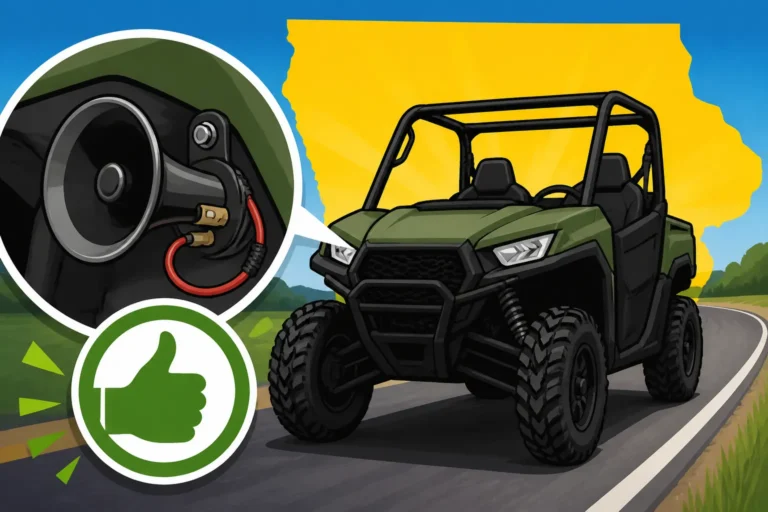
First and foremost, your ATV or UTV needs to be properly registered with the county recorder, and you must have a current [Iowa ATV Registration Cost] decal displayed in the correct location, typically the rear of the machine. Without a current registration, you're looking at a fine right off the bat, regardless of where you're riding. Beyond registration, think about what a standard vehicle needs. You'll need working headlights and taillights, and these aren't just for night riding; Iowa law generally requires headlights to be on at all times when operating on a public road, even during the day. A horn is also a must, as is at least one rearview mirror, typically mounted on the left side, providing a clear view to the rear. Many riders find that aftermarket accessories from companies like SuperATV can help them easily add these necessary components to their machines, ensuring they comply with the law. Lastly, for speed, you must display a slow-moving vehicle triangle on the rear of your machine if you're traveling under 25 mph, which, given the 35 mph cap, is almost always the case. [What Iowa Requires of an ATV on a Public Road] details these requirements further.
Common Reasons for an ATV/UTV Ticket in Allamakee County
When a deputy in Allamakee County pulls you over on your ATV or UTV, it's usually not for just one thing. It's often a combination of factors that, from the officer's perspective, clearly indicates you're not complying with Iowa law. Understanding these common pitfalls is the first step to avoiding them.
Missing Registration or Decal Problems
This is arguably the easiest ticket to get and one of the most common. Iowa law is clear: any ATV or UTV operated on public land, which includes public roads, must be registered. If you haven't gone through the process of [Registering an ATV in Iowa] at your local county recorder's office, you're immediately in violation. It's not just about having registration, either; the physical decal must be affixed correctly, visible, and current.
Many riders forget that the decal expires every year on December 31st, no matter when you registered it. [Why Iowa Registrations Expire December 31] explains this in detail. If you're out riding on January 5th with a decal from the previous year, you're technically unregistered and can be ticketed. This is especially frustrating for folks who only ride occasionally and feel like they just renewed it. Always double-check that expiration date! Another issue is when the decal fades or becomes damaged to the point where it's unreadable. While often not an intentional violation, a deputy needs to see a clear, valid decal to confirm your registration. If yours is looking a bit worn, consider getting a replacement.
Age and Licensing Violations
Iowa has strict age requirements for operating ATVs and UTVs on public roads, and this is another frequent cause of tickets. It’s a common misconception that if you have a driver's license, you're good to go on any road. Not so fast!
To operate an ATV or UTV on a public road in Iowa, you must be at least 18 years old and possess a valid driver's license. [Iowa Minimum Age to Ride a Road] lays out this rule explicitly. This means no 16-year-old on a provisional license, and certainly no younger teens, even if they've completed an ATV safety course. While Iowa does have a safety certificate program for riders aged 12-17 for trail riding, that certificate does not grant permission to operate on public roads. This can be particularly confusing for families who ride together. An adult might be legally operating their UTV on a gravel road, only for their 17-year-old child following behind on an ATV to get ticketed because they don't meet the age requirement for road use. It's a critical distinction and one that local law enforcement is well aware of.
Lack of Insurance
Just like your car, if you're riding your ATV or UTV on a public road in Iowa, it needs to be insured. This isn't optional, and failing to carry proper liability insurance is a surefire way to earn a ticket, often with substantial [Iowa Fines for No Proof of Insurance].
Iowa mandates minimum liability coverage for any OHV operating on a public road, typically 20/40/15: $20,000 for bodily injury to one person, $40,000 for bodily injury to two or more people, and $15,000 for property damage. This is the same basic coverage required for automobiles. Many riders assume their existing car insurance policy covers their ATV, or that because they don't ride on the road much, it's not necessary. Both assumptions can lead to trouble. You need a specific ATV/UTV insurance policy, and you need to carry proof of that insurance with you whenever you're riding on public ground. A physical insurance card or digital proof on your phone will usually suffice, but you must be able to present it to an officer upon request. Without it, you're not just looking at a ticket, but potential legal complications if an accident were to occur. [Iowa ATV Insurance Requirement] provides further details.
Improper Lighting or Other Equipment Failures
Iowa law expects your ATV or UTV to have specific functional equipment when operated on public roads. It's not just about having the right parts; they have to work.
Imagine you're cruising down a gravel road just after dusk in Allamakee County. If your headlights aren't on, or if a taillight is out, you're a hazard and can be ticketed. The requirement for headlights to be on during all road use is often overlooked, but deputies are trained to look for it. Similarly, if your rearview mirror is broken, missing, or obscured, you're in violation. The slow-moving vehicle triangle also needs to be properly displayed and in good condition; a faded or missing triangle is a red flag. Sometimes, riders modify their machines, perhaps adding a rear cargo box that blocks the triangle or installing aftermarket lighting that doesn't meet the brightness requirements. While customization is fun, it's essential to ensure your modifications don't compromise your road legality. SuperATV, for example, offers many accessories that are designed with compliance in mind, from their various mirror options to their lighting kits, making it easier to meet these safety standards.
What to Do If You Get Pulled Over or Ticketed
The moment those flashing lights appear, your heart probably starts to pound. It's a stressful situation, but how you handle it can make a big difference in the outcome. Staying calm and respectful is key, even if you feel frustrated or confused about why you've been stopped.
Remaining Calm and Cooperative
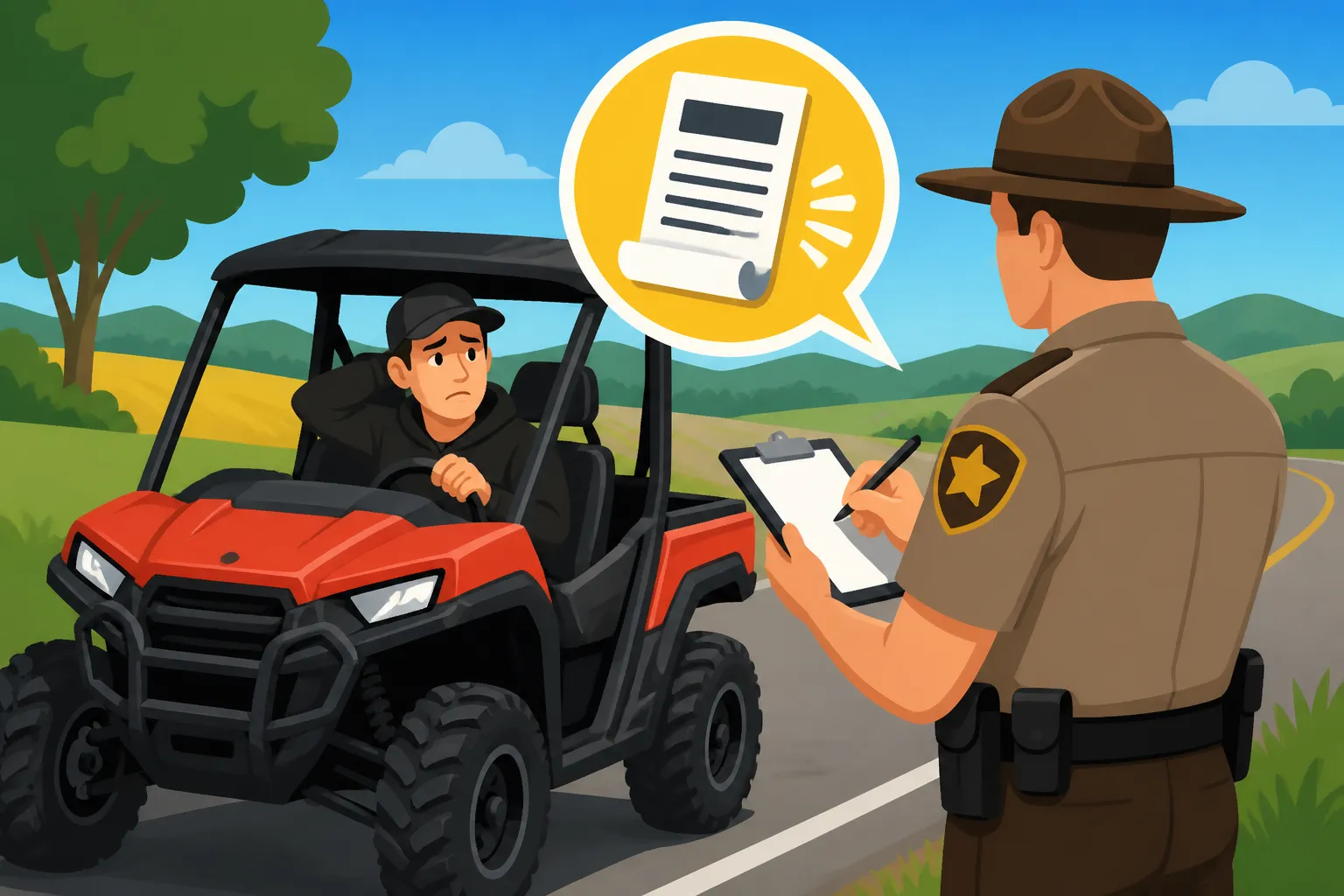
First things first: when you see flashing lights, safely pull your ATV or UTV over to the side of the road, just as you would in your car. Turn off your engine and keep your hands visible. The deputy will approach your machine, and it's essential to remain calm and cooperative. You might be feeling a mix of frustration, anger, or fear, but expressing those emotions aggressively won't help your situation.
When the officer asks for your license, registration, and proof of insurance, have them ready. If they're tucked away in a hard-to-reach compartment, calmly explain you need to access them and move slowly to retrieve them. If you're carrying your [Carrying the Certificate on an Iowa Ride] and insurance card in your pocket, simply take them out. Answer any questions truthfully and politely. If you're unsure about something, it's okay to say, "I'm not sure, officer." Avoid making excuses or arguing at the roadside. This is not the time or place to debate the nuances of Iowa law or Allamakee County ordinances. Your goal at this stage is to be respectful, provide the requested information, and listen to what the officer tells you.
Understanding the Citation
If the deputy decides to issue a ticket, they will explain the violation. Listen carefully to what they say. The ticket, or citation, will specify the exact Iowa Code section or Allamakee County ordinance you're accused of violating. It will also state the fine amount and instructions on how to pay or contest the ticket.
It's important to understand that a ticket is not a conviction; it's an accusation. You have the right to challenge it in court if you believe you were unjustly cited. However, if you are clearly in violation (e.g., no registration, underage), paying the fine might be the most straightforward path. Before you leave, politely ask the officer for clarification on anything you don't understand about the ticket itself. For instance, if you're not sure which court the citation refers to, ask. Make sure you know the due date for payment or your court appearance. If you decide to contest the ticket, gather any evidence you might have, such as photos of your decal, copies of your registration, or relevant county ordinances you printed out.
Preventing Future Tickets: Best Practices for Iowa Riders
The best way to deal with an ATV or UTV ticket is to avoid getting one in the first place. This requires a bit of homework and consistent diligence, but it's well worth the peace of mind.
Know Before You Go: Researching Local Ordinances
The number one rule for riding on public roads in Iowa is "know before you go." This means researching the specific rules for the county and any cities you plan to ride through. Allamakee County, like others, will have its own specific ordinances regarding OHV use on secondary roads. You can usually find these by visiting the county's official website or calling the Allamakee County Auditor's office or Sheriff's Department.
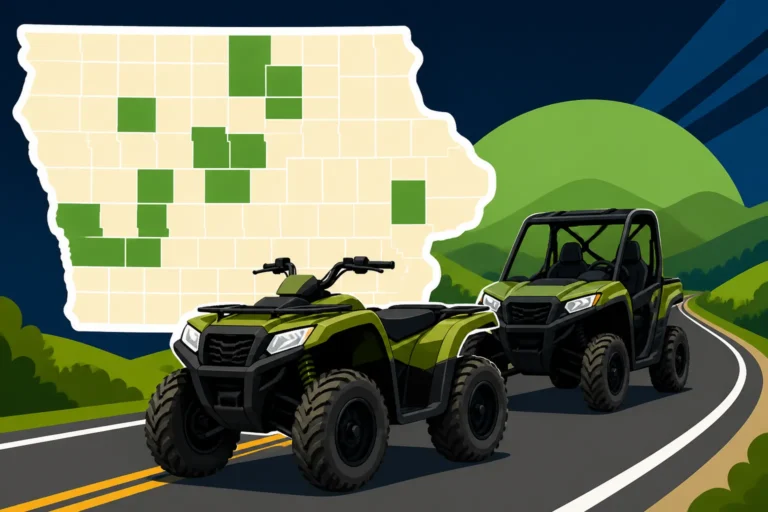
Don't assume that because you rode a gravel road in another county last week, you can ride the same type of road in Allamakee. Each county board of supervisors makes its own decisions. Also, pay attention to the exact roads mentioned in any ordinance. Some counties may open some secondary roads but not all. If your ride will take you through a town, you absolutely need to check that city's ordinances as well. This might seem like a lot of work, but it's the only way to be truly confident you're riding legally. Consider printing out relevant sections of the ordinances and carrying them with you, just in case. [Iowa Counties That Allow ATVs on Paved Roads] can be a helpful starting point, but always verify at the local level.
Pre-Ride Checks and Documentation
Before every ride that might take you onto public roads, perform a quick pre-ride check of your machine and your documents. This only takes a few minutes but can save you a lot of grief.
Pre-Ride Checklist for Iowa Road Use
| Item | Requirement | Check Before Ride |
|---|---|---|
| Registration Decal | Current, visible, correctly mounted | Is the current year's decal clearly displayed? |
| Headlights/Taillights | Working, on (even during day for road use) | Are all lights functional? Are they on? |
| Horn | Functional, audible | Does the horn make a clear sound? |
| Rearview Mirror | At least one on left, clear view to rear | Is the mirror intact and providing a clear view? |
| Slow-Moving Vehicle Sign | Displayed on rear if traveling under 25 mph (always for OHVs on roads) | Is the orange triangle visible and in good condition? |
| Insurance | Minimum liability (20/40/15) | Do I have current proof of insurance? |
| Driver's License | Valid, in possession (for operators 18+) | Is my driver's license current and on my person? |
| Age of Operator | 18+ for public road use | Is everyone riding on public roads at least 18? |
Beyond the machine itself, make sure you have all your necessary paperwork: your valid driver's license, your ATV/UTV registration certificate, and proof of insurance. It's smart to keep these documents in a waterproof bag or container on your machine, easily accessible but protected from the elements. Some riders even take photos of their documents and keep them on their phone as a backup, though physical copies are often preferred by law enforcement. Think of it like taking your passport when traveling internationally; you wouldn't leave home without it. The same goes for your riding documents when you plan to hit the roads. Investing in compliant accessories from companies like SuperATV can also ensure your machine meets all necessary standards, reducing the chances of a ticket for equipment issues.
Ride Responsibly and Respectfully
Finally, and perhaps most importantly, ride responsibly and respectfully. Even if you're on a road where OHV use is permitted, you're sharing that space with cars, trucks, and other residents. Excessive speed, reckless operation, or loud exhaust can draw unwanted attention from law enforcement and upset local communities, potentially leading to stricter rules in the future.
Stick to the posted speed limits – remember, even on open gravel roads where allowed, you're capped at 35 mph. Drive predictably, use hand signals if your machine doesn't have turn signals, and be mindful of dust, especially when passing homes or other vehicles. Pull over to let faster traffic pass when safe to do so. These simple acts of courtesy not only make the experience safer for everyone but also foster a positive image of ATV and UTV riders in the community. Law enforcement officers are often more inclined to give a warning or explanation rather than a ticket if they see a rider who is clearly making an effort to be safe and courteous, even if a minor infraction occurred. After all, we all want to enjoy the incredible riding opportunities Iowa, and specifically Allamakee County, has to offer, and responsible riding helps ensure those opportunities remain open for years to come.
Disclaimer
This article is for general informational purposes only and does not constitute professional advice. Laws, prices and regulations vary by location and change over time. Consult a qualified professional for guidance on your specific situation.