Riding Past an Iowa Town Line
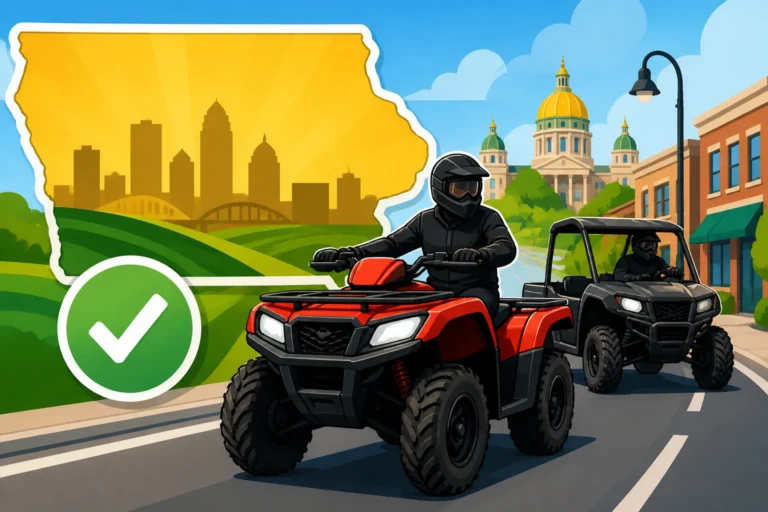
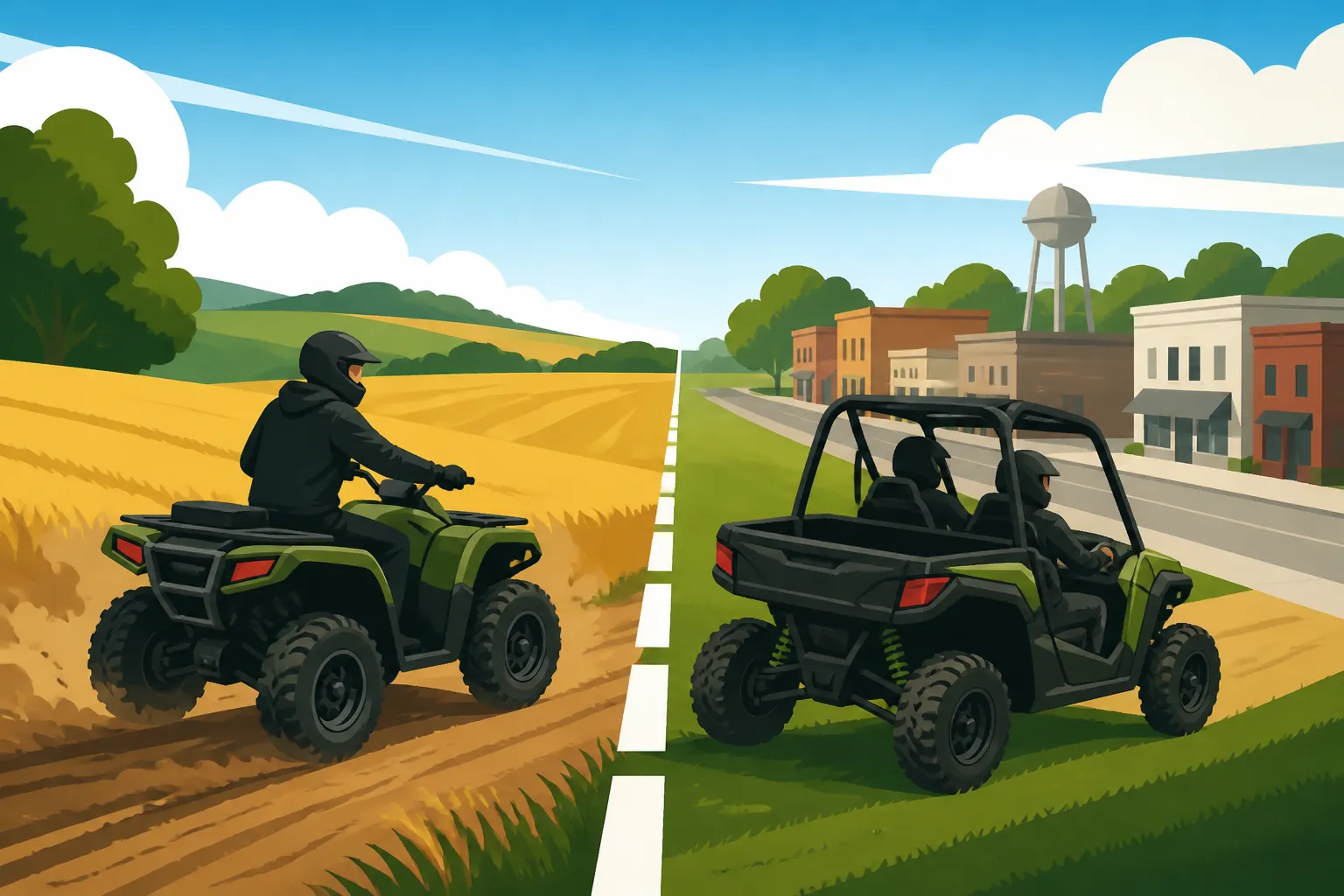
There's a special kind of freedom that comes with exploring Iowa's backroads on your ATV or UTV, but that sense of adventure can quickly turn to frustration when you approach an unfamiliar town line. Many riders assume that if they're legal on a county road, they're good to go straight through any small town, only to find themselves facing a citation or a stern warning. This guide is here to untangle the often-confusing rules surrounding ATV and UTV use when you’re riding past an Iowa town line, helping you understand where you can and can't legally go.
The Base Rules: Where Iowa ATVs Can and Can't Legally Roam
Before we even consider a town line, it's crucial to understand the foundational rules for ATV and UTV use on Iowa's public roads. The state has a tiered system, and knowing these basic distinctions is your first step to a trouble-free ride. You can't navigate the exceptions if you don't know the general rule.
The Default Freedom: Unpaved Secondary Roads
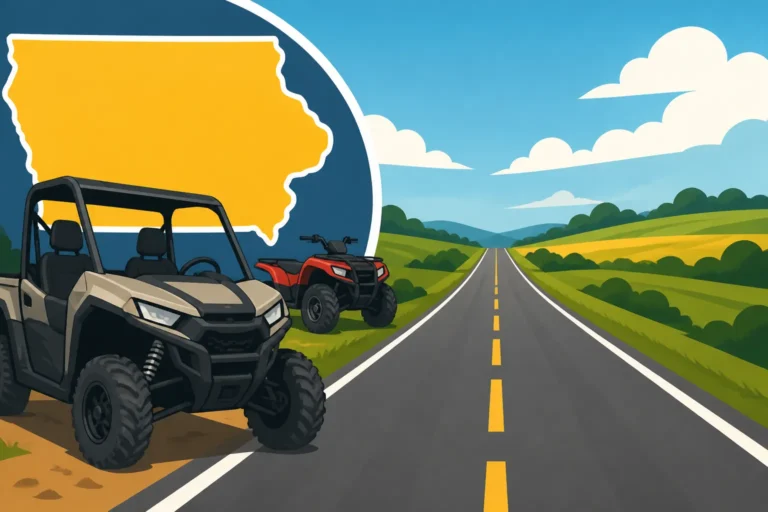
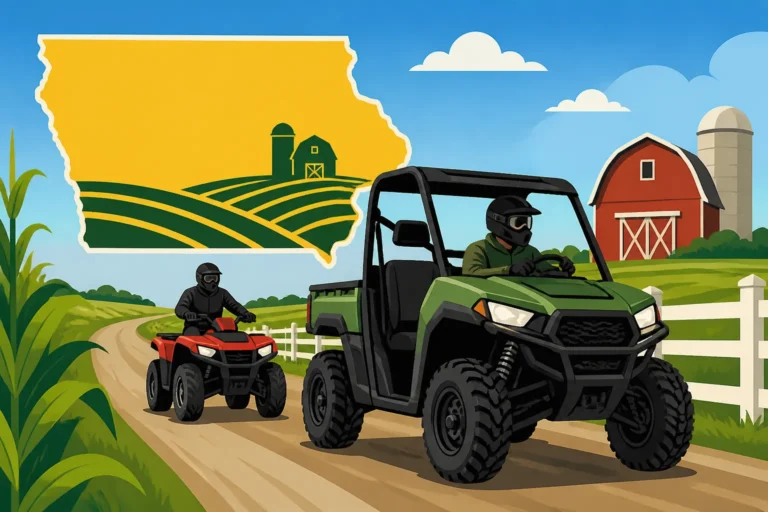
For many Iowa riders, the open gravel roads of the countryside are their playground. And for good reason: Iowa law generally permits ATVs and UTVs on unpaved secondary roads. These are typically the gravel and dirt roads maintained by the county, not the paved highways or city streets. This is often the most straightforward part of the equation, as the state grants general permission for these types of roads without needing specific county resolutions for each stretch.
However, "generally permitted" doesn't mean "anything goes." When you're riding on these [Unpaved County Secondary Roads in Iowa], you're still expected to adhere to specific state requirements. First and foremost, the operator must be at least 18 years old and possess a valid driver's license. You also need to have all the necessary road-legal equipment on your machine, including working headlights (which must be on even during daylight hours), taillights, brake lights, at least one mirror (on the left side of the machine), a horn, and a slow-moving vehicle (SMV) triangle prominently displayed on the rear. And, crucially, you must carry adequate liability insurance for your machine. This is non-negotiable for riding on any public roadway in Iowa. Speed is another big one; even on the most open gravel road, your speed is capped at 35 mph. It's a lower limit than cars, and deputies do enforce it. Understanding [What Iowa Requires of an ATV on a Public Road] is paramount before you even think about hitting the gravel.
The Hard Lines: Paved Roads and Primary Highways
Now, this is where things start to get a bit more restrictive, and where many riders can inadvertently cross a legal line. While unpaved secondary roads are generally open, paved secondary roads are a different story. These are the paved highways and blacktop roads that are still maintained by the county, but they are not automatically open to ATV or UTV traffic. For you to legally ride your machine on a paved county secondary road, that specific county's Board of Supervisors must have passed a resolution explicitly authorizing such use. Without that county resolution, that paved road is off-limits. You can imagine the headache this creates when you transition from a gravel road to a stretch of blacktop; without local knowledge, you could be riding illegally without even realizing it.
Even stricter rules apply to primary highways, which are typically state-maintained roads often designated by numbers like Highway 30 or Highway 14. These are almost universally closed to ATVs and UTVs in Iowa. The only general exception is for the most direct crossing of an undivided two-lane primary highway at an intersection, perpendicular to the flow of traffic. You cannot ride down a primary highway, even for a short distance. This distinction is critical because primary highways often form the boundaries or arteries near towns. If your route involves [Paved Secondary Roads and County Authorization], you absolutely must check with that specific county's rules. Likewise, knowing the strict limitations on [Undivided Two-Lane Primary Highways in Iowa] can keep you out of serious trouble.
The "Town Line" Challenge: Decoding City Ordinances
The biggest unknown for many riders, and the source of the most confusion, is what happens when you cross into the limits of an incorporated city or town. This invisible line often brings with it a whole new set of rules that can vary wildly from one community to the next.
The City's Discretion: Opening or Closing Streets
Unlike county gravel roads, which have a general state allowance, city streets are not automatically open to ATVs and UTVs in Iowa. This is a critical point to grasp. For you to legally operate your machine on any street within an incorporated city or town, that municipality's city council must have passed a specific ordinance authorizing such use. If no such ordinance exists, the city streets are considered closed to ATVs and UTVs. This means that pulling up to a "Welcome to Anytown, Iowa" sign could instantly change your legal status from compliant to lawbreaker if you proceed into town without knowing the local rules.
Even when a city does open its streets, the ordinance can come with its own unique set of conditions. Some cities might allow ATVs on all streets, while others restrict them to specific routes or only permit them during certain hours of the day. Some might have speed limits lower than the state's 35 mph cap, or enforce different noise restrictions. It truly is a patchwork, and there's no uniformity across Iowa's hundreds of cities and towns. This local control means that two towns just a few miles apart could have completely opposite stances on ATV access. Understanding how [City Streets and Iowa Council Authorization] works is the key here.
The Rider's Homework: Finding Local Rules
Given the vast differences in local ordinances, your riding freedom past a town line hinges entirely on your homework before you even hit the road. There is simply no statewide master list of which Iowa cities allow or disallow ATVs and UTVs on their streets. This is incredibly frustrating for riders who just want to enjoy their machines without fear of breaking the law, but it's the reality of local governance.
So, what's a responsible rider to do? If your planned route takes you through or near an incorporated city, you need to proactively investigate that city's specific rules. The most reliable way to do this is to contact the city clerk's office directly. A quick phone call or email before your ride can save you a lot of grief. Many cities also publish their ordinances online on their official municipal websites, so a quick search can often yield results. Imagine planning a scenic ride that includes passing through a charming small town, only to find out you're technically trespassing on public roads because you didn't check. It's a common scenario, and it highlights [Why Iowa Publishes No List of City Ordinances] and the importance of individually [Calling a City Clerk About ATVs] for each area you plan to traverse. Without this groundwork, every town line is a gamble.
Connecting the Dots: Using the "Most Direct Route" When Crossing Boundaries
Beyond simply riding through a town, there's another crucial legal concept that often comes into play when navigating Iowa's roads: the "most direct route" provision. This rule is designed to allow riders to logically connect legal riding areas or access necessary services, even if it briefly takes them onto roads that might otherwise be restricted.
Understanding the "Most Direct Route" Provision
Iowa law includes a provision that allows ATVs and UTVs to use the "most direct route" on certain roads. This isn't a free pass to joyride; it's a specific allowance for a practical purpose. The "most direct route" generally applies when you need to travel from a legal riding area (like a county gravel road or an OHV park) to another legal riding area, or to reach essential services such as a gas station, food, lodging, or even your own private property. It's about minimizing the time and distance spent on roads that are otherwise restricted.
The emphasis here is on "most direct." This means you can't take a scenic detour through a restricted area under the guise of using the "most direct route." You're expected to choose the shortest, most practical path to your destination or connection point. For example, if you're riding a county gravel road and need to cross a paved county road to get to another section of gravel, and that paved road has been authorized by the county, you'd use the most direct path across it. It’s designed to facilitate connectivity, not casual cruising on prohibited stretches. This concept is vital when trying to get to destinations like [The Most Direct Route to an Iowa OHV Park].
Practical Application at City Limits
The "most direct route" rule becomes particularly interesting – and complicated – when it intersects with town lines and city ordinances. If a city has passed an ordinance explicitly allowing ATVs and UTVs on its streets (or specific streets), then you might be able to use the "most direct route" through that city to connect to another legal riding area, or to access services within the town. In this scenario, the city's specific ordinance would dictate where within the city you can use this direct route. You would still be bound by any conditions in that city's ordinance, such as speed limits or time restrictions.
However, if a city has not passed an ordinance allowing ATVs and UTVs on its streets, then the "most direct route" rule typically does not override that city's general prohibition. In other words, you can't claim you're taking the "most direct route" through a city that doesn't permit ATVs at all. In such cases, your "most direct route" might actually involve finding an alternative path around the town, even if it's longer, to avoid riding illegally on its streets. This requires careful planning and a thorough understanding of each jurisdiction's rules. Always remember, a city's specific ordinance (or lack thereof) takes precedence within its municipal boundaries. The "most direct route" is a facilitator, not a loophole.
Gearing Up and Staying Safe When Crossing Jurisdictions
Riding an ATV or UTV in Iowa, especially when traversing different jurisdictions, requires more than just knowing the rules; it demands proper equipment, documentation, and a proactive mindset. Staying safe and legal is a combination of preparation and vigilance.
Essential Road-Legal Equipment Checks
When your machine is intended for any public road use in Iowa, it needs to meet specific equipment standards. This isn't just a suggestion; it's the law, and deputies will check. First, ensure your machine has working headlights that are on at all times, even in broad daylight. You also need functional taillights and brake lights. A horn is mandatory, as is at least one rearview mirror mounted on the left side of your machine. Finally, a slow-moving vehicle (SMV) triangle must be securely attached to the rear of your ATV or UTV, visible to trailing traffic.
Many riders, myself included, find that aftermarket accessories are essential for getting their machines up to spec and enhancing safety. Companies like SuperATV offer a wide array of DOT-compliant accessories specifically designed for ATVs and UTVs, including robust mirror kits, loud horns, and even full turn signal kits which, while not always strictly required by Iowa law on secondary roads, significantly boost safety and visibility when you're interacting with other traffic. Investing in quality lighting upgrades or brighter, more visible flags from SuperATV can also be a game-changer, especially when you're crossing intersections or navigating areas with more vehicle traffic. Performing a quick pre-ride check of all these items, every time, is crucial. Ensure your [Iowa Lighting Requirements for ATVs] are met and that your [Iowa Mirror Requirement for Road Use] is satisfied.
Insurance, Documentation, and Driver Preparedness
Beyond the machine itself, you, the rider, carry significant responsibilities. First and foremost, you must have a valid driver's license and be at least 18 years old. This is non-negotiable for public road use. Just as important is carrying proof of liability insurance that meets Iowa's minimum requirements (currently $20,000 for bodily injury to one person, $40,000 for bodily injury to two or more persons, and $15,000 for property damage). Keep your insurance card and your machine's registration certificate on you or securely stored on the machine whenever you ride. Law enforcement can, and will, ask for these documents during a roadside stop. Understanding your [Iowa ATV Insurance Requirement] is fundamental.
Maintaining the 35 mph speed limit is critical, but so is defensive riding. Always anticipate other vehicles, give them plenty of space, and make your intentions clear. Be extra cautious when approaching intersections or blind curves. Visibility is key, so wearing brightly colored gear and ensuring your lights are spotless and working properly can make a big difference. Remember, the general expectation is that you operate your machine safely and respectfully, sharing the road with other vehicles. Always [Carrying the Certificate on an Iowa Ride] and your [Carrying a Driver's License on a Gravel Road] is non-negotiable.
Planning Your Ride to Avoid Unpleasant Surprises
The best defense against confusion at a town line is thorough pre-trip planning. Before you even load your machine, sketch out your route. Identify any incorporated cities or towns along your path. For each of these, make those phone calls or check those websites to confirm their ATV/UTV ordinances. If a town is off-limits, plan an alternative route around it, even if it adds a few miles to your journey. Ignorance of the law is never an excuse, and a citation is a quick way to ruin a good day of riding.
Consider the time of day you'll be riding. Some cities might have time restrictions, such as prohibiting ATV use after dark or during specific morning hours. Also, always check weather conditions. Iowa's gravel roads can become treacherous after heavy rain or snow, and some OHV parks or county roads might even close temporarily due to conditions. Being prepared for varying conditions and knowing the rules for every mile of your journey ensures a safe, legal, and enjoyable ride. And always, always make sure you're [Keeping an ATV Under 35 mph on Gravel Roads], regardless of the speed limit for other vehicles.
Iowa ATV/UTV Road Use: Rules at a Glance
Navigating Iowa's ATV and UTV road rules, especially across different jurisdictions, can feel like a maze. Here's a quick comparison to help you understand the core differences you might encounter when crossing a county or city line.
| Feature / Rule | Unpaved County Secondary Roads (Gravel) | Paved County Secondary Roads | City Streets (within city limits) |
|---|---|---|---|
| Default Status | Generally Open (by state law) | Generally Closed | Generally Closed |
| Requires Authorization? | No (state-level permission) | Yes (County Board Resolution required for use) | Yes (City Council Ordinance required for use) |
| Minimum Age | 18+ with valid driver's license | 18+ with valid driver's license | 18+ with valid driver's license |
| Speed Limit | Max 35 mph | Max 35 mph | Max 35 mph (or posted city limit, whichever is lower) |
| Equipment | Headlight (on), Taillight, Brake Light, Horn, Left Mirror, SMV Triangle, Insurance | Same as gravel roads | Same as gravel roads |
| Direct Route Allowed? | Not applicable (generally open) | Yes (if authorized and for direct connection/access) | Yes (if authorized and for direct connection/access, per city ordinance) |
| Research Needed by Rider | Less (know general state rules) | Yes (check county's specific resolutions) | Critical (check each city's unique ordinance) |
Disclaimer
This article is for general informational purposes only and does not constitute professional advice. Laws, prices and regulations vary by location and change over time. Consult a qualified professional for guidance on your specific situation.