Iowa Safety Certificate Age Range
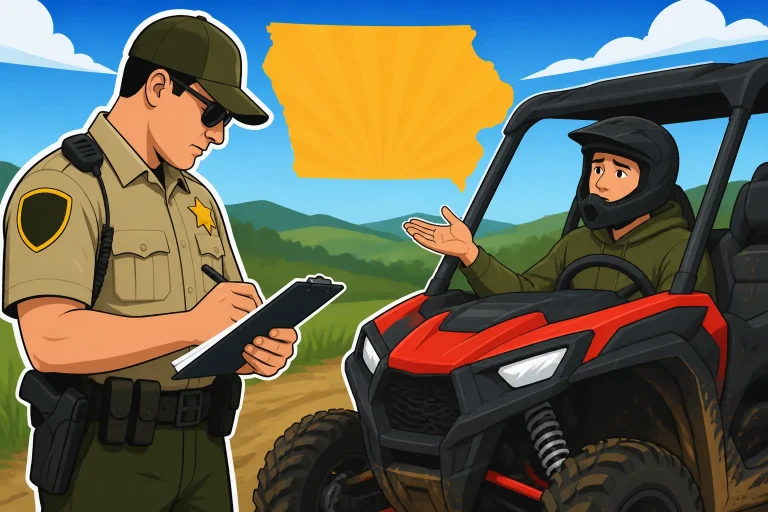
Iowa’s ATV safety certificate rule can be confusing because age is only part of the answer. The requirement generally concerns riders ages 12 through 17, but it also depends on the machine and where it is ridden. Here’s how to understand the age range, what changes at 12 and 18, and what to check before a ride.
Which Iowa riders need a safety certificate
For a covered ATV ride, Iowa’s safety certificate requirement generally applies to operators ages 12 through 17. In practical terms, a rider in that age range should complete the required safety course and have proof of completion before operating a covered machine in a place where the rule applies.
The certificate is evidence that the rider completed safety education. It is not a driver’s license, registration, title, or riding permit. It also does not give a young rider permission to use a machine or trail that would otherwise be off-limits. Age, vehicle type, riding location, supervision rules, and other requirements can still matter.
| Rider age | General certificate picture | What else to check |
|---|---|---|
| Under 12 | The 12-to-17 certificate range has not begun, but separate age and supervision rules may apply | Whether the child may operate that machine and who must supervise |
| 12 through 17 | A certificate is generally required for covered ATV operation in places where Iowa requires it | Vehicle type, riding area, and supervision requirements |
| 18 and older | The youth certificate requirement generally ends at 18 | Registration or permit rules, trail rules, and any rules specific to the vehicle |
Treat this as a starting point, not a substitute for checking the rule that applies to the particular ride. Iowa’s safety requirements distinguish between vehicle types and riding settings. For the broader rule, see Iowa ATV Safety Certificate Requirements.
The age range is not the same as a minimum riding age
A certificate requirement does not mean that every 12-year-old may operate every ATV. A machine that is too large or powerful for a young rider may still be an unsafe choice, and supervision rules can apply even when the rider has completed a course. A certificate shows course completion; it does not certify that a particular machine is suitable for a particular child.
Likewise, a child younger than 12 does not automatically become eligible to ride simply because the certificate requirement is described as applying from age 12. Iowa has separate rules for younger riders. Check Iowa Rules for Riders Under 12 before planning a ride with a child below that age.
At 12, the rider enters the age range where the certificate requirement becomes relevant for covered ATV operation. The birthday is not a general permission to ride anywhere or without an adult. The specific rules for a 12-year-old can depend on the setting and the type of machine. See [Iowa Rules for a Rider Aged 12] for details about that age.
A 17-year-old remains within the youth certificate range. Turning 17 does not remove the requirement; the usual change comes at age 18. For questions that concern the last year in the range, [Iowa Rules for a Rider Aged 17] can help clarify what still applies.
Adults generally do not need the youth certificate
The certificate rule discussed here is an age-based requirement for young operators, not a general ATV license that every adult must obtain. An adult ATV operator generally does not need this youth safety certificate solely because they are riding an ATV. That does not remove other obligations, such as registration, a permit where required, or compliance with riding-area rules.
If a parent or other adult is taking a young rider out, the adult should not assume that their own experience replaces the child’s certificate. The rider’s age and the machine being operated are the important starting points. For the adult side of the question, see Does an Iowa Adult Need a Certificate?.
Why the machine and riding location matter
The phrase “ATV safety certificate” can sound as if the same requirement applies to every off-road vehicle in every location. It does not. Iowa distinguishes among machine types, and not every vehicle is treated as a covered ATV for this certificate rule. Riding on private property may also raise different questions from riding on public land or a designated riding area.
ATV, side-by-side, and off-road motorcycle are not interchangeable terms
A side-by-side may look similar to an ATV in how it is used, but it can fall under different certificate rules. Iowa’s rules do not require a side-by-side operator to have the same certificate discussed for youth ATV riders. That distinction concerns the certificate only; it does not mean a side-by-side is exempt from registration, permit, age, or trail requirements. For that vehicle-specific question, see [Does an Iowa UTV Operator Need a Certificate?].
Off-road motorcycles are another distinct category. The certificate rule for ATV operators should not automatically be applied to a dirt bike rider. Machine classification matters, so confirm which rules cover the exact vehicle rather than relying on a general label such as “off-road vehicle.”
This distinction is especially important when a family has more than one type of machine. A child may need a certificate for one vehicle but not another under this particular rule. That does not mean the child can safely or legally switch between them without checking the separate requirements.
Public riding areas and private property can involve different rules
A certificate requirement may apply in a covered public riding setting, while a private-property ride can be governed differently. But “private land” is not a blanket exemption from every Iowa rule. Permission from the landowner, any applicable age or supervision limits, and requirements that attach to the machine can still matter.
A designated riding area is also not simply the same as any open field or trail. The area may have its own operating rules, including requirements about age, supervision, equipment, or where riders may travel. Before heading out, check Iowa Rules for Riding a Designated Riding Area and the current instructions for the specific place.
Do not assume that a certificate authorizes riding on public land generally. It satisfies a course-related requirement where that requirement applies; it does not create access rights. A rider still needs to use land or trails that are open to that type of machine and follow posted restrictions.
A certificate does not replace registration or a visitor permit
A youth rider may have a valid certificate and still need the machine to meet separate registration or permit requirements. Iowa registration and nonresident rules are separate from safety education. A certificate does not function as a decal, and a decal does not prove that the rider completed a course.
For visitors, reciprocity and permit rules may also affect what is needed for the machine. A home-state registration may not answer every Iowa requirement. Before traveling, check the rules for the vehicle and the place where it will be used, as well as any applicable nonresident permit requirement.
A useful way to avoid confusion is to treat the ride as a checklist with separate questions:
- Is this rider old enough to operate this vehicle in this location?
- Does this rider need a safety certificate for this vehicle and setting?
- Is the machine registered or otherwise authorized for the ride?
- Is a nonresident permit required?
- Is the land or trail open to this machine, and are there additional posted conditions?
- Does the rider need supervision, and does the supervising adult meet the applicable requirements?
Answering each question separately is more reliable than treating “has a certificate” as a complete clearance to ride.
Getting ready before a young rider goes out
If a rider is 12 through 17 and will operate a covered ATV where Iowa requires certification, plan ahead. Confirm that the course and certificate meet the current Iowa requirement, then make sure the rider can show proof if asked. Do not rely on memory or a parent’s statement that the rider has taken a class; keep the actual certificate or an accepted record available.
Confirm the course and retain proof
Use the current Iowa DNR information to verify where to take an approved course, how course completion is documented, and what proof a rider should carry. Course access, formats, and administrative details can change, so check with the official provider before enrolling. The course requirement is about completing qualifying safety education, not merely watching an informal video or receiving instructions from a family member.
Once the rider completes the course, store the certificate where it can be found before a trip. A photo or digital record may be useful as a backup, but do not assume it will be accepted in place of the official proof unless current instructions say so. If a certificate is lost, check the replacement process at Replacing a Lost Iowa Safety Certificate.
For a young rider, course completion is also a chance to review practical riding behavior: keeping an appropriate speed, staying on permitted trails, avoiding unsafe passengers, and stopping when conditions become difficult. A certificate is a baseline, not a substitute for adult judgment or close attention to the rider’s ability.
Match supervision to the rider, not just the paperwork
Parents and guardians should check supervision rules separately from the certificate requirement. Having a certificate does not necessarily mean a young rider can go out alone. For younger children, supervision may be a specific legal condition. For older teens, the setting may still have rules about adult oversight or group operation.
The supervising adult should understand the machine, the route, and the limits of the riding area. A responsible plan includes knowing how to contact the group, setting a turnaround point, and agreeing on what to do if a rider becomes tired or the trail is unsuitable. These measures are good practice even when a particular location does not impose a specific supervision requirement.
Also consider the ATV itself. Choose a machine the young rider can control, with controls they can operate while seated and protective equipment that fits. A certificate does not establish that the machine’s size, speed, or weight is appropriate. Nor does it prevent mistakes caused by fatigue, unfamiliar terrain, or pressure to keep up with adults.
Recheck rules when the ride changes
A family might ride on private land one weekend and visit a public OHV area the next. A change in location can change which rules apply. A rider might also switch from an ATV to a side-by-side, or a visiting family might bring a machine registered in another state. Each change is a reason to review the requirements rather than assuming the same answer carries over.
Before leaving, confirm the riding area is open and check its posted rules. Weather, trail conditions, and local restrictions can affect whether riding is allowed. Carry the documents that apply to the machine and rider, and make sure the adult in charge knows how the youth’s certificate requirement fits with registration and access rules.
The key point is simple: Iowa’s certificate age range generally covers ATV riders from 12 through 17, but age alone does not determine whether a ride is allowed. Check the vehicle classification, location, supervision requirements, and current official instructions for the specific trip.
Disclaimer
This article is for general informational purposes only and does not constitute professional advice. Laws, prices and regulations vary by location and change over time. Consult a qualified professional for guidance on your specific situation.