Why an Iowa Nonresident Permit Covers One Machine
An Iowa nonresident permit is tied to a machine, not to the person, family, trailer or group taking a trip. That distinction matters when you bring more than one ATV or UTV: a permit displayed on one vehicle does not automatically cover the others. Here’s how to think through the one-machine rule, check whether you need a permit at all, and avoid arriving at a riding area with paperwork for the wrong machine.
What “one machine” means in practice
The simplest way to understand the rule is to treat each machine as a separate vehicle with its own registration or permit status. A nonresident permit is not a general pass that follows you from one ATV or UTV to another. If two machines both need Iowa nonresident permits, plan on obtaining one for each.
That can feel counterintuitive if you’re used to permits issued to a person. A fishing license, for example, is generally associated with the angler. A vehicle permit works differently: it identifies the particular machine authorized under that permit. The permit is not a substitute for the machine’s own identification or documentation.
For a trip, that means:
- One person riding one covered machine does not need a second permit just because someone else is driving it.
- Two people taking turns on the same covered machine do not turn it into two machines.
- One permit displayed on one ATV does not cover a second ATV on the same trailer.
- A permit for an ATV does not automatically cover a side-by-side or another off-highway vehicle.
- A permit on a machine does not cover a friend’s or relative’s machine, even if you travel together.
The key question is not how many riders are in your group. It is how many machines need an Iowa permit. If you’re bringing several vehicles, check the status of each one separately before leaving home.
| Your situation | What to check |
|---|---|
| One machine, one rider | Whether the machine’s home-state credentials qualify under Iowa’s rules or whether it needs an Iowa permit |
| One machine, multiple riders taking turns | The machine’s permit status; the permit is associated with the vehicle, not each rider |
| Several machines owned by one visitor | The registration or permit status of each machine |
| A machine borrowed from someone else | The machine’s credentials and who is responsible for obtaining any required permit |
| A rental machine | Whether the rental provider has handled the Iowa permit requirement |
| A machine replaced during the trip | Whether the replacement machine has its own valid credentials |
The permit’s one-machine scope is also why it should not be treated like a transferable day pass. A decal or permit issued for one vehicle does not become valid on another merely because both machines belong to you, share a trailer or are used by the same household. For a closer look at that distinction, see Why a Nonresident Sticker Cannot Move Machines.
Check whether your machine needs an Iowa permit
Before buying a permit, first establish what documentation applies to the machine. A visitor may have a machine registered in their home state, may be bringing one that is not registered there, or may be relying on an exemption or a different authorization. Those situations can lead to different requirements.
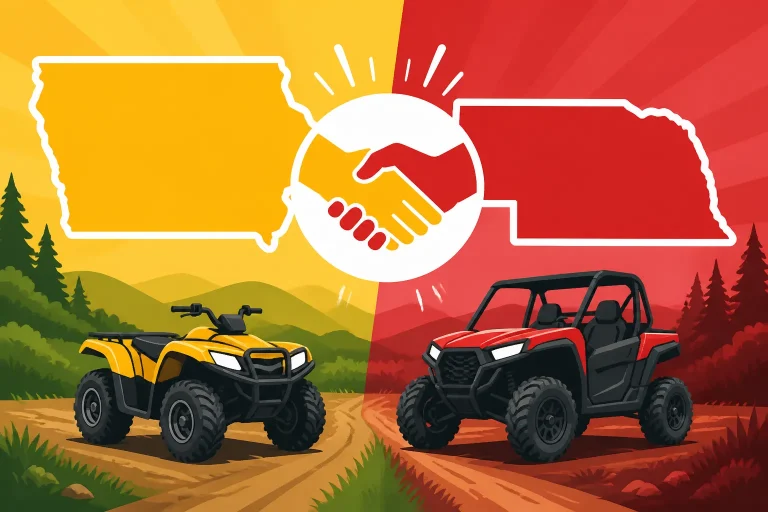
Do not assume that every out-of-state machine automatically needs the same Iowa permit, or that an out-of-state registration automatically settles the question. Iowa’s treatment of visiting machines can depend on the machine’s status and applicable reciprocity rules. The safest first step is to check the current Iowa requirements for your home state and vehicle type. Does Iowa Honor Out-of-State Registration? and Iowa’s Reciprocity With Minnesota are useful starting points if you’re comparing credentials from another state. The same principle applies to visitors from other states: verify the specific arrangement rather than relying on a friend’s experience from a different state.
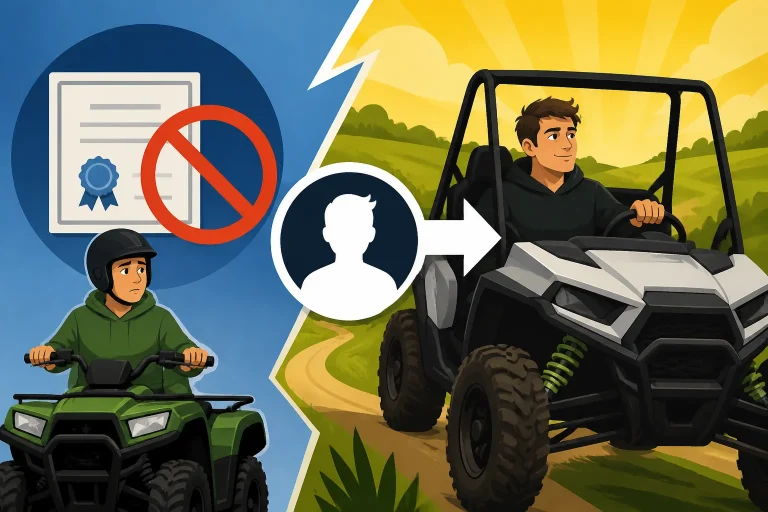
The word “permit” can also lead people to confuse different requirements. A nonresident user permit is about a visiting machine’s authorization to operate where Iowa requires it. A safety certificate is a separate issue that can apply to certain young riders in particular circumstances. A permit for the machine does not automatically satisfy a rider’s age-related certificate requirement, and a rider’s certificate does not register or permit the machine. See Iowa’s Safety Certificate for Ages 12 to 17 for the separate rider requirement.
A practical check for each vehicle
Make a short list before you travel. For every ATV, UTV, dirt bike or other machine in the group, write down:
- The machine type and identifying information.
- Whether it is registered in your home state.
- Whether you have the relevant registration documents with you.
- Whether Iowa recognizes that status for the intended use.
- Whether the machine needs its own Iowa nonresident permit.
- Where the permit or decal must be placed, if one is required.
This takes a little longer than buying one permit for the whole group, but it prevents the common mistake of treating a multi-machine trip as a single vehicle. If you’re bringing a machine across a state line, Carrying Your Home-State Registration on a Visit explains why keeping the supporting paperwork with the machine can make a roadside or trail check easier.
If you are unsure whether your machine qualifies under a reciprocity arrangement, ask the relevant Iowa authority before you ride. Avoid relying solely on informal advice from a seller, a riding group or a social media post. Requirements can vary by state and machine type, and the fact that another visitor’s vehicle was accepted does not prove yours has the same status.
Why the permit is attached to a machine
A machine-specific permit gives Iowa a practical way to identify which vehicle has been authorized. A group-level pass would be hard to apply consistently: the group might split up, change vehicles, lend a machine to someone else or bring a different vehicle on a later trip. Tying the authorization to a particular machine makes the permitted vehicle identifiable even when the driver changes.
It also makes the permit easier to verify. A decal or other vehicle-linked credential can be checked against the machine it belongs to. If a permit could freely move from one vehicle to another, a visitor could use one permit to authorize multiple machines over the course of a trip without obtaining the required credentials for each one. The one-machine rule avoids that ambiguity.
The rule is about coverage, not ownership. The person who paid for or obtained the permit may not be the person operating the machine at a particular moment. What matters is whether the machine being operated is the one associated with the permit and whether the operator follows the separate rules that apply to riders and the riding area.
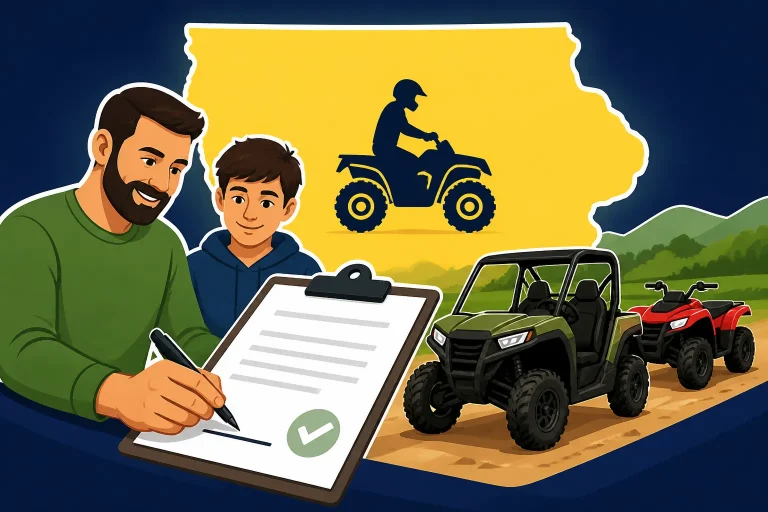
This distinction is especially useful for families. Suppose a parent brings a UTV and two ATVs. The family should not assume that one permit covers the entire trailer just because one adult arranged the trip. Instead, confirm whether each vehicle’s own registration or permit status meets Iowa’s requirements. A child riding one of the machines may also have separate age, supervision or safety-certificate requirements. Those rider rules do not expand the permit’s coverage to another vehicle.
It matters for borrowed machines, too. If a friend lends you an ATV, their ownership or paperwork does not necessarily settle whether the machine is properly authorized for your Iowa ride. Ask what documentation accompanies it and verify that it applies to that specific vehicle. If the permit requirement applies, a permit displayed on a different machine in your group is not a workaround.
The one-machine approach also helps prevent confusion after a change in plans. If the first ATV develops a problem and you switch to another machine, do not assume the first vehicle’s permit now covers the replacement. Check the replacement’s credentials before riding it. Likewise, moving a decal between machines because the original vehicle is being left behind can create a mismatch between the permit and the vehicle it was issued for. For permit transfer questions, consult Iowa’s Nonresident User Permit and confirm the current process with the state before making a change.
A permit is not a blanket approval for every kind of riding. It does not override trail closures, private-land permission requirements, machine restrictions, age rules or road-use laws. It only addresses the authorization for the machine under the permit system. Before riding, make sure the location allows your type of vehicle and that you have any other required documents. Iowa Rules for Riding a Designated Riding Area covers the separate rules that may apply at designated riding locations.
Planning a trip with two or more machines
The one-machine rule is easiest to manage when you handle paperwork vehicle by vehicle. Don’t leave the check until you reach the trailhead, where a problem can disrupt the whole group. Build a small record for each machine and confirm its status before you load.
Make a machine-by-machine checklist
For each vehicle, note the make, model, type and identifying number. Keep the details with a copy of the registration or permit information. If you have several similar ATVs, identifying each one can stop you from mixing up which paperwork belongs to which machine.
A basic table in your trip notes can be enough:
| Machine | Home-state status | Iowa requirement checked | Documents packed | Permit attached or displayed |
|---|---|---|---|---|
| ATV 1 | Registered or not registered | Yes or no | Yes or no | Yes or no |
| ATV 2 | Registered or not registered | Yes or no | Yes or no | Yes or no |
| UTV 1 | Registered or not registered | Yes or no | Yes or no | Yes or no |
The table is a planning tool, not an official form. Its value is that it forces you to make a decision for every machine instead of assuming one person’s paperwork covers all the vehicles.
Keep the paperwork matched to the vehicle
Carry the documents that support the machine’s status, and keep them protected from water, mud and abrasion. A simple waterproof document pouch can help keep papers legible in a truck or gear bag. If you use an Amazon document wallet or similar organizer, label it clearly and avoid putting the only copy somewhere that can be lost with a helmet or riding pack.
If your family transports several machines, a simple identifier system can make loading and unloading easier. Use the machine’s identifying details in your notes, and match paperwork to the right vehicle rather than relying on color or a nickname. An Amazon luggage tag or durable label can help identify a document pouch or key set, but it does not replace an official decal or required documentation.
Keep the permit or decal where Iowa’s current instructions require it. Do not improvise a new location just because another machine has a convenient flat panel. Before applying anything, check Iowa’s Permit for a Visiting Machine and the current placement instructions. If a decal is damaged, missing or attached incorrectly, contact the appropriate office for instructions rather than trying to move one from another machine.
If a decal or permit gets lost during a trip, do not treat a photograph or receipt as permission to transfer another vehicle’s decal. Keep any purchase confirmation or other records available, then contact the issuing authority for guidance. The right next step depends on the document and the circumstances; a receipt may help explain what happened, but it does not turn a permit for one machine into a permit for another.
Confirm rental and borrowed-machine arrangements
For a rental, ask the provider directly whether the machine is properly documented for the Iowa location you plan to visit. Do not assume that “ready to ride” means every permit, registration and safety requirement is covered. Ask which documents are supplied, which are your responsibility, and whether the authorization applies to the exact vehicle being rented.
If the rental company changes your machine after you arrive, check that the documentation matches the replacement. A permit attached to the original rental should not be assumed to cover a substituted vehicle.
For a borrowed machine, ask the owner for the registration documents and confirm that the machine’s status meets Iowa’s requirements. It is also sensible to agree in advance who will obtain any permit that is needed and who will keep the paperwork during the ride. That avoids a last-minute disagreement at the trailhead.
Common misunderstandings and what to do instead
A few assumptions cause most one-machine permit problems.
“I bought one permit, so my group is covered.”
A group can include multiple machines with different registration statuses. Check each vehicle separately. One permit does not automatically cover every ATV or UTV traveling with you.
“The permit belongs to me because I paid for it.”
Payment does not make a vehicle-linked permit a personal pass. The authorization is associated with the machine named or identified under the permit. The fact that you paid does not make it valid on another vehicle.
“The permit covers whichever machine I ride today.”
Do not move a decal or assume a permit follows you when you switch vehicles. Confirm the procedure with the issuing authority if a machine is replaced, sold, damaged or otherwise taken out of service.
“My friend has an Iowa permit, so I can ride their second machine.”
The friend’s permit does not automatically cover a different vehicle. Check the second machine’s own credentials before operating it.
“A valid home-state registration always means I can skip the Iowa permit.”
That depends on the rules that apply to your home state and machine. Check the relevant reciprocity information rather than assuming every out-of-state document is treated alike. Iowa ATV Registration for a Nonresident gives broader visitor context.
“If the machine is permitted, I can ride anywhere.”
A permit does not grant access to private land or open a closed trail. You still need to follow the landowner’s rules and the riding area’s requirements. If you are riding private property, review Iowa Landowner Permission Rules.
“The decal is all I need to show.”
A decal may identify the permit, but supporting documents can still matter. Carry the paperwork that establishes the machine’s status, especially if you are relying on an out-of-state registration or a reciprocity arrangement. If you are uncertain what must be carried, check the current Iowa guidance before leaving.
“A permit is a pass for the operator.”
The vehicle and the rider have separate responsibilities. Age rules, supervision requirements, safety certificates and location rules may apply independently. Check them for every rider, particularly when children are in the group.
These distinctions are not just paperwork details. A mismatch can leave a vehicle without the authorization you thought it had, and it may be difficult to fix once you are at a park or trail. A little planning before the trip is much easier than trying to sort out multiple vehicles in a parking area.
A quick plan before you ride in Iowa
Use this order when preparing a visit:
- List every machine you plan to bring. Include borrowed and rented vehicles, not just the ones titled in your name.
- Check each machine’s home-state status. Make sure you know whether it is registered and have the relevant documents.
- Confirm Iowa’s current reciprocity treatment. Do not assume a rule for one neighboring state applies to all visitors.
- Determine whether each machine needs its own nonresident permit. Think vehicle by vehicle, not person by person.
- Obtain the required permit for each machine that needs one. Check current purchasing options and instructions with the official provider.
- Match each permit and document to the correct vehicle. Keep a simple checklist if you are carrying several machines.
- Check separate rider and location rules. A machine permit does not replace safety certificates, landowner permission or trail-specific requirements.
- Recheck if plans change. A replacement, rental swap or borrowed machine may have different paperwork.
If you want the full overview of the visitor permit system, see Iowa’s Nonresident User Permit. For cost questions, avoid relying on an old receipt or a screenshot shared by another rider; confirm current amounts and purchase options with the provider. The main planning point remains the same regardless of the fee: if multiple machines each need authorization, one machine’s permit does not cover the others.
A final practical check is to walk the trailer before departure. Match each vehicle to its paperwork, confirm that any required decal is present and properly placed, and make sure the group knows which machine each document belongs to. If something is unclear, resolve it before riding rather than treating another vehicle’s permit as a temporary substitute.
Disclaimer
This article is for general informational purposes only and does not constitute professional advice. Laws, prices and regulations vary by location and change over time. Consult a qualified professional for guidance on your specific situation.