When the Dealer Files at the County Recorder
Buying a new ATV or UTV can be incredibly exciting, but the paperwork that comes afterward often feels like wading through quicksand. Many folks wonder if they'll be stuck navigating the Iowa county recorder's office themselves or if the dealer handles all the nitty-gritty details. This guide is here to clear up that confusion, explaining exactly when a dealer typically steps in to handle your registration and titling, and what you can expect throughout the process.
The Dealer's Role in Iowa ATV/UTV Registration
When you walk into an authorized dealership in Iowa to purchase a new (or even a used) ATV or UTV, you're not just buying a machine; you're often purchasing a service that includes handling the initial registration and titling. This can be a huge relief for many buyers, as the process can seem daunting with all its forms, fees, and specific requirements. Reputable dealers understand this and incorporate it into their customer service.
When a Dealer Takes the Lead
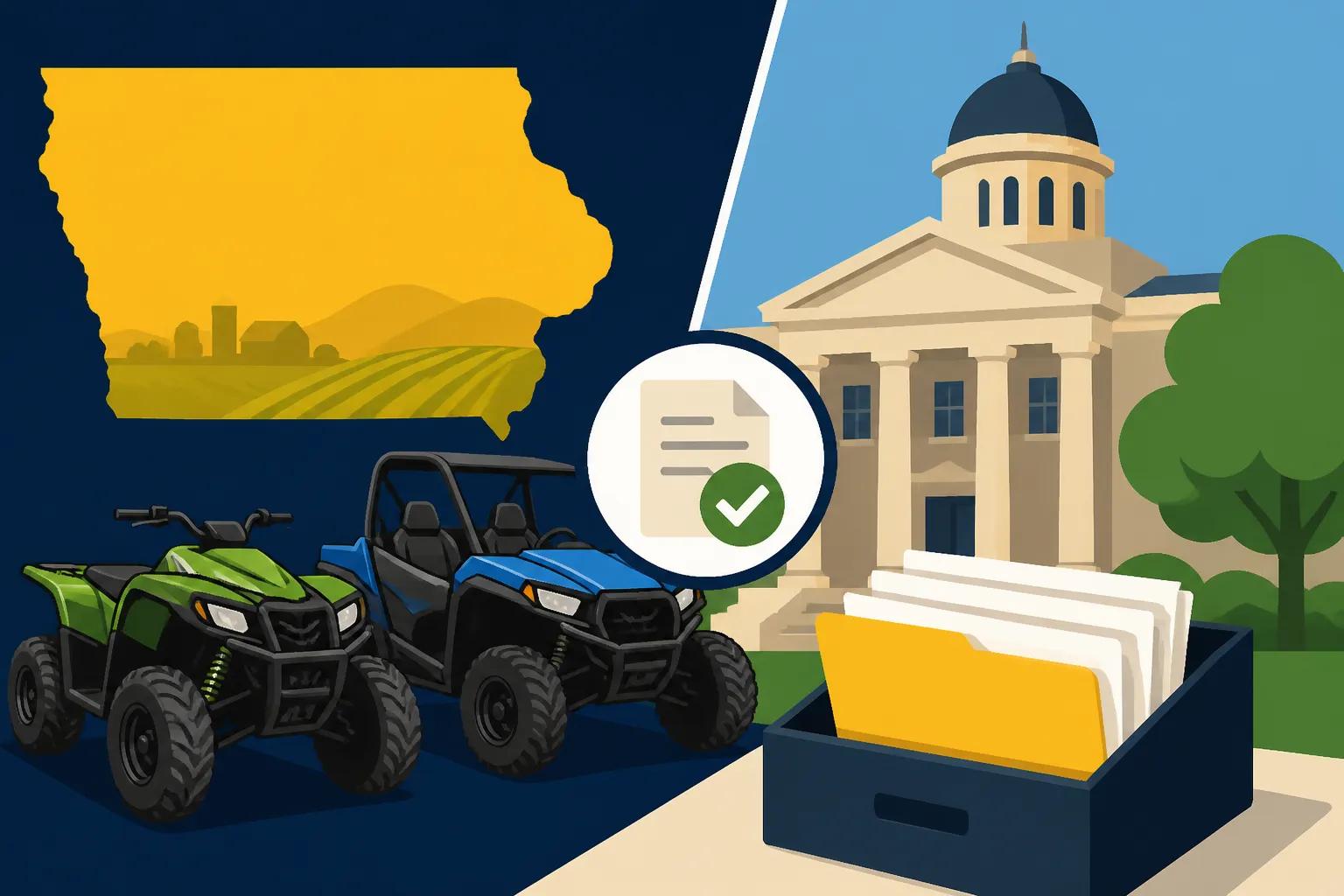
Most of the time, when you buy an ATV or UTV from a licensed dealer in Iowa, they will take on the responsibility of processing your initial registration and titling paperwork. This is a massive convenience because it means you don't have to worry about collecting all the right forms, understanding the correct fees, or making a special trip to your county recorder's office right after your purchase. Think of it as part of the full-service experience. The dealer acts as an intermediary, submitting everything on your behalf to the proper authorities, usually your local county recorder, where all off-highway vehicle (OHV) registrations are handled in Iowa. This ensures that your new ride is legally recognized and ready for the trails as quickly as possible.
The dealer will typically collect all necessary information from you at the time of sale, including your personal details, and details about the machine. They'll handle the nuances of transferring ownership, ensuring the previous title (if it's a used machine) is properly endorsed or the Manufacturer's Statement of Origin (MSO) for a new one is correctly filled out. It’s a seamless process for the buyer, designed to get you out on the trails without administrative headaches. They understand the ins and outs of the system, which can save you from potential mistakes or delays.
The entire process is designed to make things as simple as possible for you. Instead of trying to figure out which forms to download, what proofs of residency you need, or the exact calculations for sales tax and registration fees, the dealer takes care of it all. They will often provide you with temporary operating permits or copies of the submitted paperwork so you have proof of purchase and intent to register while you wait for your official documents and decals to arrive. This allows you to legally operate your ATV or UTV while the state processes your official registration.
How Dealers Handle Sales Tax and Fees
One of the most significant advantages of buying from a dealer is that they simplify the financial side of registration and titling. When you purchase your ATV or UTV, the dealer will collect all applicable sales tax directly from you. In Iowa, this includes the state's 6% sales tax, plus any local option sales tax, which often adds up to a combined 7% in most counties. This sales tax is collected at the point of sale and then remitted by the dealer to the state. This means you won't have to calculate it or pay it separately when your paperwork is processed at the county recorder's office, as you would in a private sale. For more details on the tax, you can refer to [Iowa ATV Sales Tax Rate].
Beyond sales tax, dealers will also collect all the necessary fees for titling and registration. This typically includes the base title fee, the annual registration fee, a writing fee, and often an administrative fee. The fees are usually clearly itemized on your purchase agreement, so you know exactly what you're paying for. For instance, you'll see charges for [Iowa ATV Title Cost] and [Iowa ATV Registration Cost]. By consolidating these payments, the dealer ensures that all financial obligations are met upfront, preventing any surprises or additional payments later on when your paperwork reaches the county recorder.
The dealer then bundles these payments and sends them along with your paperwork to the county recorder. This comprehensive approach simplifies your life, as you make one payment to the dealer, and they handle the dispersal of funds to the appropriate state and county agencies. It's a system designed for efficiency, ensuring that your machine is properly titled and registered without you needing to make separate transactions for taxes and fees. This consolidation is a key part of the value a dealership provides beyond just selling the machine itself.
When the Buyer Needs to Step Up
While dealers handle a lot, there are definitely situations where the responsibility for titling and registration falls squarely on your shoulders as the buyer. Understanding these scenarios is crucial to avoid any legal troubles or delays in getting your new ride out on the trails. It's not always a set-it-and-forget-it deal, especially if you're venturing outside the traditional dealership model.
Private Sales and Your Responsibility
The most common scenario where you, the buyer, are fully responsible for the paperwork is during a private sale. When you buy an ATV or UTV directly from another individual, whether it's through a classified ad, an online marketplace, or a handshake deal with a neighbor, the entire titling and registration process becomes your project. The seller's primary responsibility is to provide you with a properly signed-off title and a bill of sale. From that point on, it’s up to you to take those documents to your county recorder's office. If you're looking at buying a machine this way, it's wise to review resources like [Buying a Used ATV in Iowa] to understand the nuances of the transaction.
You'll need to gather all the required documents, which usually include the signed-over title from the previous owner, a completed bill of sale, and proof of your identity and residency. Sometimes, if the machine is very old or came from a state with different titling laws, you might even encounter situations where there isn't a traditional title. In such cases, the process can become a bit more complex, potentially requiring additional forms or affidavits to establish proof of ownership. Make sure you understand [Registering a Machine Bought Privately in Iowa] before you finalize any private purchase.
Once you have all your documents in hand, you'll need to visit your county recorder's office. Be prepared to fill out the necessary registration application form, pay the sales tax (if it wasn't already paid), and cover all the titling and registration fees yourself. It's a good idea to call ahead or check your county recorder's website to confirm their hours, what documents you need to bring, and their accepted payment methods. Being prepared will save you a lot of time and frustration, ensuring your visit is as smooth as possible. Don't forget that accurate completion of [What Iowa's Registration Form Asks For] is paramount for a successful registration.
Specific Scenarios Where Dealers Might Not File
Even when dealing with a business, there are a few specific instances where a dealer might not handle the entire registration and titling process for you, or where their role might be limited. For example, if you purchase an ATV or UTV from an out-of-state dealer, particularly one that isn't accustomed to Iowa's specific off-highway vehicle laws, they might only provide you with the MSO or title and a bill of sale, leaving you to handle the Iowa registration directly. This is common because each state has its own unique regulations, and an out-of-state dealer might not be set up to process Iowa-specific paperwork.
Another scenario could arise with older machines, especially those bought from certain types of specialized or antique dealers, where the machine might have been previously unregistered or operated under an exemption. These dealers might sell the machine "as-is" with only a bill of sale, expecting the buyer to research and handle any historical titling or registration hurdles. Always clarify with any dealer, regardless of their location, exactly what paperwork they will be providing and what, if any, part of the registration process you will be responsible for.
It's also worth noting that if you purchase a machine that is specifically intended for agricultural use and qualifies for an exemption from registration, the dealer might not process a registration. While they would still typically provide a title, the registration aspect would be bypassed unless you later decide to use the machine in a way that requires it. Always ask for clear documentation of any exemptions claimed at the time of purchase. A thorough bill of sale, which you can often create using tools like those found on LawDepot, can be especially useful in these less common scenarios to clearly document the terms and responsibilities of the sale.
What to Expect When the Dealer Files
When you've purchased your ATV or UTV from a dealer who handles the registration and titling, you've avoided the initial legwork. However, the process isn't instantaneous, and there's still a period of waiting and a few things you should be aware of. Understanding this timeline and what to look for can help manage your expectations and ensure everything proceeds smoothly.
The Waiting Game for Your Decal and Title
After the dealer submits all your paperwork to the county recorder, the clock starts ticking. It takes time for the county office to process the application, officially issue the title, and send out your registration decal. Typically, you can expect to wait at least a couple of weeks, and sometimes a bit longer, for your official registration decal and title to arrive in the mail. This isn't an overnight process, so don't fret if your shiny new sticker doesn't show up on your doorstep within a few days of your purchase. You can find more specific expectations regarding this process at [Two Weeks Before an Iowa Decal Arrives].
During this waiting period, the dealer should provide you with some form of temporary documentation. This might be a temporary permit or copies of the submitted forms, serving as proof that the registration process is underway. This temporary paperwork is crucial because it allows you to legally operate your ATV or UTV on designated trails or permissible public lands while you await the official documents. Always keep this temporary proof with you whenever you ride. The actual title will be mailed directly to you or, if you financed the machine, often to your lienholder first, who will then forward it to you once the loan is satisfied.
It’s important to remember that delays can happen, especially during peak seasons or if there's any missing information or discrepancies in the paperwork submitted by the dealer. While the dealer aims for perfection, human error is always a possibility. If a few weeks have passed and you haven't received anything, it's wise to first check with the dealer and then, if necessary, follow up with your county recorder's office to inquire about the status of your application. Patience is key, but so is proactive follow-up if things seem to be taking an unusually long time.
Verifying the Dealer's Actions
It’s a good practice to verify that your dealer has indeed processed your registration and titling paperwork. While most reputable dealers are diligent, a simple confirmation can provide peace of mind. One of the first things you should receive from the dealer is a copy of the completed registration application and perhaps a temporary operating permit. Keep these documents safe. They are your initial proof that the process has begun.
Once the expected waiting period has passed (usually a couple of weeks), if you still haven't received your official decal and title, don't hesitate to reach out. Your first call should be to the dealership. They should be able to confirm the submission date and provide you with a tracking number or other identification that you can use to inquire directly with your county recorder. Many county recorder offices also have online systems or phone lines where you can check the status of a title or registration application by providing information like your name or the machine’s serial number.
Should there be any issues, such as lost paperwork or an unexpected delay, having a detailed bill of sale from the dealer and any communication records can be invaluable. This documentation helps you prove that you completed your part of the transaction and that the dealer was responsible for submitting the paperwork. Services like LawDepot can be beneficial for ensuring you have a robust and legally sound bill of sale that clearly outlines the responsibilities of both parties, offering an extra layer of protection should any disputes or questions arise. Remember, while you trust the dealer, it's always wise to have your own records.
Essential Documents for ATV/UTV Transactions
Whether the dealer is handling everything or you're managing a private sale, certain documents are absolutely critical for any ATV or UTV transaction in Iowa. Understanding what these are and why they matter will ensure a smooth process and protect you as both a buyer and a seller. Having the right paperwork prevents headaches down the road.
Key Paperwork the Dealer Handles
When you buy a new ATV or UTV from an authorized dealer, the most important document they provide and process for you is the Manufacturer's Statement of Origin (MSO), sometimes called a Manufacturer's Certificate of Origin (MCO). This is essentially the birth certificate for your machine, proving it's new and hasn't been titled before. The dealer will endorse this MSO, signing it over to you, and then use it to apply for the first-ever title for your ATV or UTV in your name. Without an MSO, a new machine cannot be legally titled and registered.
For used ATVs or UTVs purchased from a dealer, the key document is the previous owner's Iowa Certificate of Title. The dealer will ensure that this title is properly signed over to them by the previous owner, and then they will sign it over to you as part of your purchase. A clean, properly endorsed title is paramount for a legal ownership transfer. The dealer will collect this, along with a detailed bill of sale for the transaction, and submit everything to the county recorder to get a new title issued in your name and register the machine. Understanding [Titling an ATV in Iowa] is critical, as this process ensures proper legal ownership.
The bill of sale itself, while perhaps seeming secondary to the MSO or title, is extremely important. It legally documents the sale price, the machine's identifying information (like the VIN/serial number), and the date of sale. This document is essential for calculating sales tax and can serve as crucial proof of purchase in case of any future disputes or if you need to trace ownership. Even when a dealer is handling everything, you should always receive a comprehensive bill of sale, outlining all charges, fees, and the final purchase price. This document is your financial and legal record of the transaction. You can learn more about this crucial document in [An Iowa Bill of Sale for an ATV].
Your Records and What to Keep
Even though the dealer is typically managing the official submission of documents, it's incredibly important for you to maintain a comprehensive set of personal records for your ATV or UTV purchase. This means getting copies of everything you sign and everything the dealer provides. Request copies of the Manufacturer's Statement of Origin (MSO) after it's been endorsed to you, the previous title if it was a used machine, and especially a detailed, itemized bill of sale. These copies should be kept in a safe place at home, not just tucked into the glove box of your truck where they could be lost or damaged.
A detailed bill of sale, even from a dealer, is your best friend. It should clearly state the purchase price, any trade-in value, all taxes and fees paid, and a complete description of the ATV or UTV, including its Vehicle Identification Number (VIN) or serial number. This document is your primary proof of ownership and purchase terms. In a private sale, a well-drafted bill of sale is even more critical, and resources like LawDepot can provide templates to ensure all necessary legal language is included, protecting both the buyer and the seller. This record can be invaluable for insurance purposes, future sales, or if there's ever a question about the transaction.
Beyond the initial purchase documents, you should also keep copies of your official registration certificate and title once they arrive. While you'll carry the registration certificate on your machine when riding, having a backup copy at home is always a smart move. Remember, a lost title can be a hassle to replace, so secure storage for these originals is non-negotiable. Additionally, retain receipts for any major maintenance, repairs, or accessories. Building a complete file for your ATV or UTV helps you track its history, ownership, and value, which becomes particularly useful if you decide to [Sell an ATV in Iowa] down the road.
| Scenario | Party Responsible for Filing | Key Documents Required (Buyer) | Initial Proof of Ownership/Registration |
|---|---|---|---|
| New Machine from Iowa Dealer | Dealer (most commonly) | Buyer provides personal info; Dealer handles MSO | Temporary permit from dealer |
| Used Machine from Iowa Dealer | Dealer (most commonly) | Buyer provides personal info; Dealer handles old title | Temporary permit from dealer |
| Private Sale (Used Machine) | Buyer | Signed-over Title, Bill of Sale, Proof of ID/Residency | Receipt from County Recorder |
| Out-of-State Dealer (New) | Buyer (often) | MSO, Bill of Sale, Proof of ID/Residency | Bill of Sale, Receipt from County Recorder |
| Out-of-State Dealer (Used) | Buyer (often) | Out-of-state Title, Bill of Sale, Proof of ID/Residency | Bill of Sale, Receipt from County Recorder |
When buying an ATV or UTV in Iowa, understanding who handles the registration and titling is key to a smooth and legal process. Most reputable dealers will take on this responsibility, saving you a trip to the county recorder and ensuring all taxes and fees are correctly paid. However, in private sales or certain unique situations, the burden shifts to you, the buyer. Regardless of the scenario, maintaining meticulous records—including a thorough bill of sale and copies of all official documents—is paramount. By staying informed and organized, you can enjoy your off-road adventures without the headache of administrative surprises.
Disclaimer
This article is for general informational purposes only and does not constitute professional advice. Laws, prices and regulations vary by location and change over time. Consult a qualified professional for guidance on your specific situation.