Iowa ATV Registration for a Hunting Quad
It's a familiar scenario for many Iowa outdoors enthusiasts: you've finally got that perfect "hunting quad" – maybe it's a trusty old Polaris Sportsman you picked up from a neighbor, or a shiny new Honda Rancher from the dealer, ready to haul gear, scout timber, and retrieve game. But then the nagging question hits you: do I actually need to register this thing? What if I only ride it on my own property, or just a short distance down a gravel road to get to my deer stand? This guide is going to walk you through exactly why and how your hunting quad needs to be properly registered and titled in Iowa, clearing up common misconceptions and ensuring you're ready for hunting season without a run-in with the DNR.
Why Your Hunting Quad Needs Iowa Registration (Even on Private Land)
There's a common misunderstanding that if an ATV is primarily used for hunting or strictly on private property, it somehow escapes the need for official Iowa registration and titling. While it's true that purely private land use has slightly different implications for where you can ride, the act of owning and operating an off-highway vehicle (OHV) in Iowa almost always ties back to the Iowa DNR's registration requirements. This isn't just about trail riding; it's about the state's system for tracking ownership, collecting sales tax, and funding OHV programs.
The Myth of "Private Land Only" Exemption
Many hunters believe that as long as their quad never touches a public trail or road, they don't need to bother with the county recorder. This isn't entirely accurate. In Iowa, any ATV, UTV, or dirt bike (defined as an OHV) that is purchased or transferred must go through the titling process. When you title an OHV, you generally register it at the same time. The primary exemptions for registration typically relate to specific agricultural uses or machines that are truly implements of husbandry and meet very strict criteria, such as those used solely for farming operations within 2 miles of the farm. Your typical hunting quad, even if it's occasionally used to haul feed, is highly unlikely to qualify for the [The Implement of Husbandry Exemption in Iowa] simply by virtue of being used for hunting or farm tasks. The moment it's used for recreational purposes, like riding to a hunting blind, scouting, or retrieving game, it steps outside those narrow exemptions.
Why Every Purchase Leads to the Recorder
When you buy a new or used ATV in Iowa, whether it's from a dealership or a private seller, the transfer of ownership triggers the need for titling. This is where the state collects sales tax, even on private sales. Unlike some other vehicles, ATVs do not have a "casual sale" exemption in Iowa. This means that if you buy a used hunting quad from your buddy down the road, you're still liable for Iowa sales tax on the purchase price. To pay this sales tax and get the machine officially in your name, you must go to your county recorder's office. Once you're there for titling, the registration process usually follows hand-in-hand. This ensures the state knows who owns the machine and that it's properly accounted for, whether it’s for hunting, trail riding, or farm use. [Iowa ATV Sales Tax on a Private Sale] is a really important read on this.
Funding Iowa's OHV Program
The fees collected through Iowa ATV registration and titling aren't just arbitrary taxes. They directly contribute to the Iowa Off-Highway Vehicle (OHV) program, managed by the Iowa DNR. These funds are used for things like developing and maintaining the state's designated OHV parks and trails, providing safety education, and even offering grants to clubs and counties for OHV-related projects. So, while it might feel like an extra hoop to jump through, registering your hunting quad is actually supporting the very infrastructure that might allow you to legally ride and enjoy your machine in other contexts. This is also why [Where Iowa Registration Fees Go] is so critical for the OHV community.
The Step-by-Step Process for Registering Your Hunting Quad
Registering your hunting quad in Iowa is a straightforward process, primarily handled by your county recorder. It's not nearly as complicated as some might fear, especially if you come prepared with the right documentation.
Beginning at Your County Recorder's Office
The very first place you’ll head is your local county recorder’s office. This is where all Iowa OHV titles and registrations are processed. You can register your hunting quad in the county where you reside, or if you keep the machine at a cabin or secondary property, you can register it in that county too. The staff at the recorder's office are usually very knowledgeable about the specific requirements and can help guide you through the forms. They are accustomed to dealing with all sorts of machines, including those used for hunting, so don't hesitate to ask questions. You can't just show up and expect everything to happen automatically, though; you need to bring specific documents, which we'll cover next.
What Happens at the Counter
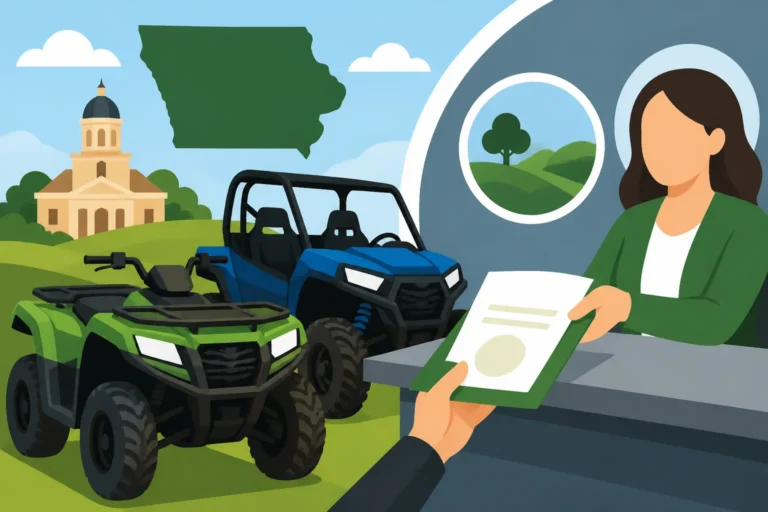
When you arrive at the county recorder’s office, you’ll typically be asked to fill out an application for title and registration. This form will ask for details about your machine, such as its make, model, year, and most importantly, its Vehicle Identification Number (VIN) or serial number. For a hunting quad, this is usually found stamped into the frame. Be sure to have this number handy, as it’s crucial for accurate record-keeping. You’ll also declare the purchase price for sales tax purposes. The recorder's office will calculate any applicable sales tax, the title fee, and the registration fee. You'll pay these fees right there, typically with cash, check, or sometimes a debit/credit card (though it's always wise to check their accepted payment methods beforehand). They'll issue you a temporary registration and a receipt on the spot. Your official decal and registration card will then be mailed to you. You can find more details on this process by reading [Registering at an Iowa County Recorder].
Getting Your Decal and Carrying Your Certificate
After you've completed the registration process and paid the fees, the county recorder will process your application. You won't walk out with the physical decal immediately. Instead, your official registration decal and registration certificate will be mailed to you, usually within two weeks. Once you receive the decal, you’ll need to mount it in a visible location on the rear of your hunting quad. The specific placement is important; Iowa law requires it to be clearly visible. It’s a good practice to take a moment to ensure it’s securely affixed and won’t easily peel off during your rides through brush or bad weather. Additionally, you must carry the registration certificate on your person or on the ATV itself whenever you are operating it. This is not optional. A clear plastic pouch attached to the handlebars or tucked into a waterproof storage compartment is a great way to ensure it’s always with the machine. [A Decal on the Rear of an Iowa Machine] and [Carrying the Certificate on an Iowa Ride] offer further guidance on these critical steps.
Key Documents You'll Need for Your Hunting Quad Registration
To ensure a smooth registration process for your hunting quad, gathering the necessary documents before you head to the county recorder's office is paramount. Missing even one piece of paperwork can lead to frustrating delays.
Proof of Ownership: Title or Bill of Sale
This is the most critical document. If you're buying a new quad from a dealer, they will typically handle the initial paperwork, but you'll still need to visit the recorder to finalize it. If you're buying a used hunting quad from a private seller, you'll need the original Iowa title, properly signed over to you by the previous owner. If the machine has never been titled in Iowa (perhaps it's an older model from a state that didn't title ATVs, or was used strictly on private land by previous owners), you'll need a properly executed bill of sale. A detailed bill of sale should include:
- The full names and addresses of both the buyer and the seller.
- A clear description of the ATV (make, model, year, color).
- The Vehicle Identification Number (VIN) or serial number.
- The purchase price.
- The date of sale.
- Signatures of both parties.
For those needing a reliable template, resources like LawDepot offer customizable bill of sale forms that can ensure all the necessary legal information is included. Using a structured form from a service like LawDepot can help prevent issues down the line by providing a clear record of the transaction. You can learn more about this by checking out [Iowa ATV Bill of Sale Requirements].
Sales Tax Information and Payment
As mentioned earlier, Iowa collects sales tax on all ATV purchases, even private sales. The tax rate is 6% state sales tax, plus any applicable local option sales tax, which is typically an additional 1% in most counties, bringing the total to 7%. When you register your hunting quad, you'll declare the purchase price, and the county recorder will collect this tax. You'll need to be prepared to pay this amount along with your title and registration fees. If you traded in another machine, bring documentation of the trade-in, as this can reduce the amount of sales tax you owe.
Identification and Payment for Fees
You'll need a valid form of personal identification, such as an Iowa driver's license or state ID, when you go to the recorder's office. This confirms your identity as the new owner. As for payment, be ready for the various fees:
- Title Fee: There's a set fee for issuing the ATV title.
- Registration Fee: This is the annual fee for the decal.
- Writing Fee: A small administrative fee for processing the paperwork.
- License Agent Fee: Another small fee that goes to the county recorder's office for their service.
- NRC Administration Fee: A fee that contributes to the DNR's administrative costs.
It’s always a good idea to call your county recorder’s office ahead of time to confirm their exact accepted payment methods and current fee amounts, as these can sometimes vary or be updated. For a comprehensive breakdown, consider reading [Iowa ATV Registration Cost] and [Iowa ATV Title Cost].
Here’s a quick overview of common documents and items needed:
| Document/Item | Purpose | Where to Get It / What to Prepare |
|---|---|---|
| Proof of Ownership | Establishes you as the legal owner | Previous title (signed over) or Bill of Sale |
| Bill of Sale (if no title) | Legal record of private purchase for tax/ownership | Seller, or use a template from LawDepot |
| ATV VIN/Serial Number | Unique identifier for your machine | Stamped on ATV frame (bring photos if needed) |
| Purchase Price Details | For calculating sales tax | Your purchase agreement or verbal agreement |
| Valid Photo ID | Verifies your identity as the buyer | Driver's License or State ID |
| Payment for Fees/Tax | To cover title, registration, and sales tax costs | Cash, check, or debit/credit card |
Beyond Registration: Important Rules for Hunters Using ATVs in Iowa
Getting your hunting quad registered is a fantastic first step, but the journey doesn't end there. Iowa has specific rules for how and where ATVs can be used, especially when it comes to hunting and public land. Understanding these regulations will help you avoid fines and ensure a safe, enjoyable hunting season.
Riding on Public Roads and Land for Hunting Access
One of the biggest areas of confusion for hunters is using ATVs on public roads or to access public hunting grounds. While Iowa has specific rules allowing ATVs on certain public roads, these rules are often strict and have requirements. Generally, ATVs can be operated on unpaved county secondary roads. Some counties may also authorize paved secondary roads, and some cities may open their streets. However, primary highways and interstates are typically off-limits. If you're going to use your registered hunting quad on a public road, even for a short distance to get to a hunting spot or cross a property line, you must:
- Be at least 18 years old and hold a valid driver's license.
- Operate the ATV under 35 mph.
- Have headlights on, even during the day.
- Carry proof of liability insurance with minimum coverage.
- Have a rearview mirror and a horn.
- Display a slow-moving vehicle triangle on the rear if traveling on the shoulder.
It's crucial to remember that these rules are for road use, not for off-road travel on public lands unless specifically designated. Many public hunting areas, like state wildlife management areas, have strict rules about ATV use, often limiting them to designated trails or for specific game retrieval purposes only. Always check with the specific land manager (e.g., Iowa DNR, county conservation board) for their ATV policies before you ride. For more on this, consult [Iowa Rules for Riding a Gravel Road] and [Are ATVs Street Legal in Iowa?].
Carrying Firearms and Retrieving Game
Using an ATV during hunting season comes with its own set of rules, particularly concerning firearms. While you can certainly transport a firearm on your hunting quad, it must be unloaded and encased. This means no loaded firearms visible or easily accessible while you're operating the ATV. The casing requirement applies whether you are on public or private land. The idea is to separate the act of operating the vehicle from the act of hunting.
For game retrieval, ATVs can be incredibly useful. However, just because you've harvested an animal doesn't give you free rein to ride anywhere you want. On public lands, there are often specific regulations about where you can drive off-trail for game retrieval. Always confirm these rules with the local DNR office or the specific hunting area's regulations. On private land, you have more leeway, but always operate responsibly to avoid damaging habitat or creating unnecessary ruts. Understanding [Iowa Rules for Carrying a Firearm on an ATV] is essential for any hunter.
Safety and Environmental Considerations
Beyond the legalities, responsible ATV use during hunting season also includes safety and environmental awareness. Always wear appropriate safety gear, especially a helmet, even though Iowa law doesn't mandate helmets for adults on roads (they are highly recommended on trails and off-road). Be mindful of your impact on the environment; avoid riding through sensitive areas, wetlands, or areas where you could spread invasive species. Hunting season often means wet, muddy conditions, so be aware of how your riding affects trails and access points. A little foresight can go a long way in preserving access and ensuring a positive experience for everyone.
Registering your hunting quad is a fundamental part of responsible ATV ownership in Iowa. It not only ensures you're legally compliant but also contributes to the resources that make Iowa a great place for ATV enthusiasts and hunters alike. By understanding the process and adhering to the rules, you can focus on enjoying your time in the great outdoors.
Disclaimer
This article is for general informational purposes only and does not constitute professional advice. Laws, prices and regulations vary by location and change over time. Consult a qualified professional for guidance on your specific situation.