Iowa Registration for a Youth Machine
It's incredibly exciting to introduce a young rider to the world of ATV and UTV adventures, but the moment that shiny new (or new-to-you) youth machine rolls into the driveway, a flurry of questions often follows. Many parents wonder if these smaller quads and side-by-sides need to be registered and titled just like their full-sized counterparts, or if there's some kind of special exemption for kid-friendly models. This guide aims to clear up all that confusion, walking you through the ins and outs of getting your youth machine legally ready for the trails here in Iowa.
Understanding Iowa's Youth Machine Landscape
Bringing home a new off-highway vehicle (OHV) for a young family member is a big moment, full of anticipation for outdoor adventures. But before you hit the dirt, there’s often a nagging question in the back of a parent's mind: "Does this smaller machine, designed for kids, really need to go through all the same hoops as an adult ATV?" It’s a common misconception that youth machines might be exempt from registration or titling requirements simply because of their size or the age of their primary operator. In Iowa, however, the rules are fairly consistent across the board for most OHVs that will be ridden off private land.
What Qualifies as a "Youth Machine" in Iowa?
When we talk about "youth machines" in Iowa, we're generally referring to ATVs, UTVs, or dirt bikes that are specifically designed and marketed by manufacturers for younger riders. These machines typically feature smaller engines, often with throttles that can be limited, and have a lighter, more compact chassis. They might have a lower top speed, reduced suspension travel, and safety features tailored for less experienced operators. However, it's important to understand that Iowa's off-highway vehicle laws don't draw a hard line for registration purposes based solely on the vehicle's "youth" designation or engine size. If a machine meets the general definition of an ATV, UTV, or off-road motorcycle, and it's going to be operated anywhere beyond your own private property, it will likely need to be registered.
For example, a Polaris Outlaw 90 or a Honda TRX90, while clearly designed for kids, are still considered ATVs by the state. The same goes for many smaller, entry-level side-by-sides. The state is more concerned with the type of vehicle and where it will be ridden, rather than the specific age group it's intended for. This means that even a pint-sized quad with training wheels could technically fall under the same registration requirements as a powerful sport ATV if it's going to be used on public trails.
Why Youth Machines Need Registration in the First Place
The idea of registering a small machine for a child might seem like an extra step, but there are some very good reasons why Iowa requires it. Primarily, registration helps fund the very trails and programs that make off-road riding enjoyable and safe for everyone, including young riders. When you register an OHV, a portion of those fees goes directly into the state's OHV fund. This fund is crucial for maintaining existing trails, developing new riding areas, and supporting educational and safety programs across Iowa. Without these funds, the trail systems we all enjoy would quickly deteriorate or simply wouldn't exist.
Think about it this way: the registration decal on your child’s machine isn't just a sticker; it's an investment in their riding future. It's what helps pay for trail grooming at places like Gypsum City OHV Park, signage, and even land acquisition for future riding opportunities. Beyond funding, registration provides a mechanism for the state to track ownership and promote responsible use. It ensures a basic level of oversight for vehicles operating in public spaces, contributing to safety and accountability. When incidents occur, having registered machines makes it easier to identify owners and ensure proper procedures are followed. It's all part of creating a structured and safer environment for the entire off-road community, from the youngest beginner to the most seasoned veteran.
The Core Registration Process for a Youth Machine
The process of registering a youth machine in Iowa isn't dramatically different from registering a full-sized ATV or UTV. The biggest hurdle many parents face is simply knowing what paperwork to bring and where to go. It can feel a bit like a treasure hunt trying to gather all the right documents, but with a little preparation, it's a straightforward process that will get your young rider out on the trails legally.
Gathering Your Essential Paperwork
Before you even think about heading to the county recorder's office, you need to arm yourself with the right documents. The absolute cornerstone of your registration journey is proof of ownership. For a brand-new youth machine purchased from a dealer, this will typically be a Manufacturer's Statement of Origin (MSO) or a Manufacturer's Certificate of Origin (MCO). This document is essentially the "birth certificate" for your ATV or UTV, verifying that it's new and who the first owner is. The dealer should provide this to you at the time of purchase. Make sure to keep it in a safe place!
If you're buying a used youth machine, the critical document is the previously issued Iowa title. Unlike some other states or vehicle types, Iowa requires titles for all off-highway vehicles, regardless of age or size, that are transferred between owners. [Why Iowa Titles Every Transferred Machine] This means that even if you're buying a small quad from a neighbor for your child, you need that signed-over title in hand. Along with the title, a properly executed bill of sale is highly recommended. While it might not always be legally required for registration itself if you have a clear title, a bill of sale acts as a strong record of the transaction, detailing the buyer, seller, price, and machine specifics. This can be invaluable for protecting yourself and proving ownership. Websites like LawDepot offer easy-to-use templates for creating a comprehensive bill of sale, ensuring all the necessary details are included and making the private sale process smoother and more secure. Don't forget, you'll also need to fill out an Iowa Off-Highway Vehicle Registration Application, which you can usually get from the county recorder's office or sometimes download from the Iowa DNR website.
Navigating the County Recorder's Office
Once your paperwork is in order, your next stop is your local county recorder's office. This is the primary point of contact for all OHV registrations and titling in Iowa, not the DMV or Iowa DOT. [Why a County Recorder and Not the DMV] It can be a little confusing if you're used to doing vehicle registrations elsewhere, but the county recorder handles all off-highway vehicle paperwork. You'll go to the office in the county where you reside. When you arrive, be prepared with all your documents: the MSO/MCO or signed-over title, your bill of sale (if you have one), and your completed registration application. You'll also need a valid form of identification.
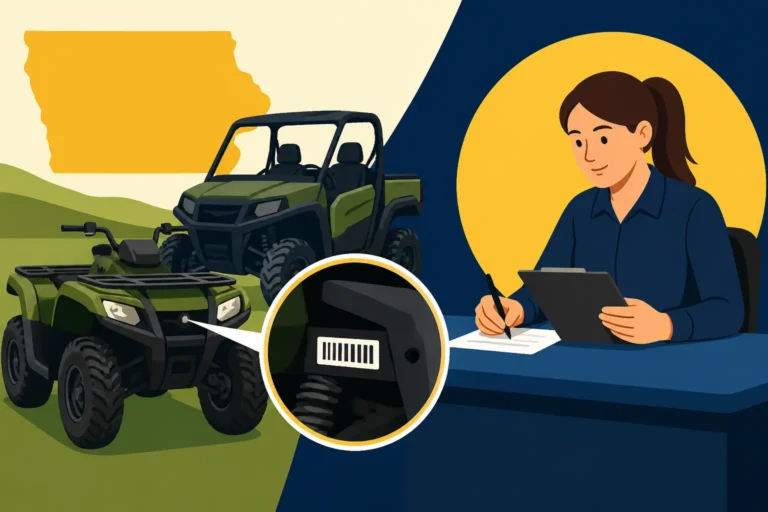
The staff at the recorder's office are generally very helpful, but it’s always best to be prepared for any questions they might have. They'll review your documents, verify the vehicle information (including the VIN or serial number, so have that handy!), and process your payment for the registration and titling fees. They will collect Iowa sales tax, even on private sales, so be ready for that as well. [Iowa ATV Sales Tax on a Private Sale] Once everything is processed, they’ll issue you a temporary registration and often your new title right on the spot, or it will be mailed to you shortly. You'll also receive your registration decal, which needs to be affixed to the rear of the machine. [Where the Iowa Decal Mounts] Don't be surprised if the full process takes a little time, especially if the office is busy, so try to go during off-peak hours if possible.
Specific Considerations for Youth Machine Titling
Titling an off-highway vehicle often feels like the more formal step in the ownership process, distinct from just getting a yearly registration sticker. For parents getting a youth machine, understanding the nuances of titling is crucial, especially when it comes to eventual resale or proving ownership definitively. Iowa's approach is quite clear: if it's an OHV, it needs a title.
Does a Youth Machine Need a Title in Iowa?
The short answer is a resounding yes. In Iowa, any ATV, UTV, or off-road motorcycle that is new or being transferred between owners must be titled. This isn't just for the big, powerful machines; it applies equally to youth models. The state doesn't differentiate between a 90cc quad for a 10-year-old and an 800cc UTV for an adult when it comes to titling requirements. [Titling an ATV in Iowa]
A title serves as the ultimate legal proof of ownership. It's a permanent document that establishes who the rightful owner of the machine is. Without a title, transferring ownership in the future becomes incredibly difficult, if not impossible, from a legal standpoint. Imagine trying to sell your child's outgrown quad years down the road, only to find you can't because you never properly titled it when you bought it. You'd have a very hard time proving you even own it. Moreover, if your machine is ever stolen, the title is paramount for recovery and for your insurance claims. It’s a foundational piece of ownership documentation that protects you, the buyer, and any subsequent owners down the line.
Transferring Ownership of a Used Youth Machine
Buying a used youth machine is a popular and economical choice for many families, but it comes with its own set of responsibilities, particularly concerning the transfer of ownership. The most critical step here is ensuring you receive a properly executed title from the seller. The seller must sign the existing title, typically on the back, and usually requires notarization. Without this signed title, you won't be able to register the machine in your name at the county recorder's office.
Beyond the title, a comprehensive bill of sale is paramount, even for informal private sales. This document should clearly identify both the buyer and seller, the purchase price, and a detailed description of the youth machine, including its Vehicle Identification Number (VIN) or serial number. A bill of sale protects both parties by documenting the terms of the transaction and can be particularly helpful if any disputes arise later. For instance, if the seller claimed the machine had no issues but you discover a hidden problem shortly after purchase, a bill of sale provides a clear record of the transaction date and terms. You can find excellent templates for creating a legally sound bill of sale on reputable sites like LawDepot, which helps ensure you haven't overlooked any crucial details. It's always a good idea to complete this document even if you're buying from a friend or family member, as it formalizes the transaction and protects everyone involved. [Iowa ATV Bill of Sale Requirements]
Costs and Renewals for Your Young Rider's ATV/UTV
Just like any other vehicle, there are ongoing costs associated with owning and legally operating a youth ATV or UTV in Iowa. These aren't just one-time fees; you'll need to budget for annual renewals to keep your child's machine legal on public trails. Understanding these financial aspects upfront helps avoid any unpleasant surprises down the road, allowing you to focus on the fun rather than the paperwork.
Breaking Down the Registration and Titling Fees
When you register and title a youth machine in Iowa, you're looking at a few different components that make up the total cost. First, there's the initial titling fee. This is a one-time charge to establish legal ownership of the machine. [Iowa ATV Title Cost] Then, there's the annual registration fee. This is what you'll pay each year to keep the machine's registration current and receive your yearly decal. Iowa's registration fees are quite reasonable and are crucial for supporting the state's OHV trail system. You might also encounter a small writing fee or agent fee when processing your paperwork at the county recorder's office. [The $2 Writing Fee on Every Registration]
Beyond these, remember that Iowa collects sales tax on the purchase price of the machine, whether it's new from a dealer or used from a private seller. This use tax is collected by the county recorder's office at the time of initial registration and titling. For a small youth machine, these costs are typically much lower than for a car, but they still add up. It’s always a good idea to call your local county recorder's office beforehand to get the most current fee schedule and confirm what you'll need to pay. This way, you can arrive prepared with the correct amount, whether in cash or check, to avoid any delays.
Keeping the Registration Current
An Iowa ATV or UTV registration is not forever; it expires annually. Specifically, all Iowa OHV registrations expire on December 31st of each year. [When an Iowa ATV Registration Expires] This means you'll need to renew your youth machine's registration to keep it legal for the following year. The good news is that Iowa offers a convenient renewal window, typically opening in September, allowing you a few months to get it done before the new year. [Iowa's September to December Renewal Window]
You have a couple of options for renewing your registration. Many riders prefer to renew online through the Iowa DNR's licensing and registration system, which is usually the quickest and easiest way. [Renewing an Iowa Registration Online] You simply input your machine's information, pay the fees, and your new decal will be mailed to you. The other option is to visit your county recorder's office in person. This can be beneficial if you have questions or need assistance with your renewal, or if you simply prefer face-to-face interaction. It’s vital not to let the registration lapse, as operating an unregistered machine on public land can result in fines and penalties. [Iowa's Late Registration Penalty] Always check that new decal arrives and gets properly mounted on the rear of your child's machine before their next ride out.
Beyond Registration: Safety Certificates and Riding Rules
Getting your youth machine registered and titled is a fantastic first step, but it's only part of the equation for ensuring safe and legal riding in Iowa. For young riders, there are additional requirements and rules designed to promote safety and responsible operation. These cover everything from mandatory safety education to where and how a child can legally operate their off-road vehicle.
The Mandatory Safety Certificate for Young Riders
Safety is paramount, especially when introducing children to OHV riding. Iowa takes this seriously, requiring a mandatory safety certificate for most young riders. If your child is between 12 and 17 years old and plans to operate an ATV, UTV, or off-road motorcycle on public land, they must possess a valid Iowa DNR Off-Highway Vehicle Safety Certificate. [Iowa ATV Safety Certificate Requirements] This certificate signifies that they've completed an approved safety course and have a foundational understanding of safe riding practices, regulations, and basic machine operation.
The course can typically be taken online, offering a convenient way for busy families to complete the education. These courses cover essential topics like proper riding gear, environmental stewardship, hazard awareness, and understanding trail signs. While there isn't a mandatory "riding day" component for the Iowa certificate, the online curriculum is designed to impart crucial knowledge. Once they pass the course and pay a small fee, they'll receive their official certificate. It's important for them to carry this certificate with them whenever they're riding on public land. Even if your child is under 12, while not required to have the certificate, they must be under the direct supervision of a licensed, experienced adult when riding off private property. [Iowa Supervision for Riders Under 12] This emphasis on education and supervision is critical for preventing accidents and ensuring that young riders develop good habits from the start.
Where Your Youth Machine Can Legally Ride in Iowa
Once your child's youth machine is registered and they have their safety certificate (if applicable), the next big question is: where can they actually ride? The short answer is primarily on designated OHV parks and trails, or on private land with permission. Iowa has a robust system of off-highway vehicle parks, like the popular Gypsum City OHV Park near Fort Dodge or Bluff Creek OHV Park in Eddyville. These parks are specifically designed for OHV use and offer a variety of trails suitable for different skill levels, including youth areas. [Where to Ride an ATV in Iowa] Your Iowa registration decal essentially acts as your admission to these state-managed parks.
However, riding on public roads or other public lands (like wildlife management areas) is generally restricted or entirely prohibited. While some counties and cities have opened certain secondary gravel roads or city streets to OHV use, these regulations are very specific and often come with age restrictions (usually 18 and older) and other requirements like insurance and lighting. [Are ATVs Street Legal in Iowa?] It's critical to research local ordinances before attempting to ride on any public road. For youth riders, sticking to designated OHV parks or private land with explicit permission is always the safest and most legal option. Riding on private land does not require registration, but permission from the landowner is absolutely essential to avoid trespassing. Always respect property boundaries and landowner wishes, ensuring that the adventures on their youth machine are fun, safe, and legal.
| Feature | Youth Machine (e.g., 90cc ATV) | Adult Machine (e.g., 500cc ATV) | Key Differences/Similarities |
|---|---|---|---|
| Registration Required | Yes, for public land use | Yes, for public land use | Same requirement for both. |
| Titling Required | Yes, for ownership transfer | Yes, for ownership transfer | Same requirement for both. |
| Annual Renewal | Yes, by Dec 31st | Yes, by Dec 31st | Same renewal period. |
| Safety Certificate | Required for ages 12-17 | Not required for adults (18+) | Age-specific requirement. |
| Supervision (Under 12) | Mandatory for public land use | N/A (adult operators) | Parental/adult supervision crucial. |
| Sales Tax | Yes, collected at registration | Yes, collected at registration | Applied to all OHV sales. |
| Decal Placement | Rear of machine | Rear of machine | Same placement rule. |
| Road Use | Generally prohibited for minors | Restricted, specific rules for 18+ | Age restriction for public roads. |
| Trail Access | Designated OHV Parks | Designated OHV Parks | Both use the same OHV parks. |
Disclaimer
This article is for general informational purposes only and does not constitute professional advice. Laws, prices and regulations vary by location and change over time. Consult a qualified professional for guidance on your specific situation.