Volunteers Who Cut the Trails You Ride
Iowa’s ATV trails don’t clear themselves after a storm, and a rideable loop takes more than someone with a chainsaw. Volunteers help plan routes, remove hazards, manage water, post signs and report damage—often when riders never see the work happening. This guide explains what trail volunteers do, why their work matters and how riders can support it at Iowa’s off-highway parks.
What Iowa trail volunteers do
Trail work starts before anyone cuts a branch
Clearing a trail is only one part of keeping it open. Before work begins, volunteers and park managers need to understand where a route goes, what obstacles or drainage problems are present, and whether the proposed work fits the land and park rules. A path that looks like an obvious shortcut may cross sensitive ground or create a new erosion problem.
That planning matters in Iowa, where wet weather can quickly change trail conditions. Clay soil that seems firm one weekend may turn slick or hold deep ruts after rain. A volunteer crew may need to check the trail before deciding whether it is safe to work on—or whether the area should stay closed until it dries. The same conditions that make riding difficult can also make maintenance equipment damage the trail.
Volunteers may also help mark routes, check signs and flag places that need attention. Their observations can be valuable because they spend time on the ground, but route changes and closures should still follow the park operator’s direction. Before relying on a map or a familiar route, check [Iowa Trail Maps From the DNR] and the park’s own posted information.
Clearing, drainage and signs all count as maintenance
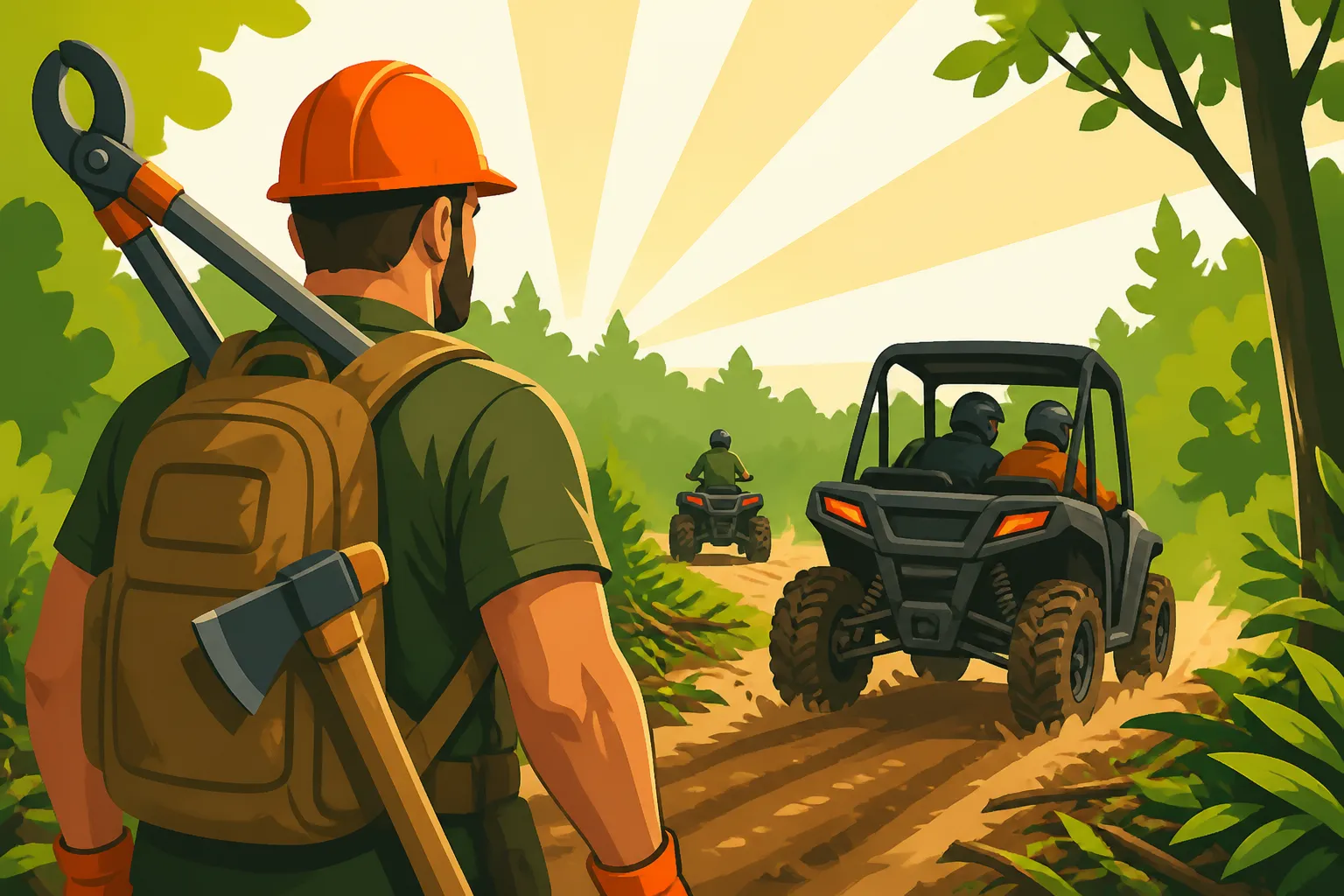
When people picture trail work, they often imagine a crew cutting fallen limbs. That is part of the job, but it is not the whole job. Volunteers may remove brush that blocks a route, move small debris, report downed trees that require equipment, and help keep trail markers visible. The goal is a clearly defined route—not a wider trail or a new path created wherever a rider can squeeze through.
Water management is just as important. If rainwater runs down the trail instead of away from it, it can wash out soil and deepen ruts. Crews may address drainage concerns through methods approved by the land manager, such as improving how water leaves a route or identifying a spot that needs professional attention. The right fix depends on the site; an improvised ditch can send water somewhere it causes even more damage.
Signs are another easily overlooked part of the work. A faded marker or missing direction sign can send riders off course, especially at a junction or in unfamiliar terrain. At parks such as Gypsum City near Fort Dodge, Bluff Creek near Eddyville, and Nicholson-Ford near Marshalltown, riders should follow the signs and designated routes they encounter rather than assuming a trail is open because it looks rideable. Learn how the parks differ in [Iowa's Eight Designated OHV Parks].
Why volunteer work matters to riders
Good maintenance protects trails and keeps routes usable
A well-maintained trail is easier to follow and less likely to surprise a rider with an avoidable obstruction. That benefits beginners, families and experienced riders alike. When signs are clear and hazards are reported, riders can make better decisions about where to go and when to turn back.
Maintenance also helps protect the ground the trails cross. Riding outside a marked route can widen a trail, damage vegetation or create new channels for water. Even a short detour around a muddy patch can become a second track if many riders repeat it. Staying on the marked route is a practical way to reduce the amount of repair volunteers and land managers must handle later.
Conditions can change faster than a trail map. A route that was open on your last visit may be closed after heavy rain, while a tree may come down between maintenance checks. Before loading the trailer, review [Iowa Trail Conditions Before You Ride] and [Iowa Trail Closures to Check First]. If you use a mapping app such as onX Offroad to plan or record a ride, treat it as a navigation aid—not confirmation that a route is currently open or that riding is permitted there.
Closures can be part of responsible trail care
A closed trail can feel frustrating, especially after you have driven a long way. But when soil is saturated, repeated tire traffic can leave deep ruts and make later repairs more difficult. A temporary closure may give the ground time to dry and help prevent a manageable wet spot from turning into a longer-lasting damaged section. [Why Iowa Closes Parks for Wet Trails] explains why weather can affect access.
A closure may also reflect a safety issue, a maintenance project or a concern identified by the park operator. The reason is not always visible from the parking lot. Riders should check official park notices rather than guessing that a gate is closed “just in case” or taking an unofficial route around it.
| What riders notice | Why it may matter | A responsible response |
|---|---|---|
| A muddy or deeply rutted section | The trail may be too wet for traffic | Turn around or follow posted directions |
| A downed tree | The route may be obstructed or unsafe | Report it to the park operator |
| A missing or unclear marker | Riders may accidentally leave the designated route | Stop, check the map and ask park staff |
| A closed gate or posted notice | Access may be restricted for safety or repair | Do not bypass the closure |
| Fresh trail work | Equipment or unfinished ground may be present | Give the area space and follow signs |
Riding around a barrier can undo work that has already been done and put riders in an area that has not been cleared or checked. If a route looks damaged, avoid making it worse and report what you saw. For more on the consequences of riding on vulnerable ground, see [Trail Damage From Riding Too Wet].
How Iowa riders can support trail volunteers
Help without creating more work
The simplest way to support a volunteer crew is to ride only where the park allows, respect closures and avoid widening the trail. If a branch is lying across a route, do not assume it is safe to move it yourself. A small limb may be manageable, but a heavy tree, a damaged sign or an unstable slope can require trained people and proper equipment. Report the issue through the park’s established contact method.
Accurate reports are more useful than vague ones. Note the park, the nearest sign or trail junction, and what the problem looks like. If you can safely describe whether the obstruction blocks the whole route or only part of it, that helps the operator assess the report. Do not step into a closed area or ride off trail just to get a better look.
You can also help by sharing current, practical information with the people you ride with. Remind a group that a route is closed, point out a marked detour and discourage “just one pass” through a wet section. Apps such as onX Offroad can help riders organize a route or keep track of where they have been, but park signs and official closure information take priority. A saved track does not replace permission or current trail-status checks.
Join a club or volunteer effort through the park
Riders who want to do more can ask the park operator or an associated riding organization whether volunteer workdays are available. The exact work, schedule, tools and safety requirements vary by location, so it is better to ask before showing up with equipment. A park may need help with sign checks one day and clearing debris another; it may also require volunteers to work under an approved plan.
Iowa parks operate through a mix of local organizations and public partners. That means the people coordinating trails can differ from park to park. [Why Iowa Parks Are Run by Clubs and Counties] offers helpful context on why local groups and county involvement matter. If you are interested in supporting a club, ask what kind of help is useful beyond trail work. Communication, event support and reporting problems can also contribute.
Some organized trail projects may rely on funding or grants as well as volunteer labor. Riders involved with a club can ask how projects are selected and whether the organization is pursuing support for improvements. [How a Club Applies for DNR Trail Money] provides more detail about that process. Even if you are not ready to volunteer, following the park’s rules and encouraging others to do the same is meaningful support.
Preparing for a ride and respecting the work
Check conditions before you make the drive
A good ride plan includes more than choosing a park. Check whether the park is open, whether weather may affect the trails and whether any routes have restrictions. This is especially useful when driving across Iowa to a destination such as Gypsum City, Rathbun or Paul Huting Recreation Area near Waterloo. A quick check before departure can save a long drive to a closed gate.
Use maps to understand the general area, but don’t treat a digital line as proof that a trail is open. onX Offroad may be useful for organizing navigation, yet the park’s current signs and official information should guide your decision on the ground. If the digital route conflicts with a closure sign, follow the sign and contact the park operator if you need clarification.
Have a backup plan, too. If your intended park is closed or conditions are unsuitable, do not try to find an unapproved trail nearby. Look for another destination that is open and permits your machine, or reschedule. [Where Iowa Riders Go When Parks Close] can help you think through alternatives without turning a closure into a reason to ride somewhere unauthorized.
Leave the trail ready for the next person
After a ride, take a moment to consider whether anything needs to be reported. Was there a new obstruction, a confusing junction or a section that seemed unusually soft? A clear, timely report can help the park operator decide what to inspect. Avoid posting unverified claims that a route is open or closed; conditions can change, and other riders may rely on what you share.
Treat volunteers and park staff as partners in keeping access safe and sustainable. If you see a crew working, slow down, follow their instructions and give them room. Do not ride through an active work area or assume that a freshly cleared trail is ready for immediate use. Maintenance may still be underway, and a temporary sign may have been placed for a reason.
The trails riders enjoy are shaped by local knowledge, careful maintenance and everyday choices. Volunteers can clear hazards and improve routes, but riders help determine how long that work lasts. Staying on designated trails, checking conditions and respecting closures are small actions that protect the experience for everyone who visits Iowa’s riding areas.
Disclaimer
This article is for general informational purposes only and does not constitute professional advice. Laws, prices and regulations vary by location and change over time. Consult a qualified professional for guidance on your specific situation.