Blaze Orange on an Iowa Park Trail
A fall ride can put you on the trail while hunters are active nearby, and a dark jacket or muddy machine can make you harder to spot than you think. Blaze orange is a simple way to improve visibility on an Iowa park trail. Here’s when to wear it, how to use it safely, and why it never replaces checking local rules and trail conditions.
Why blaze orange matters on an Iowa park trail
Visibility helps when trails and hunting seasons overlap
Iowa’s riding season can overlap with hunting activity, especially in fall. Even when you’re riding at a designated OHV park rather than hunting land, nearby woods, fields, or public areas may be active. Blaze orange gives other people a bright, recognizable patch of color to notice through brush, changing light, dust, or a busy trail setting.
It can also help your riding group keep track of one another. Think about a wooded bend at Gypsum City or a crowded staging area before a ride at Bluff Creek. A rider wearing brown, black, or camouflage can blend into the background when they stop beside a tree or step away from the machine. An orange vest or jacket is easier for a riding partner to pick out.
Orange is useful, but it is not a force field. A rider can still be difficult to see around a blind corner, on a narrow trail, or in low light. Ride at a speed that lets you respond to what’s ahead, stay on marked routes, and leave enough space between machines for dust and sudden stops.
For a wider look at seasonal considerations, see Iowa Riding in Hunting Season. The important point is to plan for the surroundings, not just the trail surface: hunting activity, other riders, weather, and visibility can all affect how safely a ride unfolds.
Blaze orange is a precaution, not a substitute for checking rules
Don’t assume that every Iowa OHV park has the same blaze-orange rule. A designated riding area, a wildlife area, and private property can have different access rules and activities. Whether orange is required depends on the applicable rules for the place and activity; wearing it voluntarily is a practical visibility choice, but it does not tell you whether a trail is open to riding.
Before loading your machine, check the park’s posted rules and any current notices. If your route leaves a designated OHV park or passes near other land, confirm that riding is allowed there. Iowa Rules for Riding a Designated Riding Area and [Iowa Rules for Riding a Wildlife Area] cover two situations riders shouldn’t treat as interchangeable.
A map can help you prepare, but it cannot grant access or override a closure. If you use onX Offroad to plan, treat it as one planning aid: compare what you see with official park information and signs at the entrance. For Iowa’s designated areas, Iowa’s Eight Designated OHV Parks is a useful starting point for understanding the difference between a managed riding park and other public land.
Choosing and wearing blaze orange gear
Wear orange where other people can see it
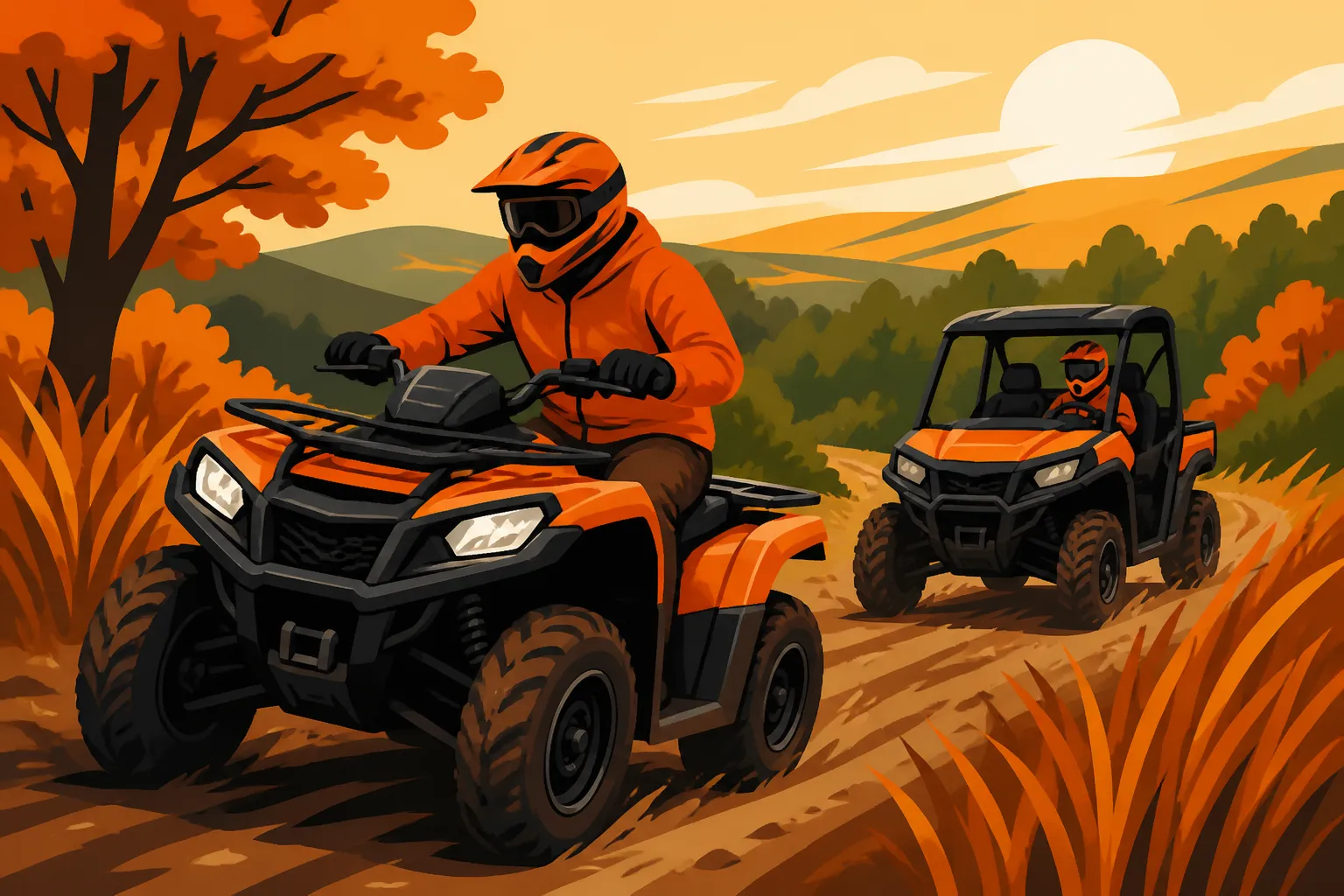
A high-visibility vest or jacket is often the simplest option because it puts orange on your upper body rather than hiding it behind a machine. A bright outer layer also remains visible when you step off the ATV or UTV to check a tire, talk with your group, or walk around the staging area.
If you already have riding gear, consider an orange vest or a bright orange panel that fits comfortably over it. Check that it doesn’t catch on branches, restrict your movement, or interfere with controls. A rider who feels cramped or distracted by loose gear may be less focused on the trail.
An orange helmet cover or backpack panel can add visibility, but don’t rely on a small patch alone. If you’re riding with children or a group, help each person choose something visible from multiple angles. A child’s orange layer should fit securely and comfortably; oversized clothing can snag or shift during a ride.
Think about the whole ride, not just the trail
You may be most visible while seated on the machine, but rides include stops, unloading, walking around camp, and regrouping at trail junctions. A vest that stays on through those moments can be more helpful than a small orange item attached to a machine and left behind when you dismount.
For UTV occupants, check that orange clothing is still visible with seat belts fastened and doors or nets in place. Avoid covering required lights, reflectors, or other equipment with loose fabric. If you add an orange flag or panel to a machine, mount it securely and make sure it cannot interfere with the rider, passenger, or moving parts.
A navigation app can help you keep your group on a planned route, but don’t let a screen take your attention away from riding. If you use onX Offroad to review a route, do that before you start or stop in a safe place. The same goes for checking a paper map or phone: pull over fully rather than studying it while moving.
| Visibility choice | Where it can help | What to check |
|---|---|---|
| Orange vest or jacket | On the machine and when walking nearby | Secure fit, comfort, and freedom of movement |
| Orange helmet cover or panel | Helps distinguish a rider in a group | It must not affect helmet fit or block visibility |
| Orange backpack or gear panel | Adds color while stopped or riding | Keep straps and loose material clear of controls |
| Machine-mounted orange panel or flag | Can make a machine easier to notice | Attach it securely and keep lights and equipment unobstructed |
Planning a safer ride during hunting season
Confirm the route and conditions before leaving
Start with the park or land manager’s current information. Trail access can change because of maintenance, weather, or other local conditions. Read posted notices at the entrance, and don’t assume that a route shown on an older map is open today. Iowa Trail Conditions Before You Ride and Iowa Trail Closures to Check First are useful reminders to verify conditions before making the drive.
Use Iowa Trail Maps From the DNR as part of your planning, and check the specific park’s information as well. If you use onX Offroad, compare the route you plan to take with official sources and signs on the ground. Mapping tools can support route planning, but they aren’t a replacement for permission, current closure information, or posted rules.
If you’re considering riding somewhere beyond a marked OHV park, pause to confirm that the land is open to your kind of riding. A trail that appears close to a park route may cross a boundary, a closed section, or land with different rules. When in doubt, stay on the authorized, marked route and contact the relevant park or land manager for clarification.
Make group habits part of your visibility plan
Before you start, agree on a lead rider, a tail rider, and a safe place to regroup if the group gets separated. Keep the group together at junctions, and don’t assume that the rider behind you can see around a curve just because you can see them in a straight line. A bright vest makes riders easier to spot, but spacing and clear communication matter just as much.
For family rides, give children simple instructions: stay with the group, stop only in a safe place, and tell an adult if they lose sight of the rider ahead. Choose gear that fits their machine and riding ability, and keep the route appropriate for the youngest or least experienced person. Iowa Trails Good for Kids can help you think about which riding environments may suit a family outing.
Also make sure everyone understands what to do if a machine breaks down. Move out of the active trail where possible, make the group visible, and avoid standing just over a blind crest or around a sharp corner. If you need to walk to get help, wear the orange layer rather than leaving it on the machine.
Common mistakes to avoid
Assuming orange makes an unauthorized route safe
Blaze orange improves visibility; it does not make riding legal where riding is prohibited. Wearing it doesn’t replace registration or other requirements, and it doesn’t authorize access to private property, wildlife areas, or closed trails. Confirm the route before you ride and follow signs once you arrive.
Likewise, don’t assume that seeing other riders on a route means it is open. Conditions and permissions can differ across neighboring properties. If you can’t confirm that a route is authorized, choose a marked trail at a designated riding area instead.
Treating a bright garment as a complete safety plan
An orange vest can help others see you, but it can’t compensate for poor visibility caused by dusk, fog, heavy dust, or a rain-darkened trail. Adjust your plans when visibility is poor, and use appropriate lights where required and appropriate for the conditions. Keep your speed under control and be prepared for other riders, hikers, or unexpected obstacles.
Finally, make sure your orange gear is clean enough to remain bright and in good condition. Mud, wear, and a dark layer thrown over the top can reduce its visibility. Put it on before the ride, check that it stays secure, and make visibility part of your group’s preparation—not an afterthought once you reach the trailhead.
Disclaimer
This article is for general informational purposes only and does not constitute professional advice. Laws, prices and regulations vary by location and change over time. Consult a qualified professional for guidance on your specific situation.