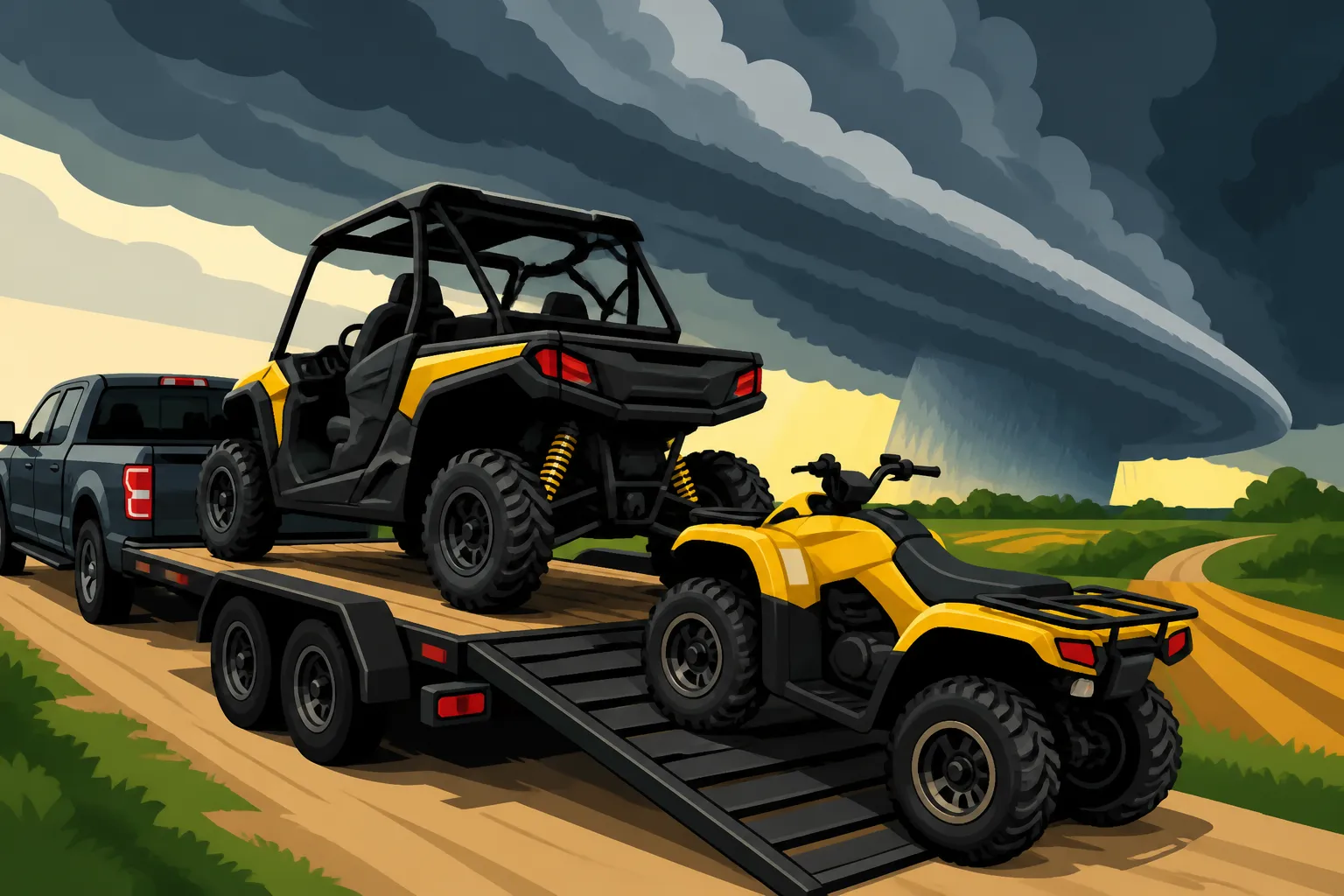
Loading Up Before an Iowa Storm
A storm forecast can turn an Iowa ATV or UTV trip into a wasted drive if you discover a closure, soaked trail, or unsafe ride after the trailer is already hooked up. A little planning before you load helps you check conditions, protect your machine, choose a backup destination, and decide when it’s smarter to stay home.
Check the forecast and trail status before loading
Look beyond the chance of rain
A forecast that says “scattered showers” doesn’t tell you everything you need to know. Check when the rain is expected, how long it may last, and whether thunderstorms or strong winds are part of the system. A brief shower after you’ve finished riding is a different planning problem from heavy rain arriving during your drive or while you’re on the trail.
Use a reliable weather forecast for both your starting point and the riding area. Conditions can vary across Iowa: a storm near Fort Dodge may not affect Eddyville the same way, and rain around Waterloo may leave a different trail picture than rain near Solon. If you’re traveling to Gypsum City OHV Park, Bluff Creek OHV Park, Paul Huting Recreation Area, or Lakeview OHV Park, check conditions near the destination rather than relying only on the forecast at home.
Think about the timing in practical terms. If thunderstorms are forecast for the middle of the afternoon, ask whether your group can finish and be back at the staging area well before they arrive. If the storm timing is uncertain, or your route would leave you riding far from the trailer when lightning starts, don’t treat the trip as a race against the weather. Build in enough margin to stop riding, get off the trail, and reach shelter safely.
Confirm closures through park or official updates
Rain can make a trail unsuitable even when the weather has cleared. Iowa’s clay-heavy ground can become slick, soft, and easily damaged. Parks and local operators may close trails or facilities when conditions are unsafe, so check the park’s own updates before leaving and again before unloading. For a broader checklist, see Iowa Trail Closures to Check First and Iowa Trail Conditions Before You Ride.
A map app can help you plan a route and see what’s nearby, but don’t treat a mapped trail as proof that it is open today. onX Offroad can be useful for reviewing your route and saving navigation information before you leave. Pair it with current information from the park or responsible land manager, especially when storms are in the forecast.
If the status is unclear, call the park or its operator before you load. Ask whether the riding area is open, whether any trails or facilities are restricted, and whether recent rain has changed access. Calling a Park Before You Load is a useful reminder that a quick call can save you a long drive with a trailer. For more on how wet weather affects riding, read Iowa Riding After Heavy Rain.
Decide whether the trip is still worth making
A trail that is technically open may still be a poor fit for your group on a stormy day. Consider how far you need to travel, whether you have children or newer riders with you, and how easily everyone can leave the riding area if weather worsens. A short local trip may be easier to change at the last minute than a full weekend away with campground plans and several machines.
Use a simple go-or-no-go check before departure:
| What you find | A sensible plan |
|---|---|
| Park confirms it is open and conditions are suitable | Load, but keep checking the forecast and leave time to finish early |
| Storms may arrive while you are riding | Shorten the ride, delay departure, or choose a different day |
| The park has closed trails or access | Follow the closure and choose a confirmed alternative |
| Conditions are unclear and you cannot reach the operator | Don’t assume the park is open; delay or make another plan |
| Heavy rain has left the ground soft or slick | Avoid riding and protect the trail from damage |
When in doubt, postponing is often less frustrating than arriving at a closed gate or trying to ride through deteriorating conditions. Check Checking Whether Three Parks Are Shut for a practical way to think about verifying more than one destination.
Prepare the machine and trailer for a stormy trip
Inspect the trailer, tie-downs, and tow vehicle
Storm preparation starts before the ATV or UTV goes on the trailer. Check that the trailer is properly connected, the lights work, the tires look sound, and the load is within the limits of your tow vehicle and trailer. Confirm that ramps are secure and that your tie-downs are in good condition. A sudden downpour on the highway is a poor time to discover a loose strap or a trailer light that has stopped working.
Load each machine so it sits securely and does not shift when you brake or turn. Use appropriate tie-down points and tighten straps evenly. After a short distance, pull over somewhere safe and recheck the load. Do the same if you drive through a hard rain or notice unusual movement behind the vehicle.
Before departure, consider what happens if the trip changes. Keep a tarp or suitable cover accessible, but don’t use one in a way that can flap loose or block lights and visibility. Bring tools for routine adjustments, a flashlight, and the equipment you normally use to secure a disabled machine. If a storm forces you to stop, park somewhere safe and legal rather than on a narrow shoulder or in a place where runoff is collecting.
Protect gear and plan for wet conditions
Keep phones, keys, documents, and spare clothing in waterproof bags or sealed containers. Pack rain gear where you can reach it without unloading the trailer. A dry layer for the ride home can make a big difference after a damp day, particularly if the group has been exposed to wind or cool rain.
Bring enough drinking water and basic supplies for a delay. A closed park, a slow drive through heavy rain, or a sudden change of plan can stretch the day longer than expected. If you’re traveling with children, make sure they have dry clothing and a warm layer that fits, rather than assuming they can share an adult’s spare jacket.
Prepare the machine for mud without assuming that mud makes every trail rideable. Check that the tires are in good condition and that any protective equipment, such as skid plates, is securely attached. After riding, clean mud from areas where it can build up and affect cooling or moving parts. If the ground is saturated, though, the best way to protect both the machine and the trail may be not riding at all. Iowa Clay That Turns to Grease explains why wet Iowa soil can change the character of a trail so quickly.
Save navigation information before you lose signal
Download or save the information you’ll need before leaving home: the park address, directions, contact details, and any route information relevant to your trip. Mobile reception can vary, and a dead zone is inconvenient when you’re trying to check a closure or find the right entrance.
onX Offroad can help you organize route information and keep a map available for navigation, but use it as a planning aid rather than a substitute for a park’s current notice. Save the park’s official contact details separately, and tell someone at home where you’re going and when you expect to be back. If you change destinations because of weather, let that person know too.
Avoid relying on a single phone for every task. A charged power bank can help, but keep paper notes or an offline map available for essential directions if practical. If a storm is close enough that you need to rush through setup or navigation, pause and reassess. Getting everyone to the right place safely matters more than squeezing in a short ride.
Make a backup plan before you leave home
Choose a second destination with current information
A backup park is useful only if you know it is open and accessible. Before loading, identify another riding area that could work for your group, then check its status and weather too. A destination an hour away may have better conditions, but it may also be under the same storm system. Use the forecast for each location rather than assuming that moving across the county will solve the problem.
Think through the practical details, not just the name of the park. Can your trailer reach the entrance safely in wet conditions? Is there room to turn around if the gate is closed? Are the riding areas suitable for your machine and your group’s experience? Are any necessary facilities available? If you’re considering a different part of the state, Picking a Backup Park an Hour Down the Road can help you make the alternative part of the plan before you need it.
onX Offroad may be useful for comparing possible routes or checking the area around a destination. Still, confirm access and riding status with the place responsible for the trail. A route appearing on a map doesn’t guarantee that it is open, legal to ride, or suitable after rain.
Set limits for changing or canceling the trip
Agree on a cutoff before departure. For example, decide that you will postpone if the park does not confirm its status, if thunderstorms are expected during your planned riding window, or if the forecast shifts earlier while you’re on the road. A shared decision made at home is easier than arguing in the parking area after everyone is tired and eager to unload.
Make sure every adult in the group understands the plan. If children are coming, explain that weather can change the outing and that a cancellation is about safety and trail care, not punishment. It can help to have a backup activity ready, such as a meal stop or a different family outing, so the day doesn’t feel like a total loss.
Be especially cautious with a weekend plan that includes camping. Check both trail status and the conditions for getting in and out of your campsite. A campground may be open while some riding trails are closed, or the reverse may be true. Confirm what the operator is actually allowing, and don’t assume that a reservation or a clear forecast from earlier in the week guarantees access. For trip planning around changing weather, see Iowa Trail Seasons and Conditions.
Ride only when conditions allow
Know when rain means it’s time to stop
If rain starts while you’re riding, pay attention to what the trail is doing, not just how wet you feel. Loose ground, standing water, poor visibility, lightning, and wind can all make a route more dangerous. Don’t continue simply because the group has already traveled a long way or because someone wants to finish one more loop.
Turn around or head for a safe stopping point before conditions make it difficult. Avoid riding into flooded areas or water covering a trail when you cannot judge its depth or what lies beneath. If thunder or lightning is nearby, get off the machine and seek appropriate shelter. An ATV or UTV does not protect you from a lightning strike, and an open trail is not a safe place to wait out a storm.
Use the park’s signs and instructions, and follow any closure immediately. A closed trail is not an invitation to find a way around a gate or ride a different route. Wet ground may be vulnerable to deep ruts and erosion, and riding around a closure can damage land or put you in an unsafe area. For a closer look at trail impact, read Trail Damage From Riding Too Wet.
Clean up, check the machine, and review the next trip
After a wet ride, inspect the machine before storing it. Remove packed mud from the tires, undercarriage, and cooling areas, and look for branches or debris caught around moving parts. Check for loose fasteners, damaged straps, and anything that may have shifted during the drive home. If the machine has been exposed to deep water, unusual noise, or a warning light, don’t assume it is fine simply because it still runs.
Clean your trailer too. Mud can hide damage and make ramps slippery the next time you load. Let wet gear dry fully before packing it away, and recharge phones, radios, and other equipment. Make a note of any items you ran short on so you can fix the problem before the next outing.
Finally, review what worked. Did you check the park status early enough? Was the backup destination realistic? Did the storm arrive sooner than expected? Small adjustments—like calling before departure, leaving earlier, or choosing a shorter riding window—can make the next Iowa trail day calmer and safer.
Disclaimer
This article is for general informational purposes only and does not constitute professional advice. Laws, prices and regulations vary by location and change over time. Consult a qualified professional for guidance on your specific situation.