The $34.95 Iowa Online Safety Course
The $34.95 Iowa online safety course is a way for eligible young ATV riders to earn a safety certificate without attending an in-person riding day. The important catch: passing the course is only one piece of riding legally. Machine type, age, location, registration and permit rules can still matter.
What the Iowa online safety course does
The Iowa online safety course teaches safety concepts and, when completed through an approved course pathway, allows eligible riders to earn an Iowa safety certificate. The course is not a registration application, a trail pass or permission to ride anywhere.
That distinction matters because several different requirements can apply to one ride. A rider may need a safety certificate because of their age and the machine they are operating, while the machine may separately need registration or a visitor permit. The landowner or riding area may also set access rules of its own.
| Requirement | What it addresses | What it does not replace |
|---|---|---|
| Safety course and certificate | Whether a rider in a covered age and machine category has completed required safety education | Registration, a nonresident permit, landowner permission or park rules |
| Iowa registration decal | Registration of a covered machine for use under Iowa rules | The operator’s safety certificate or permission to use private land |
| Nonresident user permit | Iowa authorization for a visiting machine when required | The rider’s home-state registration or any applicable safety certificate |
| Site or land permission | Whether riding is allowed at a particular property or trail | State registration, permit and operator requirements |
The course is also different from a hands-on riding class. The online option focuses on learning and passing the required assessment; it does not provide a practical riding day or prove that a student can safely handle every machine or trail condition.
For a broader overview of who must complete training and carry a certificate, see Iowa ATV Safety Certificate Requirements. If you are specifically looking for an approved course option, Where to Take an Iowa ATV Safety Course is the related topic.
The certificate is not a trail pass
An Iowa safety certificate does not grant access to an OHV park, a private trail or someone else’s land. It also does not make an unregistered machine legal to ride where registration is required. Before heading out, check the machine’s registration status, the rider’s age-related requirements and the rules for the intended riding location.
For visiting riders, a safety certificate and a nonresident permit answer different questions. The certificate concerns rider education; a permit concerns the machine’s authorization to ride in Iowa when a permit is required. Start with Iowa’s Nonresident User Permit if you are bringing a machine from another state.
Who may need the course
The Iowa certificate requirement is age- and machine-specific. The online course is especially relevant to young ATV riders in the age group covered by Iowa’s safety education rules. It is not a blanket requirement for every person who rides any off-road machine.
In general, riders should check the requirement for their age, the kind of machine they will operate and where they plan to ride. Do not assume that a rule for an ATV automatically applies to a side-by-side or an off-road motorcycle. Machine classifications can have different treatment under Iowa rules.
Riders ages 12 through 17
Iowa’s safety education rules apply to covered young ATV operators in the relevant age range. For a young rider, the practical step is to confirm that the course and certificate apply to the exact machine and riding situation, then complete the course before the ride that requires proof.
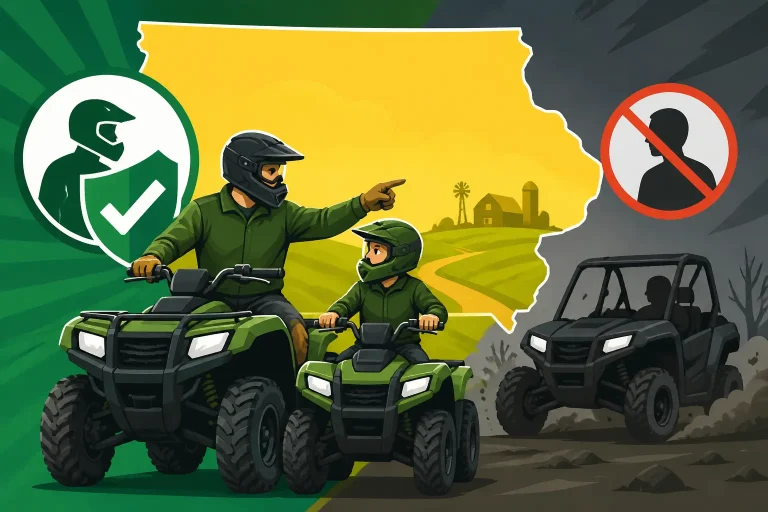
The certificate requirement is not a substitute for adult supervision where supervision is required. A younger child may face additional restrictions even if an adult is nearby, and an older teen may still need to follow age-related rules for the machine or riding area. See [Iowa Supervision Rules for Riders Under 12] for the separate supervision issue.
Do not treat a completed course as permission to operate a machine that is too large or unsuitable for the rider. The course can teach hazard awareness and operating principles, but the adult responsible for the ride still needs to consider the rider’s size, experience, ability to reach the controls and the terrain.
Adults and the age cutoff
An adult should not automatically assume that the youth certificate rule applies to them. Iowa’s safety certificate requirement has an age boundary, and the rules differ once a rider reaches adulthood. The certificate also does not expire into a general riding license that overrides other requirements.
The age distinction is explained in Why the Iowa Certificate Stops at Eighteen. Even when an adult does not need this particular certificate, safe operation remains the rider’s responsibility, and a park or event may set additional participation conditions.
Side-by-sides and off-road motorcycles
A side-by-side is not simply an ATV with more seats for every legal purpose. Iowa treats some safety-certificate requirements differently for UTV or side-by-side operators. Check [Does an Iowa UTV Operator Need a Certificate?] rather than relying on an ATV rule.
Off-road motorcycles also have their own treatment. A rider should not assume an ATV safety certificate is required just because the motorcycle is used off road. Why an Iowa Off-Road Motorcycle Operator Is Exempt discusses that distinction.
The right question is not just, “Did I take the course?” It is, “Does this requirement apply to this rider, this machine and this place?” A dealer’s description of a machine or a family’s usual name for it may not settle its legal classification. Check the machine’s documentation and the current Iowa guidance if the category is unclear.
How the online course works
The online course is designed to let a student work through safety material remotely, then complete the required assessment. The specific interface and steps can vary by course provider, so follow the instructions shown when enrolling and make sure the course is an approved Iowa option.
The process usually looks like this:
- Confirm that the rider needs the certificate. Check the rider’s age, machine type and intended riding location. If a child is riding a UTV, dirt bike or a less common machine, verify that the ATV course is the correct route.
- Choose an approved online course. Use an option recognized for Iowa certification. Avoid relying on a course merely because its title includes “ATV safety”; confirm that it leads to the Iowa certificate you need.
- Register using the rider’s information. Enter the student’s details carefully. An error in the name or other identifying information can complicate certificate processing or later proof.
- Complete the lessons and assessment. Work through the materials rather than trying to guess through the test. Topics can include safe operation, risk awareness, protective practices and responsible use.
- Meet the passing requirement. The course has a required pass mark. The listed pass standard is covered in The 80 Percent Iowa Pass Mark; check the course screen for the current requirement before beginning.
- Follow the certificate instructions. After passing, complete any required certificate step and save the proof in a place the rider or supervising adult can access.
The online format can be convenient for a family that cannot attend an in-person session, but it requires the student to manage their own progress. A parent or guardian may need to help with account access, reading instructions or keeping track of the certificate, while allowing the young rider to understand the material and complete the assessment honestly.
Access window and pacing
Online course access is not necessarily unlimited. The course information lists a 90-day period to complete the material, so a student should avoid enrolling long before they are ready to work through it. See Ninety Days of Course Access for the access-window details.
A sensible approach is to choose a stretch when the rider can make steady progress and finish before a planned trip. If the course has an access deadline, check when that period starts and what happens if it expires. Do not assume that a half-finished course will remain available indefinitely or that a new enrollment will be free.
Online access also does not mean the course is self-explanatory for every child. Younger students may need an adult nearby to help navigate the website, read directions or address technical problems. The adult should make sure the student understands the safety content rather than simply clicking through the screens.
What the course can and cannot teach
A course can help riders recognize hazards, understand safer operating practices and think through decisions before they are on the machine. It cannot replace practice under controlled conditions, good judgment in changing terrain or supervision when required.
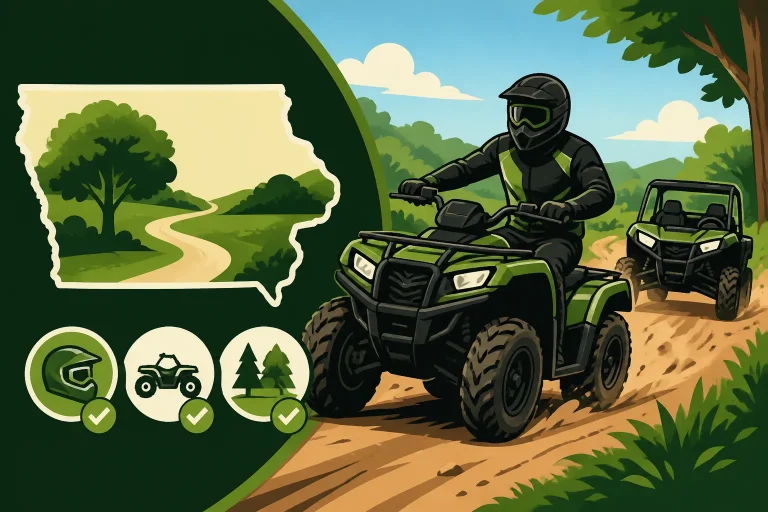
The conditions at an Iowa OHV area can include loose soil, ruts, hills, mud, other riders and changing visibility. A student who has passed online should still start with terrain suited to their ability, ride at a manageable pace, use appropriate protective equipment and follow posted site rules. Passing a test is evidence of completing education, not proof of advanced riding skill.
Cost, certificate details and avoiding surprises
The course title refers to a $34.95 online course. Treat that figure as the course charge described by the title, not as a guarantee of the total cost for every student or a promise that the provider’s current checkout amount has not changed. Confirm the current charge with the approved course provider before paying.
There may also be a separate certificate fee or processing step. The related topic The $5 Iowa Certificate Fee covers that part of the cost. Because fees and checkout arrangements can change, check both the course provider’s current price and the certificate instructions before completing the purchase. Look at the final checkout total, not only the amount in a course description.
| Cost or step | What to check |
|---|---|
| Online course charge | Confirm the provider’s current amount before enrollment |
| Certificate or processing charge | Check whether it is collected separately or included in checkout |
| Access period | Confirm when the access window begins and how long it lasts |
| Certificate delivery | Follow the instructions for retrieving or saving proof after passing |
| Repeat or expired enrollment | Ask the provider what happens if access ends before completion |
Check the provider before paying
Before entering payment information, verify that the course is the correct one for Iowa and for the rider’s situation. Check the provider name and course description against official Iowa guidance or the relevant DNR course information. A general online safety class may cover useful material without producing the Iowa certificate the rider needs.
Read the checkout page carefully for the full charge, any separate certificate step and the available payment or completion instructions. If the course access period is important to your schedule, confirm the exact start and end rules. If a student is close to a birthday that changes which age rules apply, confirm how the requirement is determined rather than guessing based on the planned ride date.
Keep a copy of the completion confirmation and the certificate if one is issued. A screenshot can help as a backup, but it should not replace any required card or formal proof. Check how the course tells students to retrieve or present the official certificate.
Do not confuse course fees with machine fees
The course charge is not an ATV registration fee or a nonresident permit charge. Registration and permits are separate machine-related requirements, and the correct amount depends on the transaction and machine. For example, a resident’s registration process is different from a visitor’s permit process.
A rider who completes the course may still need to arrange the machine’s paperwork before riding. For help distinguishing those requirements, see Iowa’s Permit for a Visiting Machine and Iowa ATV Registration Paperwork. Always verify the current rules and charges for the specific machine rather than adding an assumed course fee to an assumed permit total.
After passing: prepare for the actual ride
Passing the course is a useful milestone, but it is worth taking a few more steps before the young rider heads out. The certificate addresses safety education; a safe and legal ride also depends on the machine, its condition, the route and the people sharing the trail.
Save proof where it can be found
Follow the course provider’s instructions for obtaining the certificate or completion record. Save a digital copy and, if a physical card or printed record is available, keep it somewhere it will not be lost or damaged. Make sure the rider and supervising adult know how to access it.
Do not assume that a phone image will satisfy every requirement or every site’s policy. Confirm what form of proof is accepted, and keep any required paperwork accessible during the ride. The same care applies to registration documents and permits, which are separate from a safety certificate.
Check registration and permit status separately
Before loading the machine, confirm that its registration decal is valid and correctly displayed if Iowa registration is required. If the machine is visiting from another state, check whether Iowa requires a nonresident permit or recognizes the machine’s home-state registration for the intended use. Does Iowa Honor Out-of-State Registration? covers the reciprocity question.
A safety certificate cannot cure missing machine paperwork. Nor should the presence of an Iowa decal be taken as proof that the operator has met an age-based certificate rule. Think of these as separate boxes to check, not substitutes for one another.
Match the ride to the rider
Pick terrain and a route that suit the rider’s experience. An online course does not assess whether the rider can control a particular machine on a hill, through mud or around faster traffic. Start conservatively and explain the route, stopping points and signals before moving out.
For a young operator, machine fit matters. The rider should be able to reach the controls, operate them deliberately and respond to instructions. The adult should also consider whether the machine’s power, weight and speed are appropriate. A safety certificate is not a recommendation that a young person is ready for any size or style of ATV.
Review site rules on arrival
Designated riding areas can have posted rules about helmets, age, supervision, machine types, trails and closed sections. Those rules may be stricter than the basic course requirements. Check signs at the entrance and any current closure notices before riding.
Stay on marked trails and respect temporary closures. Wet conditions can make a route unsafe or cause lasting damage, and a rider who has just completed an online course may not yet have experience judging surface conditions. If the area is unfamiliar, begin with an easier section and turn back when conditions exceed the rider’s ability.
The course is most useful when its lessons carry over into real decisions: choosing a manageable speed, keeping space between machines, avoiding risky shortcuts and stopping when visibility or trail conditions worsen. Those habits matter whether a rider is using a family machine, a borrowed ATV or a machine at a designated riding area.
Frequently Asked Questions
Is the $34.95 Iowa online safety course the total cost?
Not necessarily. The title refers to a $34.95 course charge, but a certificate or processing fee may be separate. Confirm the current course price and any additional charge with the approved provider before enrolling.
Does passing the online course register an ATV?
No. The course and safety certificate concern rider education. Registration or a nonresident permit concerns the machine, and those requirements must be checked separately.
Is there an in-person riding day?
The online course does not include a practical riding day. It provides online instruction and an assessment. A new certificate holder still needs appropriate practice, supervision where required and a machine suited to their ability.
Does every ATV, UTV and dirt bike operator need this certificate?
No. The requirements differ by rider age and machine category. Check the current Iowa rules for the exact machine rather than applying an ATV requirement automatically to a side-by-side or off-road motorcycle.
How long does the online course stay open?
The course information lists a 90-day access period. Confirm when the period begins and what happens if it expires with the provider before enrolling.
Disclaimer
This article is for general informational purposes only and does not constitute professional advice. Laws, prices and regulations vary by location and change over time. Consult a qualified professional for guidance on your specific situation.