Taking a Dog to an Iowa OHV Park
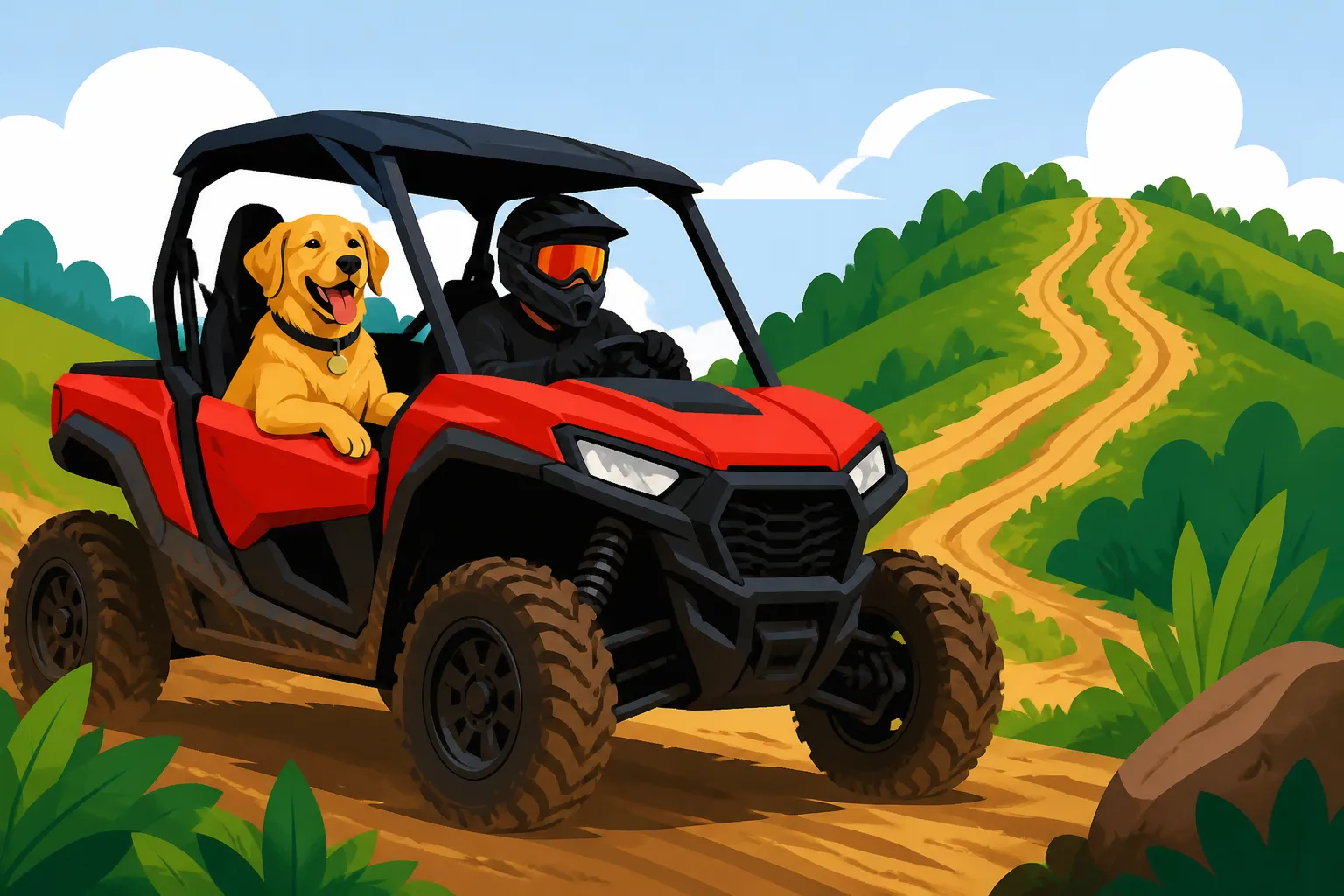
Taking a dog to an Iowa OHV park takes more planning than packing a leash. Riders, machines, noise, and changing trail conditions can make a park stressful or unsafe for a dog, and individual parks may have rules to check before you leave. Here’s how to plan a dog-friendly visit, understand Iowa’s leash requirement, and decide when it’s better for your dog to stay home.
Check the leash rule and the park’s own requirements
According to the Department of Natural Resources, dogs brought to Iowa state parks, recreation areas, and public lands must be kept on a leash or chain no longer than six feet. That gives you a clear starting point for preparing to visit an OHV area, but it doesn’t answer every question about dogs at every individual riding park.
Before you load the machine, contact the park or its managing organization to confirm that dogs are allowed where you plan to go. Ask whether the dog may be in the staging area, campground, or other visitor spaces, and whether any additional rules apply. Don’t assume that permission to bring a dog to a recreation area means a dog can accompany you onto every trail or riding surface.
A quick call matters because OHV parks can have different layouts, operators, and local practices. The Iowa DNR lists parks such as Bluff Creek OHV Park at Eddyville, Gypsum City OHV Park at Fort Dodge, and Paul Huting Recreation Area at Waterloo, but the listed locations alone don’t establish each park’s dog policy. If you’re considering a different riding area, Iowa’s Eight Designated OHV Parks can help you identify places to check.
When you contact the park, be specific. You might ask:
- Are dogs permitted on the property?
- Are dogs allowed only in certain areas, or can they go near the trails?
- Must dogs remain on a leash or chain at all times?
- Are there rules about dogs near staging areas, shelters, or campsites?
- Are there trail closures or busy events that could make a visit harder for a dog?
If the park can’t confirm that dogs are allowed in the areas you want to use, plan on leaving the dog with a trusted caregiver rather than arriving and hoping to sort it out at the gate.
A leash that meets the stated limit is useful only if it gives you control in the park’s conditions. A short, sturdy leash and a well-fitted harness can make it easier to keep a dog close when machines are passing or people are moving around the unloading area. If you’re replacing a leash, Amazon is one place to compare options, but check the leash’s actual measured length instead of relying on a product name.
Decide whether the riding environment suits your dog
An OHV park is not simply a walking trail with a few machines in the distance. Motor noise, dust, vibration, unfamiliar dogs, changing traffic, and active loading areas can make it a difficult setting for some animals. A dog that is calm at home may react differently around unfamiliar vehicles or sudden engine sounds.
Think about your dog’s behavior before the trip. Can the dog stay settled on a leash when people and vehicles pass? Does the dog tend to pull, bark, chase moving objects, or slip out of equipment? If those behaviors are likely, a busy riding area can put the dog, riders, and other visitors at risk. There is no need to test a dog’s tolerance in the middle of a crowded staging area.
Consider the whole outing, not just the time you expect to spend riding. If the dog has to wait while you unload, gear up, ride, and load again, there may be long stretches without a comfortable place to rest. A dog left in a vehicle can also be exposed to heat or cold, so don’t treat the vehicle as a convenient waiting area. If you can’t supervise the dog safely throughout the visit, arrange another place for it to stay.
The type of park and trail conditions can affect how manageable a visit feels. Tight, wooded routes or busy staging spaces may leave little room to step aside from a machine. Check Iowa Trail Maps From the DNR and Iowa Trail Difficulty Ratings when planning your ride, and ask the park whether dogs can use nearby non-riding areas. Those resources help with ride planning, but they do not replace the park’s current dog policy.
Noise can be a particular concern. Some dogs become frightened by engines; others may approach moving machines out of curiosity. Either response can become dangerous if the dog is near a trail, unloading ramp, or vehicle path. Watch your dog’s body language and be ready to leave if it seems overwhelmed. Do not assume that a dog will become comfortable just because it has been around household vehicles.
Before you go, consider whether your dog can comfortably:
- Stay close to you on a leash while machines are moving nearby.
- Settle in a designated visitor area without approaching riders or equipment.
- Tolerate noise, dust, and unfamiliar people without panicking.
- Take a break away from active riding and vehicle traffic.
If the answer is uncertain, a quieter walk or a different outing may be kinder to the dog and simpler for your group.
Pack for control, comfort, and a quick exit
A dog-friendly visit starts with equipment that works before you reach the park. Check the leash and harness at home, make sure the fit is secure, and choose a setup you can hold comfortably while managing your own gear. A leash that is tangled, damaged, or awkward to handle is a poor match for an active staging area.
Bring water and a bowl, waste bags, and anything your dog needs to stay comfortable. Keep the dog’s supplies separate from riding gear so you can reach them without leaving the dog unattended. If the park has no convenient place to refill water or dispose of waste, you’ll be glad you prepared ahead.
Plan where the dog will wait while you ride. The answer should be a safe area where the dog remains under direct supervision, away from moving machines and trail entrances. A leash does not make it safe to tie a dog to a post and leave it while you ride. Nor should another visitor be expected to watch your dog without agreeing to do so.
Use the leash whenever the dog is in an area where it is required, and keep it short enough to prevent the dog from reaching machines, riders, or other animals. According to the Department of Natural Resources, the leash or chain for dogs brought to Iowa state parks, recreation areas, and public lands cannot exceed six feet. Be prepared to keep your dog close even when a quieter part of the property makes a longer lead seem convenient.
A simple checklist can help you avoid preventable problems:
| Before leaving | At the park | During the visit |
|---|---|---|
| Confirm the park’s dog policy directly | Keep the dog away from active machine traffic | Watch for signs of stress or overheating |
| Check the leash and harness | Follow posted instructions and staff directions | Keep the dog supervised and under control |
| Pack water, a bowl, and waste bags | Choose a safe place to pause | Leave if the setting becomes unsafe or distressing |
| Review trail conditions and closures | Keep the dog out of riding areas unless permitted | Don’t leave the dog tied up while you ride |
Check current conditions before the drive, too. A closed trail or weather-related change can alter where you can ride and how much time you spend at the park. Iowa Trail Conditions Before You Ride and Checking Whether Three Parks Are Shut can help with that part of trip planning. For a direct answer about a dog or an access area, call the park before you load.
Make a backup plan before you arrive
Even after you’ve checked the rules, be prepared to change plans. The dog might be allowed on the property but not in the places your group needs to go. The park could be crowded, the noise could be too much, or conditions could leave no suitable spot for the dog to rest. A backup plan prevents a rules question or an anxious dog from turning into a difficult day.
If one person in your group can stay with the dog in an approved area while others ride, agree on that arrangement before arrival. Make sure the person knows where the dog’s water and supplies are and can leave if the setting becomes uncomfortable. Don’t rely on someone else to supervise unless that person has agreed and is able to keep the dog safe.
You can also plan a separate dog walk before or after your ride, in a place where dogs are allowed and where moving OHVs are not part of the environment. That can be a better fit for dogs that need exercise but do not cope well with engine noise or crowded staging areas. Check the rules for any alternate location rather than assuming the same access requirements apply everywhere.
If you plan to stay overnight, confirm dog rules for the campground as well as the riding area. Camping Near an Iowa OHV Park can help you think through the lodging part of a trip, but check directly with the specific campground about pets, leash expectations, and where dogs may go. A park and its campground may not have identical arrangements.
Finally, keep the machine-side rules separate from the dog plan. A dog’s presence does not change what your vehicle needs for legal operation, and having a leash does not authorize access to a trail or area that does not allow dogs. If you need to review the machine’s registration or certificate before the trip, see Carrying the Certificate on an Iowa Ride. Visitors riding an out-of-state machine can also check Iowa ATV Registration for a Nonresident before heading to a designated area.
The practical rule is straightforward: confirm that the dog is welcome, keep it leashed as required, and don’t bring it into a setting where you can’t supervise it safely. If the park cannot confirm access or your dog is uncomfortable around machines, leaving the dog at home is the more responsible plan.
Sources
- Iowa Department of Natural Resources — IAC Ch 61, p.1 571—61.7 (461A) Restrictions—area and use (checked November 3, 2026)
Disclaimer
This article is for general informational purposes only and does not constitute professional advice. Laws, prices and regulations vary by location and change over time. Consult a qualified professional for guidance on your specific situation.