Registering a Quad That Never Leaves Your Timber
It’s a scenario many Iowa ATV and UTV owners find themselves in: you bought a great quad or side-by-side, but your primary (or even only) plan is to use it on your own property – maybe for hunting in your timber, managing your acreage, or just having fun on your private trails. The thought of going through the hassle of registration might seem completely unnecessary. After all, if it’s never going to touch a public road or a state OHV park, why would the state care? This guide is here to untangle that common misconception and clarify Iowa’s registration requirements for off-highway vehicles, even if they never leave your private land.
The Common Misconception About Private Land Riding
It's a natural assumption, isn't it? You buy a piece of equipment, and if you only use it on your own property, it feels like your business alone. For many ATV and UTV owners in Iowa, the idea of registering a machine that's exclusively ridden on private land, whether it's your own backyard, a friend's farm, or leased hunting ground, just doesn't seem to click. You might think, "I'm not on public roads, I'm not on DNR trails, so what's the point of a state registration?" This line of thinking is incredibly common, and honestly, it makes a lot of sense from a practical, personal standpoint.
Folks often believe that their property rights extend to total autonomy over what vehicles they operate on their own dirt. They envision registration as a public-use permit, designed for those venturing out onto shared resources. The thought of paying a fee and getting a sticker for a machine that might only ever see the inside of their own pole barn and the tracks of their own fields can be a source of frustration. It feels like an unnecessary government intrusion into private affairs, adding a layer of bureaucracy to something that feels inherently personal.
Why Many Riders Assume No Registration Is Needed
The logic behind assuming no registration is needed for private land use often stems from a simple premise: no public interaction, no public rules. If your ATV is primarily a tool for maintaining your sprawling acreage, navigating dense timber for hunting, or simply enjoying the seclusion of your own trails, it’s easy to dismiss the need for a state-issued decal. Riders think, "This machine is mine, this land is mine (or my friend's/family's with permission), so it's a private matter." This perspective overlooks the broader scope of how state laws often define and regulate certain types of vehicles, regardless of their operational environment.
Another reason for this assumption comes from a lack of clarity. Many states have vastly different rules for off-highway vehicles. Some might indeed only require registration if you're hitting public trails or roads. Iowa, however, has its own specific set of regulations, which can often catch even seasoned riders off guard if they haven't delved into the specifics. The feeling of "common sense" often dictates that if you're not impacting public resources or safety on public land, then the government shouldn't have a say. Unfortunately, state statutes don't always align with our personal common sense, especially when it comes to vehicle identification and tracking.
When Iowa Law Steps In
Despite the common feeling that private land means private rules, Iowa law generally requires all off-highway vehicles (OHVs), which include ATVs, UTVs, and off-road motorcycles, to be registered with the state. This requirement isn't solely tied to public land access; it's a fundamental aspect of owning and operating these types of machines within Iowa's borders. The state's interest often lies in having a record of these vehicles for various reasons, including ownership tracking, enforcement, and funding for OHV programs that ultimately benefit riders, even if you never use them.
This broad requirement can certainly be surprising and even irritating for a private landowner who believes their machine is an exception. You might hear stories from other states where different rules apply, leading to further confusion. However, for those operating within Iowa, the default position is that registration is necessary unless a very specific and narrow exemption applies. Ignoring this can lead to uncomfortable situations down the line, such as unexpected fines or complications when selling your machine. It’s important to understand that the law is designed to cover almost all OHVs, creating a baseline of regulation that applies universally.
Iowa's Specific Exemptions for Off-Highway Vehicles
While the general rule in Iowa is that all ATVs and UTVs need to be registered, there are a few very specific exemptions. These are crucial to understand, especially if you're genuinely convinced your machine falls outside the typical registration requirements. However, be warned: these exemptions are often much narrower than people assume, and mistakenly believing your machine is exempt when it's not can lead to problems. It's not about what you think the exemption means, but what the law specifically defines.
The most common misunderstanding here is that simply using a machine on a farm automatically exempts it. That's usually not the case. The intent and primary use of the machine are absolutely critical. Just because you have a farm doesn't mean every ATV you own is an implement of husbandry. There's a fine line, and crossing it (even unknowingly) can mean you're operating an unregistered vehicle.
The "Implement of Husbandry" Exemption
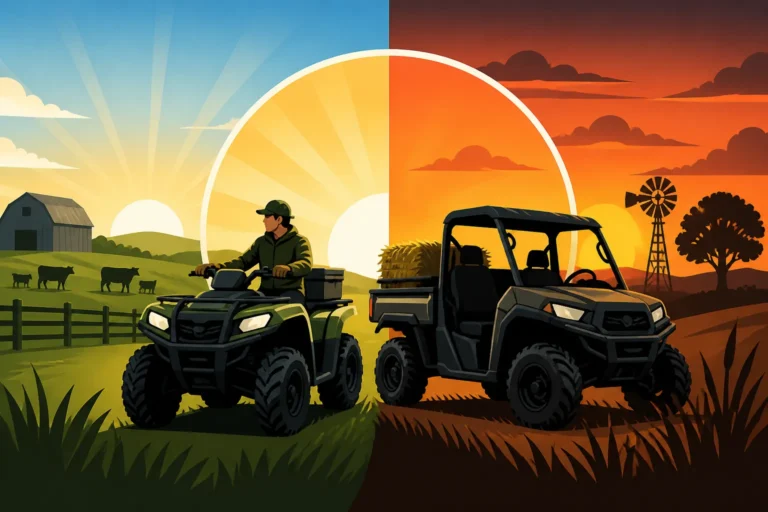
This is the big one for many rural Iowans, and it's also where a lot of confusion lies. An ATV or UTV can be exempt from registration if it qualifies as an [The Implement of Husbandry Exemption in Iowa]. However, this isn't a blanket exemption for anything used on a farm. Iowa law defines an implement of husbandry as a vehicle "designed for agricultural purposes and used exclusively in the conduct of agricultural operations." The keyword here is "exclusively," and it implies direct, demonstrable agricultural work.
Think about it this way: if your UTV is primarily used for hauling feed to livestock, checking fence lines, spraying small fields, or moving irrigation equipment, it likely fits the bill. These are direct, necessary tasks related to farming. On the other hand, if you're using that same UTV to ride around your property for recreation, to scout for deer during hunting season, or to simply enjoy the scenery, it likely does not qualify, even if you own a farm. The moment its use veers into recreational or non-agricultural territory, the exemption typically no longer applies. This distinction often catches people off guard, as they believe that simply being on a farm makes it an implement of husbandry. It's about the function, not just the location. The law is quite particular about this.
Other Limited Exemptions
Beyond the implement of husbandry rule, other exemptions are even more specific and typically don't apply to a privately owned machine that never leaves your timber for general use. For instance, machines used solely for competitive events on a closed course might have different rules, but this usually involves temporary permits or specific event regulations rather than a permanent exemption from state registration for private property recreational use. These are usually race-specific registrations or permits, not a general allowance for private land riding.
Another exemption covers machines owned by a governmental agency for official business, which clearly doesn't apply to your personal quad. There's also an allowance for non-residents bringing a machine into Iowa if it's already properly registered in their home state and they carry that proof. However, if they don't have home-state registration, they would need to purchase an [Iowa's Nonresident User Permit] to ride legally. While this allows out-of-state machines on Iowa trails, it doesn't create an exemption for an Iowa resident's machine that stays on private land. The takeaway here is that general, ongoing private recreational or utility use by an Iowa resident typically requires registration, regardless of where the wheels spin. The list of legitimate exemptions is incredibly short and narrowly defined.
Understanding the Consequences of Non-Registration
So, you've got this machine that you only ever use on your own property, and you've decided not to register it. What's the real risk? It might seem negligible, especially if you live in a secluded area or feel confident no one will ever know. However, operating an unregistered ATV or UTV in Iowa, even on private land, when no specific exemption applies, carries genuine consequences. It’s not just about avoiding a ticket on a public trail; it’s about compliance with state law and preparing for unforeseen circumstances that could bring your machine under scrutiny.
The state’s requirement to register isn’t just about collecting fees; it’s about creating a registry of these vehicles for various purposes, including tracking ownership, aiding in recovery if stolen, and ensuring that funds are available for statewide OHV programs. While you might not use the trails, the system is designed to encompass all machines of a certain type. Ignoring this can lead to legal complications that are far more inconvenient and costly than simply getting the registration done.
Why Registration Matters Even on Your Own Land
Imagine this scenario: you're out riding your unregistered ATV on your timber land, and an accident occurs. Perhaps you hit a fallen tree, or someone else on your property has an incident with your machine. In the event of an injury or significant property damage, law enforcement or emergency services might be called to your property. During their investigation, they could easily observe that your machine is unregistered. This immediately introduces a new layer of legal complexity to an already stressful situation. Not only are you dealing with the accident itself, but now you could also face fines for operating an unregistered vehicle.
Beyond accidents, consider the implications if a conservation officer or sheriff's deputy has a legitimate reason to be on your property – perhaps investigating a complaint, responding to an emergency, or even just patrolling adjacent public land and observing activity on your private acreage. If they spot an unregistered ATV or UTV that doesn't clearly fall under an exemption like the implement of husbandry, they could issue a citation. [Iowa Fines for an Unregistered ATV] can be substantial, often far exceeding the annual cost of registration. It's a risk that many private land riders unknowingly take, assuming their property acts as a shield from state regulations. The truth is, state laws apply everywhere within state lines unless specifically exempted.
When You Do Need to Register
To put it plainly, if your ATV or UTV doesn't fit one of Iowa's very narrow exemptions (most commonly the strict "implement of husbandry" definition for direct agricultural use), then it needs to be registered. This applies even if your plan is for it to remain entirely on private property. The state's law doesn't make a distinction for vehicles that are "only on my farm" for recreational use, hunting, or general property management that isn't directly tied to farming operations.
Consider other situations: What if your machine needs a major repair and you trailer it to a local shop in town? While trailering an unregistered machine isn't illegal, the machine itself is still an unregistered vehicle subject to Iowa law. A future sale is another prime example. If you decide to sell your machine down the road, having it properly registered makes the transaction much smoother. A buyer will likely expect to see current registration, and without it, the transfer of ownership can become complicated. The process of registering is straightforward: you'll need to head to your [Registering at an Iowa County Recorder] office with proof of ownership (like a bill of sale or previous title) and fill out [What Iowa's Registration Form Asks For]. The annual [What Iowa Charges to Register an ATV] is a relatively small sum compared to the headaches of non-compliance.
How to Actually Register Your Machine
If you've decided to play it safe and register your ATV or UTV, even if it primarily stays on your land, the process in Iowa is quite manageable. Your first step is to visit your local County Recorder's office. This is the official agency responsible for processing off-highway vehicle registrations and titles. You'll need to bring some essential documents to prove ownership. This usually includes the manufacturer's statement of origin (MSO) for a brand new machine, or a bill of sale and possibly a previous title if you bought it used. A properly executed [An Iowa Bill of Sale for an ATV] is absolutely critical, especially for private party sales, as it establishes a clear chain of ownership. If you're buying or selling a machine, even privately, having a solid bill of sale is absolutely critical. Services like LawDepot can help you generate a professional, legally sound document that covers all your bases, ensuring there are no questions about ownership during registration.
Once at the Recorder's office, you'll complete the necessary forms, which ask for details about your machine (make, model, serial number) and your personal information. You'll pay the required fees for registration and, if applicable, titling. After the paperwork is processed and fees are paid, you'll receive a registration certificate and a decal. The decal needs to be mounted clearly on the rear of your machine, usually on the fender or a visible rack. [A Decal on the Rear of an Iowa Machine] ensures it's easily seen. You're also required to [Carrying the Certificate on an Iowa Ride] whenever the machine is in operation. This certificate is your proof of legal registration and should always be accessible.
Practical Considerations for Private Land Owners
Ultimately, the decision to register an ATV or UTV that stays solely on private land comes down to weighing the minor inconvenience and cost against the potential risks and complications of non-compliance. While the immediate impulse might be to skip registration, a closer look at the practical realities often reveals that opting for registration is the more prudent and less stressful path in the long run. It's about being prepared for anything, even on your own turf.
Think about it from a long-term perspective. Your machine might only be on your timber today, but what about five years from now? Will you still own that land? Will you decide to sell the machine? Having a clear and active registration history makes future transactions and changes in use significantly easier. It prevents legal headaches and provides a level of peace of mind that a few dollars a year can easily buy.
The Low Cost of Compliance vs. The High Cost of Non-Compliance
Let's talk numbers, or at least the general scale of them. The annual registration fee for an ATV or UTV in Iowa is quite modest. When you consider the fees involved – which are typically a base registration fee, a writing fee, and perhaps a small agent fee – it's a relatively inexpensive yearly outlay. This minor cost pales in comparison to the potential fines you could incur for operating an unregistered vehicle. A single citation could easily exceed multiple years' worth of registration fees, not to mention the time and stress of dealing with legal issues.
Beyond fines, there's the cost of peace of mind. Knowing your machine is fully compliant with state law means one less thing to worry about. You won't have to second-guess yourself if a deputy is on your property for an unrelated reason, or if you need to take your machine for service. The registration process itself is fairly quick at your County Recorder's office. Renewals are even easier, often done online or by mail, with a specific [Iowa's September to December Renewal Window] each year leading up to when [Why Iowa Registrations Expire December 31]. It's a small recurring investment for significant legal protection and convenience.
Planning for Future Use or Sale
Even if your intention is for your ATV to spend its entire life on your private timber, plans can change. You might decide to venture out to one of Iowa's fantastic OHV parks like Gypsum City or Bluff Creek, or perhaps ride on authorized gravel roads. If your machine isn't registered, you'll have to go through the process then, potentially facing delays or even penalties if you try to use it before it's properly registered. Having it registered from day one eliminates this hurdle.
More importantly, consider the future sale of your machine. When you decide on [Selling an ATV in Iowa], a registered machine with a clear title history is far more attractive to potential buyers. It indicates responsible ownership and makes the transfer process seamless. An unregistered machine, especially one that should have been registered, can raise red flags for buyers, leading to questions about its history, legality, and even potential value. You might find yourself having to register it just to sell it, and potentially pay back fees or penalties. When it comes time to sell, whether it's years from now or next season, having all your registration ducks in a row makes the process far smoother for both you and the buyer. And if you're drafting a new bill of sale or other legal document for the transaction, resources like LawDepot can be invaluable to ensure everything is above board.
Documenting Your Agricultural Use (If Applicable)
If you are confident that your ATV or UTV exclusively meets Iowa's stringent definition of an "implement of husbandry" because it's used solely and directly for agricultural operations on your farm, then registration might indeed be genuinely exempt. However, it's a very good idea to have some form of documentation or clear explanation readily available to demonstrate this. This isn't a legal requirement, but it’s a practical step for your own protection.
Consider keeping a simple log of the machine's usage, noting tasks like "hauling fence posts," "checking cattle," or "spraying weeds in field." Photos of the machine actively engaged in these tasks can also be helpful. This isn't about proving it in court every day, but about being able to articulate and demonstrate its primary purpose if ever questioned by a conservation officer or sheriff's deputy. Remember, casual recreational riding, even on a farm, generally does not qualify for the implement of husbandry exemption. Be honest with yourself about how the machine is truly used, and if there's any recreational component, registering it is the safest bet.
| Scenario | Registered Machine (Compliant) | Unregistered Machine (Non-Compliant) |
|---|---|---|
| Operating on your private timber for hunting | Legal, peace of mind, no fines. | Risk of fine if observed by law enforcement on your property. |
| Transporting machine to dealer for service (trailered) | Clear proof of ownership and legal operation. | May draw unwanted scrutiny; machine is still technically unregistered. |
| Selling the machine to a new owner | Smooth transfer, desirable to buyers, clear title. | Potential buyer reluctance, complex transfer, possible fees/penalties. |
| Accident on private property | Simpler insurance claims, clear legal standing. | May complicate investigations, potential for additional fines. |
| Deciding to ride public trails next year | Ready to go, simply purchase a permit or ensure safety certs. | Must register first, causing delay and potential penalty. |
| Machine used exclusively for direct farm work | Exempt if truly an "implement of husbandry" (documentation helpful). | Exempt if truly an "implement of husbandry" (documentation helpful). |
Disclaimer
This article is for general informational purposes only and does not constitute professional advice. Laws, prices and regulations vary by location and change over time. Consult a qualified professional for guidance on your specific situation.