When a Quad Counts as an Implement of Husbandry
It can be incredibly confusing trying to figure out if your trusty quad or side-by-side, which spends most of its life helping out on the farm, actually needs to be registered and titled in Iowa. You’re not alone if you’ve scratched your head over this, wondering if that trip to check the back forty fences or haul feed to the livestock means you need a full-blown DNR decal. This guide is here to untangle the nuances of Iowa's "implement of husbandry" rules for ATVs and UTVs, helping you understand when your machine is exempt and when you absolutely need to hit up the county recorder's office.
Understanding Iowa's Implement of Husbandry Exemption
For many Iowans, an ATV or UTV isn't just a toy; it's a vital piece of farm equipment. These machines zip across fields, haul tools, and generally make farm life a whole lot easier. The state of Iowa recognizes this practical reality, and that's where the "implement of husbandry" exemption comes into play. However, like many legal definitions, it has very specific boundaries that can easily be misunderstood, leading to potential headaches down the line if you're not careful.
What "Implement of Husbandry" Actually Means
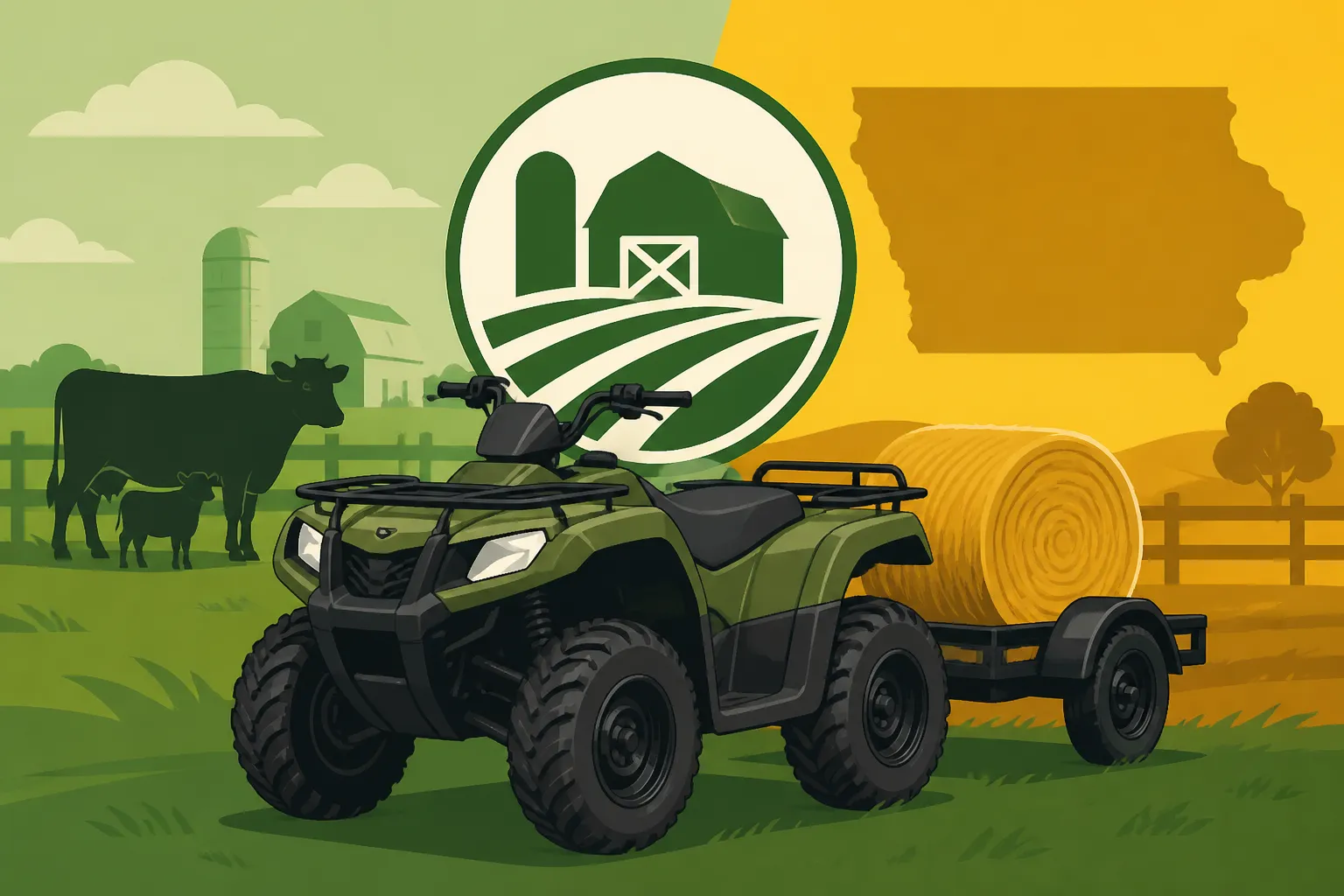
At its heart, an "implement of husbandry" refers to a vehicle that is exclusively used for agricultural purposes. Think of it this way: if your quad or UTV spends its entire working life directly supporting farming operations, it likely falls under this definition. This could mean using it to move livestock, inspect crops, carry tools for fence repair, haul small loads of hay or feed, or even spray fields. The key word here is "exclusively." It's not about how often you use it for farm work, but whether it's only ever used for farm work. If its tires ever touch the ground for anything other than a direct farming task, the exemption can quickly disappear.
For instance, consider a UTV that perpetually shuttles seed bags from the barn to the planter during spring, or a quad that's the primary vehicle for checking every inch of a sprawling cattle pasture. These are clear-cut examples of machines serving as implements of husbandry. They are an extension of the farm's operational tools, much like a tractor or a combine. The intent behind this exemption is to spare farmers the additional bureaucratic burden of registering vehicles that are integral to food production, as long as they stay within those specific agricultural parameters.
The Line Between Farm Use and Recreational Riding
This is where the waters can get murky for many riders. What if you use your side-by-side to check fields, but then on a weekend, you take it out for a spin on a private timber trail on your property just for fun? Or perhaps you load it up on a trailer and head to [Gypsum City OHV Park at Fort Dodge] for a day of recreational riding? The moment your ATV or UTV is used for any purpose that isn't directly and exclusively tied to agricultural work, even if it's still on your private land, it generally loses its "implement of husbandry" status.
Iowa law is quite clear that the exemption applies to machines "used exclusively for agricultural operations." This means there isn't really a "primarily" test where if you use it 80% for farm work and 20% for recreation, it's still exempt. The "exclusively" part is critical. If you bought an ATV specifically for hunting and use it to scout deer stands on your land, it's not an implement of husbandry. If you use your UTV to check irrigation lines, but also take your kids for joyrides around the farm pond, that recreational use typically pulls it out of the exemption. It's a binary choice: either it's only for farming, or it needs to be registered and titled. Trying to straddle that line can lead to uncomfortable conversations with law enforcement and potential fines if you're caught without the proper registration or decal when it's required.
Specific Scenarios and the "Two Miles From the Farm" Rule
Understanding the implement of husbandry exemption gets even more complex when your farm machine needs to venture off your private property. While you generally don't need to worry about registration when riding solely on your own land for farm work, the game changes the moment your tires touch a public road or right-of-way. This is where Iowa has created a very specific, limited exception to help farmers move their equipment without needing a full registration for machines that otherwise qualify as implements of husbandry.
Riding on Private Land vs. Public Roads for Farm Work
Let's clarify the basic premise: if your ATV or UTV is used exclusively for farm work and never leaves your private property, you typically don't need to worry about registration. The exemption largely pertains to the use of public ways. You can haul feed across your pastures, inspect crops in your fields, or check fences within your own property lines without needing a state-issued decal. This gives farmers the flexibility to utilize these efficient machines for their intended purpose without unnecessary red tape for operations contained entirely on their land. So, if your quad never leaves your timber lot for logging fallen trees or checking traplines that are part of your farm's income, you're usually in the clear from a registration standpoint. The challenge arises when you need to connect different parts of your operation that might be separated by a county road. This is where the specific road use exemptions become critical to understand, as merely crossing a road changes the context entirely.
When Your "Farm Machine" Needs a Decal and Title
The moment your ATV or UTV, even if it's primarily used for farming, is used for recreational purposes, or if it travels on public land or trails (even if trailered there), it usually loses its implement of husbandry exemption and requires full registration and titling. This means if you ever plan to ride your UTV at [Bluff Creek OHV Park at Eddyville] or take your ATV hunting on public land, it absolutely needs to be properly registered and display a current decal. There's no gray area here; recreational use, regardless of how infrequent, mandates full compliance.
However, Iowa offers a very narrow window for road use for certain farming activities. An unregistered ATV or UTV that qualifies as an implement of husbandry may be operated on public roads and highways from sunrise to sunset, provided it is being used for agricultural purposes and is traveling no more than two miles from the main part of the farm. This "2 Miles From the Farm in Iowa" rule is specific: it's for direct, agricultural travel between fields or farm sections. It's not a blanket pass to run errands in town or visit a neighbor for coffee, even if your machine usually hauls grain. You must be engaged in an actual farm task, such as moving equipment from one field to another, or transporting items directly related to crop or livestock production. The law requires a direct route and strict adherence to the sunrise to sunset timeframe.
It's also crucial to remember that this two-mile, sunrise-to-sunset rule is for road use only and does not exempt the machine from registration if it's otherwise used recreationally. For example, if you sell an ATV that you’ve only ever used on the farm, the new owner might still need to title and register it, especially if they plan any recreational use. When you’re buying or selling a used ATV in Iowa, particularly one that's been on a farm, it's always wise to clarify its usage history and document the sale thoroughly. A comprehensive [An Iowa Bill of Sale for an ATV] can save a lot of trouble, and resources like LawDepot offer excellent templates for ensuring all the necessary details are covered. Understanding these distinctions is paramount to avoiding citations and ensuring you're operating within Iowa law.
Navigating Registration, Titling, and Legal Considerations
When you finally realize that your farm-used quad or UTV might not, in fact, qualify for the implement of husbandry exemption after all, the next step is to understand what you do need to do. It can feel like a sudden shift from simple farm equipment to a recreational vehicle that requires state oversight. The good news is that Iowa has a standardized process, and once you know the steps, it’s fairly straightforward to get your machine compliant. The crucial thing is to be proactive and understand the requirements before you're caught in a situation where you're out of compliance.
The Process if Your ATV/UTV Doesn't Qualify
If your ATV or UTV doesn't exclusively perform agricultural tasks, or if you simply want the flexibility to ride it recreationally or travel beyond the two-mile farm-to-field rule, you'll need to go through the standard registration and titling process. This typically involves a trip to your local county recorder's office. This is the same place you'd go to [Registering an ATV in Iowa] or [Titling an ATV in Iowa] for any other off-highway vehicle. They handle all the paperwork and issue your official decals and title.
Here’s a general rundown of what you can expect:
| Item | Description |
|---|---|
| Proof of Ownership | This is usually your current title, manufacturer's statement of origin (MSO), or a notarized bill of sale. If you're [Buying a Used ATV in Iowa], ensure you get a clear title or a proper bill of sale from the seller. |
| Application Forms | You'll fill out the necessary forms provided by the county recorder. These ask for details about you, your machine, and its serial number. You can often get a head start by looking at [What Iowa's Registration Form Asks For] online, though you'll sign at the office. |
| Fees | Be prepared for several fees. There's a base registration fee, a writing fee, and often an administrative fee. There's also a separate fee for [Iowa's $13.50 ATV Title Fee]. These amounts are collected at the time of registration. |
| Sales Tax | If you just purchased the machine, you’ll also pay Iowa sales tax (which is usually 6% state sales tax plus any local option sales tax, often totaling 7%) on the purchase price, unless a specific exemption applies. Even on a private sale, the county recorder collects this. |
| Decal & Certificate | Once processed, you'll receive a registration certificate and an annual decal to mount on the rear of your machine. Remember, it usually takes about [Two Weeks Before an Iowa Decal Arrives] if mailed, but you'll get a temporary certificate right away. |
It’s always a good idea to call your specific county recorder's office beforehand to confirm their hours, required documents, and acceptable payment methods. Each office might have slightly different local procedures, and a quick call can save you a lot of time and a second trip.
Avoiding Pitfalls and Staying Compliant
The best way to avoid issues is to be completely honest with yourself about how you use your ATV or UTV. If there’s any doubt that it qualifies as an exclusive implement of husbandry, then it’s almost always safer and less stressful to simply register and title it. The cost of registration and titling is relatively small compared to the potential fines and hassle of being caught in violation. A DNR officer or county deputy doesn't want to debate your specific farm tasks roadside; they want to see the correct decal if your machine should have one.
Consider these tips for staying compliant:
- Be Realistic About Use: If your machine ever leaves private land for non-agricultural use, or if it’s used for recreation even on your own land, it needs registration. Don't try to stretch the definition of "implement of husbandry" to fit your personal convenience.
- Keep Documentation: Always carry your [Carrying the Certificate on an Iowa Ride] with you when operating your machine, especially if you're on public land or roads. For sales, use detailed documentation. Services like LawDepot can provide robust, legally sound [An Iowa Bill of Sale for an ATV] templates that clearly outline the sale terms, protecting both buyer and seller. This is particularly vital when dealing with machines that might have ambiguous usage histories.
- Understand Road Rules: If you do use your registered ATV/UTV on approved public roads (like certain gravel roads or city streets where authorized), know the specific [Iowa Rules for Riding a Gravel Road], including speed limits, age requirements, and insurance mandates. The implement of husbandry road exemption is narrow and doesn't cover general road use.
- Check Before You Ride: Always confirm the status of trails or public lands before heading out. [Iowa's Weather-Driven Trail Closures] are common, and riding on closed trails or in unauthorized areas can lead to significant penalties, regardless of your machine's registration status.
By understanding these regulations and taking the necessary steps, you can enjoy your ATV or UTV responsibly and legally, whether it’s diligently working on the farm or exploring Iowa's scenic trails.
Disclaimer
This article is for general informational purposes only and does not constitute professional advice. Laws, prices and regulations vary by location and change over time. Consult a qualified professional for guidance on your specific situation.