Sunrise to Sunset on Husbandry Work
Navigating the rules for ATVs and UTVs in Iowa can feel like trying to solve a puzzle, especially when you’re using your machine for honest-to-goodness farm work. Many folks assume that because their quad or side-by-side never leaves the farm, it doesn't need any state paperwork. While there’s a grain of truth to that, relying solely on assumptions can lead to unexpected fines. This guide will clarify the specific conditions under which your ATV or UTV can be legally used for agricultural purposes in Iowa, particularly focusing on the "sunrise to sunset" rule, helping you avoid common missteps.
Understanding Iowa's Implement of Husbandry Exemption
For those of us working the land in Iowa, our ATVs and UTVs are often invaluable tools, not just recreational toys. They haul feed, check fences, transport tools, and generally make farm life a whole lot easier. Recognizing this practical reality, Iowa law provides a specific exemption for machines used as "implements of husbandry." This means your quad or side-by-side, when actively engaged in agricultural tasks, might not need to be registered with the Iowa Department of Natural Resources (DNR) in the same way a recreational machine would.
The core idea behind this exemption is to distinguish between machines used for legitimate farming operations and those primarily for fun on trails. If your ATV or UTV is genuinely functioning as a piece of farm equipment, performing tasks directly related to the production of crops or livestock, the state acknowledges its role. This is a huge relief for farmers, as it removes a layer of bureaucratic hassle and cost for tools essential to their livelihood. However, it's not a blanket exemption that covers every single use, which is where the nuances come into play. It's important to understand the specific criteria that define when a machine truly "counts as an implement of husbandry" to ensure you're always on the right side of the law.
The state isn't trying to make your life harder; rather, it’s about ensuring public safety and proper use of public resources. If your machine is strictly confined to your private property and solely performing farm duties, it’s generally exempt. The complications arise when these machines venture onto public roads or are used for non-agricultural activities. This distinction is paramount, as crossing that line—even for a short distance—can immediately change your legal obligations. It’s why so many farmers find themselves scratching their heads over when they need a decal and when they don’t.
The "Sunrise to Sunset" Rule and Agricultural Tasks
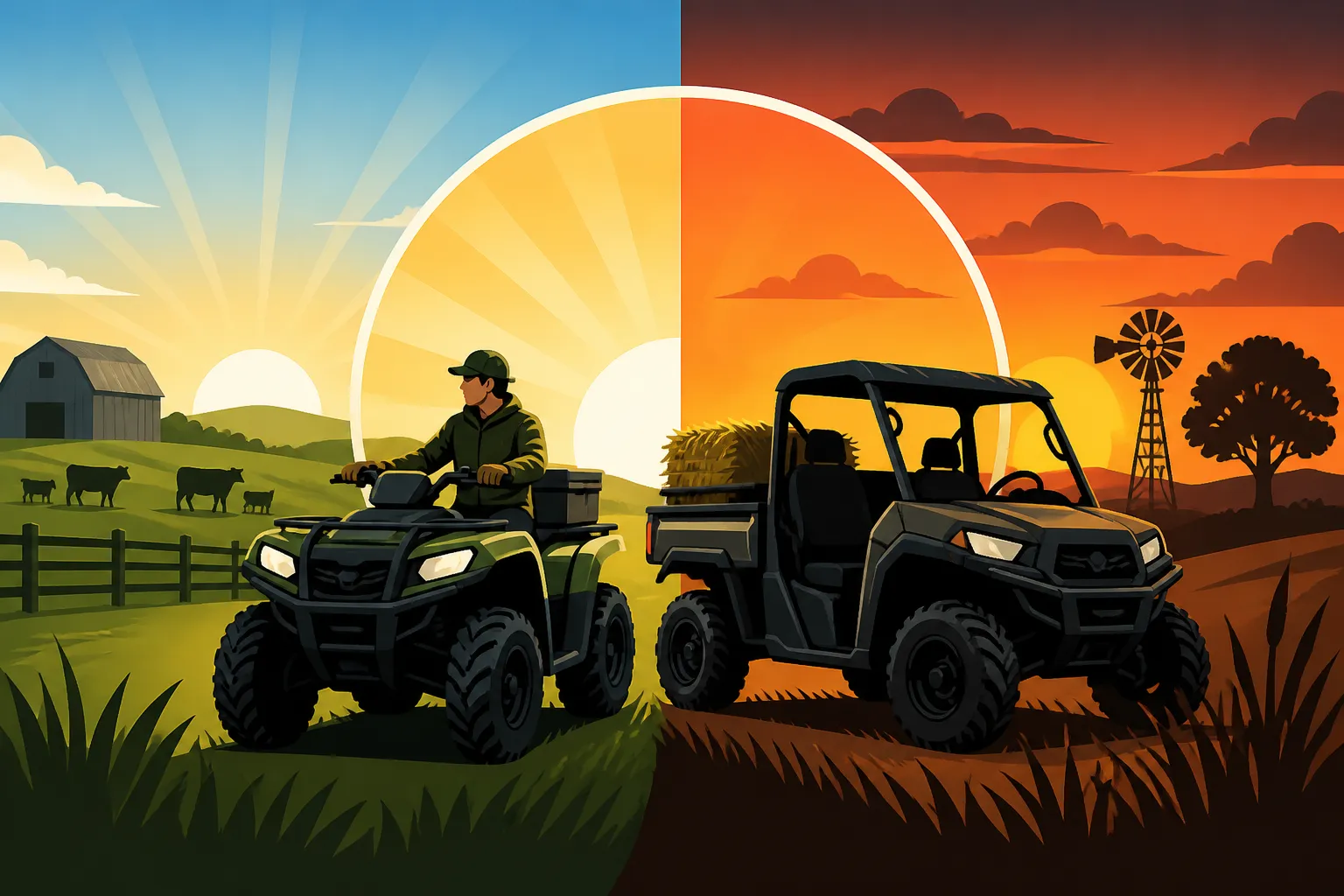
One of the most specific, and sometimes overlooked, aspects of the implement of husbandry exemption in Iowa is the "sunrise to sunset" rule. This isn't just a quaint saying; it's a legal timeframe that dictates when an unregistered ATV or UTV can be operated on public roads when conducting farm work. Essentially, if your machine qualifies as an implement of husbandry and you need to move it on a public road, you are generally restricted to operating it only between these daylight hours. This rule is designed to enhance safety, as low-light conditions significantly increase the risk of accidents, especially for machines that might not be equipped with full road-legal lighting.
Imagine you're checking cattle in a far pasture, and the quickest way there involves crossing a short stretch of county gravel road. If it's 10:00 PM, and you’re using an unregistered ATV, you're technically in violation. Even if you have the best intentions and are genuinely performing farm duties, the "sunrise to sunset" rule is a hard limit. This can be frustrating, particularly during busy seasons like planting or harvest when farm work often extends well into the night. It means planning your movements carefully and understanding that certain tasks, if they require public road use, must be completed during daylight. This is distinct from [Riding a Snow-Covered Gravel Road] which might have different considerations due to road conditions.
The rule reinforces the idea that while your ATV or UTV is a farm tool, it's not a conventional road vehicle. The state gives you leeway for essential farm travel, but with clear boundaries. If you find yourself consistently needing to move farm machines on public roads outside of daylight hours, it might be a strong indicator that you should consider registering the machine and ensuring it meets all requirements for road use, even if only for short distances. This is especially true if you're regularly travelling more than [2 Miles From the Farm in Iowa], as longer distances on public roads further scrutinize the "implement of husbandry" claim.
Geographic Limits: When and Where the Exemption Applies
The implement of husbandry exemption isn't just about what you're doing; it's also profoundly about where you're doing it. The geographic boundaries are crucial for determining whether your ATV or UTV needs to be registered. Generally, the exemption is most robust when your machine remains entirely on your own private property, or on property where you have explicit permission to operate for agricultural purposes. The moment your wheels touch public land or public roads, even briefly, the rules can change dramatically.
Iowa law specifies that an implement of husbandry can be operated on a public highway for short distances, primarily for moving from one farm parcel to another or for accessing fields. However, this is tightly constrained. There’s a widely recognized, though not always rigidly defined, "2-mile rule" or similar short-distance allowance that permits such crossings. The intent is to facilitate necessary farm logistics, not to provide an excuse for unregistered recreational riding on public routes. If you’re riding [2 Miles From the Home Place] to another parcel of your land, the exemption might still apply, but pushing beyond that or using it for anything other than direct farm operations is a quick way to invalidate the exemption.
Consider a scenario: you own two fields separated by a county gravel road. Taking your unregistered ATV directly across that road to get to the other field for fence repair would typically fall within the exemption, provided it's within the "sunrise to sunset" window and you're moving directly. However, if you decide to take a detour down that gravel road to visit a neighbor for a non-farm chat, or worse, to access a recreational trail, you've likely just stepped outside the bounds of the exemption. At that point, your machine would be considered unregistered for recreational use on public land, which could lead to a citation. This is why understanding [Riding Iowa Private Land Without Registering] is so key; it's where the exemption provides the most freedom.
Avoiding Pitfalls: When Your Farm Machine Needs a Decal
Even if your ATV or UTV spends 99% of its life performing farm tasks, there are specific situations where the implement of husbandry exemption simply won't apply, and your machine will need to be registered and titled with the Iowa DNR. Understanding these scenarios is paramount to avoiding fines and ensuring you're always compliant. The state focuses on the primary use and location of operation when determining registration requirements, and veering from purely agricultural use or strictly private land can quickly trigger the need for a decal.
One of the most common pitfalls is using your farm machine for any recreational activity on public land or designated public trails. For example, if you take your "farm quad" out for a weekend ride at an OHV park, or even just joyriding down a remote county road, it immediately loses its implement of husbandry status for that outing. In these cases, you absolutely need a current Iowa registration decal. The law is very clear that the exemption is for agricultural work, not for dual-purpose recreational use. If you’re considering buying a used machine that was primarily used for farm work, it’s wise to understand [Why Iowa Titles Every Transferred Machine] and ensure the previous owner took care of any titling obligations. You might also want to look into [Iowa ATV Bill of Sale Requirements] to protect yourself in the transaction.
Another scenario is when your farm machine is operated on public roads beyond the very limited scope of direct farm-to-farm or field-to-field transport. If you're frequently traveling more than a minimal distance on public roads, or if you're using public roads to access non-agricultural destinations, the implement of husbandry exemption likely won't protect you. For machines that regularly interact with public thoroughfares, even for farm-related activities, considering full registration is often the safest and most compliant option. This means your machine would need a title, and you'd pay the [Iowa ATV Registration Cost] annually. You’d also need to ensure it meets any specific road-use requirements like lighting or insurance. For forms and documentation, you might find templates on sites like LawDepot helpful for creating a record of sale or ownership transfer, but for state registration, you’ll be dealing directly with the county recorder’s office. They’ll need to see [What Iowa's Registration Form Asks For] filled out completely.
It’s also crucial to remember that the exemption typically pertains to DNR registration. Other state laws, such as those related to [Iowa's Farm License Exemption] for certain agricultural vehicles, operate under different criteria. Don't assume that an exemption in one area automatically grants you free rein in another. Always double-check the specific rules for ATVs and UTVs. If you determine your farm machine needs to be fully registered, you’ll need to understand the process for [Registering a Farm Machine in Iowa] at your local county recorder’s office. They can guide you through the necessary steps for [Titling an ATV in Iowa] and getting that essential decal affixed to your machine.
| Situation | Implement of Husbandry Exemption Applies? | What You Might Need Instead |
|---|---|---|
| On private farm property, doing farm work | Yes, generally | N/A |
| Crossing public road between fields (daylight) | Yes, if direct & short | N/A (but follow road rules) |
| Joyriding on a public gravel road | No | Iowa ATV Registration decal |
| Riding trails at an Iowa OHV Park | No | Iowa ATV Registration decal |
| Hauling tools on public road at 10 PM | No (due to "sunrise to sunset") | Iowa ATV Registration decal (and proper lights) |
| Moving between farm parcels >2 miles (daylight) | Potentially, but risky | Iowa ATV Registration decal highly recommended |
| Using for hunting on public land | No | Iowa ATV Registration decal |
| Selling the machine | N/A (still needs proper title transfer) | Iowa ATV Title, Bill of Sale (e.g., from LawDepot) |
Remember, when in doubt, it’s always better to err on the side of caution and ensure your machine is properly registered and titled. The peace of mind alone is worth it, preventing potential headaches and financial penalties down the road.
Disclaimer
This article is for general informational purposes only and does not constitute professional advice. Laws, prices and regulations vary by location and change over time. Consult a qualified professional for guidance on your specific situation.