Iowa Spark Arrester Rules
Iowa riders often hear that an ATV or UTV needs a spark arrester, but the answer can depend on where the machine is being used. The practical solution is to check the rules for the specific riding area, understand what the device does, and make sure a required arrester is intact before unloading.
What an ATV spark arrester does
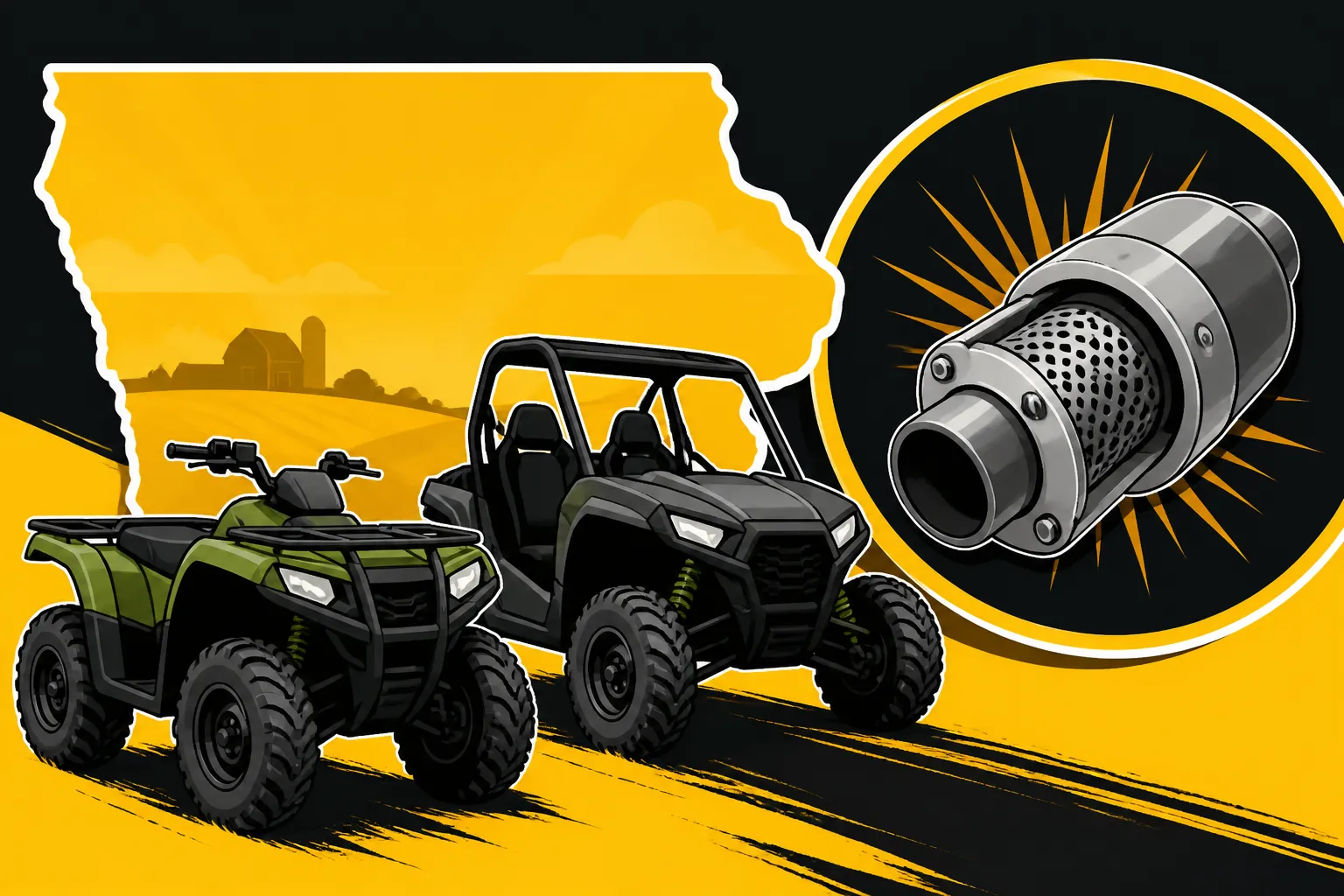
A spark arrester is a device in the exhaust system designed to reduce the chance that hot particles leave the exhaust and start a fire. It is not the same thing as a muffler. A muffler reduces exhaust noise; a spark arrester addresses sparks and hot debris. Some exhaust components combine both functions, but one does not automatically prove the other is present.
That distinction matters because a machine can sound quiet and still lack a functioning spark-arresting device. It can also have an arrester while producing more noise than a riding area allows. Treat fire-prevention and noise rules as separate checks. For more on the noise side, see Iowa Sound Limits at an OHV Park.
Spark arresters are particularly relevant where dry vegetation, timber, grass, or other combustible material is near a trail. Even if a machine has a factory exhaust, do not assume it meets every riding area’s requirements after an exhaust change, repair, or modification. A device may have been removed, damaged, or replaced with a component that does not perform the same function.
A spark arrester also does not make a machine safe to ride anywhere. It does not grant access to public land, replace registration or a visitor permit, or override a closure. For the larger picture, check Iowa Rules for Riding Public Land and the rules for the particular park or trail you plan to use.
Where Iowa riders should check the rule
There is no good substitute for checking the rules that apply to the specific place you plan to ride. Requirements may come from state law, a public riding-area operator, a club, a county, or a private landowner. A rule at one facility should not be assumed to apply identically at another.
Start with the riding site’s current rules. If the machine will be used at a designated riding area, look for its posted requirements and ask the operator or managing agency if the spark-arrester language is unclear. The rules for a park may cover equipment, noise, trail access, and temporary closures separately. Iowa Rules for a Designated Riding Area explains why the site itself matters, while Iowa’s Eight Designated OHV Parks can help put public riding areas in context.
| Where you plan to ride | What to check before the trip |
|---|---|
| A designated OHV park | The park’s current machine and equipment rules, including any spark-arrester requirement |
| A club-managed trail | The club’s access conditions and any requirements for machines using its trails |
| Public land | The managing agency’s rules for that property and the specific area open to riding |
| Private land | The landowner’s permission and any conditions attached to it |
| A different state or facility | That location’s rules; do not assume Iowa or another park’s requirements carry over |
A club trail may have its own entry conditions even if the route crosses or borders land managed by someone else. Ask the trail operator rather than relying on a general statement from a rider or an old social media post. See Iowa Rules for Riding a Club Trail for more on checking the rules that come with club access.
If the answer is not clear online, contact the park or land manager before driving there. Ask specifically whether your machine needs a spark arrester, whether a particular approval or marking is required, and whether the requirement applies to all machine types using the area. That is more useful than asking only whether the site has “noise rules,” since noise limits and spark-arrester requirements address different issues.
Keep in mind that a riding-area rule can change, and a site can close trails or alter access conditions. Check again close to your planned ride, especially if you have not visited recently. Iowa Trail Closures to Check First offers a broader reminder to confirm current conditions before loading.
How to check your machine and exhaust
Begin with the owner’s manual and the documentation for the exhaust system currently installed. If the machine still has its original exhaust, the manual may identify the system’s components and maintenance requirements. If it has an aftermarket exhaust, use the paperwork for that exact system rather than assuming a similar-looking product is equivalent.
Before a ride, look for signs that the exhaust has been altered or damaged:
- Missing components, loose fittings, or visible gaps in the exhaust assembly
- A damaged or removed screen, insert, or other arrester component
- Evidence that a part has been drilled, cut, or modified
- Excessive exhaust noise, which may indicate a separate muffler or maintenance issue
- A replacement exhaust with no clear documentation about whether it includes a spark arrester
A quick visual check cannot always confirm that a device meets a particular site’s requirements. If the rule calls for a specific type of approval or identification, check the manufacturer’s documentation and compare it with the site’s wording. Do not rely on appearance alone, and do not treat a generic mesh insert as proof of compliance unless the riding area accepts that component.
If you are shopping for a replacement, search by the exact machine model and exhaust system, then confirm fitment and documentation with the manufacturer or seller. Listings on Amazon can include parts for many model years and configurations, so a product title or photo by itself is not enough to establish that a component fits or meets a riding site’s requirements. When the site requires a specific approval, get confirmation before buying or riding.
Do not remove or modify an arrester to change the sound or exhaust flow without checking the consequences. A modification can affect both fire-prevention compliance and noise compliance, and may also create reliability or warranty issues. If you are unsure whether a part is missing or damaged, have a qualified repair shop inspect the exhaust before the trip.
A well-maintained exhaust is a practical precaution even when a particular site does not clearly state a spark-arrester requirement. Keep the machine in good repair, follow the manufacturer’s maintenance instructions, and avoid riding near dry vegetation when conditions make fire risk a concern. Those steps do not replace a formal requirement, but they help reduce preventable risk.
Spark arresters, permits, and visiting riders
A spark arrester is an equipment issue, not a riding permit. Having one does not establish that your ATV or UTV is registered, that you have permission to use a trail, or that your machine is eligible to ride there. Visitors should check both equipment rules and the requirements that apply to an out-of-state machine.
If you are visiting Iowa, check whether your home-state registration is accepted for the riding you plan to do and whether an Iowa nonresident permit is required for your circumstances. The answer can depend on the machine, the type of riding, and the location. Start with Does Iowa Honor Out-of-State Registration? and Iowa’s Permit for a Visiting Machine, then confirm the current rule with the relevant official source or site operator.
The same separation applies to Iowa residents. Registration and a park’s admission or access rules are not the same as the condition of the exhaust. Review Iowa ATV Registration and Sales Tax only if you need background on the registration side; it does not answer whether a spark arrester is required at a particular trail.
Before each trip, use this short process:
- Identify the exact park, trail, or property where you intend to ride.
- Check its current rules for spark arresters, exhaust noise, and any other equipment conditions.
- Confirm that your installed exhaust has the required component and documentation.
- Check registration, permit, access, and closure requirements separately.
- If any rule is ambiguous, contact the land manager or operator before leaving home.
This approach avoids two common mistakes: assuming a quiet exhaust automatically contains an arrester, and assuming that carrying the right permit settles every equipment question. A short check with the site can prevent a wasted trip and help protect the riding area.
Disclaimer
This article is for general informational purposes only and does not constitute professional advice. Laws, prices and regulations vary by location and change over time. Consult a qualified professional for guidance on your specific situation.