Iowa Rules for Riding a Snow-Covered Road
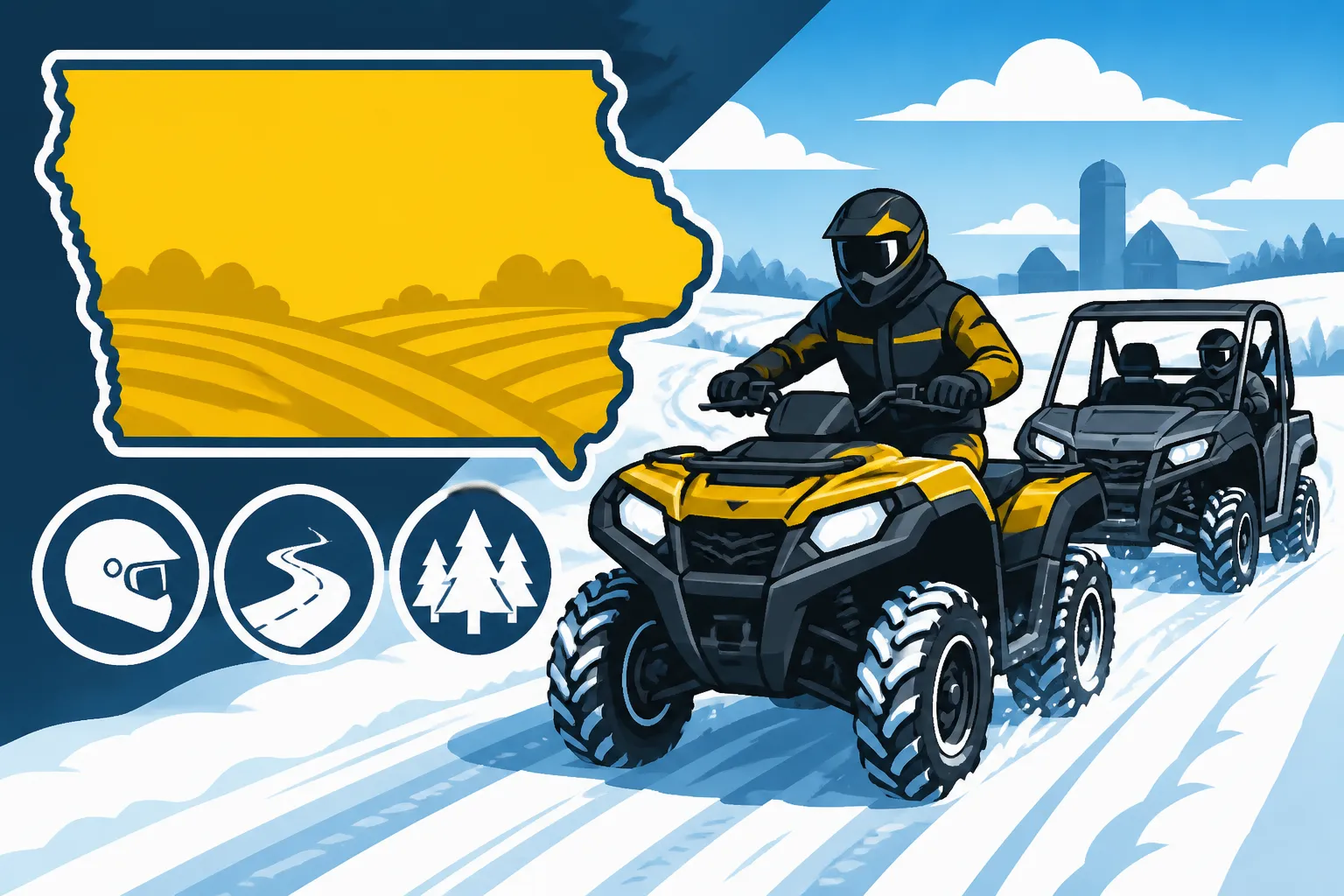
The allure of a fresh blanket of snow stretching across the Iowa landscape, just begging for tracks, is a powerful draw for any ATV or UTV owner. Many of us naturally think that a snow-covered road suddenly transforms into a winter playground. However, this isn't exactly the case in Iowa, and misunderstanding the rules can quickly turn a fun winter ride into a costly ticket or, worse, a dangerous situation. This guide will walk you through the specific regulations and practical considerations for legally and safely riding your ATV or UTV on snow-covered roads in Iowa.
The Basics of Iowa Road Riding for ATVs & UTVs and How Snow Changes Things
Before we even talk about snow, it's crucial to understand the baseline rules for operating an all-terrain vehicle (ATV) or utility terrain vehicle (UTV) on public roads in Iowa. These foundational rules don't just disappear when the snowflakes start to fall; in fact, they remain largely intact and become even more critical to safety and legality.
Standard Road Rules: The Foundation
Iowa's law about riding ATVs and UTVs on public roads is quite specific, and it's designed with safety and public order in mind. Generally, you're looking at a few core requirements. First, the operator must be at least 18 years old and possess a valid driver's license. This isn't a suggestion; it's a strict age and licensing requirement. Furthermore, your machine needs to be properly insured. Think of it like driving your car – you wouldn't (or shouldn't!) hit the road without the right coverage, and your off-highway vehicle is no different when it's on public ground. Iowa law mandates minimum liability coverage to protect you and others in case of an incident. [Insurance Iowa Requires on a Road] outlines these requirements clearly.
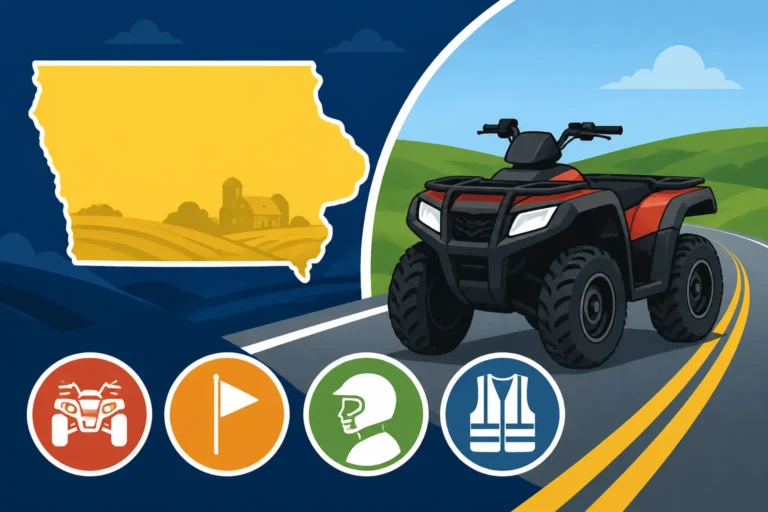
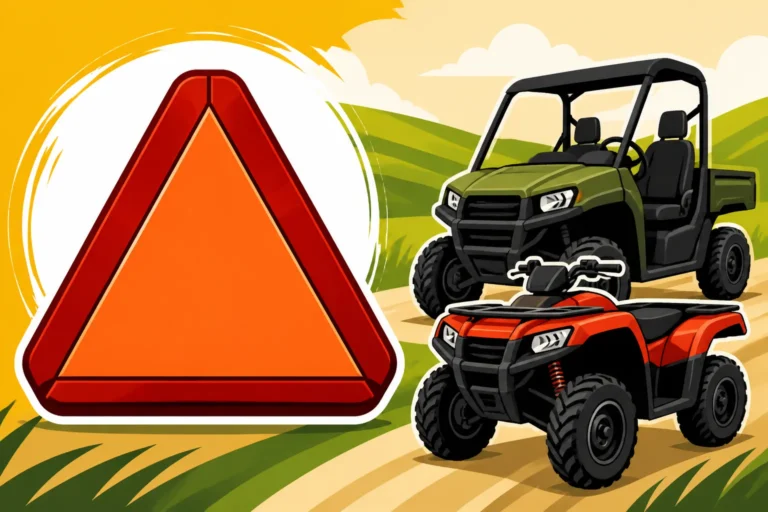
You're also generally limited to unpaved county secondary roads, unless a specific county or city ordinance allows for riding on paved secondary roads or certain city streets. Speed is capped at 35 mph, and you must always take the [Iowa's Most Direct Route Rule] between your starting point and destination, or to a designated trail system. You can't just joyride up and down any road that catches your eye. Lights are required to be on, even during daylight hours, and your machine needs to have a horn, at least one rear-view mirror, and functional tail and brake lights. A slow-moving vehicle triangle is also a must on the rear of your machine. When you're thinking about adding accessories for winter riding, like a full cab enclosure or a heater, make sure they don't impede your visibility or the visibility of these crucial safety elements.
The critical takeaway here is that these standard rules are the bedrock. Snow doesn't magically dissolve them. If a road isn't legally open to ATVs or UTVs under normal, clear conditions, it certainly isn't open just because it's covered in snow.
Why Snow-Covered Roads are Different (But Not Always)
There's a common misconception that once a road is blanketed in snow, especially if it's unplowed or less traveled, it somehow reverts to an unregulated expanse where off-road vehicles can roam freely. This is a tempting thought for many winter enthusiasts, but it's a dangerous one to embrace from a legal standpoint in Iowa. The underlying classification of the road – whether it's an unpaved county secondary road, a paved secondary road, a primary highway, or a city street – remains unchanged. Snow doesn't transform a highway into an off-road trail, nor does it override existing county or city ordinances.
What snow does change is the surface condition, and sometimes, the enforcement context. An unplowed, snow-covered county gravel road might feel more like a trail, but it's still legally a road. Law enforcement still has jurisdiction, and all the standard road rules, including age, licensing, insurance, and direct route requirements, still apply. The biggest practical difference might be less vehicular traffic, especially on lesser-used roads, but this isn't a legal waiver.
Some counties and cities might have specific language in their ordinances regarding "unmaintained" or "impassable" roads due to snow, but these are exceptions, not the rule, and they typically refer to vehicles other than ATVs or UTVs. For example, a rural lane might be closed to regular traffic due to a massive snow drift, but this doesn't automatically mean it's open for ATV recreation. Always err on the side of caution and assume that if it's a public road, the normal ATV/UTV road use laws apply, snow or no snow. For any significant winter upgrades, like track systems that replace tires, you'd want to check with your county recorder or local law enforcement for clarification on how those might affect road legality, as they can change the machine's footprint and handling characteristics significantly. Companies like SuperATV offer a range of winter-specific accessories that can greatly improve your machine's performance in snow, but even the best equipment doesn't override the law.
Specific Legalities for Snow-Covered Secondary Roads and City Streets
Understanding where you can actually ride your ATV or UTV in Iowa when the snow falls requires a careful look at how different road types are governed. It’s not a blanket rule across the state, and even within the same county, rules can vary based on the type of road.
Navigating County Secondary Roads in Winter
The vast majority of legal road riding for ATVs and UTVs in Iowa takes place on unpaved county secondary roads. These are your typical gravel or dirt roads that crisscross the rural landscape. When snow covers these roads, their legal status as secondary roads remains unchanged. This means all the standard rules we discussed earlier—operator age, valid driver's license, insurance, [Iowa's 35 mph Cap], and the requirement to follow the [Iowa's Most Direct Route Rule]—are still in full effect.
What snow does change is the physical riding experience and the demands it places on your machine and your skills. Traction is significantly reduced, so maintaining the 35 mph speed limit becomes even more crucial for safety. Headlights and taillights must still be on, even if it's broad daylight, to ensure maximum visibility in potentially adverse weather conditions. The [Iowa's Slow-Moving Vehicle Triangle] is still a legal requirement on the back of your machine, regardless of how much snow might be flying around. You want every possible measure to help other drivers spot you.
Consider the practical implications: deep snowdrifts can make certain stretches of road impassable, even for ATVs and UTVs. While this might mean fewer cars, it also increases the risk of getting stuck or encountering hidden obstacles. If you're using your UTV for tasks like clearing a long driveway or accessing a remote deer stand on private land that requires a brief stint on a snow-covered secondary road, ensure you're compliant with all road-use laws for that specific segment of your journey. Many riders equip their machines with snow plows or even track systems from companies like SuperATV, which makes these winter tasks much more efficient, but the legal framework for road use doesn't change just because you're using your machine for practical work. Remember that a road that is unplowed and snow-covered doesn't automatically become an "off-highway vehicle trail" in the eyes of the law. It's still a road, and the rules governing roads apply.
City Streets and Snow: Check Local Ordinances
City streets present a unique challenge when it comes to riding ATVs and UTVs, especially when snow is involved. In Iowa, ATVs and UTVs are generally prohibited on city streets unless the local city council has passed a specific ordinance to allow them. This means that unlike county roads, you can't assume you can ride in a city without checking first. And when snow falls, this general prohibition doesn't lift. If anything, city ordinances might be even more stringent during winter weather.
For example, a city like Waukon, which has opened its streets to ATVs and UTVs, might have specific hours of operation or designated routes that riders must follow. [Waukon's Midnight to Five Ban] is one such example of a restriction that would still apply regardless of the weather. It's entirely possible that a city's ordinance might even include clauses about not riding during or immediately after snowfalls, or if roads are actively being plowed.
Therefore, before even thinking about taking your machine onto a snow-covered city street, you absolutely must check the local city ordinances. Don't rely on hearsay or what a friend "heard." Call the city clerk's office or check the city's official website. Since Iowa doesn't publish a statewide list of cities that allow ATVs on streets, this legwork is entirely up to you. An ordinance that allows ATVs on clear streets doesn't automatically extend to snowy conditions. The city's primary concern during snow events will be emergency access and efficient snow removal, and ATVs/UTVs might be seen as an impediment rather than a helpful tool, unless you're specifically operating under a city-approved snow removal contract. Your shiny new SuperATV snow plow is fantastic for your own property, but using it on city streets requires specific authorization.
Practical Considerations and Safety on Snow-Covered Roads
Beyond the legal requirements, riding an ATV or UTV on snow-covered roads introduces a whole host of practical and safety challenges that demand your attention. Ignoring these can lead to serious accidents, regardless of whether you're technically within the law.
Safety First: Beyond Just the Law
Snow and ice are inherently treacherous surfaces for any vehicle, and ATVs and UTVs are no exception. Traction is significantly reduced, meaning your stopping distances will be much longer, and your steering response will be less predictable. Even experienced riders can be caught off guard by a patch of black ice or a sudden shift in snow consistency. It's not just about avoiding hitting something; it's about maintaining control of your machine in conditions that actively try to take it away from you.
Visibility is another massive concern. While Iowa law mandates your lights be on, heavy snowfall, blowing snow, or even just the glare from a bright winter sun can severely limit both your ability to see and, crucially, other drivers' ability to see you. Cars, trucks, and especially snow removal equipment like plows are not expecting ATVs or UTVs on snow-covered rural roads. They might be focused on the road ahead, dealing with their own traction issues, and could easily miss your machine. Wearing bright, high-visibility clothing is critical, even if it's not strictly required by law.
Cold weather itself poses risks. Hypothermia can set in quickly if you're not properly dressed for the conditions, especially if you get stuck or have a breakdown. Layering is key, as are waterproof and windproof outer layers. Always carry emergency supplies: a shovel, a tow strap, a fully charged cell phone, extra warm clothing, water, and snacks. If you're riding a UTV, consider investing in a full cab enclosure and a heater from a reputable brand like SuperATV to dramatically improve comfort and reduce exposure to the elements. Remember, an enjoyable ride quickly turns miserable, or worse, if you're not prepared for the biting Iowa winter.
Staying Legal and Responsible
Even when you're meticulously following all the road rules, being a responsible rider on snow-covered roads means a heightened sense of awareness and adherence to the spirit of the law, not just the letter. Your [Iowa ATV Insurance Requirement] doesn't become optional because of snow. Make sure your proof of insurance is readily accessible, as a roadside stop in winter conditions can be even more uncomfortable.
Your registration decal, which serves as your permit to ride, needs to be clearly visible. A [Decal on the Rear of an Iowa Machine] can easily become obscured by snow, mud, or ice thrown up from your own tires. Take the time to clear it off regularly. A deputy can't verify your registration if they can't see the decal, which could lead to an unnecessary stop or citation.
The "most direct route" rule is particularly important here. You cannot use snow-covered roads as an excuse to deviate from the shortest, most practical route to your destination or a designated riding area like [Gypsum City OHV Park at Fort Dodge]. Wandering off the direct path for recreational purposes on public roads, even if they're snowy, is still illegal. Stick to your purpose and your route.
Finally, be respectful and give wide berth to any snow removal equipment. These operators are working hard to clear roads for essential travel, and they often have limited visibility themselves. They are performing a public service, and getting in their way or causing a distraction is irresponsible and dangerous. If you encounter a plow, pull over safely to the side of the road, stop, and wait for it to pass. Also, remember that if a road is designated as a "Level B" road, you might be able to ride its ditches during certain times of the year, but generally, [Riding a Ditch Beside a Level B Road] is restricted, and snow doesn't change this underlying rule. Always ride within the designated boundaries and permissions.
Here's a quick summary of key considerations for riding on snow-covered roads:
| Road Type | Legal Status (Snow-Covered) | Key Considerations for Snow |
|---|---|---|
| Unpaved County Sec. | Generally permitted (if legal when clear) | Reduced traction, poor visibility, drifts |
| Paved County Sec. | Permitted only if county ordinance allows | Reduced traction, black ice, higher speeds |
| Primary Highways | Generally prohibited (exceptions for crossing/emergency) | Highly dangerous, high speed, high traffic |
| City Streets | Permitted only if city ordinance allows | Check specific city rules for snow/winter |
Disclaimer
This article is for general informational purposes only and does not constitute professional advice. Laws, prices and regulations vary by location and change over time. Consult a qualified professional for guidance on your specific situation.