Carrying a Driver’s License on a Gravel Road
Picture this: you've planned an amazing day of riding, your ATV or UTV is gassed up, and you're ready to hit some of Iowa's beautiful gravel roads to get to your favorite trail system or simply enjoy the scenery. You pull out of your driveway, and then it hits you – that little voice of doubt. Do you actually need to have your driver's license with you, right now, just to ride down a gravel road? This is a common point of confusion and a question that, if answered incorrectly, can turn a fun outing into a frustrating and expensive encounter with law enforcement. This guide will walk you through exactly when and why you need your driver's license on Iowa's gravel roads, along with other crucial items to ensure your ride stays legal and worry-free.
Iowa's Framework for Riding Off-Highway Vehicles on Public Roads
Iowa has specific rules that govern the use of off-highway vehicles (OHVs), which include ATVs and UTVs, on public roads. While the primary purpose of these machines is off-road recreation, there are times when you'll need to use public roads, particularly unpaved secondary roads, to access trails, move between properties, or simply get home. Understanding these foundational rules is the first step to staying compliant.
Understanding Unpaved Secondary Roads
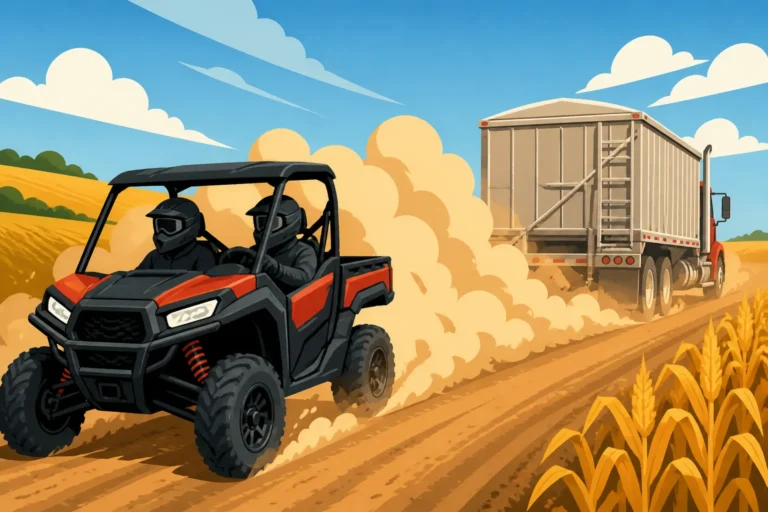
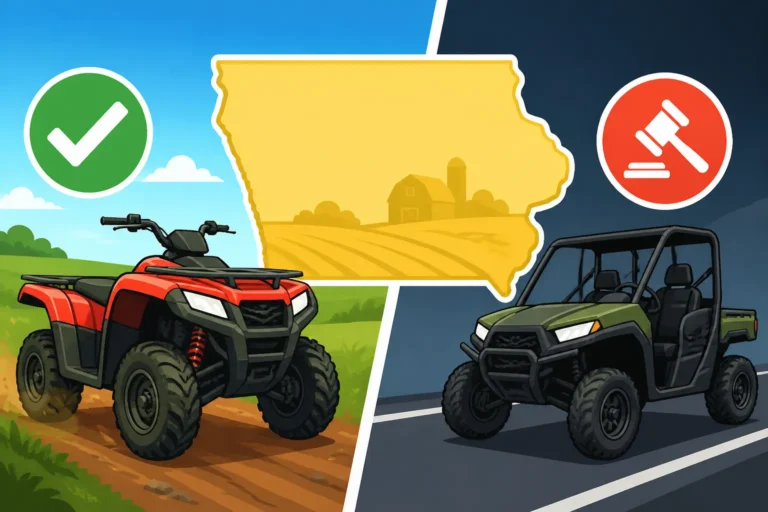
When we talk about riding ATVs and UTVs on public roads in Iowa, we're almost always referring to what are legally known as "unpaved secondary roads." These are your typical gravel roads, the backbone of rural Iowa, that connect farms, small towns, and recreational areas. Unlike paved highways or even paved secondary roads (which require specific county authorization to open for OHV use), unpaved secondary roads are generally open to registered and properly equipped OHVs, provided you adhere to all other state laws. It’s important to recognize that while they might feel more like a trail than a highway, they are still considered public roads, and all traffic laws apply to the operator and the vehicle. This means you can't treat them like your private acreage; they are shared thoroughfares with other vehicles, including cars, trucks, and farm equipment.
The "Most Direct Route" and Its Implications
Iowa law doesn't just let you cruise gravel roads for leisure without purpose. There's a "most direct route" rule that governs your travel. This means that if you're using a gravel road, you should generally be taking the shortest, most practical route to get to a specific destination – whether that's an OHV park, your property, a service station, or another authorized riding area. You can't simply meander aimlessly or use them as a private recreational track. For example, if you're heading to a place like Gypsum City OHV Park, you are expected to take [The Most Direct Route to an Iowa OHV Park] from your starting point. This rule is designed to prevent excessive and unnecessary OHV traffic on public roads, maintaining their primary function for transportation while allowing reasonable access for enthusiasts. Violating this can lead to a citation even if you have all your other paperwork in order.
Age and Operator Requirements on Public Roads
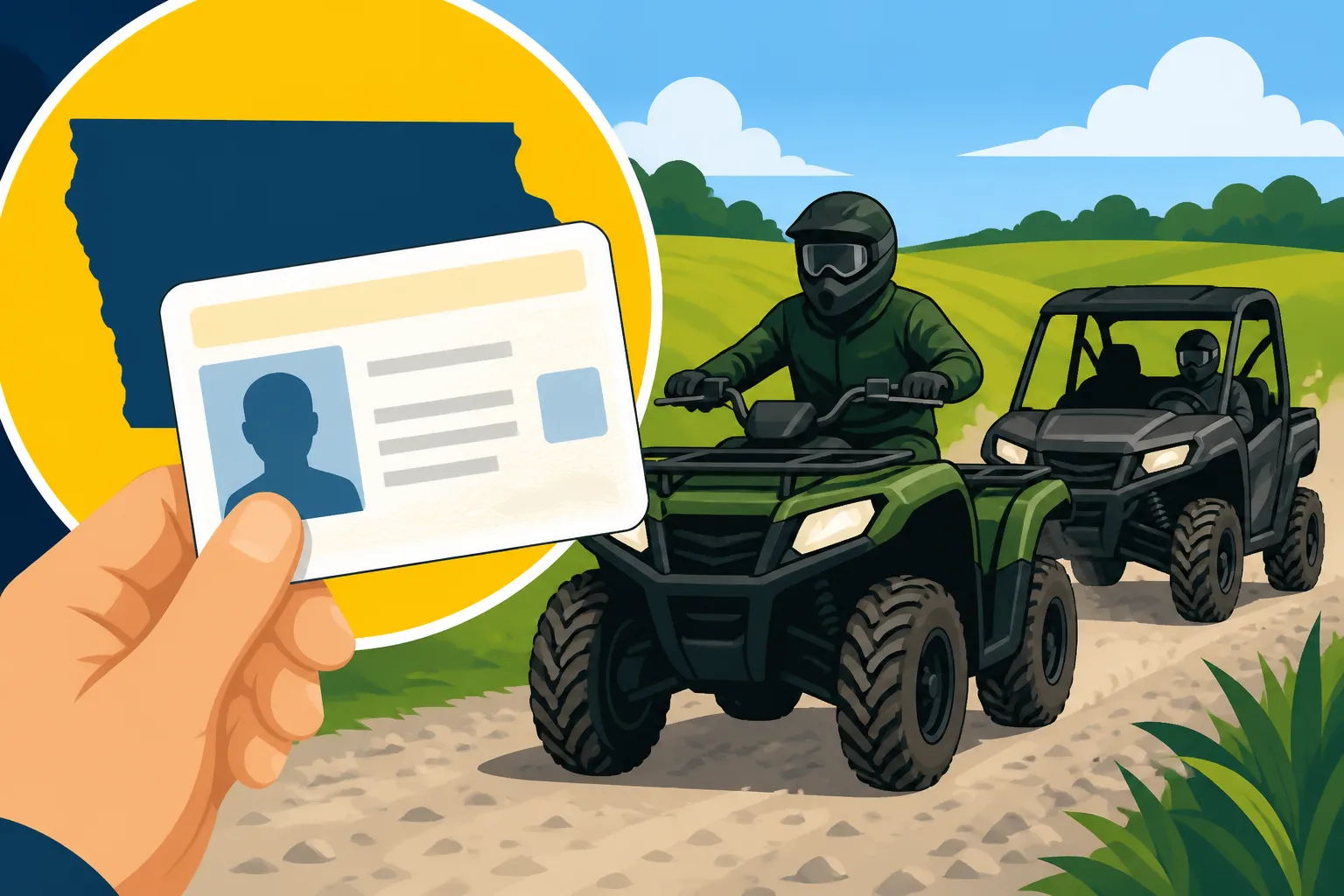
One of the most critical aspects of riding an ATV or UTV on any public road in Iowa, including gravel roads, pertains to the operator. Iowa law is very clear: to operate an ATV or UTV on a public road, you must be at least 18 years old. There is no exception for younger riders, even if they possess an off-highway vehicle safety certificate. This is a common point of confusion, especially for parents of eager younger riders. Furthermore, you must possess a valid driver's license. This isn't just a suggestion; it's a legal requirement that elevates the operation of an OHV on a public road to the same level as driving a car or truck in terms of operator qualifications. [Iowa Minimum Age to Ride a Road] is a non-negotiable aspect of responsible and legal riding on these routes.
The Driver's License: Your Essential Credential
When you transition your ATV or UTV from private land to a public gravel road, your role as an operator instantly changes. You're no longer just a recreational rider; you're a motorist on a public thoroughfare, and your driver's license becomes your most important document.
Why the License is Non-Negotiable on Public Land
Think of your driver's license as your official permit to operate a motor vehicle on public roads. When you're on a gravel road, even if it feels remote and untraveled, you are operating a motor vehicle on public property. Iowa law mandates that any person operating an ATV or UTV on a public road must hold a valid driver's license. This isn't just about identification; it proves that you have undergone the necessary training and testing to be deemed a competent and safe driver. It signifies that you understand traffic laws, can react appropriately to road conditions, and are generally fit to share the road with others. Without it, you're not just unregistered; you're unqualified in the eyes of the law, which carries significant legal ramifications.
The Distinction: Public Versus Private Property
It’s crucial to understand the bright line between riding on private land and riding on public roads. If you're riding your ATV or UTV entirely on your own property, or on someone else's private land with their express permission, the requirement for a driver's license typically doesn't apply. [Riding Iowa Private Land Without Registering] is a completely different ballgame. On private property, you're governed by different rules, primarily those set by the landowner and general safety practices. However, the moment your wheels touch a public right-of-way—even just crossing a ditch to get to another field, or briefly running along a road shoulder—you are on public land. At that exact moment, the requirement for a valid driver's license, along with other road-specific equipment and registration, immediately kicks in. This distinction is paramount and often misunderstood by riders who assume a casual approach to public road access.
Consequences of Riding Without a Driver's License
Ignoring the driver's license requirement can lead to a host of unpleasant consequences. If you're stopped by an Iowa deputy or a conservation officer while operating an OHV on a gravel road without a valid driver's license, you're likely looking at a citation. This isn't just a slap on the wrist; it can result in significant fines and potentially even more severe penalties. Law enforcement is very clear on this. When a deputy performs a roadside check, they're looking for several things, and your driver's license is high on that list. [What an Iowa Deputy Checks Roadside] can tell you more about what to expect. Beyond the financial hit, you could face delays, the inconvenience of having your machine impounded, and the stress of dealing with the legal system. It's simply not worth the risk. Always carry your physical, valid driver's license when you're going to be on any public road, even if it’s just a short hop across a gravel lane.
Beyond the License: Other Road-Legal Essentials for Your OHV
While a driver's license is fundamental for operating your ATV or UTV on Iowa's gravel roads, it's far from the only requirement. Your machine itself needs to be properly equipped and documented to be legal for road use. Forgetting these additional items is just as problematic as forgetting your license.
Registration and Decals
Just like a car, your ATV or UTV needs to be registered with the state of Iowa if you plan to operate it on any public land, including gravel roads. This involves paying the annual registration fee, after which you'll receive a registration certificate and an annual decal. This decal must be prominently displayed on the rear of your machine. [A Decal on the Rear of an Iowa Machine] ensures that law enforcement can quickly verify your machine's legality without needing to stop you. The cost of registration covers various administrative fees and contributes to the state's OHV program, supporting trail development and maintenance. Understanding [Iowa ATV Registration Cost] is crucial for budgeting your riding season. Riding an unregistered machine on a public road is a direct violation and will certainly lead to a citation. It’s also wise to keep your registration certificate with you on the machine, either in a waterproof pouch or a secure compartment.
Proof of Insurance
Iowa takes insurance seriously, and this applies to ATVs and UTVs used on public roads. If you're going to be on a gravel road, you must have liability insurance coverage. The minimum requirements are typically expressed as 20/40/15: $20,000 for bodily injury to one person, $40,000 for bodily injury to two or more people, and $15,000 for property damage. This protects you and others in the event of an accident. You need to be able to provide proof of this insurance if requested by law enforcement. [Iowa ATV Insurance Requirement] is a mandatory component of road-legal operation. Failing to have adequate insurance, or simply not being able to prove it on demand, can result in substantial [Iowa Fines for No Proof of Insurance]. Make sure you carry your insurance card or an electronic copy that is easily accessible.
Essential Equipment for Road Use
Beyond your license, registration, and insurance, your ATV or UTV itself needs to meet specific equipment standards for road use. These aren't just suggestions; they are legal requirements designed for safety and visibility.
- Headlights and Taillights: Your machine must have working headlights and taillights. These are essential for visibility, especially during dawn, dusk, or in inclement weather, or if you find yourself out later than planned. [Iowa Lighting Requirements for ATVs] state that headlights must be on at all times when operating on public roads.
- A Horn: A working horn is necessary to alert other drivers or pedestrians to your presence. A quick "beep" can prevent an accident or simply let a farmer know you're passing by. For those looking to upgrade or add this feature, reputable brands like SuperATV offer a variety of horns that can be easily installed to meet Iowa's requirements.
- At Least One Mirror: You must have at least one rearview mirror mounted on your machine, allowing you to see traffic approaching from behind. Many UTVs come with these, but if your ATV doesn't, aftermarket options are readily available. SuperATV, for instance, provides universal mirrors that can improve your safety and ensure compliance. [A Horn and a Mirror for Iowa Road Use] are basic safety features that become legal necessities on public roads.
- Slow-Moving Vehicle (SMV) Triangle: If your ATV or UTV is being operated at speeds typically below 25 mph (which is often the case on gravel roads, and certainly below the 35 mph speed cap for OHVs on Iowa roads), you are required to display a slow-moving vehicle triangle on the rear of your machine. This bright orange and red reflective triangle warns faster-moving traffic that you are operating at a lower speed.
- Brakes: Of course, fully functioning brakes are a must.
- Muffler: Your machine must have a muffler in good working order to prevent excessive noise.
Before you even think about hitting a gravel road, do a quick checklist: license, registration, insurance, horn, mirror, lights, and SMV triangle.
Debunking Common Road Riding Myths
Despite clear regulations, several misconceptions persist among ATV and UTV riders regarding road use in Iowa. Clearing up these myths can save you a lot of trouble.
"It's Just a Gravel Road, No One Cares!"
This is perhaps the most dangerous myth of all. While gravel roads might feel isolated, they are still public roadways, and law enforcement agencies—from county sheriffs to state patrols and DNR conservation officers—do patrol them. Deputies and officers are trained to recognize unregistered or improperly operated vehicles. They absolutely care, and they will enforce the law. Assuming no one is watching because you're off the main highway is a recipe for a citation and a ruined day. Always assume that legal requirements are being enforced, regardless of how remote the road feels.
Assuming Out-of-State Rules Apply
Many riders visit Iowa from neighboring states like Minnesota, Missouri, Nebraska, South Dakota, or Wisconsin. A common misconception is that if their ATV or UTV is street legal in their home state, it's automatically street legal on Iowa's gravel roads. This is incorrect. While Iowa does have some reciprocity for out-of-state registration (meaning you might not need an Iowa decal if your machine is properly registered in your home state and you purchase an Iowa Nonresident User Permit), all other Iowa road-use laws still apply to the operator and the machine. This includes the driver's license requirement, age restrictions, and equipment requirements like a horn and mirror. If you're visiting from a state like Minnesota, even if your ATV is legally registered there, you still need to know [Iowa Reciprocity With Minnesota] and understand that Iowa's specific road rules are the ones you must follow while within its borders.
"I'm Only Going a Short Distance"
The distance you intend to travel on a public road, be it a hundred feet or five miles, has no bearing on whether the law applies to you. The moment your ATV or UTV rolls onto public property (which includes ditches and shoulders), you are subject to all relevant Iowa traffic laws, including the driver's license requirement. A deputy won't give you a pass because you were "just going to the mailbox" or "just crossing the road." The law applies regardless of the length or perceived insignificance of your journey. Short distances often lead to complacency, but this is exactly where riders can get caught off guard.
The "Implement of Husbandry" Loophole
Another widespread misunderstanding revolves around the "implement of husbandry" exemption. Iowa law does provide certain exemptions for vehicles used "solely for agricultural purposes" or "incidentally moved upon a highway." This typically applies to machinery like tractors, combines, or ATVs/UTVs that are primarily used for farming tasks. However, this exemption is very specific and limited. It generally applies when the machine is being used in direct support of an agricultural operation, such as moving equipment between fields, checking livestock, or hauling feed. The moment an ATV or UTV is used for recreational purposes, or even for personal errands not directly related to farming, it typically loses its implement of husbandry status. This means that if you're taking your "farm quad" out for a joyride on a gravel road, or using it to pick up groceries, it must meet all the regular road-legal requirements, including operator licensing. [The Implement of Husbandry Exemption in Iowa] is not a blanket pass for all rural ATV use on public roads.
Here's a quick summary of the key requirements for riding your ATV or UTV on Iowa's unpaved secondary (gravel) roads:
| Requirement | Description |
|---|---|
| Operator Age | Must be 18 years old or older. |
| Driver's License | Must possess a valid, current driver's license and carry it with you. |
| Machine Registration | Must be registered with the Iowa DNR; display current decal on the rear. |
| Proof of Insurance | Must carry liability insurance (min. 20/40/15) and show proof upon request. |
| Headlights/Taillights | Must be operational; headlights must be on at all times on public roads. |
| Horn | Must have a functional horn. |
| Mirror | Must have at least one rearview mirror providing an adequate view to the rear. |
| SMV Triangle | Must display a Slow-Moving Vehicle (SMV) triangle on the rear if traveling below 25 mph. |
| Speed Limit | Max 35 mph on public roads. |
| Route | Must take the "most direct route" to or from a designated area. |
By understanding and adhering to these requirements, you can enjoy Iowa's extensive network of gravel roads with confidence, knowing you're riding safely and legally. Always be prepared, always be visible, and always carry your driver's license when you're on public land.
Disclaimer
This article is for general informational purposes only and does not constitute professional advice. Laws, prices and regulations vary by location and change over time. Consult a qualified professional for guidance on your specific situation.