Sharing Gypsum City With Full-Size Rigs
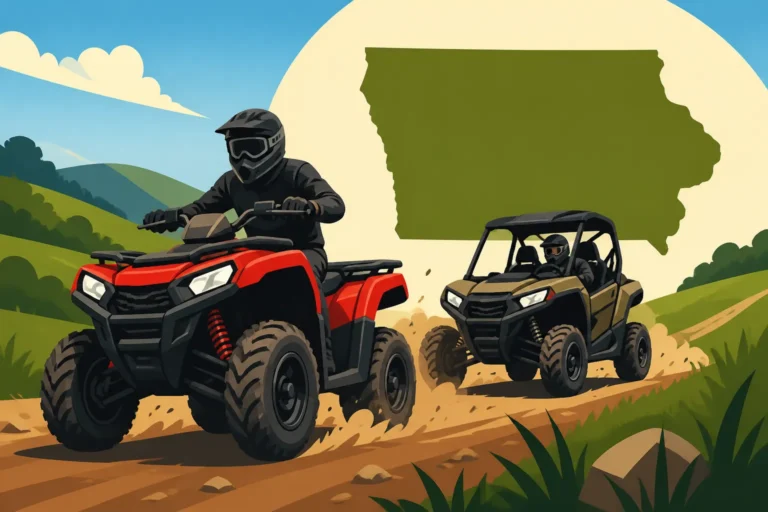
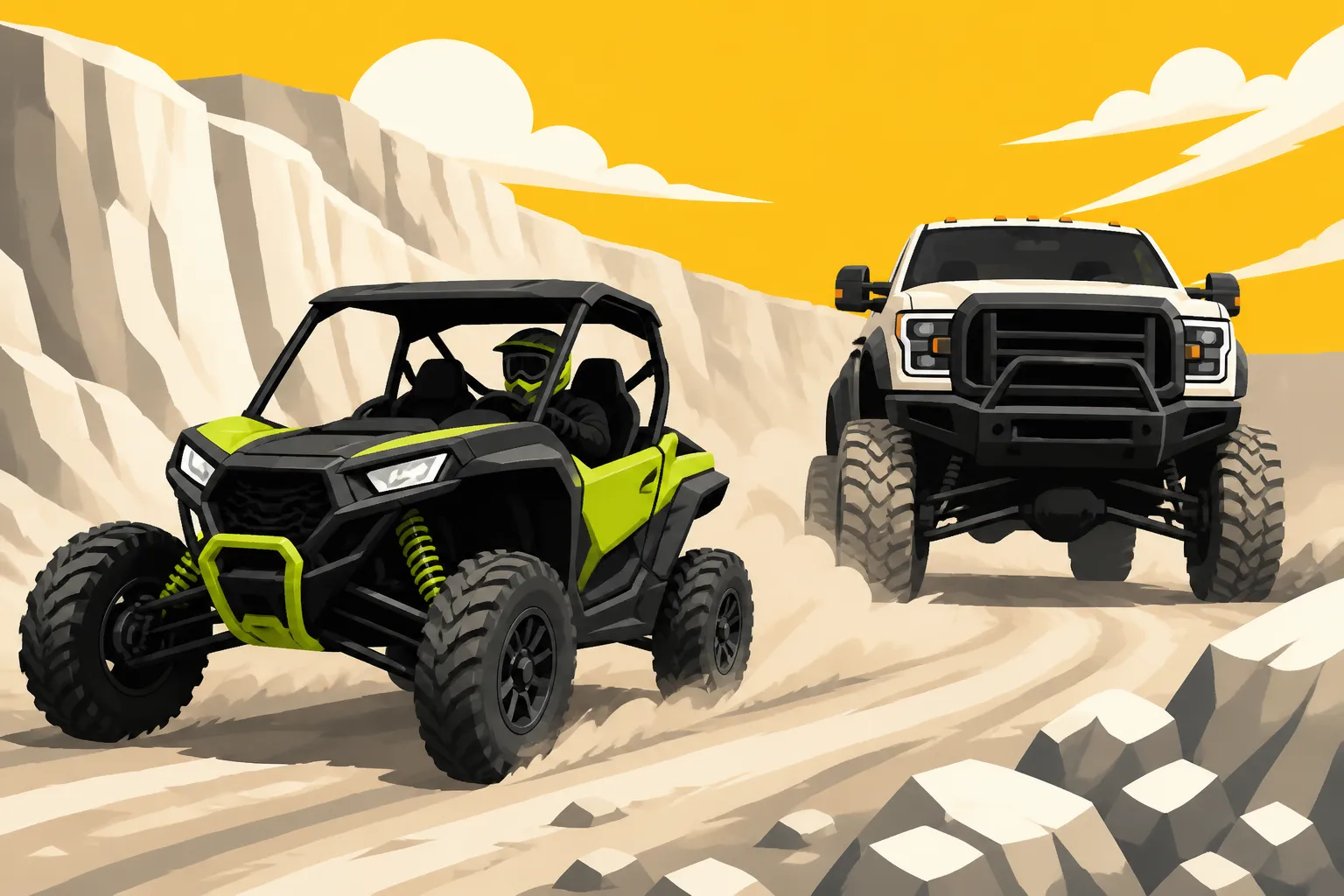
Sharing Gypsum City OHV Park with full-size rigs can feel intimidating when a larger side-by-side appears around a bend or fills the trail ahead. The key is not to assume every route suits every machine. This guide explains how to check where you can ride, pass safely, manage blind spots, and plan a more relaxed visit near Fort Dodge.
Know what sharing the trail really means
Check which routes fit your machine
Gypsum City OHV Park near Fort Dodge is a large riding area, but that does not mean every trail is suitable for every vehicle. A trail that feels roomy on a quad may be tight for a wider side-by-side, while a broad route may still have blind corners, loose ground, or narrow spots. The practical rule is simple: use the park’s current map and posted signs to confirm which routes are open to your machine and whether routes are shared.
This matters especially if your machine is close to the width limit or has accessories that make it wider, such as mirrors, a plow, or a loaded cargo rack. Measure the machine as it will actually be ridden, not just the advertised width in a brochure. If you are unsure how a route is classified, ask park staff or check the official information before unloading. The guide to Iowa Trails for a Wide Machine can help you think through fit and maneuverability before you leave home.
A map is a planning tool, not permission to ignore signs at the trail entrance. Conditions and access can change, and a trail that appears connected on a map may have a restriction posted at the junction. Review Gypsum City OHV Park at Fort Dodge and Iowa Trail Maps From the DNR before setting out, then follow signs and any direction from park staff once you arrive.
Expect different speeds and stopping distances
A full-size side-by-side takes up more trail space than a small ATV, and the driver may have a more limited view immediately around the vehicle. The machine can also need more room to slow, stop, or turn. Those differences are manageable when everyone rides predictably, but they leave less margin for sudden moves on a narrow or unfamiliar trail.
If you are on a smaller machine, do not assume the larger vehicle can see you simply because you can see it. Stay where the driver can reasonably notice you, avoid lingering beside the vehicle, and give it room to maneuver. If you are driving the larger machine, reduce speed before corners and trail junctions, and look carefully for smaller riders who may be partly hidden by brush, terrain, or dust.
For families or groups with different machine sizes, agree on a simple plan before riding: who leads, where the group will regroup, and what riders should do if they lose sight of one another. A new rider may feel pressured to keep up with a faster group. Make it clear that no one should take a risky line or speed up just to close a gap.
Ride cooperatively around larger vehicles
Give way without creating a new hazard
When riders meet on a shared route, both sides need time and room to make a safe decision. Slow down early, hold a predictable line, and avoid swerving toward the edge at the last second. If the trail is too narrow for a comfortable pass, stop in a place where both vehicles can be seen and wait for a safe opportunity.
On a narrow section, it may be safer for one machine to back up slowly to a wider spot than for both drivers to squeeze past each other. That can feel awkward, especially when a group is waiting behind you, but a few calm moments are better than a scraped machine or a collision. Do not back toward a steep edge, unstable shoulder, or hidden drop simply to clear the trail.
Keep enough space between vehicles that you can stop if the person ahead brakes suddenly. This is particularly important when riding behind a side-by-side: dust can obscure the trail, and its tires may throw loose material toward following riders. The advice in Meeting a Full-Size Truck on a Park Trail is useful for thinking through visibility, spacing, and safe meeting points on shared routes.
| Situation | Safer response | Avoid |
|---|---|---|
| You meet a larger vehicle on a tight trail | Slow early and find a visible, stable place to stop | Swerving into brush or a soft shoulder |
| You are following a side-by-side | Leave extra room and ride at a speed that preserves visibility | Closing the gap through dust |
| Your group gets separated | Regroup at a pre-agreed safe location | Stopping around a blind corner |
| A pass does not feel safe | Wait or back carefully to a wider section | Squeezing by to avoid holding others up |
Use clear, calm communication
A quick hand signal or spoken exchange can help, but do not rely on a driver hearing you over an engine or seeing a gesture through a windshield. Make eye contact when possible, signal your intention plainly, and give the other rider time to respond. If you are uncertain whether the driver has noticed you, wait rather than moving into their path.
Group leaders can reduce confusion by setting expectations before the first trail. Tell everyone to stop at junctions, wait where the whole group can gather safely, and avoid passing one another in tight areas. If a rider needs to pull over, choose a spot with good visibility rather than stopping just beyond a bend or over a rise.
Keep children and inexperienced riders close enough to supervise, but not so close that they are trapped between larger vehicles. Before heading out, explain that they should follow the leader’s pace, stop when the group stops, and never dart around a vehicle to catch up. For another perspective on planning a mixed-size outing, see Riding With a Group Across Two Iowa Parks.
Plan for visibility, dust, and changing trail conditions
Choose a pace that matches what you can see
Your safe speed is not simply the speed you feel comfortable reaching on an open stretch. It depends on how much trail you can see, the surface under your tires, and whether another rider could be around the next corner. At Gypsum City, curves, rises, vegetation, and trail intersections can limit sight lines. Ease off the throttle before those features rather than waiting until you are already committed.
Dust deserves special attention when following a larger machine. If the dust cloud blocks your view of the trail, slow down and increase your distance. If you still cannot see clearly, wait for it to settle or stop in a safe location. Riding by the faint outline of the vehicle ahead leaves little time to react to a stopped rider, a turn, or an unexpected change in terrain.
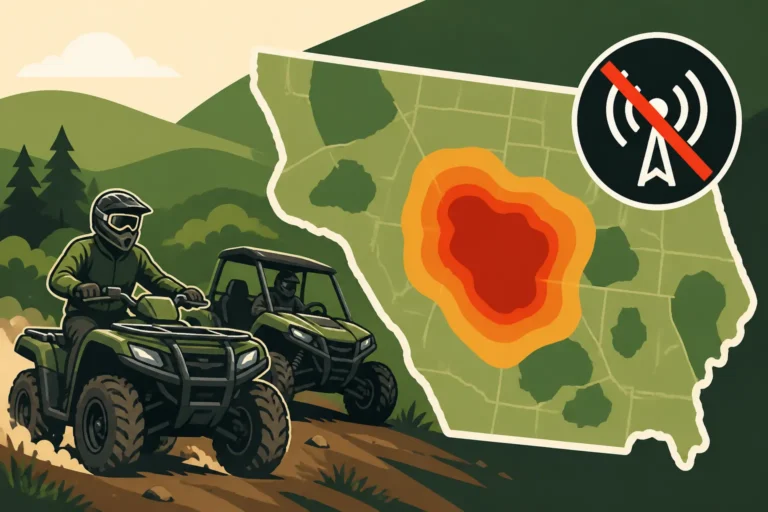
A map app such as onX Offroad can help you orient yourself and keep track of nearby routes, particularly if your group is unfamiliar with the park. Treat it as a planning aid, not a substitute for the park’s official map, current notices, or signs on the ground. Check your route before riding, save or review relevant map information when service is available, and keep your attention on the trail rather than looking at a phone while moving.
Recheck conditions before you unload
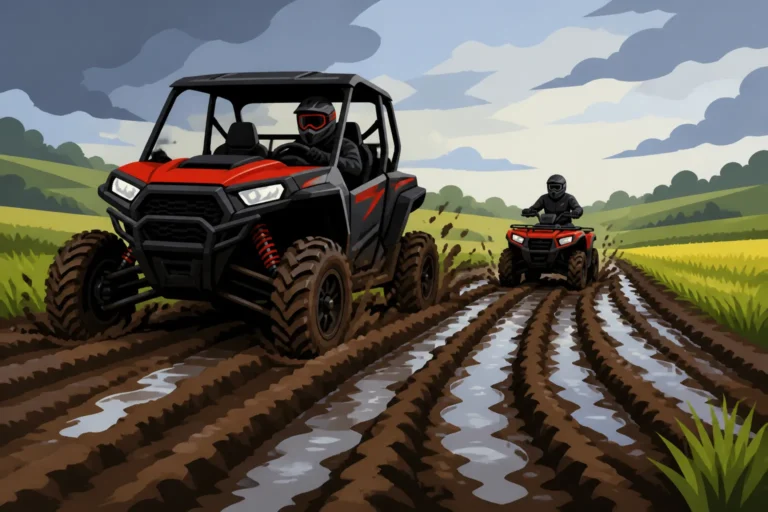
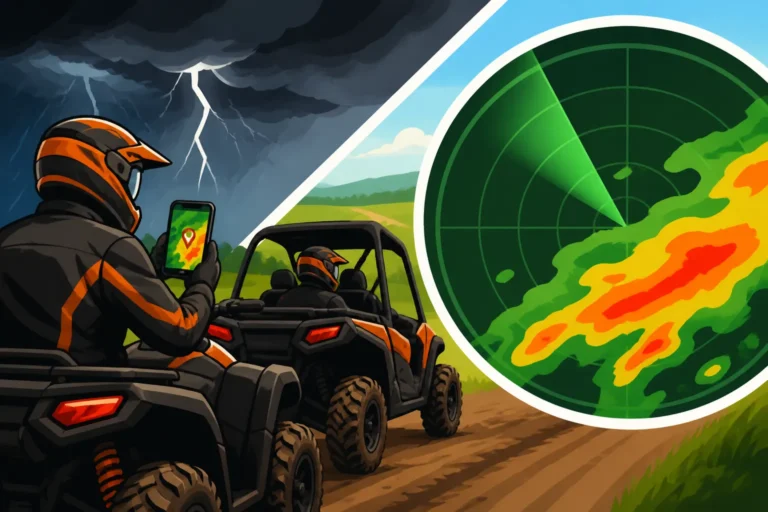
A route that was comfortable on a dry day may feel very different after rain. Loose or slick ground affects braking and cornering, and wet conditions can make it harder for a wider vehicle to turn or climb without damaging the trail. If trails are soft, muddy, or marked closed, stay off them. Riding around a closure can cause damage and create a hazard for everyone who uses the route later.
Check Iowa Trail Conditions Before You Ride before making the drive, and pay attention to the latest park notices when you arrive. If the weather has been unsettled, be ready to change your plan rather than trying to force a particular loop. Iowa Trails Closed After Rain explains why waiting for a trail to dry is part of responsible riding, not just an inconvenience.
It also helps to have a backup plan. Review 65 Miles of Trail at Gypsum City to understand the scale of the riding area, but do not treat mileage as a promise that every loop will be open or appropriate for every machine. If your preferred route is restricted or conditions are poor, choose an approved alternative or call it a day. Planning your parking and unloading area ahead of time can also ease arrival; see Parking a Trailer at an Iowa Park Lot for practical staging considerations.
Make a mixed-machine ride easier for everyone
Set expectations before the group starts
Before leaving the staging area, confirm that every rider knows which routes are allowed for their machine. Share the plan with the group, including where you expect to pause and what to do if someone gets separated. A short conversation in the parking lot is much easier than trying to sort out conflicting assumptions at a trail junction.
Agree on a pace that works for the least experienced rider, not the most powerful machine. The fastest rider can wait at safe regrouping points; a newer rider should not feel pushed to ride beyond their comfort level. If someone is uncomfortable with a narrow section or a meeting point, stop and talk through another option rather than letting pressure build.
Do a quick equipment check before riding: secure loose cargo, confirm that passengers are seated correctly, and make sure everyone has suitable protective gear. Check that each vehicle is ready for the terrain and that riders know how to stop safely. Full-size vehicles and small ATVs can share approved routes more smoothly when drivers are patient, predictable, and willing to leave space.
Know when to change the plan
A successful ride is not measured by how many miles you complete. If dust becomes too thick, the trail feels too crowded, or a route is less suitable than expected, slow down, regroup, and choose a safer option. A shorter outing is still a good day if everyone gets back without damage or a close call.
If you are not sure whether a particular route allows your machine, do not guess based on its appearance or on what another rider is doing. Ask park staff or consult the current official map and posted rules. Maps from services such as onX Offroad may help you prepare, but on-the-ground restrictions take priority.
The best approach to sharing Gypsum City with full-size rigs is to give every rider room, ride at a speed that matches visibility, and stay within routes approved for the machine. That combination makes close encounters less stressful for ATV riders, UTV drivers, families, and groups visiting the park.
Disclaimer
This article is for general informational purposes only and does not constitute professional advice. Laws, prices and regulations vary by location and change over time. Consult a qualified professional for guidance on your specific situation.