Showing a Decal at a Waukon Stop
Picture this: you're enjoying a ride through the scenic streets or gravel roads around Waukon, maybe heading to a favorite fishing spot or just cruising, when suddenly, you see those flashing lights in your rearview mirror. Your heart might do a little flip-flop, wondering if everything is in order. One of the first things a deputy in Waukon, or anywhere in Iowa for that matter, will want to confirm is that your ATV or UTV is legally registered for public use, and that often starts with your decal. This guide is here to walk you through exactly what an Iowa peace officer is looking for when you're stopped in Waukon and how to ensure your ride is squared away, minimizing any stress.
The Essential Decal: What a Waukon Deputy Wants to See
When a deputy pulls you over on your ATV or UTV in Waukon, their primary concern is often public safety and adherence to local and state laws. A huge part of that is ensuring your machine is properly registered, and your decal is the immediate visual proof.
Understanding Iowa's Off-Highway Vehicle OHV Registration Decal
Iowa takes its off-highway vehicle registration seriously, and for good reason. These decals aren't just pretty stickers; they represent your contribution to the statewide OHV fund, which helps maintain trails and facilities for everyone to enjoy. If you plan to ride your ATV or UTV on any public land, including designated city streets or county gravel roads in Iowa, that decal is absolutely non-negotiable. It proves your machine is properly documented with the state and that you've paid your annual due.
The decal itself is designed to be easily visible. Iowa regulations are quite clear about its placement: it needs to be securely mounted on the rear of your machine, specifically on the left side of the rear fender, and it must be clearly visible. It's not meant to be tucked away, hidden by mud, or peeling off. A good rule of thumb is to make sure it's clean and unobstructed, especially before you head out for a ride where you might encounter law enforcement. Deputies are trained to spot these quickly, and a missing or obscured decal can lead to an immediate stop. Remember, these decals expire on December 31st each year, so it's critical to renew yours during the [Iowa's September to December Renewal Window] to avoid any issues as the new year rolls around. You can find more specific guidance on placement in articles like [A Decal on the Rear of an Iowa Machine].
What Happens at an Iowa Roadside Stop
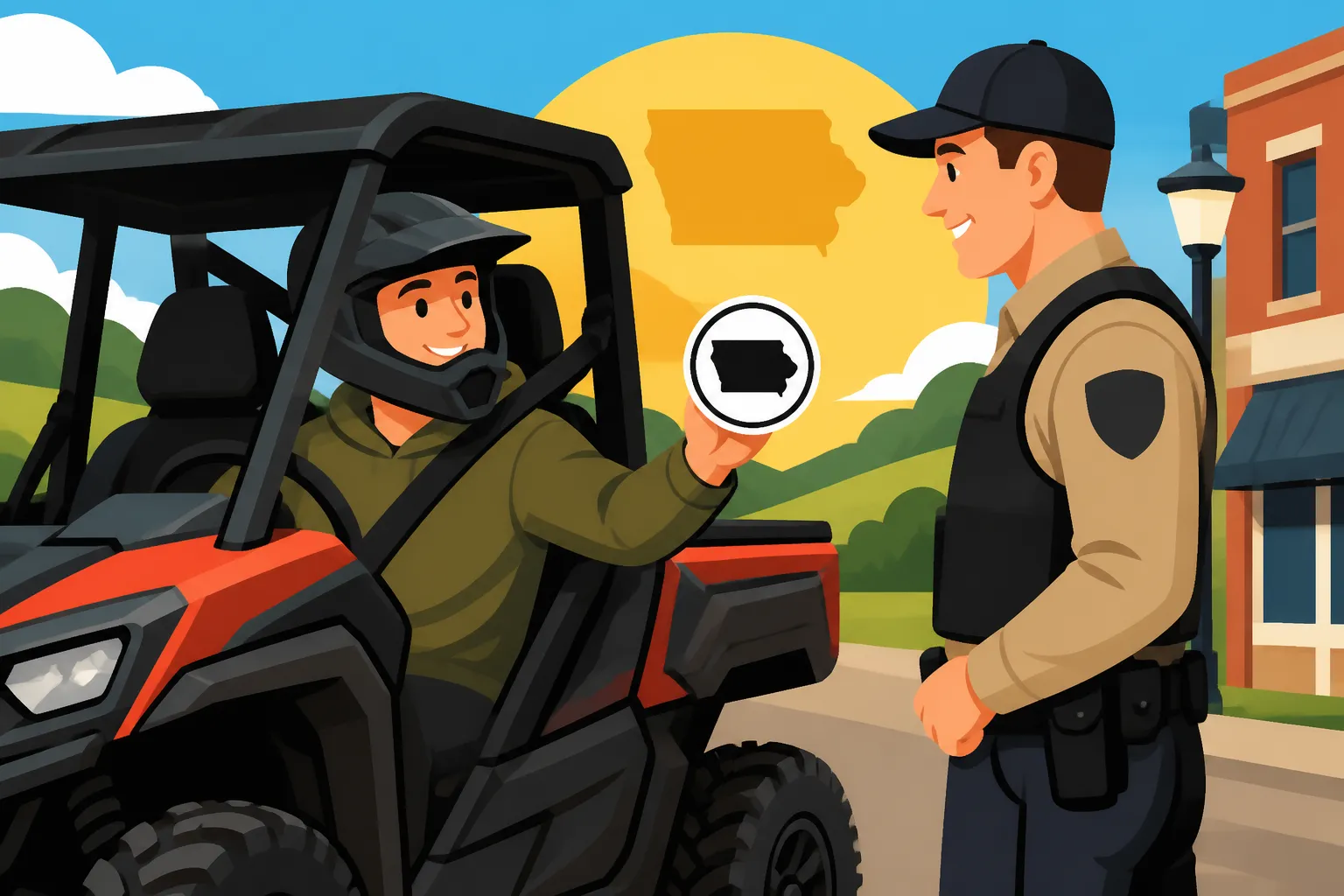
Getting pulled over can be a bit nerve-wracking, even if you know you haven't done anything wrong. The key is to remain calm, cooperative, and have your documents ready. When a deputy stops you in Waukon, they'll likely approach your machine and look directly for that registration decal. If it's visible and current, that's a great start and can often de-escalate the situation quickly. They'll confirm the year and registration number on the decal matches their records.
Beyond the decal, they'll want to verify your identity and, if you're operating on approved roads, check for other necessary documentation. A clear, properly placed, and up-to-date decal sends a strong message that you're a responsible rider who understands and follows the rules. It sets a positive tone for the rest of the interaction. Conversely, if your decal is missing, expired, or improperly displayed, it immediately raises a red flag, leading to further questions and potential citations. It's a quick visual check that helps them determine if you're legally permitted to be on that particular stretch of road.
Beyond the Decal: Other Documentation a Deputy May Request
While the decal is often the first thing a deputy looks for, it's just one piece of the puzzle. Being ready with all your documentation is crucial for a smooth roadside stop in Waukon.
Your Registration Certificate and ID
Having your physical registration certificate with you is just as important as having the decal displayed. Think of the decal as the "license plate" and the certificate as the "paperwork" that proves ownership and current registration. Iowa law requires you to carry this certificate whenever you're operating your ATV or UTV. It doesn't have to be on your person, but it must be on the machine itself, readily accessible. Many riders keep it in a waterproof bag under the seat, in a storage compartment, or even in a handlebar bag. [Carrying the Certificate on an Iowa Ride] stresses this point.
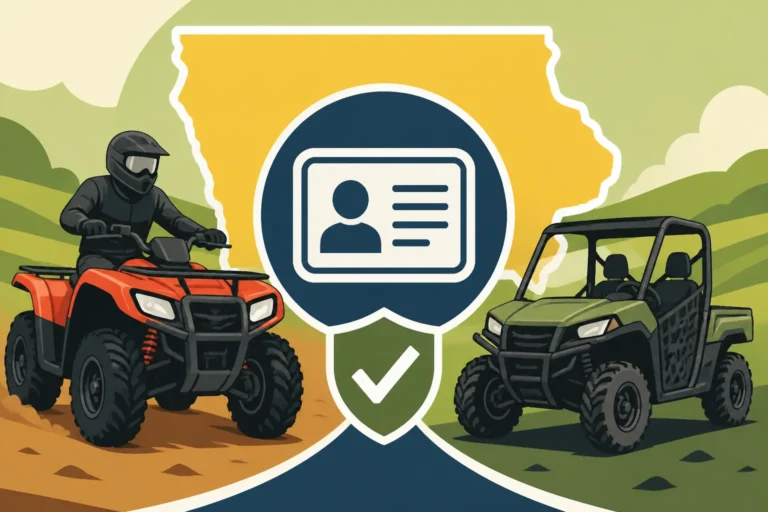
Beyond the machine's paperwork, the deputy will ask for your personal identification. If you're riding your ATV or UTV on any public road in Iowa, you must be at least 18 years old and possess a valid driver's license. This isn't just a suggestion; it's a firm legal requirement. A 17-year-old, even with a safety certificate, cannot legally operate an ATV on a public road in Iowa, so be prepared to present your driver's license. This confirms you're of legal age and authorized to operate a motor vehicle on public thoroughfares. Deputies are increasingly vigilant about these details, especially as more towns like Waukon open their streets to OHVs.
Proof of Insurance for Road Riding
Here's a big one that often catches riders off guard: if you're riding your ATV or UTV on any public road in Iowa – whether it's a city street, a paved county road where permitted, or a gravel secondary road – you absolutely must carry proof of liability insurance. This isn't optional; it's the law. Just like with your car or truck, you need to have minimum coverage amounts, which in Iowa are typically often referred to as 20/40/15: twenty thousand dollars for bodily injury to one person, forty thousand for bodily injury to two or more people, and fifteen thousand for property damage. [Iowa's Twenty, Forty and Fifteen Thousand Minimums] elaborates on this.
Failing to provide proof of insurance at a roadside stop in Waukon can result in a significant fine. Deputies are trained to ask for this, and digital proof on your phone is usually acceptable, though a physical card is always a good backup. Make sure your policy is current and that your specific ATV or UTV is listed. Don't assume your car insurance covers your OHV; most standard auto policies do not. If you're considering road riding, contact your insurance provider to ensure you have the appropriate coverage. This is not just about avoiding a ticket; it's about protecting yourself and others in the event of an accident.
Riding Legally in Waukon: Navigating City Ordinances and State Laws
Waukon, like many Iowa communities, has specific rules for ATV and UTV use within its city limits, building on the broader state laws. Knowing these nuances is key to a hassle-free ride.
Waukon's Specific ATV & UTV Ordinances
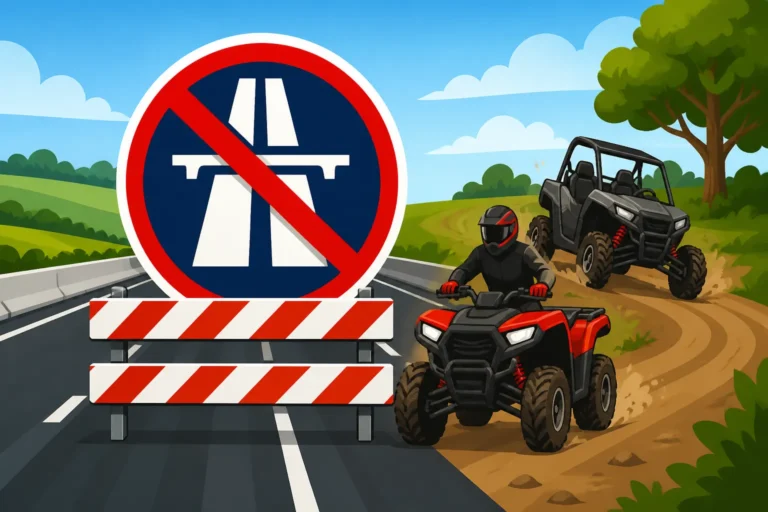
It's fantastic that some Iowa cities have embraced OHV use, and Waukon is one of them. While Iowa state law generally restricts ATVs and UTVs from paved secondary roads unless specifically authorized by the county, and even more so from city streets without a local ordinance, Waukon has taken steps to welcome riders. For example, Waukon generally allows ATVs and UTVs on its streets and alleys, which is a great amenity for residents and visitors alike. [Waukon's Open Streets and Alleys] covers this. However, it’s not a free-for-all. Many cities that open their roads have specific hours of operation, often prohibiting riding during late-night or early-morning hours, such as a ban between midnight and 5 AM as Waukon might have. [Waukon's Midnight to Five Ban] touches on this.
It's crucial to understand that these local ordinances can change, and they vary from town to town. What's legal in Waukon might not be legal in the next town over. Before riding in any city, especially one you're not familiar with, it's always a good idea to check with the city clerk's office or review their municipal code online. A quick phone call or web search can save you from a citation. Deputies in Waukon are enforcing these specific local rules, in addition to state laws, so being informed is your best defense.
State Laws for Road Use to Keep in Mind
Even with Waukon's welcoming ordinances, state laws still form the bedrock of legal ATV and UTV operation on public roads. These aren't just suggestions; they are mandates that every rider must follow. The age requirement is firm: you must be 18 years or older to operate an ATV or UTV on any public road in Iowa. This applies whether you're on a gravel road or a paved city street where allowed. A common misconception is that if you have a safety certificate, you can ride anywhere; while the certificate is vital for younger riders on trails, it doesn't bypass the 18+ rule for public road use. [Why No Iowa Minor May Ride a Road] really drives this home.
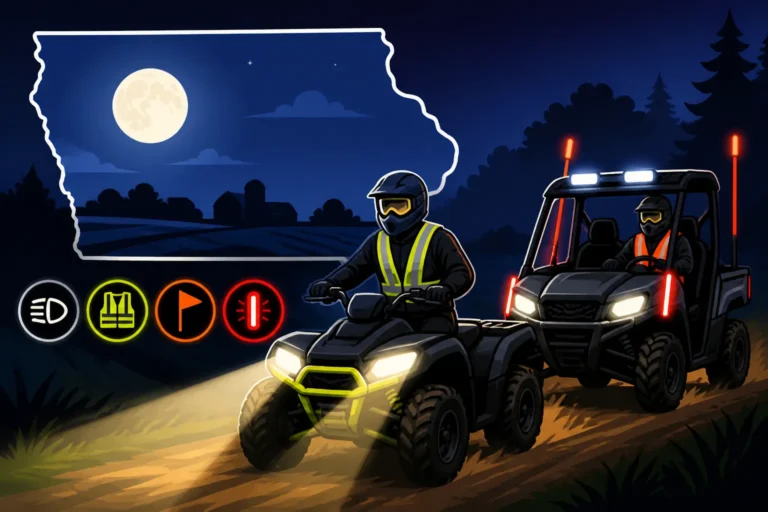
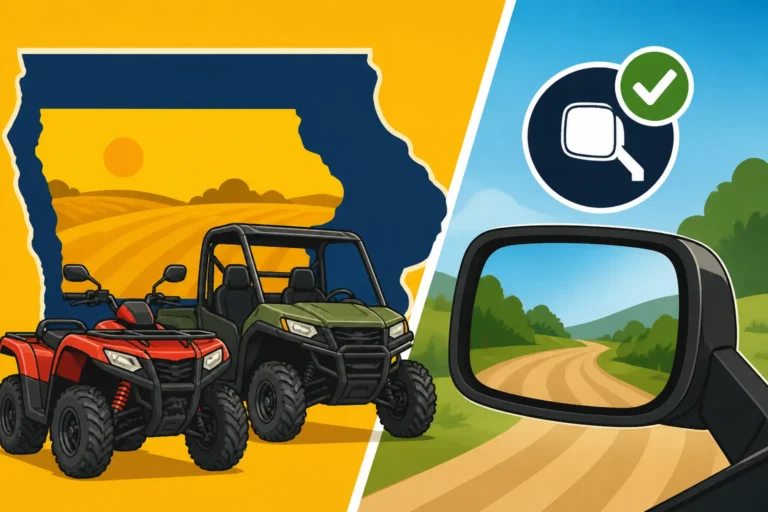
Speed is another critical factor. When on public roads, your speed is capped at 35 miles per hour. This isn't just about safety; it's about classification and ensuring OHVs don't become de facto road vehicles. Don't push it; adhere to the limit. Lighting is also paramount: your headlights must be on at all times, day or night, when operating on public roads. This significantly improves your visibility to other motorists. Furthermore, your ATV or UTV must be equipped with essential road-going safety equipment: a working horn, at least one rear-view mirror, and a slow-moving vehicle (SMV) triangle securely affixed to the rear. Companies like SuperATV offer a range of accessories, from mirrors to complete turn signal kits, that can help ensure your machine meets these safety requirements, making your ride safer and more compliant with the law. All these requirements are in place to integrate OHVs into the existing traffic flow as safely as possible. [Iowa Rules for Riding a Gravel Road] and [Headlights Burning at Noon] delve into more details on these state-level mandates.
Here's a handy breakdown of what you need to have ready at a roadside stop in Waukon:
| Document/Item | Purpose | Where to Keep It | Notes |
|---|---|---|---|
| Iowa Registration Decal | Visual proof of current registration | Securely mounted on the rear, left fender, clearly visible | Must be current, expires Dec. 31st annually. Check for fading. |
| Registration Certificate | Paper proof of ownership and current registration | On the machine, in a waterproof compartment | Carry the physical document, not just a photo. |
| Valid Driver's License | Proof of age (18+) and authorization to drive | On your person | Required for any public road use in Iowa. |
| Proof of Insurance | Verification of minimum liability coverage | On your person or easily accessible on the machine | Required for any public road use; digital or physical card. |
| Working Horn | Audible warning device | Mounted on machine | Essential for signaling other traffic. |
| Rear-View Mirror | Visibility to the rear | Mounted on machine, at least one | Many riders add two for better visibility. |
| SMV Triangle | Alert for slower-moving vehicles | Securely affixed to the rear of the machine | Required for road use, day or night. |
| Headlights (On) | Day and night visibility | On, at all times on public roads | Ensure they are functional before every ride. |
| Tail Lights | Rear visibility | On, at all times on public roads | Check functionality regularly. |
What to Do If Your Decal is Missing or Expired
Life happens, and sometimes decals get damaged, lost, or simply expire before you remember to renew them. Knowing how to address these situations promptly can save you a lot of grief.
Dealing with an Expired or Faded Decal
An expired decal is a common reason for a roadside stop and can lead to a citation. The moment January 1st rolls around, your previous year's decal is no longer valid. Iowa doesn't really have a "grace period" for registration; if it's expired, it's expired. [Riding on a Decal That Expired at New Year] discusses the implications. The good news is that renewing your Iowa ATV or UTV registration is straightforward. You can often do it online through the Iowa DNR's licensing system or by visiting your local county recorder's office. [Renewing an Iowa Registration Online] or [Renewing at a County Recorder Counter] are both viable options. When you renew, you'll receive a new decal for the current year.
Sometimes, decals simply fade over time due to sun exposure and weather, making them hard to read. Or, they might get torn or peel off the fender. If your decal is no longer legible or is damaged to the point it might be mistaken for an invalid one, you can order a replacement. This usually involves contacting your county recorder's office, who can issue a new decal for a small fee. It's always better to be proactive and replace a questionable decal before a deputy has to point it out to you during a stop. Think of it as preventative maintenance for your legal riding status.
What if You're New to Iowa or Bought a Used Machine?
Moving to Iowa with an ATV or UTV, or buying a used one from a private seller, presents a slightly different scenario for decals and registration. If you've just moved to Iowa, you'll need to register your machine in the state. Even if it was legally registered in your previous state, Iowa will require its own registration and decal for public land or road use here. You'll visit your county recorder's office with your title or proof of ownership, and they'll help you through the process, which includes paying Iowa's sales tax if applicable and the registration fees. [Registering an ATV After Moving to Iowa] walks you through this.
When you buy a used ATV or UTV, particularly from a private party, ensure the seller provides you with a clear title. In Iowa, the title needs to be transferred into your name, and that's usually when you'll register the machine and receive your new decal. Never assume that because the previous owner had a decal, you're good to go. The decal is tied to the registration, which needs to be in your name. The county recorder will collect the sales tax on the purchase price during this transfer process as well. Articles like [Buying a Used ATV in Iowa] highlight the importance of proper paperwork during a private sale. Getting everything correctly registered and titled at the county recorder's office is the only way to ensure you'll receive your own, valid Iowa registration decal, preventing any issues down the road – literally!
Disclaimer
This article is for general informational purposes only and does not constitute professional advice. Laws, prices and regulations vary by location and change over time. Consult a qualified professional for guidance on your specific situation.